
It’s a familiar ritual: the last dish is dried and put away, the TV is on, and suddenly, an almost magnetic pull draws you toward the pantry. Chocolate, cookies, ice cream—something sweet calls your name. You didn’t plan it, but within minutes, you’re standing in front of the open fridge or unwrapping a candy bar. This nightly sugar craving isn’t just a lack of willpower. It’s a complex interplay of biology, psychology, and habit. The good news? You can break the cycle—without white-knuckling through deprivation or relying on sheer discipline.
Understanding why these cravings strike after dinner—and what actually works to manage them—is key to making lasting change. This isn’t about banning desserts; it’s about creating balance, satisfaction, and control so that sugar no longer feels like a nightly compulsion.
The Science Behind After-Dinner Sugar Cravings
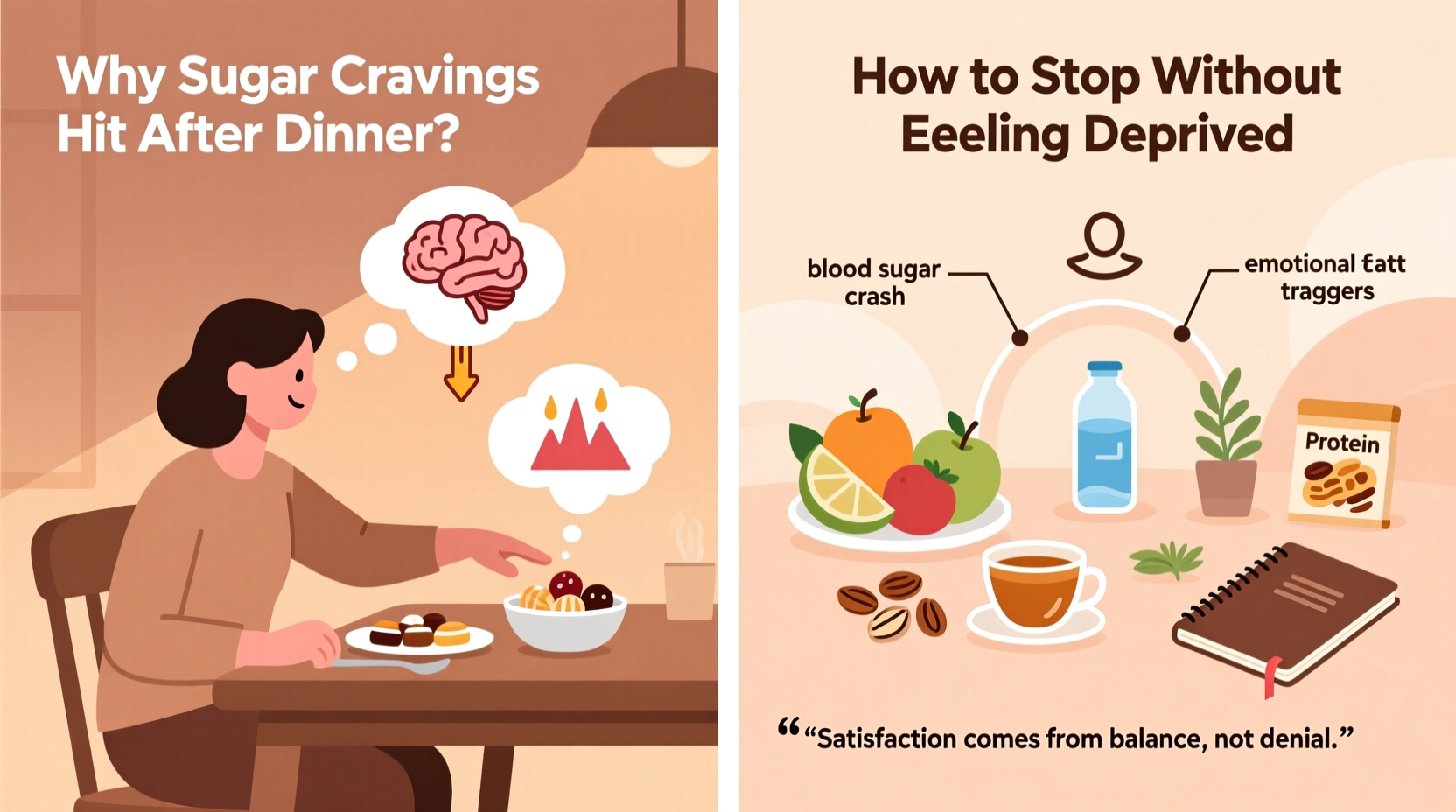
Sugar cravings aren’t simply a matter of weak self-control. They stem from multiple physiological and psychological factors that converge in the evening hours.
Hormonal shifts play a major role. Cortisol, the stress hormone, typically declines in the evening, while melatonin rises to prepare the body for sleep. But if your day has been stressful or your circadian rhythm is off, cortisol may stay elevated, increasing cravings for quick energy sources like sugar. At the same time, insulin sensitivity decreases at night, meaning your body processes carbohydrates less efficiently—yet paradoxically, this can make sugary foods feel more rewarding.
Dopamine-driven reward pathways are also activated by sugar. When you eat sweets, your brain releases dopamine, the “feel-good” neurotransmitter. If your evenings are monotonous, emotionally draining, or lonely, sugar becomes a reliable source of comfort and stimulation. Over time, your brain learns to associate post-dinner time with this reward, turning it into a conditioned habit.
Nutritional gaps earlier in the day can set the stage, too. Skipping protein-rich meals, eating too many refined carbs, or not consuming enough fiber leads to blood sugar swings. By evening, your body may be seeking fast energy to compensate, especially if dinner lacked sufficient fat, protein, or volume.
“Evening sugar cravings are rarely about hunger—they’re often about emotional regulation, routine, and metabolic timing.” — Dr. Lena Torres, Behavioral Nutritionist
Why Willpower Alone Doesn’t Work
Many people assume that stopping sugar cravings is a test of discipline. But research consistently shows that restriction-based approaches fail in the long term. When you label certain foods as “off-limits,” they become more desirable—a phenomenon known as the rebound effect.
A 2020 study published in Appetite found that participants who tried to suppress thoughts about chocolate ended up consuming significantly more of it than those who allowed themselves moderate portions. Deprivation increases mental fixation, which makes cravings stronger, not weaker.
This explains why someone might successfully avoid dessert during the week only to binge on Saturday night. The body and mind rebel against prolonged restriction. Instead of fighting your biology, the goal should be to work with it—by building sustainable routines that reduce the urge to overconsume sugar in the first place.
7 Practical Strategies to Reduce Evening Sugar Cravings
Stopping after-dinner sugar cravings doesn’t require extreme diets or willpower marathons. What it does require is consistency, awareness, and small, strategic changes. Here are seven evidence-backed methods that address both the physical and emotional roots of the craving.
1. Balance Your Dinner Plate
A satisfying, well-balanced dinner reduces the likelihood of blood sugar crashes later. Include all three macronutrients: protein, healthy fats, and fiber-rich carbohydrates.
For example, instead of a simple pasta dish with tomato sauce, opt for whole-grain pasta with grilled chicken, sautéed spinach, and a drizzle of olive oil. The combination keeps you full longer and prevents the energy dip that triggers sugar-seeking behavior.
2. Eat a Protein-Rich Snack Before Dinnertime
If you tend to get home late and eat dinner after 7 p.m., consider having a small, protein-focused snack around 5:30–6:00 p.m. This prevents excessive hunger at dinner, which can lead to overeating refined carbs and under-consuming nutrients essential for satiety.
Good options include Greek yogurt with nuts, a hard-boiled egg with hummus, or a small handful of almonds and an apple.
3. Create a Post-Dinner Ritual (That Isn’t Food)
Cravings are often tied to routine. If every night ends with dessert, your brain expects it. Replace the sugar habit with a new, equally satisfying ritual.
- Drink a warm, spiced beverage like cinnamon tea or golden milk (turmeric + warm almond milk).
- Brush your teeth right after dinner—this signals the end of eating for the night.
- Light a candle and read a book for 20 minutes.
- Do a short stretching or breathing routine.
The key is consistency. Within 2–3 weeks, your brain begins to associate the new activity with relaxation, reducing the urge to seek comfort in sugar.
4. Allow Mindful Dessert—Without Guilt
Deprivation backfires. Instead of eliminating sugar entirely, practice mindful consumption. Choose a small portion of high-quality dark chocolate or a single cookie you truly enjoy.
Eat it slowly, without distractions. Savor the texture, flavor, and sensation. This activates the brain’s satiety centers more effectively than mindlessly eating a larger amount while watching TV.
“When you eat dessert with intention, you often realize you don’t need much to feel satisfied.” — Dr. Alan Pierce, Cognitive Behavioral Therapist
5. Address Emotional Triggers
Ask yourself: *What am I feeling when the craving hits?* Boredom? Stress? Loneliness? Many people use food to fill emotional space, especially in the quiet hours after dinner.
Keep a simple journal for three nights. Note the time, what you ate, your mood, and whether you gave in to the craving. Patterns will emerge. You might notice that cravings spike on nights when you’ve had little social interaction or when work stress carried into the evening.
Once identified, replace the sugar response with a non-food coping strategy: call a friend, write in a gratitude journal, or listen to calming music.
6. Optimize Sleep and Light Exposure
Poor sleep increases ghrelin (the hunger hormone) and decreases leptin (the fullness hormone), making you more prone to cravings. Blue light from screens delays melatonin release, disrupting sleep onset and increasing late-night snacking.
Try this: dim the lights one hour before bed and avoid screens for at least 30 minutes before sleep. Use warm-toned lighting in the evening to support natural circadian rhythms.
7. Stock Smart Alternatives
If you do reach for something sweet, make sure healthier options are easy to access. Keep pre-portioned treats ready—like frozen grapes, chia pudding, or dark chocolate squares on a plate.
Avoid keeping large packages of candy or cookies in plain sight. Out of sight doesn’t mean out of mind—but it does reduce impulsive grabbing.
Checklist: How to Break the After-Dinner Sugar Cycle
Use this actionable checklist to begin rewiring your habits:
- ✅ Eat a balanced dinner with protein, fat, and fiber
- ✅ Have a small protein-rich snack if dinner is late
- ✅ Brush your teeth or rinse with mouthwash after dinner
- ✅ Replace dessert with a non-food ritual (tea, reading, stretching)
- ✅ Practice mindful eating if you choose a treat
- ✅ Track your mood and cravings for 3 days to identify patterns
- ✅ Improve sleep hygiene: reduce screen time, dim lights
- ✅ Keep healthy alternatives visible and sugary snacks out of easy reach
Real Example: Sarah’s Shift From Craving to Control
Sarah, a 38-year-old project manager, struggled with nightly ice cream binges. She’d finish dinner, clean up, and immediately head to the freezer—even if she wasn’t hungry. “It felt automatic,” she said. “Like my hand moved on its own.”
She tried cutting out ice cream completely, but within a week, she’d eat an entire tub in one sitting. Frustrated, she decided to take a different approach. First, she started adding grilled salmon or lentils to her dinners. Then, she began drinking chamomile tea with a dash of cinnamon while journaling for five minutes each night.
Within ten days, the urge to open the freezer faded. “The tea ritual made me feel cared for,” she shared. “I realized I wasn’t craving sugar—I was craving calm.” Now, she allows herself a square of dark chocolate twice a week, savoring it slowly. The difference? She chooses it—not her cravings.
Do’s and Don’ts: Managing Evening Sugar Cravings
| Do | Don’t |
|---|---|
| Eat protein and fiber at dinner | Skimp on dinner to “save room” for dessert |
| Create a relaxing evening routine | Use sugar as your only form of wind-down |
| Allow small, intentional treats | Label foods as “good” or “bad” |
| Stay hydrated throughout the day | Drink sugary beverages in the evening |
| Get 7–8 hours of quality sleep | Scroll on devices in bed until sleepiness hits |
Frequently Asked Questions
Is it okay to eat sugar after dinner if I’m active?
Physical activity can improve insulin sensitivity, which may help your body process sugar more efficiently. However, timing still matters. Even active individuals benefit from minimizing added sugars at night, as metabolism naturally slows. If you train in the evening, a small amount of sugar combined with protein (like chocolate milk) can aid recovery—but moderation is key.
Will cutting out sugar improve my sleep?
Yes, for many people. High sugar intake, especially close to bedtime, can cause blood sugar spikes and crashes during the night, leading to fragmented sleep. Reducing sugar—particularly from processed sources—often results in deeper, more restful sleep within a few weeks.
What if I still want something sweet even after trying these tips?
That’s normal. Complete elimination isn’t the goal. Focus on shifting from compulsive eating to conscious choice. If you still desire sweetness, try naturally sweet foods like roasted cinnamon apples, banana “nice cream,” or a date-based energy ball. These provide fiber and nutrients alongside sweetness, reducing the metabolic impact.
Conclusion: Reclaim Your Evenings Without Sacrifice
Craving sugar after dinner isn’t a personal failing—it’s a signal. Your body and mind are communicating a need, whether for nourishment, relaxation, or emotional comfort. The most effective solutions don’t involve denial, but redirection. By understanding the root causes and implementing gentle, consistent strategies, you can transform your relationship with sugar.
You don’t have to give up dessert to gain control. You just need to reclaim your evenings with intention, balance, and self-awareness. Start with one small change: tonight, try swapping the post-dinner snack for a warm drink or a five-minute stretch. Notice how you feel. Progress isn’t measured in perfection—it’s built in moments of mindful choice.




 浙公网安备
33010002000092号
浙公网安备
33010002000092号 浙B2-20120091-4
Comments
No comments yet. Why don't you start the discussion?