
Somewhere between laughing at a childhood photo and freezing mid-conversation after recalling an awkward moment lies a universal human experience: the cringe. That sudden flush of embarrassment, the instinctive wince, the mental replay of something you wish you could delete—these reactions are more than fleeting discomfort. They’re symptoms of a deeper cognitive process known as the brain’s \"replay loop.\" This neurological mechanism constantly revisits past experiences, often highlighting moments we perceive as failures, missteps, or social blunders. Understanding why this happens—and how to manage it—is essential for emotional well-being and personal growth.
The replay loop isn’t malfunctioning; it’s designed to help us learn from the past. But when it fixates on humiliating or regretful moments, it can distort our self-image and amplify negative emotions long after the event has passed. The key lies not in suppressing these memories, but in recognizing their function, contextualizing them, and ultimately reshaping how we respond to them.
The Neuroscience Behind Memory Replay
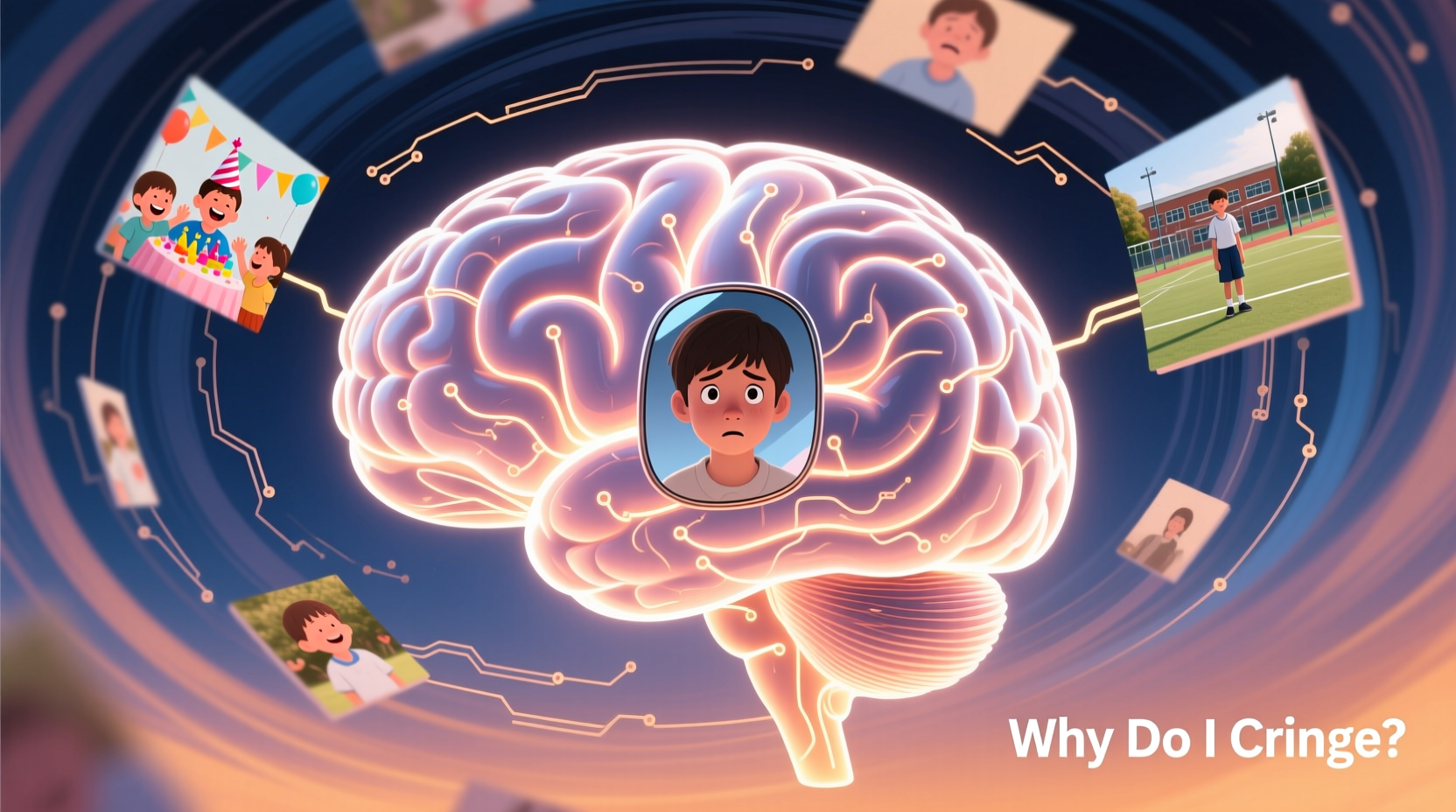
When you recall a memory, your brain doesn’t simply retrieve a static file. Instead, it reconstructs the experience using neural networks spread across multiple regions, including the hippocampus (for memory storage), the prefrontal cortex (for judgment and decision-making), and the amygdala (which processes emotion). This reconstruction process is inherently malleable—each time you revisit a memory, it can be subtly altered by your current mood, beliefs, or environment.
The “replay loop” refers to the brain’s tendency to spontaneously reactivate recent or emotionally charged experiences during rest or idle states. Neuroimaging studies show that the hippocampus fires in patterns similar to those recorded during the original event, essentially simulating the past in real time. This phenomenon, known as neural replay, plays a crucial role in consolidating memories and extracting lessons.
However, replay isn’t neutral. It favors emotionally intense events—especially negative ones. Evolutionarily, this makes sense: remembering what went wrong helps avoid future threats. But in modern life, where social survival matters as much as physical safety, a botched joke or clumsy interaction can feel like a threat to identity, triggering disproportionate emotional responses.
“Memory is not a recording device but a storytelling organ. It selects, distorts, and emphasizes based on present needs.” — Dr. Lisa Feldman Barrett, Neuroscientist and author of *How Emotions Are Made*
Why Cringing Feels So Intense
Cringing at old memories isn’t just about embarrassment—it’s a full-body emotional response rooted in self-awareness and social evaluation. When you mentally replay an awkward moment, your brain simulates the experience as if it were happening again. You don’t just remember being embarrassed; you re-experience it.
This occurs because the same neural circuits involved in real-time social processing activate during recall. The anterior cingulate cortex, which monitors conflict and errors, lights up when you relive a misstep. Simultaneously, the insula generates visceral sensations—heat in the face, stomach tension—that mirror the original event.
What amplifies the discomfort is perspective distortion. As we grow older, our values, social skills, and self-concept evolve. Looking back with today’s standards, past behaviors can seem幼稚, inappropriate, or even cringeworthy. A teenager’s attempt to fit in through exaggerated humor may now appear desperate. A younger version of yourself lacked the emotional intelligence or life experience you have today—but the brain doesn’t always account for that developmental gap.
The Role of Social Identity and Self-Narrative
We construct our identities through stories—narratives about who we are, how we’ve changed, and what defines us. Memories that clash with our current self-image become cognitive dissonance triggers. If you see yourself as confident and articulate, recalling a time you stumbled over words in public creates internal friction. The brain flags this inconsistency, prompting repeated review in an attempt to resolve it.
Unfortunately, this review often lacks context. You may overlook mitigating factors: fatigue, anxiety, lack of experience, or external pressures. Instead, the replay loop isolates the worst second—the pause, the wrong word, the laughter—and elevates it into a defining moment. Over time, isolated incidents morph into core beliefs: “I always mess up,” or “I’m socially inept.”
These narratives, once internalized, influence future behavior. Anticipating failure, you may avoid social situations altogether, reinforcing isolation and confirming the belief. The replay loop thus becomes a self-sustaining cycle: memory → negative interpretation → emotional reaction → behavioral change → new evidence for the narrative.
Breaking the Loop: A Step-by-Step Guide
Escaping this cycle requires conscious intervention. Below is a practical, neuroscience-informed approach to reframe cringe-inducing memories and reduce their emotional charge.
- Pause and Acknowledge: When a memory surfaces, resist the urge to push it away. Name it: “I’m having a flashback to that presentation last year.”
- Contextualize the Moment: Ask: What was going on in my life then? Was I under stress? New to the role? Lacking support? Reconnect with your past self’s circumstances.
- Separate Behavior from Identity: Instead of “I was embarrassing,” reframe as “I gave a talk that didn’t go as planned.” One describes an action; the other defines a person.
- Extract the Lesson: What did you learn? Maybe you now prepare more thoroughly, practice breathing techniques, or seek feedback. Focus on growth, not guilt.
- Replay with Compassion: Mentally revisit the scene, but insert kindness. Imagine saying to your past self: “That was tough. You did your best with what you knew.”
- Limit Repetition: Set a mental timer. Allow yourself two minutes to reflect, then shift attention. Use a grounding technique like naming five things you see or taking deep breaths.
Do’s and Don’ts of Managing Memory Cringe
| Do | Don’t |
|---|---|
| Practice self-compassion when recalling past mistakes | Label yourself as “cringey” or “awkward” based on one event |
| Use memories as data for growth, not proof of inadequacy | Ruminate for extended periods without resolution |
| Talk about awkward moments with trusted friends | Avoid all situations that resemble past discomfort |
| Write down reframed versions of painful memories | Compare your behind-the-scenes to others’ highlight reels |
A Real Example: From Cringe to Clarity
Maya, a 29-year-old project manager, found herself frequently haunted by a team meeting from three years prior. She had proposed an idea enthusiastically, only to be interrupted and corrected by a senior colleague. Her face flushed, she stammered, and later replayed the moment obsessively, hearing her voice crack and imagining others judging her.
For months, she avoided speaking up in meetings, convinced she’d be seen as incompetent. The memory became a symbol of professional insecurity. Only after starting therapy did she begin to unpack it. Her therapist guided her through the step-by-step process: acknowledging the pain, contextualizing her junior status at the time, recognizing that interruptions were common in that workplace, and identifying how much more assertive she’d become since.
She wrote a letter to her younger self, expressing empathy. She also realized that the correction, while delivered poorly, contained useful feedback. By reframing the event as a learning milestone rather than a humiliation, the cringe lost its power. Today, Maya still remembers the meeting—but now sees it as evidence of how far she’s come.
When the Replay Loop Becomes Harmful
While occasional cringing is normal, persistent intrusive memories may signal deeper issues. Conditions like social anxiety disorder, PTSD, or obsessive-compulsive tendencies can hijack the replay function, turning reflection into rumination. Signs include:
- Daily, involuntary flashbacks that disrupt focus
- Physical symptoms like rapid heartbeat or nausea when memories arise
- Avoidance of people, places, or activities linked to past events
- Belief that you are fundamentally flawed due to past actions
If this resonates, professional support can help. Cognitive Behavioral Therapy (CBT) and mindfulness-based interventions are effective in restructuring maladaptive thought patterns and reducing emotional reactivity to memories.
Frequently Asked Questions
Is it normal to cringe at memories from years ago?
Yes. Cringing at old memories is a common aspect of self-reflection. It often reflects increased self-awareness and higher personal standards. As long as it doesn’t interfere with daily life or self-worth, it’s a sign of growth, not pathology.
Can I stop remembering these moments altogether?
You can’t erase memories, but you can change your relationship with them. Through cognitive reframing, mindfulness, and self-compassion, the emotional sting diminishes over time. The goal isn’t suppression—it’s integration.
Why do some memories stick while others fade?
Emotionally charged events, especially those involving surprise, embarrassment, or social evaluation, are prioritized by the brain for retention. The stronger the emotional tag, the more likely the memory will be replayed and reinforced.
Take Control of Your Inner Narrative
The brain’s replay loop is not your enemy. It’s a tool designed to help you learn, adapt, and survive. The discomfort of cringing at old memories is not a flaw—it’s evidence of a mind capable of introspection and change. The very fact that you feel embarrassed means you’ve evolved beyond the version of yourself caught in that moment.
Rather than resisting these flashes from the past, meet them with curiosity and kindness. Ask not “Why was I so cringey?” but “What did that experience teach me?” Each memory, no matter how uncomfortable, holds a piece of your journey. By reframing them not as indictments but as milestones, you reclaim your story—and your peace of mind.




 浙公网安备
33010002000092号
浙公网安备
33010002000092号 浙B2-20120091-4
Comments
No comments yet. Why don't you start the discussion?