
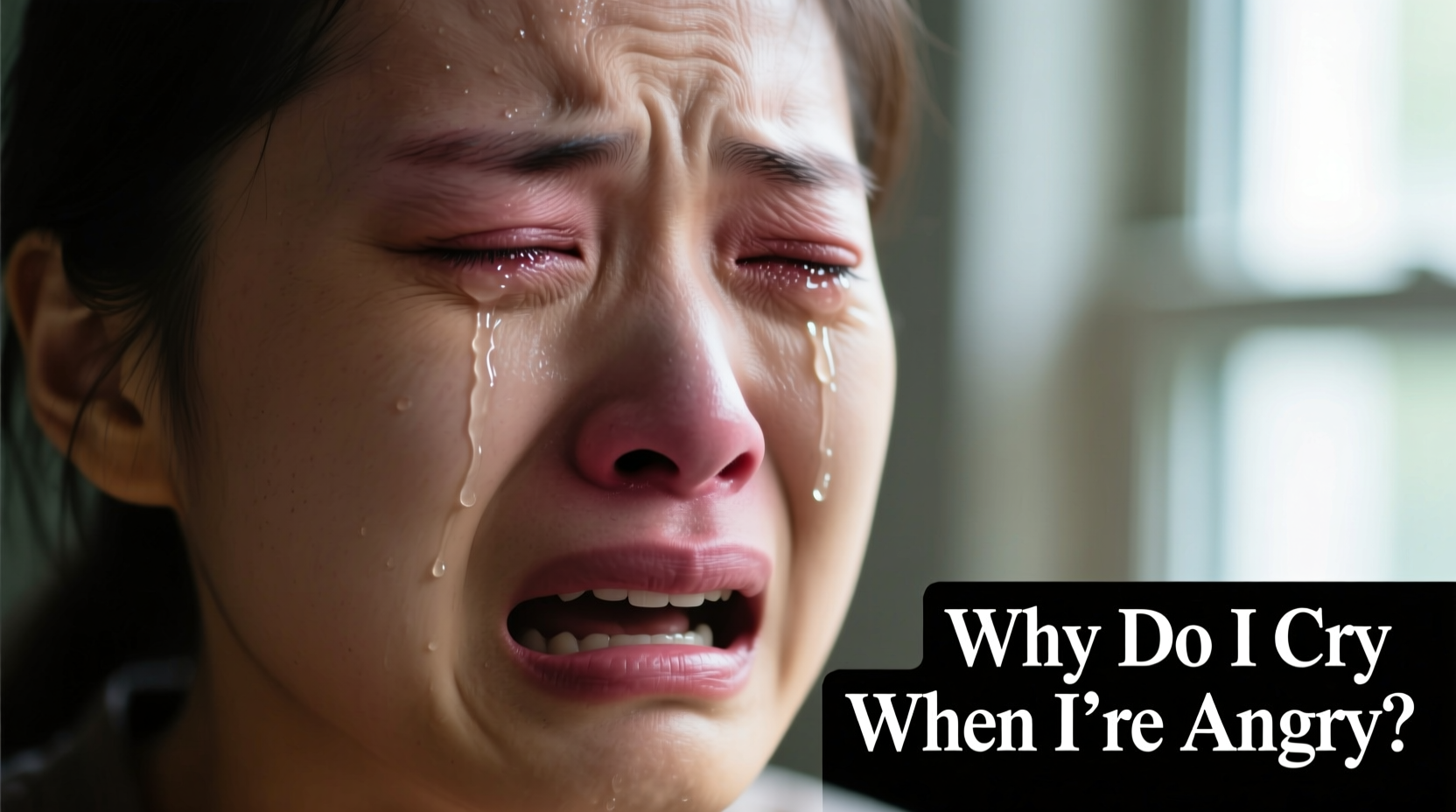
It’s a familiar moment: you’re overwhelmed with frustration, your voice rises, your face flushes—and suddenly, tears well up. You didn’t mean to cry. In fact, crying might feel counterintuitive when you're furious. Yet, this reaction is far more common—and scientifically grounded—than many realize. Crying during anger isn’t a sign of weakness or lack of control; it’s a complex physiological response rooted in how our brain, nervous system, and hormones interact under emotional stress. Understanding the science behind this phenomenon can help normalize the experience and offer insight into healthier emotional regulation.
The Brain’s Role in Emotional Overload
When anger surges, multiple regions of the brain activate almost simultaneously. The amygdala, responsible for processing threats and triggering fear or aggression, fires rapidly. This activates the hypothalamus, which signals the autonomic nervous system to prepare the body for a “fight-or-flight” response. Heart rate increases, muscles tense, and adrenaline floods the bloodstream.
But here's where it gets intricate: as emotional intensity builds, the prefrontal cortex—the area responsible for rational thought and emotional regulation—can become temporarily impaired. This neurological “short-circuit” means that even if you intellectually want to stay composed, your body may not comply. Tears often emerge at this tipping point: not because you’ve surrendered to sadness, but because your nervous system has reached its threshold for emotional arousal.
“Emotions don’t operate in isolation. Anger and distress are processed through overlapping neural networks, making tear production a natural overflow mechanism.” — Dr. Lena Torres, Cognitive Neuroscientist, University of California
This crossover explains why intense anger can trigger what feels like a “sad” response. The limbic system doesn’t distinguish cleanly between emotions—it responds to intensity. When stimulation exceeds capacity, tears serve as a release valve.
The Autonomic Nervous System and Tear Production
The autonomic nervous system (ANS) governs involuntary bodily functions, including breathing, heart rate, and yes—tear production. It consists of two main branches: the sympathetic (responsible for arousal and alertness) and the parasympathetic (which promotes relaxation and recovery).
During anger, the sympathetic branch dominates: pupils dilate, sweat glands activate, and stress hormones like cortisol and norepinephrine spike. But once the peak of the emotional surge passes—or even during it—the parasympathetic system begins to reassert control. This shift triggers what’s known as the “rest-and-digest” response, which includes stimulating the lacrimal glands to produce tears.
In essence, crying when angry may be your body’s attempt to self-regulate. As the brain signals that emotional intensity has peaked, the parasympathetic system kicks in to restore balance. Tears are part of that recalibration—a biological effort to cool down the nervous system and initiate emotional recovery.
Hormonal Triggers Behind Emotional Tears
Beyond neural circuitry, hormones play a crucial role in why we cry when angry. One key player is prolactin, a hormone associated with lactation but also present in emotional tear production. Studies show that individuals with higher baseline levels of prolactin tend to cry more easily across emotional states, including anger.
Additionally, testosterone may influence tear suppression. Research suggests that higher testosterone levels correlate with reduced crying frequency, potentially explaining gender differences in emotional expression. However, this doesn’t mean men don’t experience the same physiological urge—they may simply suppress it due to social conditioning or hormonal profiles.
Cortisol, the primary stress hormone, also contributes. Prolonged anger elevates cortisol, which in turn affects mood centers in the brain. High cortisol over time can lower emotional resilience, making it easier for strong feelings to spill over into physical expressions like crying. This creates a feedback loop: anger raises cortisol, cortisol lowers emotional thresholds, and tears follow as a release mechanism.
Key Hormones Involved in Anger-Induced Crying
| Hormone | Role in Emotional Response | Effect on Tear Production |
|---|---|---|
| Prolactin | Regulates emotional sensitivity | Increases likelihood of crying |
| Cortisol | Elevated during stress and anger | Lowers emotional threshold, promoting overflow |
| Norepinephrine | Triggers fight-or-flight response | Indirectly leads to parasympathetic rebound and tears |
| Testosterone | Associated with emotional restraint | May suppress crying reflex |
Types of Tears and Their Biological Purpose
Not all tears are the same. Scientists categorize tears into three types: basal (for eye lubrication), reflex (in response to irritants like onions), and emotional (triggered by psychological stimuli). Emotional tears are chemically distinct—they contain higher levels of proteins, manganese, and stress hormones like ACTH compared to other types.
This chemical difference suggests a functional purpose: emotional tears may literally help the body expel excess stress chemicals. One study found that crying for 5–10 minutes could reduce manganese levels, which are linked to anxiety and emotional instability. Similarly, shedding emotional tears may lower cortisol concentrations in the bloodstream, contributing to a sense of relief post-crying.
So when you cry during anger, you’re not just expressing emotion—you’re detoxifying. The tears act as a biological reset button, helping your body return to homeostasis after an emotional storm.
Mini Case Study: Sarah’s Experience with Anger Tears
Sarah, a 34-year-old project manager, noticed she frequently cried during high-pressure team meetings. She felt frustrated and embarrassed, interpreting her tears as a loss of authority. After consulting a therapist, she learned that her reactions were tied to chronic workplace stress and elevated cortisol. Her body had developed a pattern: when anger spiked, her nervous system responded with tears as a regulatory mechanism.
With guided breathing techniques and scheduled emotional check-ins, Sarah began to anticipate her triggers. Instead of suppressing her tears, she allowed herself brief pauses to step away and reset. Over time, the frequency decreased—not because she became less emotional, but because she gave her nervous system space to regulate before reaching overflow.
Her story illustrates that crying during anger isn’t inherently problematic. The issue often lies in interpretation and management, not the physiology itself.
Strategies to Manage Anger-Induced Crying
If crying during moments of anger disrupts your confidence or relationships, consider these evidence-based strategies to regain a sense of control without suppressing your emotions.
Step-by-Step Guide: Calming Your Nervous System During Anger
- Pause and Name the Emotion: Acknowledge, “I’m feeling angry,” rather than judging the tears. Labeling reduces amygdala activation.
- Engage Diaphragmatic Breathing: Inhale slowly for four counts, hold for four, exhale for six. This stimulates the vagus nerve, activating the parasympathetic system.
- Use Grounding Techniques: Press your feet into the floor, name five things you see, or hold a cold object. Sensory input distracts the brain from emotional escalation.
- Excuse Yourself Briefly: A two-minute break can prevent overflow. Say, “I need a moment to collect my thoughts,” without apology.
- Reflect Post-Event: Journal about what triggered the anger and whether unmet needs (respect, fairness, autonomy) were involved.
Checklist: Building Emotional Resilience
- ✅ Identify personal anger triggers (e.g., criticism, injustice, feeling unheard)
- ✅ Develop a non-judgmental attitude toward emotional tears
- ✅ Schedule regular stress-relief activities (exercise, meditation, creative outlets)
- ✅ Improve sleep hygiene—poor sleep lowers emotional thresholds
- ✅ Seek therapy if emotional responses interfere with work or relationships
Frequently Asked Questions
Is it normal to cry when I'm angry?
Yes, it’s completely normal. Crying during anger is a physiological response to emotional intensity and nervous system activation. It does not indicate weakness or poor emotional control.
Why do some people cry when angry while others don’t?
Differences stem from biology, upbringing, and individual neurochemistry. Factors include hormone levels (like prolactin), nervous system sensitivity, cultural norms around emotional expression, and early life experiences with emotional modeling.
Can I stop myself from crying when angry?
You can reduce the frequency with practice. Techniques like mindfulness, breathwork, and cognitive reframing help regulate emotional responses. However, aiming to eliminate crying entirely may lead to emotional suppression, which carries long-term health risks. Focus instead on managing the context and response, not the tears themselves.
Conclusion: Rethinking Tears as Strength, Not Weakness
Crying when angry is not a flaw—it’s a testament to the complexity of human physiology. Our bodies are wired to respond to emotional intensity with integrated systems that prioritize survival and balance. Tears are not a betrayal of anger; they are part of its resolution. By understanding the science behind this reaction, we can replace shame with compassion and develop healthier ways to navigate strong emotions.
Rather than fighting the tears, consider them messengers. They signal that your emotional load is high, your nervous system is working hard, and your body is seeking equilibrium. With awareness and gentle management, you can honor both your anger and your tears—transforming moments of vulnerability into opportunities for growth.




 浙公网安备
33010002000092号
浙公网安备
33010002000092号 浙B2-20120091-4
Comments
No comments yet. Why don't you start the discussion?