
It starts innocently enough: you open an app to check a message, see a friend’s vacation photo, or catch up on news. Ten minutes later, you’re deep in a spiral of comparison, envy, and unease. Your chest feels tight, your thoughts race, and suddenly, you're not sure why you're so worked up. This experience is increasingly common—and it has a name: digital anxiety.
Social media platforms are designed to keep you engaged, not calm. They exploit psychological vulnerabilities through algorithms that prioritize emotional reactions over meaningful connection. Over time, frequent use can rewire your brain's stress response, leaving you feeling drained, insecure, and anxious—especially after extended scrolling sessions. The good news? You’re not broken. You’re reacting normally to an abnormal environment. And more importantly, you can reset your nervous system and regain emotional control with intentional practices.
The Psychology Behind Post-Scroll Anxiety
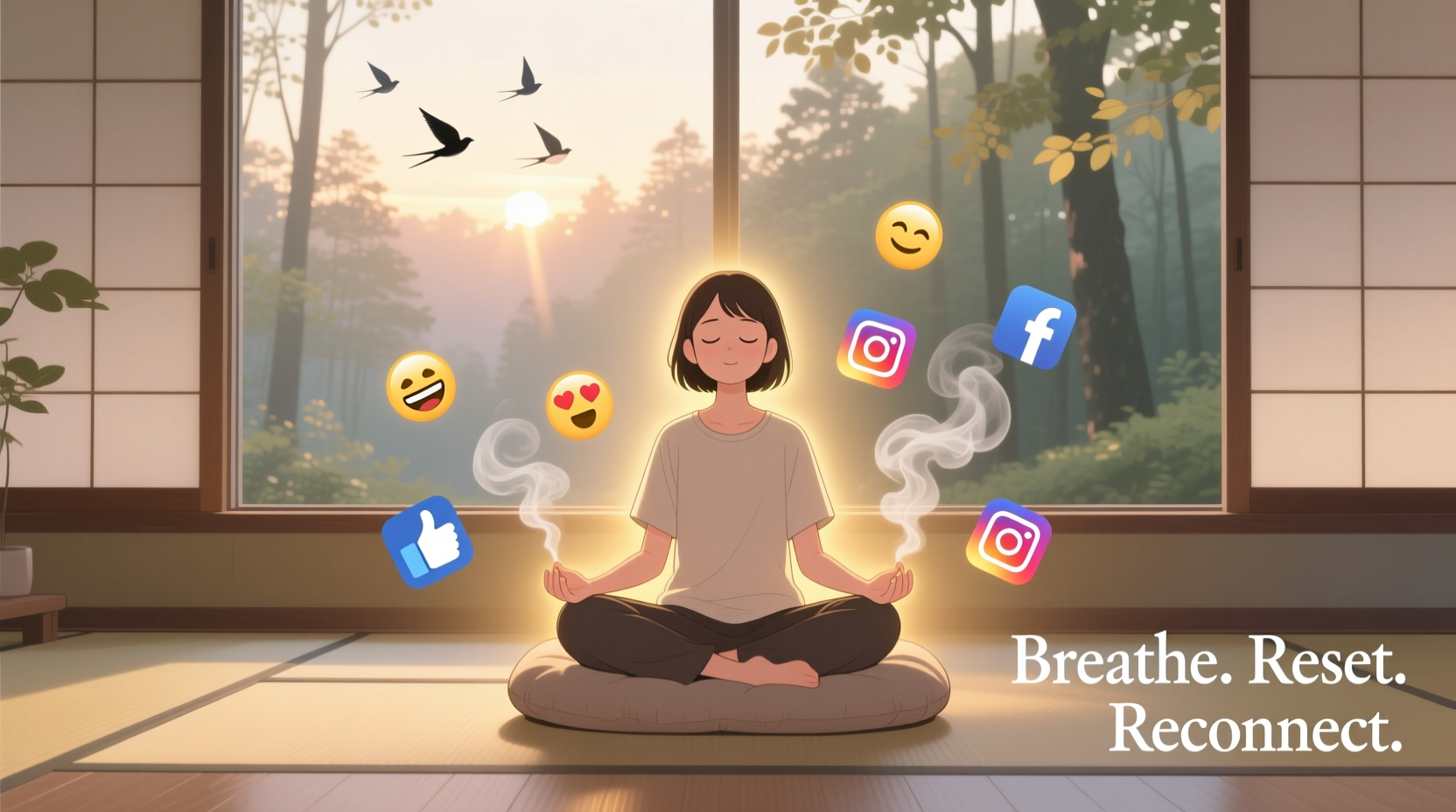
Anxiety after social media isn’t just about what you see—it’s about how your brain processes it. When you scroll, your mind absorbs a constant stream of curated images, opinions, and updates, often without context. This creates a cognitive overload that the brain struggles to resolve. Unlike face-to-face interactions, online content lacks tone, body language, and real-time feedback, making it harder to interpret intent or emotion accurately.
One key factor is **social comparison**. Platforms like Instagram, TikTok, and Facebook showcase highlight reels: perfect bodies, dream vacations, career wins, and seemingly flawless relationships. Even if you know these portrayals are edited or exaggerated, your subconscious still registers them as benchmarks. A 2023 study published in the *Journal of Social and Clinical Psychology* found that passive scrolling (viewing without interacting) significantly increased feelings of inferiority and depressive symptoms in users under 30.
Another contributor is **fear of missing out (FOMO)**. Seeing others at events you weren’t invited to, achieving milestones you haven’t reached, or simply appearing more socially connected can trigger subtle but persistent anxiety. The brain interprets social exclusion—even virtual—as a survival threat, activating the amygdala, the region responsible for fear responses.
“Social media doesn’t show life as it is—it shows life as people wish it were. But our brains don’t always distinguish between reality and perception.” — Dr. Lena Torres, Cognitive Behavioral Psychologist
How Algorithms Amplify Emotional Distress
You don’t just choose what to see on social media—algorithms decide for you, often prioritizing content that provokes strong emotions. Anger, outrage, envy, and sadness generate more engagement than neutral or positive posts. As a result, your feed becomes a loop of emotionally charged stimuli.
For example, if you pause for two seconds on a post about job insecurity, the algorithm may assume interest and flood your feed with similar content. This creates a feedback loop where anxiety begets more anxiety-inducing material. Over time, this conditions your brain to expect negativity, lowering your threshold for stress.
Neurologically, every notification, like, or comment triggers a small dopamine release—the same neurotransmitter involved in reward and addiction. But because these rewards are unpredictable (you never know when you’ll get a like), they operate on a “variable reinforcement schedule,” which is one of the most powerful mechanisms for habit formation. This explains why it’s so hard to put your phone down, even when you feel worse afterward.
Recognizing the Signs of Digital Anxiety
Anxiety after scrolling isn’t always dramatic. It often appears in subtle, physical, and behavioral cues:
- Increased heart rate or shallow breathing after using apps
- Feeling restless or irritable without knowing why
- Comparing your life to others’ posts more than once a day
- Checking your phone immediately upon waking or before sleeping
- Experiencing guilt or shame after posting or viewing content
- Losing track of time while scrolling (more than 30 minutes at a stretch)
If three or more of these resonate, you may be experiencing digital anxiety. The first step toward recovery is awareness. The second is intervention.
Step-by-Step Guide to Reset Your Mood After Scrolling
Resetting your mood isn’t about willpower—it’s about rewiring your nervous system. Use this five-step protocol the next time you feel overwhelmed after social media use.
- Pause and Label the Emotion
Stop scrolling. Close the app. Take three slow breaths. Ask yourself: “What am I feeling right now?” Name it—envy, loneliness, inadequacy. Research shows that labeling emotions reduces their intensity by engaging the prefrontal cortex, the brain’s rational center. - Ground Yourself Physically
Stand up. Feel your feet on the floor. Touch something textured—a wall, fabric, or a glass of water. This activates your somatosensory cortex and pulls attention away from rumination. Try the 5-4-3-2-1 technique: identify 5 things you see, 4 you can touch, 3 you hear, 2 you smell, and 1 you taste. - Disrupt the Thought Loop
Write down the negative thought triggered by scrolling (e.g., “I’ll never be successful like them”). Then challenge it: “Is this true? What evidence contradicts it? What would I tell a friend who said this?” Replace it with a balanced statement: “I’m on my own path, and progress isn’t linear.” - Shift to Active Engagement
Move from passive consumption to purposeful action. Text a real friend. Do five push-ups. Water a plant. Any small act of agency interrupts the helplessness that fuels anxiety. - Create a Buffer Zone
Spend 10–15 minutes doing something analog: read a book, walk outside, sketch, or brew tea. This allows your nervous system to return to baseline without digital interference.
Practical Strategies to Prevent Future Anxiety Spikes
Prevention is more effective than cure. These long-term habits reduce your vulnerability to post-scroll anxiety:
| Strategy | How It Helps | Implementation Tip |
|---|---|---|
| Curate Your Feed | Reduces exposure to triggering content | Unfollow accounts that make you feel inadequate; follow educational or calming ones |
| Set Time Limits | Prevents cognitive overload | Use built-in screen time tools to cap app usage at 30 mins/day |
| Practice Intentional Scrolling | Shifts from autopilot to mindful use | Ask: “Why am I opening this app?” before tapping |
| Engage, Don’t Just Consume | Fosters real connection over passive viewing | Comment meaningfully or DM someone instead of endlessly liking |
| Digital Detox Windows | Allows nervous system recovery | Go screen-free for 2 hours after waking and before bed |
Real Example: How Maya Reduced Her Social Media Anxiety
Maya, a 27-year-old graphic designer, used to spend 3+ hours daily on Instagram and TikTok. She noticed that after scrolling, she’d feel inexplicably sad and question her career choices. “I’d see other designers with thousands of followers and think, ‘I’m failing,’” she recalls.
She started tracking her moods in a journal and realized a direct link between app use and anxiety spikes. With a therapist’s guidance, she unfollowed 200+ accounts, set a 45-minute daily limit, and replaced evening scrolling with sketching. Within three weeks, her post-app anxiety dropped by 70%. “I still use social media, but now I control it—not the other way around,” she says.
Mood Reset Checklist: Reclaim Calm in 15 Minutes
Use this checklist the next time you feel overwhelmed after scrolling:
- ✅ Close all social media apps
- ✅ Breathe slowly for 60 seconds (inhale 4 sec, hold 2 sec, exhale 6 sec)
- ✅ Write down the top emotion and one sentence explaining it
- ✅ Step outside or open a window for fresh air
- ✅ Drink a glass of water (dehydration worsens anxiety)
- ✅ Do a quick physical activity (stretch, walk, jump in place)
- ✅ Repeat a grounding phrase: “This feeling will pass. I am safe.”
Frequently Asked Questions
Is it normal to feel anxious after using social media?
Yes. Millions of people experience anxiety, low mood, or self-doubt after scrolling. It’s not a personal failing—it’s a predictable response to emotionally manipulative design and unrealistic comparisons. What matters is how you respond to it.
How long does it take to reset your mood after scrolling?
Most people begin to feel calmer within 10–20 minutes using grounding techniques. Full nervous system recovery may take longer if you’ve been scrolling for over an hour. Consistent practice reduces recovery time over weeks.
Can deleting social media apps solve the problem?
For some, yes. A temporary or permanent break can provide significant relief. However, the deeper issue is often the habit of seeking external validation. Addressing that mindset ensures long-term resilience, whether or not you use the platforms.
Conclusion: Reclaim Your Attention, Reclaim Your Peace
Feeling anxious after social media isn’t a flaw—it’s feedback. Your nervous system is signaling that the environment you’re in is overwhelming. Instead of blaming yourself, treat the moment as a cue to step back, breathe, and reconnect with the present.
You don’t need to quit social media entirely to feel better. You need strategies that honor your mental limits and restore balance. Start small: implement one tip from this article today. Notice how you feel. Over time, these micro-shifts build into lasting change—greater focus, deeper self-trust, and a quieter mind.




 浙公网安备
33010002000092号
浙公网安备
33010002000092号 浙B2-20120091-4
Comments
No comments yet. Why don't you start the discussion?