
It starts with curiosity. A gripping headline, a chilling documentary teaser, or a recommendation from a friend leads you into the world of true crime. Hours later, you're lying in bed, heart racing, scanning the shadows in your room, unable to shake the feeling that danger is closer than it should be. You’re not alone. Millions consume true crime content weekly—podcasts, documentaries, series—but many walk away not just informed, but unsettled. The question lingers: Why do I feel anxious after watching true crime? The answer lies deep within human psychology, evolutionary instincts, and the way modern media exploits our brain’s natural alarm systems.
True crime doesn’t just entertain—it activates primal survival mechanisms. While we watch from the safety of our homes, our brains don’t always distinguish between real threat and simulated narrative. This article unpacks the psychological triggers behind post-true-crime anxiety, explains why some people are more vulnerable than others, and offers practical strategies to enjoy the genre without compromising mental well-being.
The Brain on True Crime: How Fear Circuits Get Activated
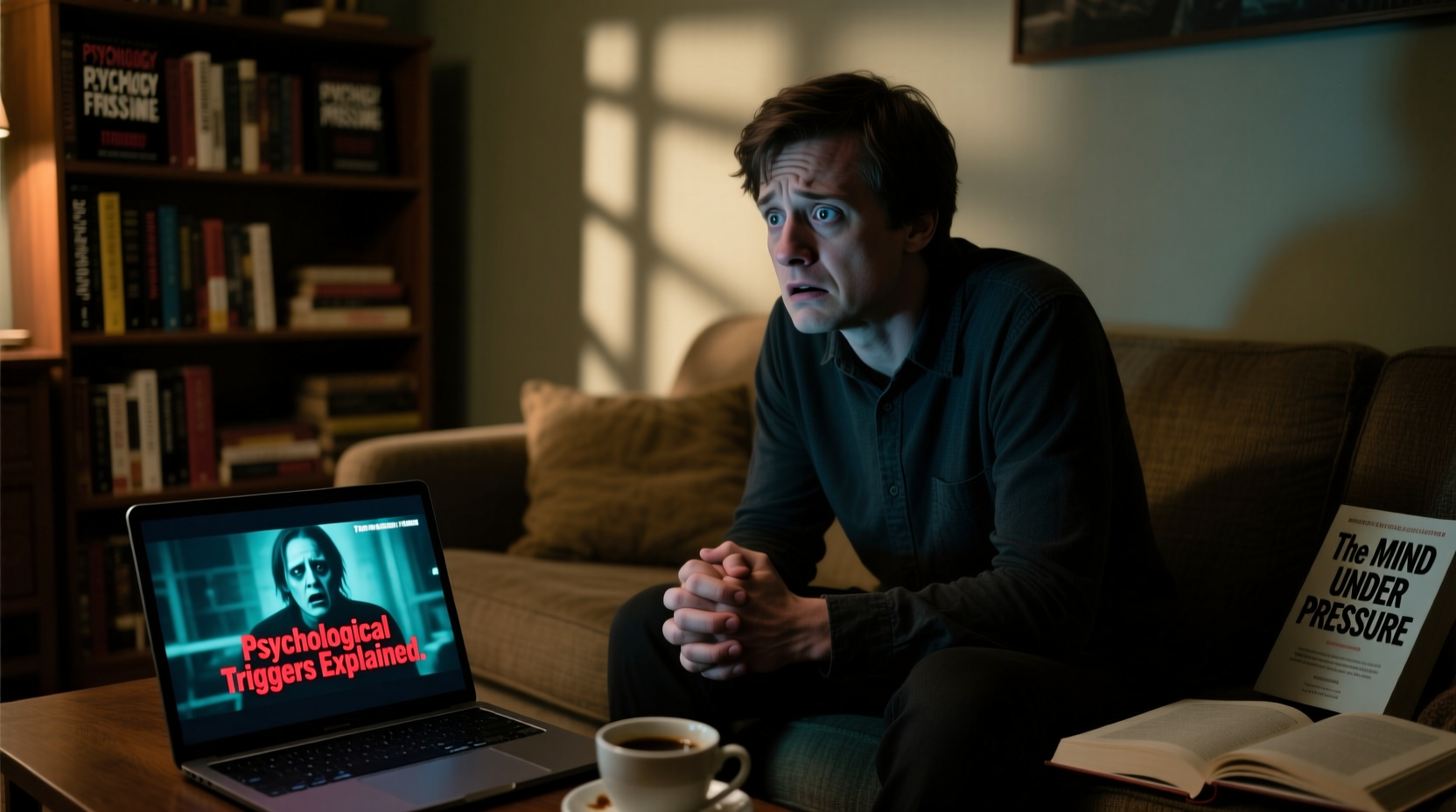
The human brain evolved to detect threats quickly and efficiently. Our ancestors survived because they paid attention to danger cues—unusual sounds, signs of predators, or changes in group behavior. Today, that same neurological machinery responds to stories of violence, even when we know they’re not happening to us.
When you watch a true crime story, several key brain regions engage:
- Amygdala: Processes fear and emotional memories. It lights up when exposed to violent or threatening narratives.
- Hippocampus: Helps contextualize events. In anxiety-prone individuals, it may struggle to remind the brain that “this isn’t happening now.”
- Anterior cingulate cortex: Involved in monitoring potential threats. Overactivity here can lead to rumination and hypervigilance.
Neuroscientist Dr. Lisa Feldman Barrett explains, “The brain predicts danger based on past experiences and incoming sensory data. A detailed murder account—even fictionalized—can trigger the same physiological stress response as an actual threat.”
This phenomenon, known as vicarious trauma, occurs when exposure to others’ suffering induces symptoms similar to direct trauma: sleep disturbances, irritability, intrusive thoughts, and heightened startle response.
Psychological Triggers Behind Post-Viewing Anxiety
Several interconnected factors explain why true crime content can leave viewers feeling anxious, even traumatized. These aren't flaws—they’re features of a sensitive, adaptive mind.
1. Perceived Proximity to Threat
Most true crime cases involve ordinary victims—people who lived normal lives until violence disrupted them. This similarity makes the danger feel personal. If it happened to someone like you, could it happen to you?
The brain uses heuristics—mental shortcuts—to assess risk. One such shortcut is the availability heuristic: the easier it is to recall an event, the more likely we believe it is to occur. After watching a kidnapping case unfold in a suburban neighborhood, your brain may overestimate the likelihood of a similar event happening near you—even if crime statistics show otherwise.
2. Narrative Immersion and Emotional Contagion
Well-crafted true crime documentaries use storytelling techniques designed to maximize emotional engagement: suspenseful music, first-person accounts, reenactments, and dramatic pacing. These elements pull viewers into the experience, creating what psychologists call narrative transportation.
Once immersed, emotional contagion takes over—the tendency to \"catch\" the emotions of others. Hearing a victim’s family describe their grief or seeing a survivor recount trauma can evoke empathy so strong it feels like shared pain.
“Media-induced fear isn’t irrational—it’s a mismatch between ancient instincts and modern information environments.” — Dr. Paul Slovic, Psychologist specializing in risk perception
3. Loss of Control and Predictability
Anxiety thrives in uncertainty. True crime often highlights how random, unpredictable, and senseless violence can be. There’s no clear pattern, no guaranteed protection. This erodes the illusion of control—a psychological buffer most people rely on for daily functioning.
When viewers realize that safety measures (locking doors, avoiding dark alleys) don’t guarantee protection, existential unease can follow. The realization that evil can strike without warning disrupts the cognitive framework that keeps anxiety at bay.
Vulnerability Factors: Who Is Most Affected?
Not everyone experiences anxiety after watching true crime. Individual differences in personality, mental health history, and viewing habits play a significant role.
| Risk Factor | Impact on Anxiety | Example |
|---|---|---|
| High empathy | Greater emotional absorption of victims' experiences | Feeling physically ill after hearing a survivor's testimony |
| History of trauma | Triggers flashbacks or re-experiencing symptoms | A sexual assault survivor triggered by a similar case portrayal |
| Neuroticism (personality trait) | Inclination toward negative emotional states | Constantly imagining worst-case scenarios after viewing |
| Poor sleep hygiene | Amplifies rumination and fear processing at night | Lying awake visualizing crime scenes |
| Excessive consumption | Desensitization followed by emotional burnout | Watching multiple episodes back-to-back weekly |
Research published in the journal *Media Psychology* found that individuals who scored high on empathy and openness were more likely to report distress after viewing true crime, despite finding the content intellectually engaging.
Mini Case Study: Sarah’s Experience with True Crime Anxiety
Sarah, a 34-year-old teacher from Portland, began listening to true crime podcasts during her commute. Initially, she enjoyed the puzzle-like nature of solving cold cases. But after binge-watching a six-part documentary on serial home invasions, her behavior changed.
She started checking her locks three times before bed, avoided walking alone even in safe neighborhoods, and experienced recurring nightmares involving masked intruders. She realized her anxiety had escalated when she canceled plans with friends, fearing they might be targeted en route.
After consulting a therapist, Sarah learned she was experiencing conditioned anxiety—her brain had associated everyday situations with danger due to repeated exposure to vivid, emotionally charged narratives. With cognitive behavioral strategies and reduced media intake, she regained emotional balance while still enjoying occasional documentaries—now with boundaries.
How to Enjoy True Crime Without Compromising Mental Health
You don’t have to give up true crime entirely to protect your peace of mind. Awareness and intentionality make all the difference. Here’s a step-by-step guide to consuming the genre responsibly.
Step 1: Audit Your Viewing Habits
Track what you watch, when, and how you feel afterward. Keep a simple log for one week:
- Note the title and type of content (documentary, podcast, series).
- Record time of day and duration.
- Rate your anxiety level from 1–10 immediately after and the next morning.
- Identify patterns (e.g., nighttime viewing = higher anxiety).
Step 2: Set Boundaries Around Consumption
Create rules that align with your emotional resilience:
- Limit sessions to 30–45 minutes.
- Avoid watching before bedtime.
- Choose less graphic formats (e.g., investigative journalism over crime scene footage).
- Take breaks—try a “true crime-free week” monthly.
Step 3: Counterbalance with Positive Content
Follow a disturbing episode with something uplifting: a comedy special, nature documentary, or conversation with a loved one. This practice, called affective regulation, helps reset your nervous system.
Step 4: Practice Grounding Techniques Post-Watching
If you feel anxious, use evidence-based grounding methods:
- 5-4-3-2-1 Technique: Name 5 things you see, 4 you can touch, 3 you hear, 2 you smell, 1 you taste.
- Reality Check Script: Say aloud: “This story happened in [location], at [time]. I am safe now. My home is secure. Help is available if needed.”
- Breathwork: Inhale for 4 counts, hold for 4, exhale for 6. Repeat for 2 minutes.
Checklist: Healthy True Crime Consumption
Use this checklist to maintain emotional balance while engaging with the genre:
- ✅ I watch during daylight or early evening hours
- ✅ I limit sessions to under an hour
- ✅ I avoid graphic or exploitative content
- ✅ I check in with my emotions during and after viewing
- ✅ I engage in a calming activity afterward (e.g., reading, stretching)
- ✅ I take regular breaks from the genre
- ✅ I seek support if anxiety persists beyond 24 hours
Frequently Asked Questions
Is it normal to feel anxious after watching true crime?
Yes, it’s common, especially if the content is emotionally intense or closely mirrors your own life circumstances. Occasional anxiety is a sign of empathy and awareness. However, persistent distress, sleep disruption, or avoidance behaviors may indicate it’s time to reassess your media diet.
Can true crime addiction exist?
While not classified as a clinical addiction, compulsive consumption of true crime—despite negative consequences—is increasingly recognized. Signs include neglecting responsibilities, continued viewing despite anxiety, and difficulty stopping. If this resonates, consider speaking with a mental health professional.
Are some formats safer than others?
Generally, audio-only formats (like podcasts) allow more control over imagination and reduce visual trauma. Documentaries with excessive crime scene photos or dramatized violence tend to provoke stronger emotional reactions. Opt for investigative or justice-reform-focused content if you want depth without distress.
Conclusion: Reclaiming Curiosity Without Fear
True crime satisfies a deep human need—to understand darkness, to seek justice, to prepare for the unthinkable. But when fascination turns into fear, it’s time to recalibrate. By understanding the psychological triggers behind post-viewing anxiety, recognizing personal vulnerability, and applying mindful consumption strategies, you can engage with the genre on your terms.
Your curiosity is valid. Your peace of mind matters more. Choose stories that inform rather than overwhelm. Watch with intention, not autopilot. And remember: being moved by tragedy doesn’t mean you must carry its weight home with you.




 浙公网安备
33010002000092号
浙公网安备
33010002000092号 浙B2-20120091-4
Comments
No comments yet. Why don't you start the discussion?