
It’s a familiar scenario: the invitation arrives, you say yes, and then—hours or even days before the event—a wave of unease sets in. Your heart races at the thought of walking into a crowded room. You rehearse conversations in your head. You consider canceling. If this sounds like you, you're not alone. Social anxiety before parties is more common than many realize, affecting people across ages, backgrounds, and social circles. While occasional nerves are normal, persistent pre-party anxiety can interfere with relationships, self-esteem, and quality of life. Understanding the roots of this anxiety and learning effective coping mechanisms can transform how you approach social events—not as threats, but as opportunities.
Understanding Pre-Party Anxiety
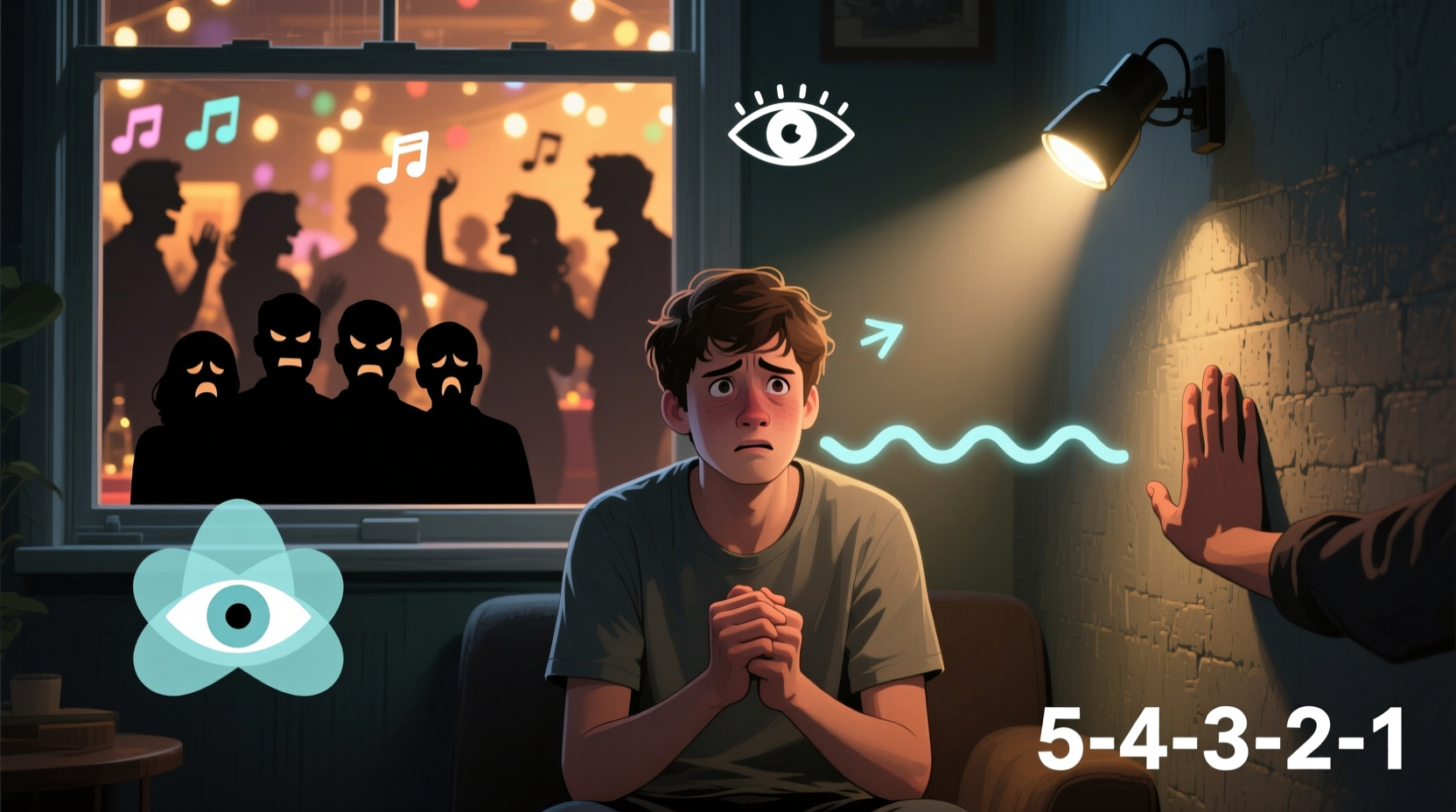
Anxiety before social gatherings isn’t just about being “shy.” It’s often rooted in deeper psychological processes related to fear of judgment, rejection, or embarrassment. The brain interprets unfamiliar social settings as potentially dangerous—activating the same fight-or-flight response that evolved to protect humans from physical threats. In modern contexts, this response misfires in situations involving peer evaluation or performance-like interactions, such as small talk or group dynamics.
Social anxiety disorder (SAD), recognized by the DSM-5, affects approximately 7% of adults in the U.S. annually. However, many more experience subclinical levels of social discomfort that still significantly impact their lives. Parties, in particular, present multiple stressors: unpredictable environments, sensory overload, lack of structure, and perceived pressure to be engaging or likable.
“Social anxiety often stems from an overestimation of negative outcomes and an underestimation of one’s ability to cope.” — Dr. Lena Patel, Clinical Psychologist specializing in anxiety disorders
Common Triggers of Party Anxiety
Anxiety doesn’t appear out of nowhere. Specific elements of party environments tend to act as consistent triggers. Recognizing these is the first step toward managing them.
- Fear of awkward silence: Many dread lulls in conversation, interpreting them as personal failures rather than natural pauses.
- Unfamiliar social groups: Entering a room full of strangers—or worse, acquaintances who already know each other—can heighten feelings of exclusion.
- Performance pressure: The expectation to be “fun,” “interesting,” or “charming” turns socializing into a high-stakes performance.
- Sensory overload: Loud music, bright lights, and crowded spaces can overwhelm the nervous system, especially for neurodivergent individuals.
- Comparison and self-judgment: Observing others laughing easily or commanding attention may trigger thoughts like, “I don’t belong here” or “Everyone else is better at this.”
- Past negative experiences: A previous embarrassing moment at a party can condition the mind to anticipate repetition.
Coping Strategies That Work
Managing pre-party anxiety isn’t about eliminating nerves entirely—that’s neither realistic nor necessary. The goal is to reduce intensity and regain control. Effective strategies combine cognitive, behavioral, and physiological techniques.
Reframe Negative Thoughts
The stories we tell ourselves shape our emotions. Cognitive restructuring involves identifying distorted thinking patterns—such as catastrophizing (“If I stumble over my words, everyone will think I’m stupid”)—and replacing them with balanced alternatives (“Most people won’t notice or care if I pause mid-sentence”).
Practice Grounding Techniques
When anxiety spikes, grounding exercises can anchor you in the present. Try the 5-4-3-2-1 method: identify five things you see, four you can touch, three you hear, two you smell, and one you taste. This sensory focus interrupts rumination and calms the nervous system.
Arrive with a Plan
Entering a party without a strategy increases uncertainty, a key fuel for anxiety. Decide in advance how long you’ll stay, who you’d like to speak with, or even bring a low-pressure activity (e.g., helping the host in the kitchen). Having a purpose reduces aimlessness and self-consciousness.
Breathe Intentionally
Controlled breathing activates the parasympathetic nervous system. Try inhaling slowly for four counts, holding for four, exhaling for six, and pausing for two. Repeat for two minutes. This simple practice can lower heart rate and mental chatter within minutes.
| Trigger | Coping Strategy | Effectiveness (Research-Based) |
|---|---|---|
| Fear of judgment | Cognitive restructuring | High – CBT shown to reduce SAD symptoms in 60–70% of cases |
| Sensory overload | Grounding + brief exits | Moderate – Sensory breaks improve regulation |
| Awkward silences | Prepared conversation starters | High – Reduces anticipatory anxiety |
| Feeling out of place | Arriving with a friend or ally | Moderate – Social support buffers stress |
Step-by-Step Guide: Managing Anxiety Before and During a Party
Follow this timeline to prepare mentally and emotionally for a social event:
- 72 Hours Before: Acknowledge your anxiety without judgment. Write down specific fears (e.g., “I’ll have nothing to say”) and challenge them with evidence (e.g., “I’ve had good conversations before”).
- 24 Hours Before: Choose comfortable, confidence-boosting clothes. Avoid last-minute changes that increase stress. Confirm logistics (transportation, time) to reduce uncertainty.
- 2 Hours Before: Eat a light meal, avoid excessive caffeine or alcohol. Practice diaphragmatic breathing for 5 minutes.
- 30 Minutes Before Arrival: Listen to calming music or a podcast that centers you. Remind yourself of your intent (e.g., “I’m going to connect with one person”).
- Upon Entry: Give yourself permission to stay for a limited time (e.g., 45 minutes). Find a quiet spot if needed. Smile at someone; nonverbal warmth often eases tension.
- During the Event: Use the “one-foot-in” rule—stay engaged enough to participate, but allow yourself short breaks (e.g., bathroom visit, stepping outside).
- After Leaving: Reflect without harshness. What went well? What could be adjusted next time? Celebrate effort, not perfection.
Real Example: From Panic to Presence
Maya, a 29-year-old graphic designer, consistently declined invitations despite wanting to reconnect with friends. Her anxiety spiked days before any event—she’d lose sleep, obsess over outfits, and imagine worst-case scenarios. After missing a close friend’s birthday gathering, she decided to seek change.
Working with a therapist, Maya identified her core fear: being perceived as “boring.” She began using cognitive journaling to examine this belief. She listed past interactions where people had asked follow-up questions or thanked her for talking—evidence against her assumption. She also practiced attending smaller events, starting with coffee meetups.
Her first test was a dinner party with eight guests. She used the step-by-step plan: arrived with a friend, brought a dish (giving her a role), and set a 90-minute minimum stay. When anxiety rose, she excused herself to refill her water and used box breathing. By the end, she’d shared a laugh over a work story and received a compliment on her insights.
She didn’t become instantly “confident,” but she proved to herself that discomfort didn’t equal danger. Over time, her attendance increased—and so did her sense of belonging.
Do’s and Don’ts of Managing Party Anxiety
| Do | Don't |
|---|---|
| Set realistic goals (e.g., talk to two people) | Expect to leave feeling completely relaxed |
| Use subtle grounding techniques (e.g., noticing textures) | Isolate yourself immediately upon arrival |
| Bring a trusted companion if helpful | Rely solely on alcohol to calm nerves |
| Leave when needed—without guilt | Stay to “prove” you’re not anxious |
| Practice self-compassion after the event | Review every interaction as a failure |
FAQ
Is it normal to feel anxious before every party?
Yes, mild anxiety before social events is extremely common. It becomes a concern only when it consistently prevents you from participating or causes significant distress. Occasional nerves don’t mean there’s something wrong with you—they reflect sensitivity to social dynamics, which can be managed with tools and practice.
Can alcohol help with party anxiety?
In the short term, alcohol may reduce inhibition, but it often worsens anxiety in the medium to long term. It can impair judgment, increase post-event rumination, and lead to dependency. Healthier alternatives include breathwork, preparation, and gradual exposure.
What if I don’t relate to anyone at the party?
Start small. Ask open-ended questions like “How do you know the host?” or “What brought you here tonight?” Most people appreciate being asked about themselves. If connection feels impossible, focus on observing or helping—tasks that provide structure without pressure.
Conclusion: Reclaiming Social Joy
Feeling anxious before parties doesn’t mean you’re broken or destined to avoid gatherings forever. It means you’re human, attuned to social nuances, and possibly holding yourself to high standards. With awareness and intentional practice, anxiety can shift from a barrier to a signal—one that guides you toward self-understanding and growth.
The goal isn’t to become the loudest person in the room, but to show up as yourself, with kindness and courage. Each small step—arriving on time, making eye contact, staying for 20 minutes longer than planned—builds resilience. Over time, the anticipation softens, and space opens for genuine connection.




 浙公网安备
33010002000092号
浙公网安备
33010002000092号 浙B2-20120091-4
Comments
No comments yet. Why don't you start the discussion?