
In a world that glorifies hustle, productivity, and constant motion, the simple act of sitting still can feel like a betrayal. You might find yourself lying on the couch with a book, only to be interrupted by an internal voice whispering: “Shouldn’t you be doing something more useful?” This quiet but persistent guilt isn’t just annoying—it’s deeply rooted in modern culture, personal beliefs, and even neurological patterns. The truth is, relaxation isn’t laziness. It’s a biological necessity. Yet millions struggle to truly disengage because their minds won’t stop judging them for resting.
This article explores why guilt arises during relaxation, how it harms both mental performance and long-term well-being, and—most importantly—practical, science-backed methods to finally shut off your overactive mind and reclaim rest without remorse.
The Psychology Behind Relaxation Guilt
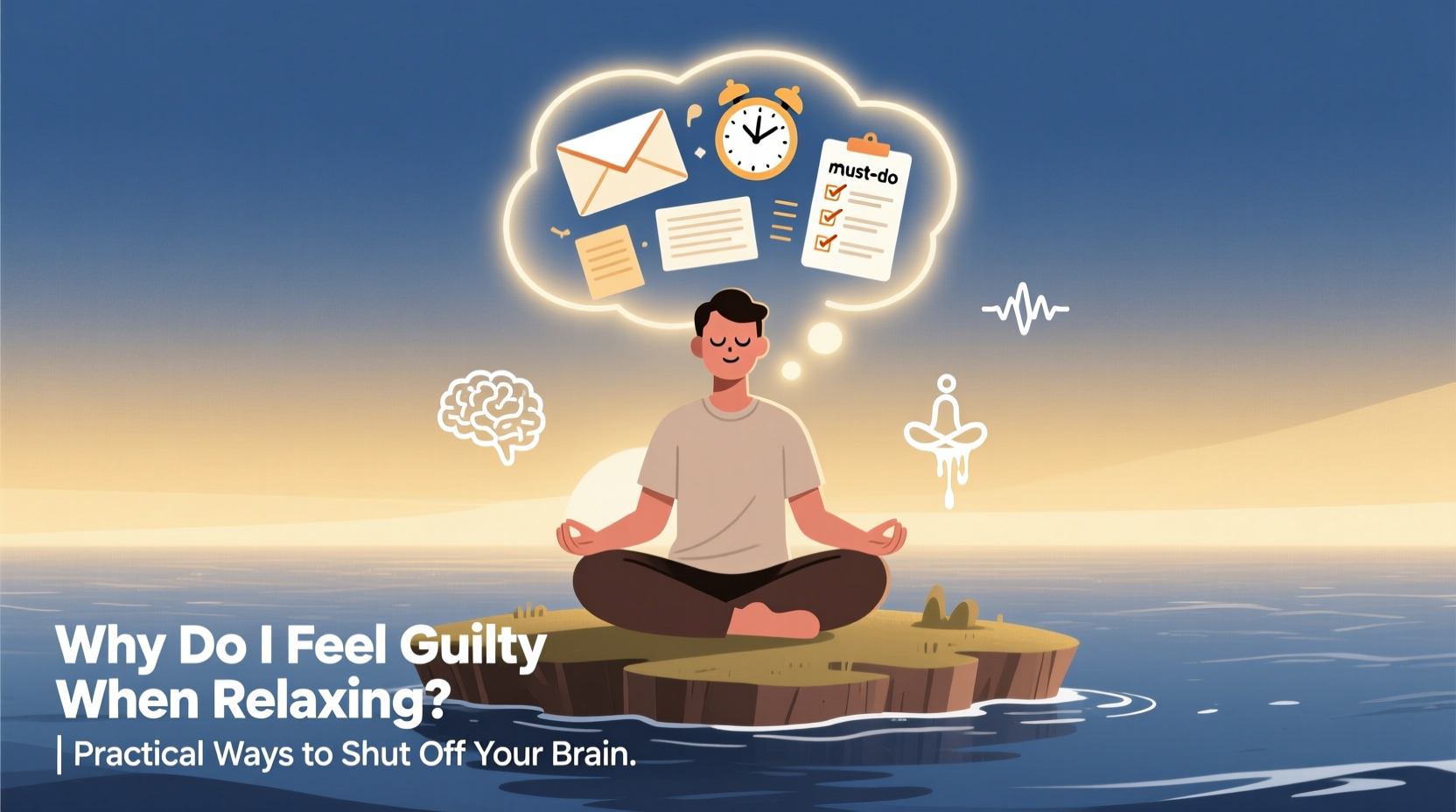
Relaxation guilt occurs when you experience discomfort or shame while not being productive. It’s not simply about being busy; it’s about identity. In many societies, especially Western ones, self-worth is closely tied to output. The phrase “I need to earn my downtime” reflects this belief system. When you’re not visibly achieving, you may feel like you’re failing—even if you’ve already worked 10 hours that day.
Psychologists refer to this as “productivity perfectionism.” A 2022 study published in the Journal of Behavioral Psychology found that individuals who equated personal value with measurable achievement were significantly more likely to report anxiety during leisure time. These people often describe relaxation as “wasted time,” even when they’re exhausted.
“Rest is not the opposite of productivity—it’s its foundation. But when we internalize busyness as virtue, recovery feels like moral failure.” — Dr. Lena Torres, Cognitive Behavioral Therapist
This mindset creates a cycle: work leads to fatigue, but rest triggers guilt, which then fuels the need to prove worth through more work. Breaking this loop requires both awareness and deliberate rewiring of thought patterns.
Why Your Brain Resists Shutting Off
Your brain wasn’t designed to idle. It evolved to scan for threats, solve problems, and plan for survival. In modern life, those mechanisms haven’t changed—but the context has. Now, instead of watching for predators, your mind scans for unread emails, upcoming deadlines, and social obligations.
This state of hyper-vigilance is maintained by the default mode network (DMN), a group of interconnected brain regions active when you’re not focused on a specific task. While the DMN supports creativity and self-reflection, in stressed individuals, it becomes a hub for rumination—replaying past mistakes or anticipating future failures.
So when you try to relax, your brain doesn’t switch off. It shifts into autopilot mode, where unprocessed thoughts rise to the surface. That’s why lying down often leads to sudden mental lists: “I should call Mom,” “Did I reply to that message?” These aren’t random—they’re unresolved cognitive tasks demanding attention.
Practical Ways to Shut Off Your Brain
Shutting off your brain isn’t about suppression. It’s about redirection and regulation. The goal isn’t to eliminate thoughts but to create space between you and them. Below are seven evidence-based techniques to help you transition from mental overload to calm presence.
1. Practice Structured Worry Time
Trying to stop worrying on demand rarely works. Instead, schedule a fixed 15-minute window each day—say, 5:30 PM—to process concerns. During this time, write down every worry, assess its urgency, and decide whether action is needed. Outside this window, when anxious thoughts arise, remind yourself: “I’ll address this during worry time.”
This method, used in cognitive behavioral therapy (CBT), trains your brain to contain rumination rather than let it spill into relaxation periods.
2. Use Sensory Anchoring Techniques
Sensory input can override mental chatter. Try the 5-4-3-2-1 grounding exercise:
- Name 5 things you can see.
- Touch 4 things around you and notice their texture.
- Identify 3 sounds you hear.
- Notice 2 smells (or recall pleasant scents).
- Pay attention to 1 thing you can taste (even if it’s just saliva).
This technique forces your brain to shift from abstract thinking to immediate sensory reality—a proven way to interrupt obsessive loops.
3. Leverage Body-Based Calming
Your mind follows your body. If your muscles are tense, your brain assumes danger. Activate the parasympathetic nervous system—the “rest and digest” mode—with physical interventions:
- Place a weighted blanket on your lap or shoulders.
- Practice diaphragmatic breathing: inhale for 4 counts, hold for 4, exhale for 6.
- Gently press your palms together or squeeze a stress ball for 30 seconds.
These actions send physiological signals of safety, helping your brain accept that it’s okay to pause.
4. Create a Transition Ritual
Without clear boundaries, your brain doesn’t know when work ends and rest begins. Design a short ritual to signal the shift. Examples include:
- Changing into comfortable clothes after work.
- Brewing herbal tea and placing your phone face-down.
- Lighting a candle or playing a specific playlist.
Rituals act as psychological punctuation marks. Over time, your brain learns: “When X happens, I’m allowed to disengage.”
5. Reframe Rest as Active Recovery
One of the most effective cognitive shifts is redefining relaxation as productive. Instead of seeing it as passive, view it as maintenance—like charging a battery or repairing muscle tissue after exercise.
For example, instead of thinking, “I’m wasting time watching this show,” tell yourself, “I’m restoring my focus and emotional resilience.” This subtle language change reduces guilt by aligning rest with long-term performance.
Do’s and Don’ts of Mental Downtime
| Do | Don’t |
|---|---|
| Set a timer for breaks. Knowing rest is time-limited reduces anxiety about “losing control.” | Scroll endlessly on social media. Passive consumption often increases mental fatigue. |
| Pair rest with low-effort activities. Knitting, doodling, or walking in nature occupy just enough attention to quiet rumination. | Use rest to multitask (e.g., checking work emails while watching TV). This confuses the brain’s downtime signal. |
| Accept that discomfort may arise. Sitting with silence can feel awkward at first—this is normal. | Force sleep if you’re not tired. Pressure to “shut off” creates performance anxiety. |
| Start small. Even 10 minutes of guilt-free stillness builds tolerance over time. | Wait until you’re completely drained to rest. Prevention beats crisis management. |
Real Example: How Sarah Learned to Rest Without Guilt
Sarah, a project manager at a tech startup, routinely worked late and skipped weekends off. She believed taking time off made her “less committed.” After months of insomnia and irritability, she visited a therapist who introduced structured worry time and sensory grounding.
She began scheduling 15 minutes each afternoon to review her task list and jot down concerns. Outside that window, she practiced saying, “This can wait,” when intrusive thoughts arose. She also started ending her workday by changing clothes and brewing chamomile tea—a ritual that signaled closure.
Within three weeks, Sarah reported falling asleep faster and enjoying evenings without mental check-ins. “I realized I wasn’t lazy for resting—I was rebuilding my capacity to work well,” she said. Her productivity didn’t drop; it improved.
Step-by-Step Guide to Building a Guilt-Free Rest Routine
Adopting sustainable rest habits takes consistency. Follow this six-week timeline to gradually retrain your brain:
- Week 1: Identify your top three sources of relaxation guilt (e.g., napping, doing nothing, screen time). Write them down.
- Week 2: Introduce a 10-minute daily break using the 5-4-3-2-1 grounding method. Do it at the same time each day.
- Week 3: Implement a transition ritual after work. Choose one simple action to mark the end of your professional role.
- Week 4: Begin structured worry time. Set a daily 15-minute appointment to process concerns.
- Week 5: Track how rest affects your next-day performance. Note energy, focus, and mood in a journal.
- Week 6: Expand rest duration. Gradually increase downtime by 5–10 minutes every few days, up to 30–45 minutes daily.
By the end of this process, rest should feel less like rebellion and more like routine maintenance.
FAQ
Is it normal to feel anxious when I stop working?
Yes. For high-achievers or those with perfectionist tendencies, pausing can trigger anxiety because the brain interprets inactivity as risk. This is common and treatable with mindfulness and behavioral strategies.
Can too much relaxation make me less productive?
No—when balanced. Chronic overwork leads to burnout, which destroys productivity. Strategic rest enhances focus, creativity, and decision-making. The key is intentional, scheduled downtime, not avoidance of responsibility.
What if my job doesn’t allow for breaks?
Even in demanding roles, micro-pauses matter. Take 60 seconds between tasks to stretch, breathe, or look out a window. These moments accumulate and prevent cognitive overload. Advocate for reasonable boundaries when possible.
Conclusion: Reclaim Rest as a Right, Not a Reward
Feeling guilty when relaxing is a sign of cultural conditioning, not personal failure. Your brain resists stillness because it’s been trained to equate worth with output. But true sustainability comes not from pushing harder, but from balancing effort with recovery.
You don’t need to earn rest. You need it. And the more you practice shutting off your brain with intention and compassion, the more natural it will become. Start small. Be consistent. Replace judgment with curiosity.




 浙公网安备
33010002000092号
浙公网安备
33010002000092号 浙B2-20120091-4
Comments
No comments yet. Why don't you start the discussion?