
You finally sit down after a long day—no emails, no deadlines, no obligations. Yet instead of relief, you're hit with a wave of unease. \"Shouldn't I be doing something more productive?\" This internal whisper isn’t just fatigue; it’s guilt. And if this sounds familiar, you’re not alone. Millions struggle with feeling unworthy of rest unless they’ve earned it through relentless output. This is the grip of toxic productivity—a cultural and psychological trap that equates self-worth with constant achievement. Understanding its roots and learning how to dismantle it is essential for mental well-being, sustainable performance, and genuine quality of life.
The Hidden Cost of Always Being “On”
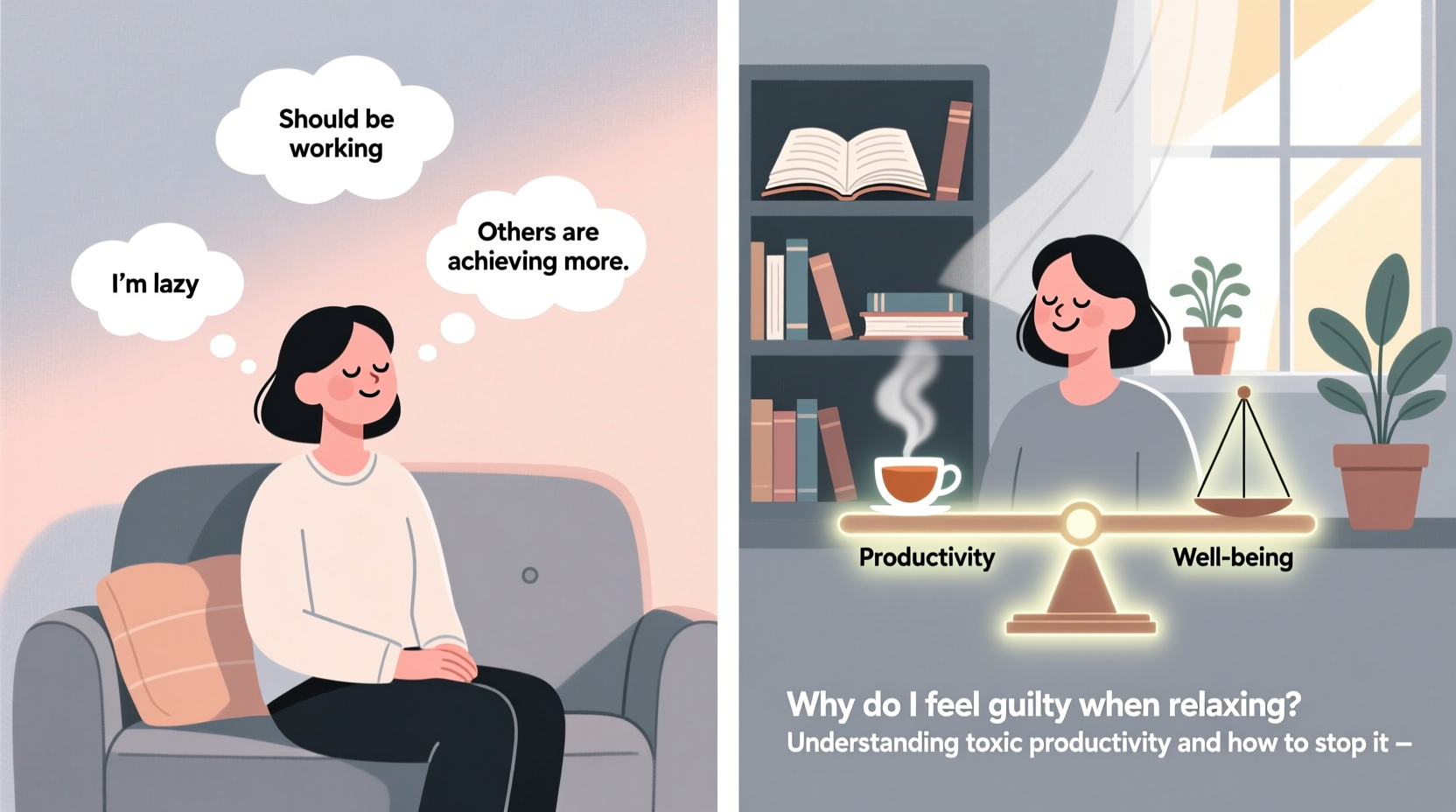
Toxic productivity isn’t simply about working hard. It’s a mindset that glorifies busyness, conflates exhaustion with virtue, and treats downtime as wasteful or lazy. In this framework, relaxation becomes a moral failing rather than a biological necessity. The consequences are far-reaching: chronic stress, burnout, strained relationships, and a persistent sense of inadequacy—even in moments of success.
This mindset often stems from societal conditioning. From childhood, many are taught that value comes from grades, achievements, and external validation. As adults, workplace cultures reinforce this: praise goes to those who work late, skip breaks, or respond instantly to messages at midnight. Over time, the brain internalizes the message: I am only worthy when I am producing.
“Rest is not idleness, and sitting still is not wasting time. The body and mind require recovery to function optimally.” — Dr. Saundra Dalton-Smith, physician and author of *Sacred Rest*
Why Relaxation Triggers Guilt: The Psychology Behind It
Guilt during relaxation isn’t irrational—it’s a conditioned response. When your nervous system has been trained to associate worth with activity, any pause activates an internal alarm: “You’re falling behind.” Several psychological mechanisms contribute to this:
- Internalized Productivity Norms: Many grew up hearing phrases like “Don’t just sit there—do something!” These messages shape subconscious beliefs about effort and worth.
- Fear of Falling Behind: In competitive environments, rest feels like surrender. You worry others are advancing while you’re “wasting time.”
- All-or-Nothing Thinking: Some believe that if they’re not being maximally productive, they’re being lazy—a false dichotomy that ignores balance.
- Low Self-Compassion: People who tie their identity to output often lack kindness toward themselves when they aren’t achieving.
This guilt can manifest physically—tight chest, racing thoughts, irritability—making relaxation itself unpleasant. The irony? The very act meant to restore energy becomes a source of stress.
Recognizing Toxic Productivity in Daily Life
Toxic productivity doesn’t always look like 80-hour workweeks. It shows up in subtle, insidious ways. Below are common signs you may be caught in its cycle:
| Behavior | Healthy Alternative |
|---|---|
| Feeling restless unless checking emails or tasks | Setting clear boundaries between work and personal time |
| Skipping meals or sleep to “get more done” | Prioritizing basic physiological needs as non-negotiable |
| Measuring self-worth by daily accomplishments | Valuing presence, relationships, and emotional well-being equally |
| Using weekends to catch up on work instead of recharging | Scheduling intentional rest and leisure |
| Feeling anxious when idle, even during vacations | Practicing mindfulness and accepting stillness |
If these patterns sound familiar, it’s likely your relationship with productivity has become unbalanced. The goal isn’t to reject ambition, but to separate it from self-worth.
A Real Example: Maria’s Breaking Point
Maria, a project manager in her mid-30s, prided herself on efficiency. She worked 60+ hours weekly, answered Slack messages at 11 PM, and filled weekends with side gigs. When she took a week off for vacation, she felt physically ill—not from illness, but from disconnection. On day two, she started drafting work emails “just to stay ahead.” By day four, she was researching online courses to “make better use of time.”
After returning, she collapsed from exhaustion. Her doctor diagnosed adrenal fatigue and recommended therapy. In sessions, Maria realized she hadn’t taken a full day off in over three years—not because she had to, but because she believed she didn’t deserve rest unless she’d “earned” it. Rebuilding her relationship with downtime became central to her recovery.
How to Break Free: A Step-by-Step Reset
Healing from toxic productivity isn’t about doing more—it’s about undoing harmful beliefs. Follow this six-step process to reclaim rest without guilt:
- Track Your Triggers: For one week, journal each time you feel guilty while relaxing. Note the situation, thought, and physical sensation. Patterns will emerge.
- Challenge Productivity Myths: Replace thoughts like “I should be working” with “Rest makes me more effective.” Write counter-statements and repeat them daily.
- Schedule Rest Like a Meeting: Block time for walks, naps, or doing nothing. Treat these appointments as non-negotiable.
- Create a Shutdown Ritual: End your workday with a physical action—closing your laptop, saying “I’m done,” or lighting a candle. This signals transition to your brain.
- Practice Micro-Rest: Start small. Five minutes of deep breathing, staring out a window, or sipping tea without distractions builds tolerance for stillness.
- Redefine Success: Ask: “Did I care for myself today?” instead of “How much did I accomplish?” Shift focus from output to sustainability.
Progress isn’t linear. Some days, old habits will resurface. The key is awareness and gentle redirection—not perfection.
Building a Sustainable Relationship with Work and Rest
True productivity isn’t measured by hours logged, but by clarity, creativity, and consistency over time. Elite athletes don’t train 24/7—they alternate intense effort with deliberate recovery. The same principle applies to mental work.
Neuroscience confirms that downtime boosts memory consolidation, problem-solving, and emotional regulation. During rest, the brain’s default mode network activates, fostering insight and innovation. In other words, doing nothing might be the most productive thing you do all day.
To cultivate balance, adopt these principles:
- Work in Cycles: Use the 90-minute ultradian rhythm—focus intensely, then rest for 20 minutes.
- Protect Non-Negotiables: Sleep, movement, and connection should never be sacrificed for tasks.
- Reframe “Lazy”: Labeling rest as laziness serves systems that profit from overwork. Choose words like “recharging” or “integrating.”
- Model Healthy Behavior: When you take real breaks, you give others permission to do the same.
“We’ve built a culture where burnout is worn like a badge of honor. But resilience isn’t forged through endless grind—it’s built through recovery.” — Dr. Christine Lawler, occupational psychologist
Checklist: Signs You’re Healing from Toxic Productivity
Use this checklist to assess your progress. The more items that apply, the healthier your relationship with rest:
- ✅ You can sit quietly without reaching for your phone
- ✅ You no longer feel the need to justify taking a break
- ✅ You prioritize sleep even when work is piling up
- ✅ You enjoy activities without multitasking
- ✅ You feel proud of caring for yourself, not just completing tasks
- ✅ You set boundaries without apologizing excessively
- ✅ You notice improved focus and mood since incorporating regular rest
Frequently Asked Questions
Isn’t being productive a good thing?
Yes—healthy productivity is goal-oriented, sustainable, and balanced with recovery. The issue arises when productivity becomes compulsive, tied to self-worth, or pursued at the expense of well-being. There’s a difference between being productive and being driven by fear of inadequacy.
How do I relax when my mind won’t stop thinking about work?
Start with structured downtime. Try guided meditations, nature walks, or creative hobbies that engage your attention differently. Cognitive defusion techniques—like imagining thoughts as passing clouds—can reduce their intensity. Over time, your brain learns that rest is safe.
What if my job expects constant availability?
In toxic work environments, systemic change is needed. However, you can still protect your boundaries: disable notifications after hours, batch-check emails, and communicate limits professionally. If the culture refuses to adapt, consider whether the role aligns with your long-term health.
Reclaiming Rest as a Radical Act
In a world that rewards speed, output, and visibility, choosing to rest is quietly revolutionary. It challenges the assumption that human value is transactional. Every time you allow yourself to pause without apology, you resist a system that profits from exhaustion.
Rest is not a reward for surviving burnout. It’s a prerequisite for living fully. You were not designed to operate like a machine—constantly optimized, never overheating. You are a complex, feeling human being whose worth exists independently of output.
Begin today. Sit still for five minutes. Breathe. Notice the weight of your body. Let go of the urge to “do” something. That moment of stillness? It counts. Not because it makes you more efficient tomorrow, but because you deserve peace now.




 浙公网安备
33010002000092号
浙公网安备
33010002000092号 浙B2-20120091-4
Comments
No comments yet. Why don't you start the discussion?