
Sleep is supposed to restore energy, repair tissues, and reset the mind. Yet, millions wake up after a full eight hours feeling groggy, drained, or mentally foggy. If you’ve ever asked yourself, “Why do I feel tired after sleeping 8 hours?” you’re not alone. The number on the clock doesn’t tell the whole story—quality, timing, and individual biology matter just as much as duration.
Eight hours is often cited as the gold standard, but it’s not a one-size-fits-all solution. Some people thrive on seven; others need nine. More importantly, uninterrupted, well-timed sleep across complete cycles is what truly recharges the body. When fatigue persists despite adequate time in bed, the root causes are often hidden in habits, environment, or undiagnosed conditions.
This article explores the most common reasons behind post-sleep exhaustion and offers practical, evidence-based strategies to align your sleep with your body’s natural rhythms.
The Myth of the 8-Hour Rule
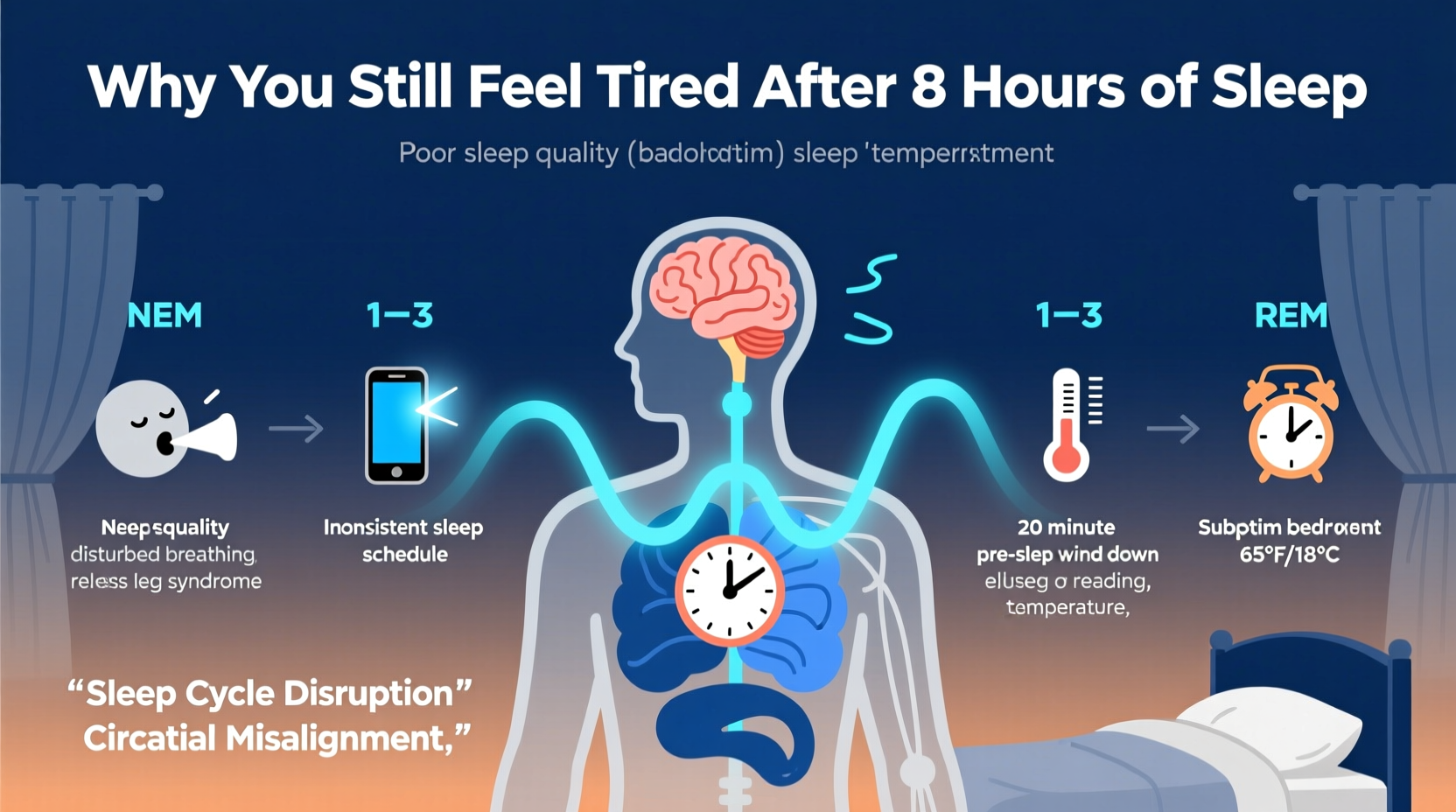
The idea that everyone needs exactly eight hours of sleep stems from population averages, not biological mandates. According to the National Sleep Foundation, adult sleep needs range from 7 to 9 hours, with significant variation based on age, genetics, lifestyle, and health status.
What matters more than total hours is sleep architecture—the progression through light sleep, deep sleep, and REM (rapid eye movement) stages. A full cycle lasts about 90 minutes, and completing four to five cycles per night ensures restorative rest. Waking up in the middle of a deep or REM phase—even after eight hours—can cause sleep inertia: that heavy, disoriented feeling upon waking.
Common Reasons You're Still Tired After 8 Hours
1. Disrupted Sleep Cycles
Your brain moves through predictable stages each night. Light sleep (N1 and N2) prepares the body for deep sleep (N3), where physical restoration occurs. REM follows, supporting memory consolidation and emotional regulation. Frequent awakenings—due to noise, stress, or medical conditions—interrupt this flow, leaving you unrested even if total sleep time appears sufficient.
2. Poor Sleep Quality Over Quantity
You might be logging eight hours, but if your sleep is fragmented or shallow, it won’t deliver the recovery your body needs. Factors like an uncomfortable mattress, room temperature, or screen exposure before bed reduce sleep efficiency—the percentage of time in bed actually spent sleeping.
3. Circadian Rhythm Misalignment
Your internal body clock regulates alertness and drowsiness. When this rhythm is out of sync—due to late-night screen use, irregular schedules, or shift work—your sleep may occur at biologically suboptimal times. Even with eight hours, sleeping too late or too early can result in non-restorative rest.
4. Undiagnosed Sleep Disorders
Conditions like sleep apnea, restless legs syndrome (RLS), or insomnia often go unnoticed. Sleep apnea, for example, causes repeated breathing interruptions that fragment sleep. Sufferers may not fully wake up but experience dozens of micro-awakenings per night, drastically reducing sleep quality.
5. Lifestyle and Environmental Factors
Caffeine intake after noon, alcohol consumption, lack of physical activity, and high stress levels all interfere with deep sleep. Additionally, blue light from phones and tablets suppresses melatonin, delaying sleep onset and reducing REM duration.
“Sleep duration is only part of the equation. Fragmentation, timing, and stage distribution determine whether sleep is truly restorative.” — Dr. Rebecca Scott, NYU Langone Sleep Disorders Center
Sleep Cycle Fixes: Aligning Rest With Biology
Step-by-Step Guide to Optimizing Your Sleep Architecture
- Determine your ideal bedtime: Count backward in 90-minute increments from your desired wake-up time. For example, waking at 6:30 AM means optimal bedtimes are 10:00 PM, 11:30 PM, or 1:00 AM (for 6, 4.5, or 3 cycles). Stick to the schedule that fits your life.
- Create a pre-sleep wind-down routine: Begin 60 minutes before bed. Dim lights, avoid screens, and engage in calming activities like reading or gentle stretching.
- Optimize your bedroom environment: Keep the room cool (60–67°F), dark, and quiet. Use blackout curtains and consider a white noise machine if needed.
- Limit caffeine and alcohol: Avoid caffeine after 2 PM. While alcohol may make you drowsy, it disrupts REM sleep and increases nighttime awakenings.
- Expose yourself to morning light: Within 30 minutes of waking, get natural sunlight or use a light therapy lamp. This strengthens circadian alignment and improves daytime alertness.
Do’s and Don’ts for Restorative Sleep
| Do | Don't |
|---|---|
| Maintain a consistent sleep schedule—even on weekends | Use your phone in bed or scroll through social media |
| Exercise regularly, but finish intense workouts 3+ hours before bed | Consume large meals or alcohol within 2–3 hours of sleep |
| Use your bedroom only for sleep and intimacy | Watch TV or work from bed |
| Practice relaxation techniques like diaphragmatic breathing or meditation | Check the clock repeatedly if you wake up at night |
| Seek professional help if fatigue persists beyond 2–3 weeks | Ignore loud snoring, gasping, or leg discomfort during sleep |
Real Example: How Sarah Fixed Her Morning Fatigue
Sarah, a 34-year-old project manager, consistently slept from 10:30 PM to 6:30 AM but woke up exhausted. She drank coffee by 8 AM just to function. After tracking her sleep with a fitness watch, she discovered she averaged only 1.8 hours of deep sleep per night (below the recommended 2–2.5 hours) and had frequent awakenings she didn’t recall.
She made three key changes: First, she moved dinner earlier and stopped drinking wine at night. Second, she replaced her old, sagging mattress. Third, she started using a white noise app and wore a sleep mask. Within two weeks, her deep sleep increased to 2.3 hours, and she no longer needed morning coffee to feel alert.
Her breakthrough wasn’t about sleeping longer—it was about improving quality and consistency.
When to Suspect a Sleep Disorder
Persistent fatigue despite good sleep hygiene warrants medical evaluation. Key red flags include:
- Loud snoring, choking, or gasping during sleep (signs of sleep apnea)
- An irresistible urge to move legs at night (possible restless legs syndrome)
- Difficulty falling or staying asleep more than three nights a week
- Daytime sleepiness severe enough to interfere with work or driving
A sleep study (polysomnography) can diagnose these conditions. For instance, untreated obstructive sleep apnea affects over 25 million Americans and is strongly linked to chronic fatigue, hypertension, and cardiovascular disease.
Checklist: Is It Time to See a Sleep Specialist?
- ☑ I often wake up with a headache
- ☑ My partner says I snore loudly or stop breathing
- ☑ I fall asleep easily during meetings, lectures, or while watching TV
- ☑ I rely on naps daily to function
- ☑ I’ve tried improving sleep hygiene for over a month with no results
If three or more apply, consult a healthcare provider or sleep clinic.
Frequently Asked Questions
Can I train myself to need less sleep?
No. While some people claim to function on minimal sleep, research shows true \"short sleepers\" are extremely rare and genetically predisposed. Most who think they’ve adapted to less sleep are actually accumulating sleep debt, which impairs cognition, mood, and immunity over time.
Is it better to get 8 hours straight or split into two segments?
For most people, consolidated sleep is superior. Biphasic or segmented sleep patterns (like siestas) can work if total sleep time and cycle completion are maintained. However, splitting sleep may reduce deep sleep unless carefully timed. Consistency matters more than structure.
Why do I feel worse after a nap?
Napping for more than 30 minutes—or napping late in the day—can lead to sleep inertia or interfere with nighttime sleep. Limit naps to 10–20 minutes early in the afternoon to boost alertness without disrupting your cycle.
Conclusion: Reclaim Your Energy Through Smarter Sleep
Waking up tired after eight hours isn’t normal—and it’s not something you should accept. Sleep is a dynamic, biological process that requires more than just time. By understanding your sleep cycles, addressing environmental disruptions, and listening to your body’s signals, you can transform unrefreshing rest into truly restorative slumber.
Start tonight: calculate your ideal bedtime, power down devices an hour early, and create a calm transition into sleep. Small adjustments compound into lasting energy, sharper focus, and better overall health. Your best-rested self isn’t defined by the clock—it’s built through intentional, informed choices.




 浙公网安备
33010002000092号
浙公网安备
33010002000092号 浙B2-20120091-4
Comments
No comments yet. Why don't you start the discussion?