
Sleeping eight hours is widely considered the gold standard for healthy rest. Yet many people wake up groggy, drained, or mentally foggy despite hitting that target. If you've ever asked, “Why do I feel tired after sleeping 8 hours?” you're not alone. The answer lies not just in duration, but in the quality, timing, and structure of your sleep—particularly how well you align with your natural sleep cycles.
Sleep isn’t a uniform state of unconsciousness. It's a dynamic process made up of repeating cycles that include light sleep, deep sleep, and REM (rapid eye movement) sleep. Disruptions to these phases, poor sleep hygiene, or misalignment with your body’s internal clock can leave you feeling unrested—even after a full night in bed.
The Science of Sleep Cycles
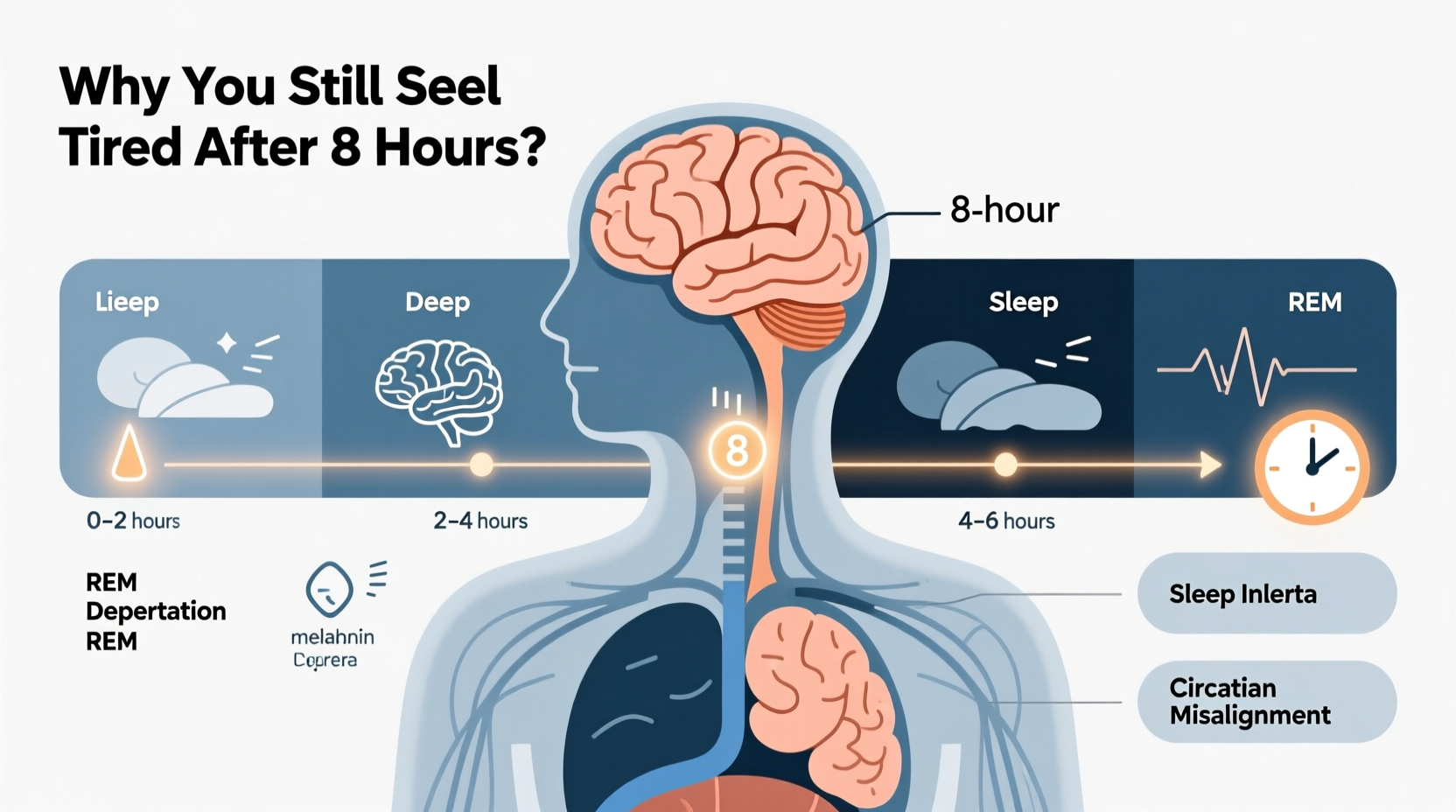
A typical night's sleep consists of four to six sleep cycles, each lasting about 90 minutes. Each cycle progresses through distinct stages:
- Stage 1 (N1) – Light Sleep: The transition from wakefulness to sleep. Lasts a few minutes. Brain waves begin to slow.
- Stage 2 (N2) – Onset of True Sleep: Heart rate slows, body temperature drops, and eye movements stop. This stage makes up about 45–55% of total sleep.
- Stage 3 (N3) – Deep Sleep (Slow-Wave Sleep): Critical for physical restoration, immune function, and memory consolidation. Waking during this phase often causes disorientation.
- REM Sleep: Brain activity spikes, dreams occur, and muscles become temporarily paralyzed. Essential for emotional regulation and cognitive performance.
Completing full cycles allows your body and brain to perform essential maintenance. However, waking up in the middle of deep sleep or REM can cause sleep inertia—that heavy, groggy feeling that lingers into the morning.
Circadian Rhythm and Chronotypes
Your internal biological clock, known as the circadian rhythm, regulates when you feel alert or sleepy over a 24-hour period. This rhythm is influenced by external cues like light, meal times, and activity levels. Even if you sleep eight hours, doing so at the wrong time relative to your rhythm can undermine rest quality.
Chronotypes—the genetically influenced preference for being a \"morning person\" or \"night owl\"—also play a role. Forcing an evening-type individual to wake at 6 a.m. disrupts their natural melatonin drop and cortisol rise, leading to chronic fatigue despite adequate sleep duration.
“Sleeping eight hours out of sync with your circadian biology is like eating nutritious food at the wrong time—it doesn’t deliver the same benefits.” — Dr. Matthew Walker, neuroscientist and author of *Why We Sleep*
Common Reasons You Still Feel Tired After 8 Hours
Duration alone doesn't guarantee restorative sleep. Several factors can compromise sleep quality even within an eight-hour window:
- Poor Sleep Architecture: Low amounts of deep or REM sleep due to stress, alcohol, or irregular schedules.
- Sleep Inertia: Waking abruptly during deep sleep leads to temporary cognitive impairment.
- Undiagnosed Sleep Disorders: Conditions like sleep apnea, restless legs syndrome, or insomnia fragment sleep without obvious awareness.
- Lifestyle Factors: Late-night screen use, caffeine after 2 p.m., or heavy dinners delay sleep onset and reduce restorative phases.
- Stress and Anxiety: Elevated cortisol interferes with falling and staying asleep, particularly REM sleep.
- Environmental Disturbances: Noise, light, or uncomfortable room temperature disrupt cycle continuity.
Mini Case Study: Sarah’s Morning Fatigue
Sarah, a 34-year-old project manager, consistently slept from 11 p.m. to 7 a.m. She logged eight hours nightly but felt exhausted every morning. Her work suffered due to lack of focus. A sleep diary revealed she frequently used her phone in bed and consumed coffee after 5 p.m. After switching to reading before bed and cutting afternoon caffeine, she reported improved alertness within two weeks. A follow-up sleep tracker showed her deep sleep increased by 22%, and she woke more refreshed—even though her total sleep time remained unchanged.
Do’s and Don’ts for Optimizing Sleep Quality
| Do’s | Don’ts |
|---|---|
| Go to bed and wake up at consistent times—even on weekends | Use screens (phones, TVs) within one hour of bedtime |
| Expose yourself to bright morning light to reset your circadian clock | Consume caffeine or nicotine within 6 hours of bedtime |
| Create a cool, dark, and quiet sleep environment | Eat large meals or drink alcohol close to bedtime |
| Practice relaxation techniques like meditation or deep breathing | Hit snooze repeatedly—this fragments your final sleep cycle |
| Track sleep patterns using wearable devices or journals | Ignore persistent snoring, gasping, or daytime sleepiness |
Step-by-Step Guide to Improve Sleep Quality
If you’re logging eight hours but still feel tired, follow this structured approach to identify and correct underlying issues:
- Track Your Sleep Patterns (Week 1): Use a journal or smartwatch to record bedtime, wake time, perceived restfulness, and nighttime awakenings.
- Optimize Your Environment: Set bedroom temperature between 60–67°F (15–19°C), eliminate light sources, and use earplugs or white noise if needed.
- Establish a Wind-Down Routine: Begin 60 minutes before bed: dim lights, avoid stimulating content, and engage in calming activities like reading or stretching.
- Eliminate Sleep Disruptors: Remove caffeine after noon, avoid alcohol within three hours of bed, and finish eating at least two hours before sleep.
- Align Wake Time with Sleep Cycles: Calculate your ideal bedtime based on 90-minute cycles. For example, if you must wake at 6:30 a.m., aim to fall asleep by 10:15 p.m. or 11:45 p.m. for 6 or 5 complete cycles.
- Assess for Sleep Disorders (Week 4+): If fatigue persists, consult a sleep specialist. A sleep study may reveal conditions like obstructive sleep apnea.
When Eight Hours Isn’t Enough—Or Too Much
While eight hours is average, individual needs vary. Some thrive on seven hours; others require nine. Genetics, age, activity level, and health status all influence optimal sleep duration.
Teenagers and those recovering from illness often need more deep sleep. Older adults may experience lighter, more fragmented sleep due to changes in melatonin production. Meanwhile, chronic oversleeping (beyond 9–10 hours) has been linked to increased inflammation, diabetes risk, and depression.
The key is listening to your body. If you rely on caffeine to stay alert, nap frequently, or feel sluggish upon waking, your sleep may be insufficient or inefficient—regardless of the clock.
Frequently Asked Questions
Can I train myself to need less sleep?
No. While some people adapt to shorter sleep due to lifestyle demands, true reduction in sleep need is extremely rare and often genetically determined (e.g., short-sleep gene mutations). Most people who claim to function on five hours are likely accumulating sleep debt, which impairs cognition, mood, and long-term health.
Does alcohol help me sleep better?
No. Although alcohol may make you fall asleep faster, it suppresses REM sleep and causes fragmented, lower-quality rest. The second half of the night often includes frequent awakenings and reduced deep sleep, leading to next-day fatigue.
Is it better to get consistent 7-hour sleep or inconsistent 8-hour sleep?
Consistency wins. Regular sleep and wake times stabilize your circadian rhythm, improving sleep efficiency and daytime energy. Erratic schedules—even with longer average sleep—disrupt hormonal balance and reduce overall restorative value.
Expert Insight: The Hidden Cost of Fragmented Sleep
“Even if you sleep eight hours, repeated interruptions prevent your brain from completing critical overnight tasks—clearing metabolic waste, consolidating memories, and resetting emotional circuits. That’s why people wake up feeling mentally ‘dirty.’” — Dr. Sara Mednick, sleep researcher and author of *Take a Nap! Change Your Life*
This explains why someone might log sufficient hours but still struggle with concentration, irritability, or low motivation. The brain didn’t get the uninterrupted blocks it needed to perform essential housekeeping.
Checklist: Optimize Your Sleep for Real Rest
- ✅ Maintain a consistent sleep schedule (within 30 minutes daily)
- ✅ Get 15–30 minutes of morning sunlight
- ✅ Avoid screens 60 minutes before bed
- ✅ Limit caffeine after 2 p.m.
- ✅ Keep your bedroom cool, dark, and quiet
- ✅ Practice a relaxing pre-sleep routine
- ✅ Track your sleep for at least one week
- ✅ Consult a doctor if snoring, choking, or excessive daytime sleepiness occur
Conclusion: Rethinking the Eight-Hour Myth
Feeling tired after eight hours of sleep isn’t a personal failing—it’s a signal that something in your sleep ecosystem needs adjustment. Duration matters, but so does timing, consistency, and quality. By understanding your sleep cycles, honoring your circadian rhythm, and removing common disruptors, you can transform your rest from merely long to truly restorative.




 浙公网安备
33010002000092号
浙公网安备
33010002000092号 浙B2-20120091-4
Comments
No comments yet. Why don't you start the discussion?