
You open Instagram for a quick break—just five minutes to unwind. But when you close the app, something feels off. You're not more relaxed. Instead, you feel anxious, inadequate, or even lonely. This isn’t just fatigue. It’s an emotional response triggered by subtle psychological mechanisms embedded in the platform's design and content.
Instagram, like many social media platforms, is engineered to capture attention. But beneath the surface of curated photos and engaging reels lies a complex web of emotional triggers that can erode self-esteem, amplify comparison, and distort reality. Understanding these triggers is the first step toward using Instagram with intention—and protecting your mental health.
The Psychology Behind Post-Scroll Regret
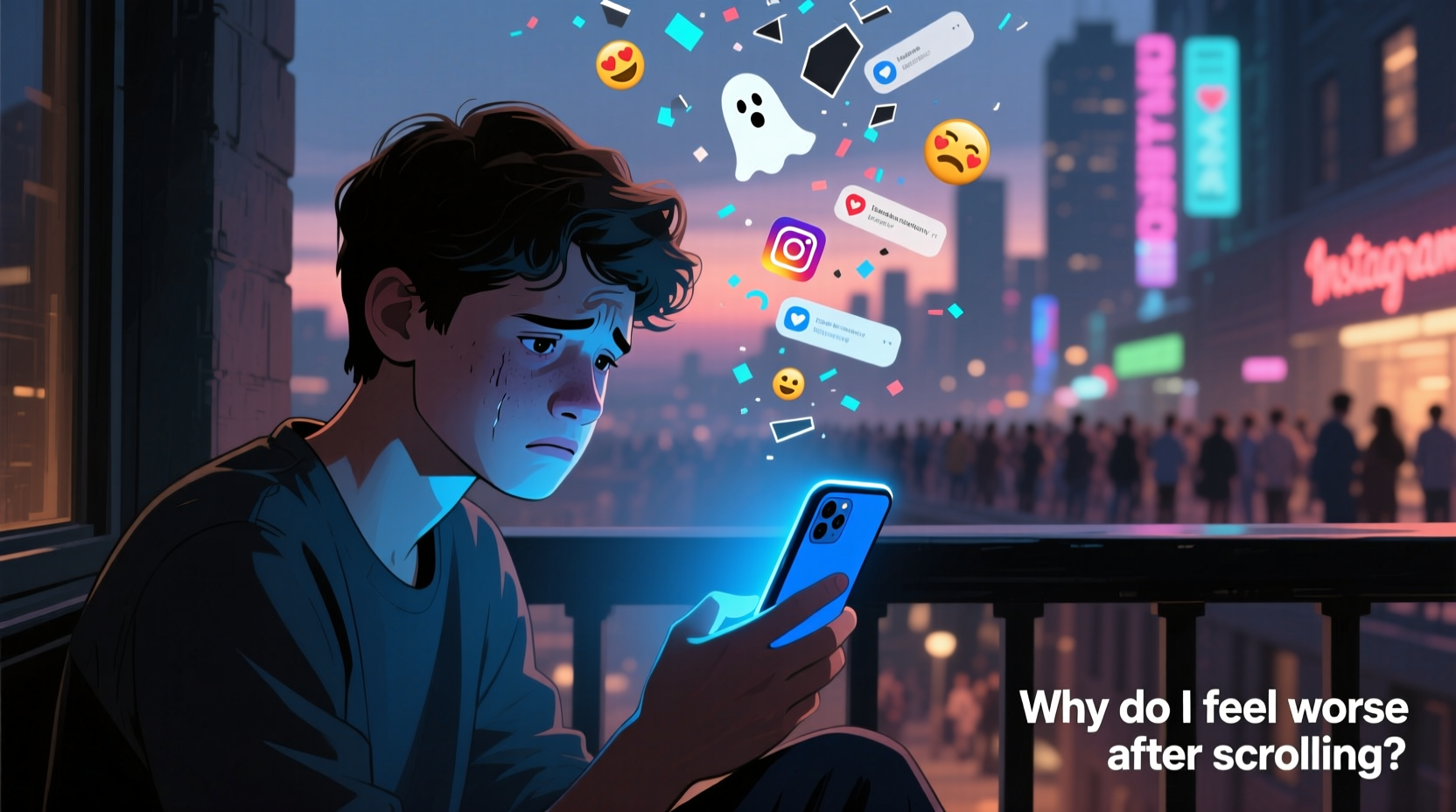
After prolonged Instagram use, many people report feelings of emptiness, envy, or dissatisfaction. These emotions aren't random. They stem from deeply rooted cognitive processes:
- Social Comparison Theory: People naturally evaluate themselves by comparing their lives to others’. On Instagram, where only highlights are shared, this leads to upward comparisons—measuring your behind-the-scenes against someone else’s highlight reel.
- Dopamine-Driven Feedback Loops: Likes, comments, and new content provide intermittent rewards, reinforcing compulsive checking behavior. When the stimulation stops, dopamine levels drop, leaving you feeling flat or restless.
- Fear of Missing Out (FOMO): Seeing friends at events you weren’t invited to—or lifestyles you can’t access—activates a primal fear of exclusion, increasing anxiety and loneliness.
These patterns don’t mean you’re weak or overly sensitive. They reveal how human psychology interacts with technology designed to keep you engaged—even at the cost of your emotional equilibrium.
“Social media doesn’t show life as it is. It shows life as people wish it were seen. The gap between perception and reality is where distress grows.” — Dr. Lena Patel, Clinical Psychologist & Digital Wellness Researcher
Common Emotional Triggers on Instagram
Not all content affects users equally. Certain types of posts and behaviors act as potent emotional catalysts. Recognizing them helps you identify what specifically impacts your mood.
1. Curated Perfection
Flawless skin, dream vacations, ideal relationships—these images create an illusion of effortless success. Over time, repeated exposure conditions the brain to view such perfection as normal, making everyday struggles feel like personal failures.
2. Lifestyle Inflation
Influencers showcasing luxury items, exotic travel, or high-end fitness routines subtly suggest that happiness is tied to consumption or achievement. This breeds dissatisfaction with one’s current circumstances, even if they’re objectively good.
3. Passive Consumption vs. Active Engagement
Scrolling silently through feeds (passive use) correlates strongly with depression and low self-worth. In contrast, actively commenting or messaging friends has neutral or positive effects. The lack of interaction during passive browsing fosters isolation.
4. Algorithmic Reinforcement of Negative States
If you linger on a post about body transformation, the algorithm assumes interest and serves more similar content—even if your engagement stems from insecurity. This creates echo chambers of comparison and self-doubt.
Breaking the Cycle: A Step-by-Step Reset Plan
Changing your relationship with Instagram doesn’t require quitting cold turkey. Small, deliberate actions can dramatically reduce its emotional toll.
- Track Your Mood Before and After Use
For three days, rate your emotional state (1–10) right before opening Instagram and immediately after closing it. Note any shifts. Patterns will emerge—perhaps sadness after fashion influencers or anxiety following news-related accounts. - Unfollow Without Guilt
Go through your feed and unfollow any account that consistently makes you feel worse. This includes friends whose lives seem “too perfect,” fitness gurus promoting extreme regimens, or brands selling unattainable aesthetics. Make space for joy, inspiration, and authenticity. - Mute Keywords and Topics
Use Instagram’s mute feature to filter out triggering words like “weight loss,” “luxury,” or “engaged.” This reduces accidental exposure to emotionally loaded content. - Set Time-Based Boundaries
Use screen time tools to limit daily Instagram usage to 20–30 minutes. Schedule specific times for checking the app—such as during lunch—instead of reaching for it reactively. - Replace Scrolling With Intentional Alternatives
When the urge to scroll hits, redirect to a meaningful activity: stretching, journaling, calling a friend, or reading a physical book. Over time, this rewires the habit loop.
Do’s and Don’ts of Healthy Instagram Use
| Do | Don’t |
|---|---|
| Follow accounts that educate, inspire, or bring laughter | Follow influencers who promote unrealistic beauty or lifestyle standards |
| Engage meaningfully—comment, DM, share | Lurk passively for extended periods |
| Use Stories or Reels to connect, not perform | Post solely for validation or likes |
| Take regular digital detox breaks (e.g., weekends) | Scroll first thing in the morning or last thing at night |
| Curate your Explore page by hiding unwanted content | Assume all recommended content reflects your interests |
A Real-Life Shift: Maya’s Story
Maya, a 29-year-old graphic designer, used Instagram daily—sometimes up to two hours. She followed dozens of creatives, hoping for inspiration. Instead, she felt increasingly stuck. “Every time I saw someone post a stunning project, I’d think, ‘Why can’t I do that?’ My own work started feeling dull. I stopped sharing anything.”
After noticing declining motivation and rising anxiety, she decided to audit her feed. She unfollowed 70 accounts, muted keywords like “viral” and “overnight success,” and began following artists who shared process videos, creative blocks, and imperfections.
She also set a 25-minute daily limit using screen time tracking. Within two weeks, her mood improved. “I realized I wasn’t behind—I was just consuming too much polished outcome without seeing the struggle behind it.” Today, she uses Instagram selectively and finds genuine inspiration again.
Action Checklist: Reclaim Your Emotional Balance
Use this checklist to reset your Instagram experience:
- ☐ Track mood before and after scrolling for 3 days
- ☐ Unfollow 10+ accounts that trigger comparison or negativity
- ☐ Mute at least 3 emotionally charged keywords
- ☐ Set a daily time limit (start with 30 minutes)
- ☐ Replace one scrolling session with a real-world activity
- ☐ Follow 5 new accounts that promote authenticity or learning
- ☐ Disable notifications for non-essential updates
FAQ: Common Questions About Instagram and Emotions
Why does Instagram make me feel lonely even though I’m connecting with people?
Paradoxically, passive scrolling simulates connection without delivering it. The brain recognizes the difference between real interaction and observation. True connection requires reciprocity—something likes and views cannot provide. Loneliness often increases because you’re witnessing relationships you’re not part of, deepening the sense of disconnection.
Is it normal to feel anxious after looking at certain types of content?
Yes. Anxiety triggered by fitness transformations, financial success stories, or relationship milestones is common. These narratives often imply urgency (“You should be further along”) or inadequacy (“They did it, why can’t you?”). Recognizing this as a conditioned response—not a personal flaw—helps reduce shame and empowers change.
Can I still use Instagram without harming my mental health?
Absolutely. The key is intentionality. When used mindfully—with clear boundaries, curated content, and awareness of emotional impact—Instagram can inform, inspire, and entertain. The danger lies in unconscious, habitual use. Control returns when you shift from autopilot to awareness.
Conclusion: Scroll With Purpose, Not Pressure
Feeling worse after Instagram isn’t a personal failing—it’s a predictable outcome of a system designed to exploit attention and emotion. But awareness changes everything. Once you see the mechanisms at play, you’re no longer passive. You become the curator of your experience.
Start small. Unfollow one account today. Set a timer. Ask yourself: *Does this feed my curiosity, or my insecurity?* Over time, these choices accumulate into a healthier digital life—one where you use Instagram, instead of letting it use you.




 浙公网安备
33010002000092号
浙公网安备
33010002000092号 浙B2-20120091-4
Comments
No comments yet. Why don't you start the discussion?