
Waking up after a long night’s sleep should leave you feeling refreshed and energized. Yet, many people experience the opposite: grogginess, disorientation, and even a throbbing headache. If you’ve ever slept in on weekends only to wake up with a dull ache behind your eyes or temples, you’re not alone. This phenomenon is closely tied to a neurological state known as sleep inertia—and understanding it can help you reclaim control over your mornings.
Sleep isn’t simply about duration; it’s about timing, quality, and alignment with your body’s internal clock. When you oversleep, especially irregularly or beyond nine hours, you disrupt delicate biological processes that regulate alertness, brain chemistry, and pain sensitivity. The result? Headaches, fatigue, and mental fog—symptoms often mistaken for laziness but rooted deeply in neuroscience.
The Science of Sleep Inertia
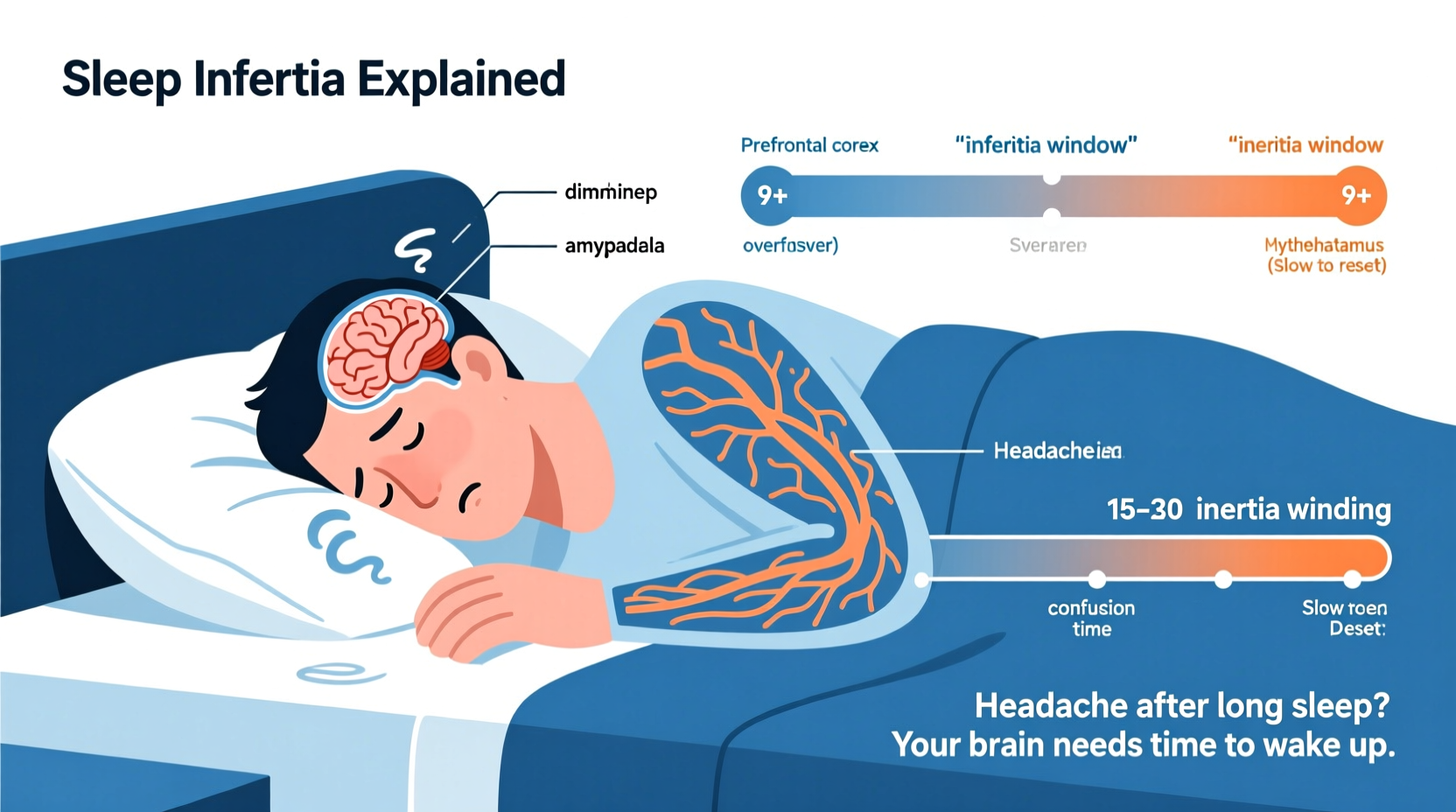
Sleep inertia refers to the transitional state between sleep and wakefulness, characterized by impaired cognitive performance, reduced motor dexterity, and a strong desire to return to sleep. It typically lasts 15 to 60 minutes after waking but can persist longer—especially when you wake from deep sleep stages like slow-wave sleep (SWS).
During extended sleep, your body cycles through multiple phases: light sleep (N1 and N2), deep sleep (N3), and REM (rapid eye movement) sleep. Each cycle lasts about 90 minutes. Waking up at the end of a full cycle—ideally during lighter stages—feels natural and smooth. But if you oversleep, you're more likely to be pulled from deep sleep, which causes abrupt disruption in brain activity.
Neuroimaging studies show that during deep sleep, cerebral blood flow decreases significantly. Upon sudden awakening, blood flow surges back into the brain, sometimes unevenly. This rapid shift can trigger vasodilation—the widening of blood vessels—which may stimulate pain receptors in the meninges (the protective layers around the brain), leading to what feels like a headache.
“Sleep inertia isn't just feeling groggy—it's a measurable neurochemical transition where adenosine levels remain high, and neurotransmitters like dopamine and norepinephrine haven’t fully ramped up.” — Dr. Lena Patel, Neurologist & Sleep Specialist
How Oversleeping Triggers Headaches
Oversleeping doesn’t just extend rest—it alters brain chemistry and circadian rhythms in ways that promote headache development. Here’s how:
- Disrupted serotonin and dopamine regulation: Prolonged sleep can suppress the release of key neurotransmitters involved in mood and pain modulation. Low dopamine has been linked to migraines and tension-type headaches.
- Circadian misalignment: Sleeping too long shifts your internal clock, delaying melatonin production and confusing cortisol release patterns. This mismatch increases inflammation and neural excitability.
- Dehydration: The longer you sleep, the more time passes without fluid intake. Even mild dehydration can cause headaches due to reduced blood volume and oxygen delivery to the brain.
- Increased intracranial pressure: Extended recumbent positions (lying down) may slightly increase cerebrospinal fluid pressure, contributing to dull, pressing headaches upon waking.
Who Is Most at Risk?
Not everyone who oversleeps gets headaches. Certain individuals are more susceptible due to underlying conditions or lifestyle factors:
| Risk Factor | Explanation |
|---|---|
| Migraine sufferers | Oversleeping is a well-documented migraine trigger due to fluctuations in serotonin and cortical excitability. |
| Depression or anxiety | These conditions often involve hypersomnia (excessive sleep) and altered sleep architecture, increasing vulnerability to sleep inertia and headaches. |
| Irregular sleep schedules | Frequent changes in bedtime and wake time destabilize the circadian system, making the brain more sensitive to disruptions. |
| Sleep apnea undiagnosed | Long sleep durations may reflect poor sleep quality rather than true rest. Fragmented breathing leads to oxygen drops, triggering morning headaches. |
| Medications affecting sleep | Antidepressants, antihistamines, and sedatives can deepen sleep or prolong REM, increasing chances of waking mid-cycle. |
Breaking the Cycle: A Step-by-Step Guide to Healthier Mornings
If you regularly wake up with headaches after long sleep, small adjustments can make a big difference. Follow this practical timeline to reset your sleep-wake rhythm:
- Week 1: Establish a fixed wake-up time
Choose a realistic hour (e.g., 7:30 AM) and stick to it every day—even weekends. Use an alarm across the room to force movement. - Week 2: Optimize your bedtime
Work backward from your wake time using 7–9 hour windows. Aim for consistency, not perfection. - Week 3: Limit weekend oversleeping to 60 minutes max
If you go to bed late Friday, allow yourself one extra hour Saturday—but no more. Prevents “social jetlag.” - Week 4: Introduce morning light exposure
Spend 10–15 minutes outside within 30 minutes of waking. Sunlight resets your suprachiasmatic nucleus (your brain’s master clock). - Ongoing: Hydrate immediately upon waking
Drink a glass of water before coffee. Replenishes fluids lost overnight and supports cerebral circulation.
Mini Case Study: Sarah’s Weekend Headache Pattern
Sarah, a 32-year-old graphic designer, began experiencing recurring headaches every Sunday morning. She’d fall asleep around midnight Friday and wake up at 10:30 AM Saturday, feeling fine. But on Sundays, after staying up late editing projects, she’d sleep until noon—and always wake with a pulsating headache above her left eye.
After tracking her sleep with a wearable device, she discovered she was spending nearly 12 hours in bed on Sundays but only getting 5.5 hours of actual sleep due to frequent awakenings. Her longest uninterrupted period occurred in deep sleep, ending abruptly at noon. By adjusting her weekend bedtime and capping sleep at 9.5 hours, her headaches disappeared within three weeks.
Do’s and Don’ts of Managing Post-Sleep Headaches
| Do | Don’t |
|---|---|
| Keep a consistent wake-up time year-round | Use alcohol to fall asleep (it fragments sleep later in the night) |
| Expose yourself to bright light soon after waking | Hit snooze repeatedly (increases sleep fragmentation) |
| Stay hydrated throughout the day and before bed | Take long naps after 3 PM (disrupts nighttime sleep depth) |
| Treat underlying sleep disorders like apnea or insomnia | Assume all headaches are “just from sleeping too much” without medical evaluation |
| Track sleep patterns with a journal or app | React to a headache with excessive caffeine (can lead to rebound headaches) |
When to See a Doctor
Occasional post-oversleep headaches aren’t usually dangerous. However, certain red flags warrant professional assessment:
- Headaches that worsen over time or become daily
- Vomiting, vision changes, or confusion upon waking
- Symptoms of sleep apnea: loud snoring, gasping, daytime fatigue despite long sleep
- Neck stiffness or fever accompanying headaches
- A history of head injury or neurological condition
Chronic daily headaches linked to oversleeping may indicate underlying issues such as idiopathic intracranial hypertension, depression-related hypersomnia, or chronic migraine. A sleep study or neurological consultation can provide clarity.
FAQ
Can sleeping 10+ hours cause migraines?
Yes. For people predisposed to migraines, extended sleep can act as a trigger by altering serotonin levels and disrupting the hypothalamus’s regulation of sleep-wake cycles. Studies show that both short and long sleep durations increase migraine frequency compared to consistent 7–8 hour nights.
Is there a difference between a sleep inertia headache and a tension headache?
While symptoms overlap, sleep inertia headaches tend to appear immediately upon waking after prolonged or poorly timed sleep and resolve within a few hours. Tension headaches are often related to muscle strain or stress and can occur at any time. However, oversleeping can indirectly cause tension headaches due to poor posture during extended bed rest.
Does caffeine help with post-sleep headaches?
In moderation, yes. Caffeine constricts blood vessels and enhances pain relief medications. However, relying on it daily can lead to dependency and rebound headaches. Better strategies include hydration, gentle movement, and light exposure.
Conclusion: Reclaim Your Mornings
Waking up with a headache shouldn’t be normalized. While it might seem harmless, it’s often a signal that your sleep pattern is out of sync with your biology. Sleep inertia isn’t just about feeling sluggish—it reflects real physiological disruptions that affect brain function, vascular tone, and neurological balance.
By aligning your sleep schedule with your circadian rhythm, avoiding extreme variations between weekdays and weekends, and addressing potential health conditions, you can eliminate these preventable headaches. Small, consistent actions compound into lasting improvements in energy, focus, and overall well-being.




 浙公网安备
33010002000092号
浙公网安备
33010002000092号 浙B2-20120091-4
Comments
No comments yet. Why don't you start the discussion?