
Many people report the same frustrating pattern: dark clouds roll in, rain begins to fall, and within hours—or sometimes minutes—a throbbing headache sets in. If this sounds familiar, you're not imagining things. Scientific evidence confirms that weather changes, particularly shifts in barometric pressure associated with rainfall, can trigger headaches and migraines in sensitive individuals. This phenomenon affects millions worldwide, yet remains poorly understood by the general public. Understanding the connection between atmospheric pressure and head pain is the first step toward managing it effectively.
The Science Behind Barometric Pressure and Head Pain
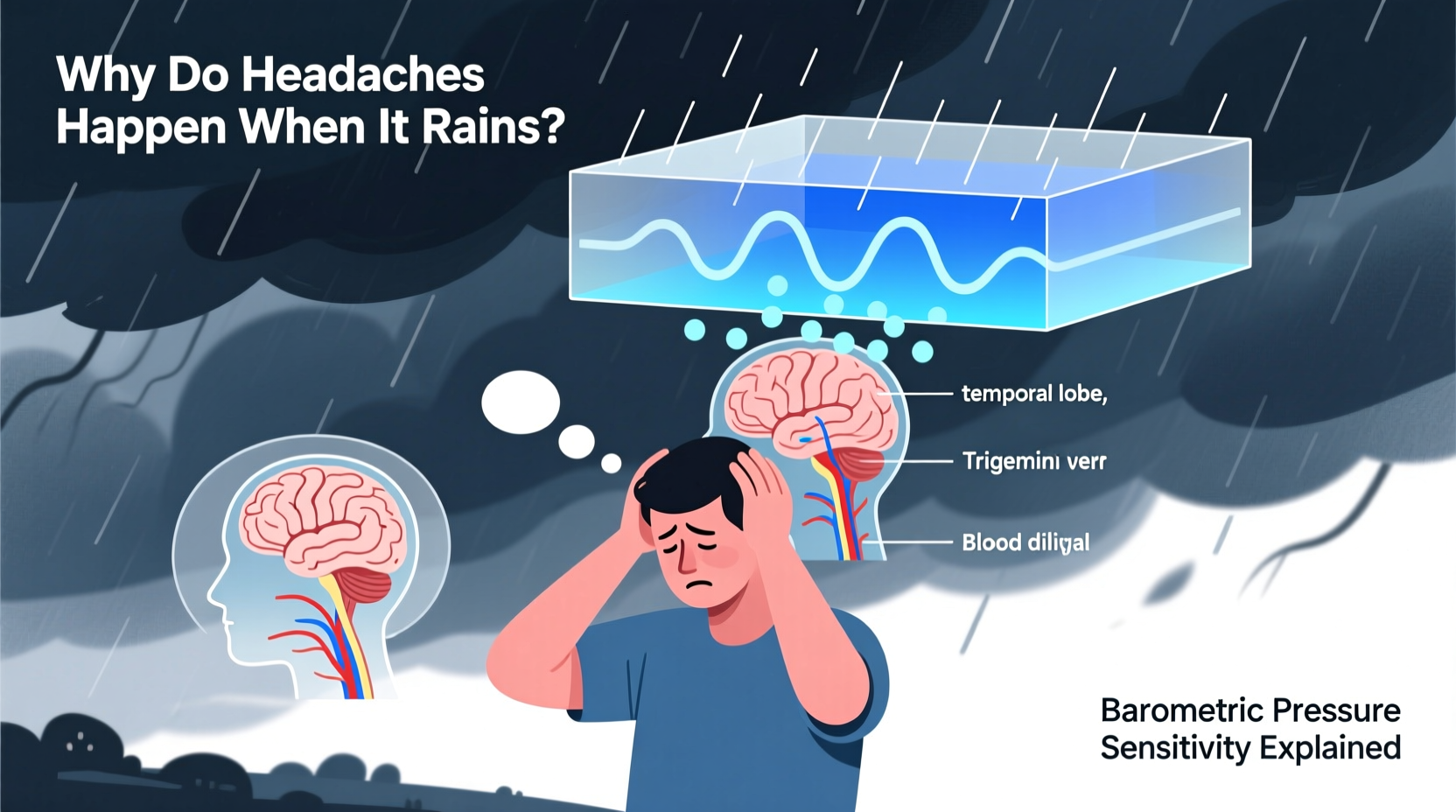
Barometric pressure, also known as atmospheric pressure, is the weight of the air pressing down on the Earth. It fluctuates constantly due to weather systems. High-pressure systems typically bring clear skies, while low-pressure systems are linked to stormy conditions—including rain. When a storm approaches, barometric pressure drops rapidly as warm, moist air rises and replaces cooler, denser air.
This drop in external pressure can affect the body in subtle but significant ways. Inside your skull, sinuses, and inner ear, air and fluid are contained under relatively stable internal pressure. When external pressure decreases suddenly—such as before or during rainfall—the difference between internal and external pressure can create imbalances. These imbalances may lead to tissue expansion, nerve irritation, or changes in blood flow—all of which are potential triggers for headaches.
Research published in *Cephalalgia*, a leading journal on headache medicine, found that a 5 hPa (hectopascal) decrease in barometric pressure over a 72-hour period significantly increased migraine risk. Another study from Japan observed a 20% rise in hospital visits for migraines during periods of rapid pressure decline preceding storms.
“Changes in barometric pressure can act like a switch for migraine sufferers—especially those already prone to neurological hyperexcitability.” — Dr. Rachel Marcus, Neurologist and Headache Specialist, Johns Hopkins Medicine
How Sinus and Migraine Headaches Differ During Rainy Weather
It’s common to assume that rain-induced head pain is sinus-related, especially if the discomfort centers around the forehead, cheeks, or bridge of the nose. However, true sinus headaches are rare. Most cases attributed to “sinus pressure” during weather changes are actually migraines with sinus-like symptoms.
True sinus headaches occur only when there is active infection or inflammation in the sinuses, usually accompanied by thick nasal discharge, fever, and facial swelling. In contrast, weather-triggered migraines often include:
- Pulsating or throbbing pain, typically on one side of the head
- Nausea or vomiting
- Sensitivity to light and sound
- Worsening pain with physical activity
- Aura symptoms (flashing lights, blind spots) in some cases
Yet, because low barometric pressure can also cause mild sinus membrane swelling, even non-infected sinuses may contribute to facial pressure sensations during storms. This overlap makes diagnosis tricky—but important for proper treatment.
Who Is Most at Risk for Weather-Related Headaches?
Not everyone reacts to barometric shifts. Susceptibility varies widely based on biology, genetics, and pre-existing conditions. The following groups are more likely to experience headaches triggered by rainy weather:
- Migraine sufferers: Up to 70% of people with migraines report weather changes as a trigger.
- Individuals with chronic sinus issues: Even without infection, inflamed passages respond more strongly to pressure fluctuations.
- People with joint or nerve pain conditions: Conditions like fibromyalgia or trigeminal neuralgia may increase overall sensory sensitivity.
- Those living in regions with frequent weather shifts: Mountainous areas, coastal zones, and temperate climates see higher incidence due to constant atmospheric variability.
- Women: Hormonal fluctuations appear to amplify environmental sensitivity; studies show women report weather-triggered headaches twice as often as men.
A 2020 survey by the American Migraine Foundation revealed that among respondents, 53% identified weather changes as a top-three migraine trigger—second only to stress and lack of sleep.
Step-by-Step Guide to Managing Barometric Pressure Headaches
You can't control the weather, but you can prepare for its impact. Use this proactive timeline to reduce your risk and respond early when storms approach:
- Monitor local barometric trends (7 days out): Use reliable weather apps that display pressure data (e.g., Weather Underground, Windy). Note patterns—many find their headaches begin when pressure falls below a certain threshold.
- Track your symptoms (ongoing): Keep a daily log noting headaches, weather conditions, sleep, diet, and stress levels. Over time, you’ll identify personal triggers and thresholds.
- Pre-medicate if advised (24–48 hours before a storm): For those with predictable patterns, doctors may recommend taking preventive medication (like triptans or NSAIDs) at the first sign of a pressure drop.
- Stay hydrated and maintain routine (during pressure shifts): Dehydration lowers your pain threshold. Stick to regular meals, sleep, and caffeine intake to avoid compounding triggers.
- Use indoor climate controls (during rain): Run a dehumidifier or air purifier to stabilize indoor air quality. Keep rooms slightly warmer than usual to offset damp chill, which can worsen muscle tension.
- Apply targeted relief (at onset): Cold packs on the neck or forehead, magnesium supplements, or gentle neck stretches can interrupt early headache progression.
Do’s and Don’ts for Rain-Triggered Headache Prevention
| Do’s | Don’ts |
|---|---|
| ✔ Track barometric pressure alongside symptoms | ✘ Ignore early warning signs like neck stiffness or mood changes |
| ✔ Stay hydrated—aim for 2 liters of water daily | ✘ Skip meals or fast during stormy periods |
| ✔ Use a HEPA air purifier to reduce allergens and stabilize indoor air | ✘ Spend extended time outdoors right before or during storms |
| ✔ Practice relaxation techniques like diaphragmatic breathing | ✘ Increase caffeine suddenly or withdraw abruptly |
| ✔ Consult a neurologist if attacks are frequent or disabling | ✘ Rely solely on OTC painkillers more than 2–3 times per week |
Real-Life Example: How Sarah Reduced Her Storm-Related Migraines
Sarah, a 38-year-old teacher from Seattle, experienced debilitating headaches nearly every time it rained—roughly 15 days per month during winter. Initially, she assumed it was allergies or fatigue. After months of missed work and failed treatments, she began logging her headaches using a migraine app that synced with local weather data.
Within six weeks, a clear pattern emerged: her migraines almost always started within 12 hours of a 4+ hPa drop in barometric pressure. Armed with this insight, she worked with her doctor to implement a prevention strategy. She now takes a low-dose NSAID at the first alert of an approaching low-pressure system, uses a white noise machine to mask thunder, and keeps blackout curtains closed to minimize light sensitivity.
Today, Sarah reports a 70% reduction in migraine frequency during rainy seasons. “I used to dread winter,” she says. “Now I feel prepared. Knowing what’s coming gives me power over it.”
Frequently Asked Questions
Can barometric pressure changes cause headaches even if I don’t have migraines?
Yes. While migraine sufferers are most sensitive, anyone can experience pressure-related head discomfort. People with sinus sensitivities, TMJ disorders, or high stress levels may also react to sudden atmospheric shifts. The effect is usually milder than a full migraine but can still cause dull aches or pressure behind the eyes.
How quickly can a pressure drop trigger a headache?
Symptoms can begin as soon as 2–6 hours after a significant pressure change, though some people notice effects up to 48 hours in advance. The speed depends on individual sensitivity, baseline health, and the rate of pressure decline. Faster drops tend to be more disruptive.
Are there long-term solutions for barometric pressure sensitivity?
While you can’t eliminate sensitivity, long-term management is possible. Options include preventive medications (like beta-blockers or CGRP inhibitors), cognitive behavioral therapy (CBT) for pain coping strategies, and lifestyle adjustments such as consistent sleep hygiene and hydration. Some patients benefit from vestibular therapy or acupuncture to improve nervous system regulation.
Conclusion: Take Control of Weather-Related Headaches
Rain shouldn’t come with a side of pain. While barometric pressure sensitivity is real and physiologically grounded, it doesn’t have to dictate your comfort or limit your life. By understanding how atmospheric changes affect your body, tracking your personal response patterns, and applying science-backed strategies, you can significantly reduce the burden of weather-triggered headaches.
Start small: download a weather app with pressure graphs, begin a symptom journal, and talk to your doctor about whether preventive treatment might help. Knowledge is your best defense against unpredictable weather—and unpredictable pain.




 浙公网安备
33010002000092号
浙公网安备
33010002000092号 浙B2-20120091-4
Comments
No comments yet. Why don't you start the discussion?