
Many people rely on naps to recharge during the day, especially when facing fatigue or a busy schedule. However, waking up from a long nap with a throbbing headache is a surprisingly common experience. While short naps can boost alertness and mood, extended daytime sleep often leads to grogginess, disorientation, and—most frustratingly—head pain. The science behind this phenomenon lies in the complex mechanics of sleep architecture, circadian rhythms, and brain chemistry. Understanding why long naps trigger headaches empowers you to adjust your habits and avoid discomfort.
The Science of Sleep Cycles and Brain Chemistry
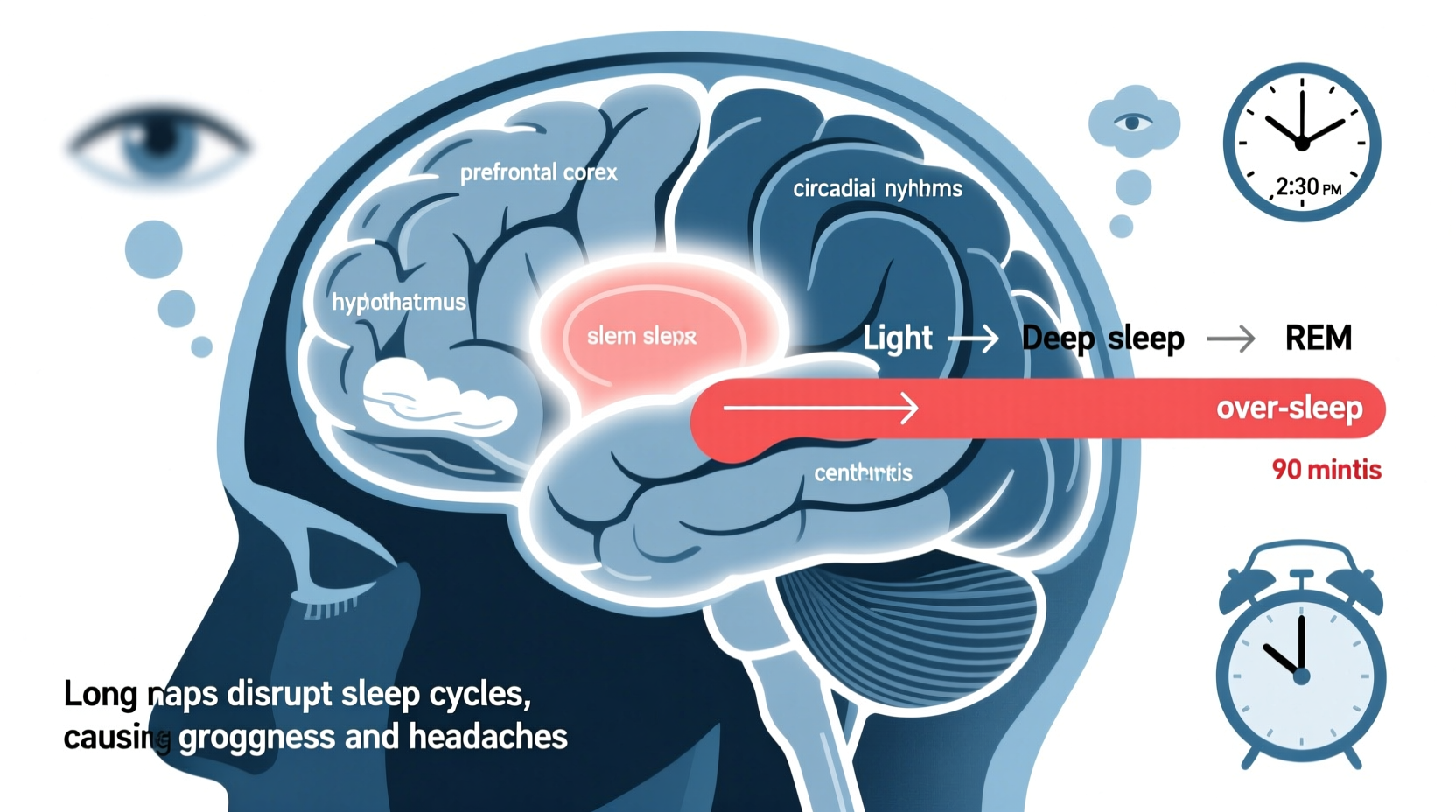
Sleep isn't a uniform state—it's composed of cycles that repeat every 90 to 120 minutes. Each cycle includes four stages: three non-REM (NREM) stages and one REM (rapid eye movement) stage. NREM Stage 1 is light sleep, Stage 2 involves slowing brain waves, and Stage 3 is deep, slow-wave sleep—the most restorative phase. REM sleep follows, where dreaming occurs and brain activity increases dramatically.
When you take a short nap—ideally 10 to 20 minutes—you typically stay within the lighter stages of NREM sleep. You wake up refreshed because your brain hasn’t descended into deep sleep. But if you nap longer than 30 to 45 minutes, you're likely to enter Stage 3, or even complete a full cycle and enter REM. Waking from deep or REM sleep triggers a condition known as sleep inertia: a state of mental fog, sluggishness, and sometimes headaches.
During deep sleep, your brain’s metabolic activity slows, blood flow shifts, and neurotransmitter levels change. Abrupt awakening disrupts this balance. Serotonin and adenosine, two chemicals involved in sleep regulation and pain perception, may fluctuate rapidly upon waking, contributing to headache onset. Additionally, changes in cerebral blood flow during deep sleep can create pressure imbalances in the skull, activating pain-sensitive nerves.
“Waking from deep sleep, especially outside your normal sleep schedule, can confuse your brain’s internal clock and trigger vascular changes linked to headaches.” — Dr. Lena Patel, Neurologist and Sleep Specialist
Why Long Naps Trigger Headaches: Key Mechanisms
Several interrelated factors explain why oversleeping during the day leads to head pain:
- Disruption of Circadian Rhythms: Your body runs on a 24-hour internal clock that regulates hormone release, body temperature, and alertness. Long naps, particularly in the mid-to-late afternoon, interfere with this rhythm. This misalignment can cause hormonal fluctuations (like cortisol and melatonin) that predispose you to headaches.
- Increased Intracranial Pressure: During deep sleep, cerebral blood flow increases. If you wake abruptly, blood redistribution may lag, leading to temporary pressure buildup in the brain—a common precursor to tension-type or hypnic headaches.
- Caffeine and Sleep Interaction: If you consume caffeine before napping, its half-life (3–5 hours) means it may still be active when you wake. Combined with sleep inertia, this can overstimulate the nervous system and trigger migraines in sensitive individuals.
- Dehydration: Even short periods of sleep reduce fluid intake. Longer naps increase the risk of mild dehydration, which is a well-known headache trigger due to reduced blood volume and oxygen delivery to the brain.
- Postural Strain: Napping in awkward positions—on a couch, at a desk, or without neck support—can strain cervical muscles and compress nerves, leading to cervicogenic headaches.
Optimal Nap Duration: What Research Says
Not all naps are created equal. The ideal nap length depends on your goal—mental clarity, memory consolidation, or emotional recovery. Scientific studies suggest different durations yield distinct benefits:
| Nap Length | Sleep Stages Reached | Benefits | Risks |
|---|---|---|---|
| 10–20 minutes | Stage 1–2 NREM | Boosts alertness, focus, motor performance | Minimal; rarely causes grogginess |
| 30–60 minutes | Enters deep sleep (Stage 3) | Improves decision-making, sensory processing | High risk of sleep inertia and headaches |
| 60–90 minutes | Full sleep cycle including REM | Enhances creativity, emotional regulation, procedural memory | Moderate inertia; may disrupt nighttime sleep |
A NASA study on military pilots found that 26-minute naps improved performance by 34% and alertness by 54%. In contrast, naps exceeding 45 minutes were associated with significantly longer recovery times and increased reports of headaches. For most people, limiting naps to under 30 minutes avoids deep sleep entry while maximizing cognitive gains.
How to Nap Smarter: A Step-by-Step Guide
If you rely on naps but want to avoid headaches, follow this science-backed routine to nap more effectively:
- Choose the Right Time: Nap between 1:00 PM and 3:00 PM. This window aligns with the natural post-lunch dip in alertness and minimizes interference with nighttime sleep.
- Limit Duration: Set an alarm for 20 minutes. Use a smartwatch or phone timer with a gentle wake-up tone to avoid abrupt arousal.
- Hydrate Before and After: Drink a glass of water before napping and another upon waking to counteract fluid loss during sleep.
- Control Caffeine Intake: Consider a \"coffee nap\"—drink a small cup of coffee right before napping. Caffeine takes about 20 minutes to kick in, so you wake up just as it starts blocking adenosine receptors, enhancing alertness.
- Optimize Environment: Use an eye mask and earplugs to block light and noise. Lie flat or recline slightly with neck support to prevent muscle strain.
- Move Gently After Waking: Stand slowly, stretch, and walk around for a few minutes. Light physical activity helps normalize blood pressure and circulation.
“Timing and duration are everything. A well-placed 20-minute nap can be as restorative as two hours of poor-quality nighttime sleep.” — Dr. Mark Chen, Sleep Researcher at Stanford University
Who Is More Prone to Post-Nap Headaches?
While anyone can experience headaches after long naps, certain individuals are more vulnerable:
- Migraine Sufferers: People with migraine disorders often have hypersensitive brains that react strongly to sleep disruptions. Irregular sleep patterns, including long daytime naps, are a common trigger.
- Shift Workers: Those with irregular schedules may nap at suboptimal times, increasing circadian misalignment and headache risk.
- Individuals with Sleep Apnea: Undiagnosed or untreated sleep apnea can cause fragmented sleep and oxygen fluctuations, making long naps more likely to induce headaches.
- People with Chronic Fatigue or Insomnia: Poor nighttime sleep quality leads to deeper, more intense daytime sleep, raising the chance of disruptive awakenings.
A mini case study illustrates this: Sarah, a 34-year-old nurse working night shifts, began experiencing frequent afternoon headaches. She would nap for 90 minutes after her morning shift, only to wake with a dull, bilateral headache. After consulting a sleep specialist, she learned that her long naps were disrupting her melatonin cycle and causing rebound vasodilation in the brain. By switching to 20-minute power naps and improving her blackout sleeping environment for nighttime rest, her headaches resolved within three weeks.
Checklist: Prevent Headaches After Napping
Use this practical checklist to minimize the risk of post-nap headaches:
- ✅ Nap between 1 PM and 3 PM
- ✅ Keep naps under 30 minutes
- ✅ Drink water before and after napping
- ✅ Avoid heavy meals or alcohol before napping
- ✅ Use supportive pillows to maintain neck alignment
- ✅ Limit screen exposure immediately after waking
- ✅ Avoid napping if you’ve had caffeine in the past 4 hours (unless doing a coffee nap)
- ✅ Maintain a consistent nighttime sleep schedule
Frequently Asked Questions
Can napping too long cause migraines?
Yes. Extended naps, especially those exceeding 60 minutes, can trigger migraines in susceptible individuals. This is due to sudden shifts in brain chemistry, blood flow, and serotonin levels upon waking. People with a history of migraines should stick to shorter naps and maintain regular sleep patterns.
Is it better to skip a nap than risk a headache?
Not necessarily. A well-timed, short nap (10–20 minutes) can improve alertness and cognitive function without side effects. Skipping naps entirely may lead to accumulated sleep debt, which itself is a headache trigger. The key is moderation and timing.
Why do I only get headaches after napping on weekends?
This is often due to \"social jetlag\"—a mismatch between your biological clock and weekend behavior. Sleeping in or taking long recovery naps disrupts circadian rhythms, leading to headaches. Try to keep your wake-up time within an hour of your weekday schedule, even on weekends.
Conclusion: Reclaim Your Rest Without the Pain
Headaches after long naps aren’t just inconvenient—they’re signals from your brain that something in your sleep routine needs adjustment. Whether it’s the depth of sleep, timing, hydration, or posture, each factor plays a role in how you feel upon waking. By respecting your body’s natural sleep architecture and circadian biology, you can enjoy the benefits of napping without the backlash of pain.
You don’t need to give up naps to avoid headaches. Instead, refine how you nap. Aim for brief, strategic rest periods that recharge rather than disrupt. Over time, these small adjustments can lead to sharper focus, better mood, and fewer unexplained aches. Start today: set a 20-minute timer, hydrate, and let your brain rest the right way.




 浙公网安备
33010002000092号
浙公网安备
33010002000092号 浙B2-20120091-4
Comments
No comments yet. Why don't you start the discussion?