
It’s a familiar scene: you reach for a doorknob, pet your dog, or even shake a colleague’s hand—and suddenly, a sharp zap shoots through your finger. Annoying at best, startling at worst. If these shocks seem to happen far more often during the colder months, you’re not imagining things. Static electricity is significantly more common in winter, and understanding why can help you take control of the situation. This article explains the science behind winter static shocks and offers real, actionable solutions to minimize them.
The Science Behind Winter Static Shocks
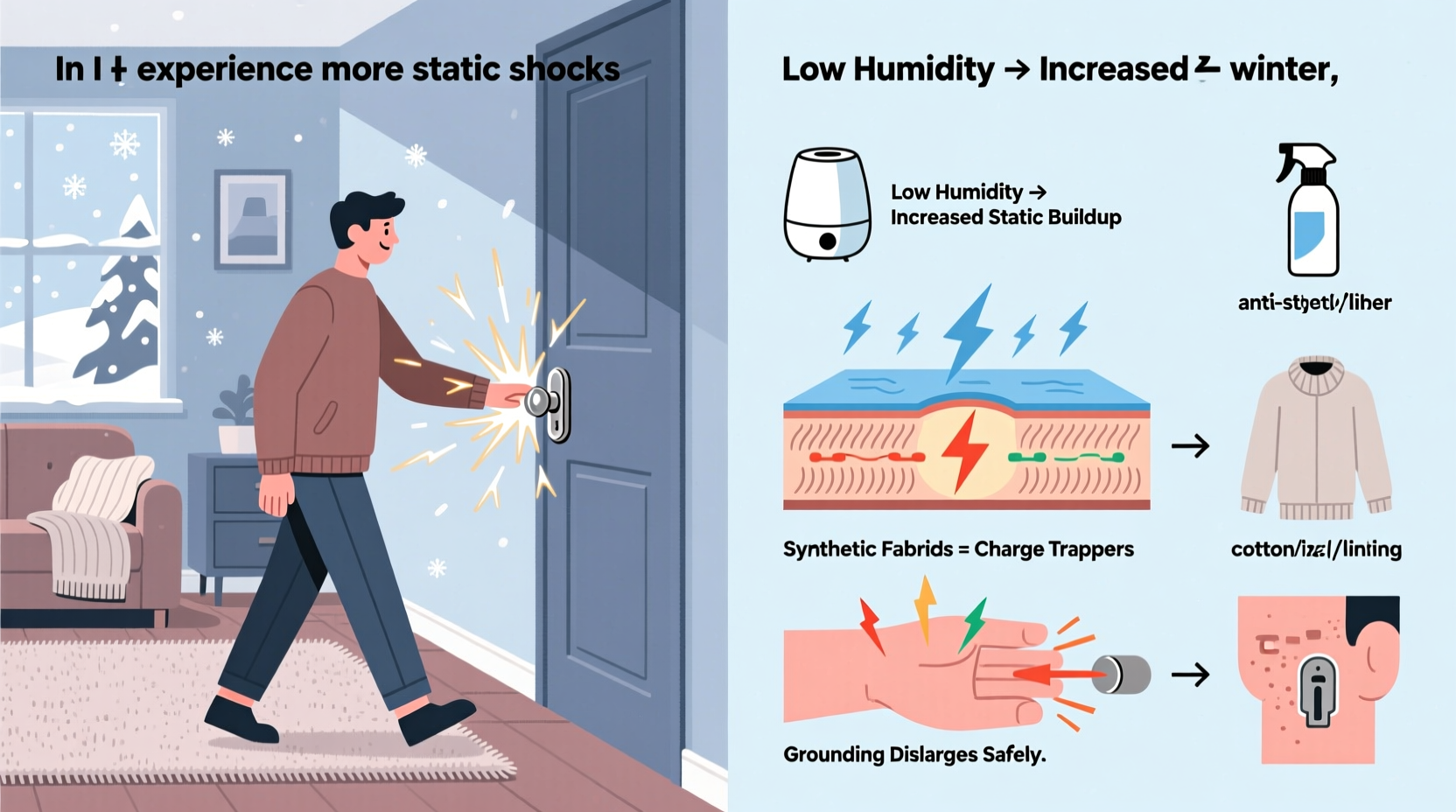
Static electricity occurs when an imbalance of electric charges builds up on the surface of a material. When two objects come into contact—like your shoe and carpet—electrons can transfer from one to the other. One object becomes positively charged, the other negatively charged. When you then touch a conductor (like metal), the excess charge rapidly equalizes, resulting in a spark or shock.
So why does this happen more in winter? The answer lies primarily in humidity—or rather, the lack of it. Cold air holds less moisture than warm air. In winter, especially in heated indoor environments, relative humidity often drops below 30%, creating ideal conditions for static buildup. Dry air is a poor conductor of electricity, so charges accumulate on surfaces instead of dissipating naturally.
In contrast, during humid summer months, moisture in the air helps conduct charges away from your body before they build up enough to cause a shock. Without that natural discharge path, winter turns everyday actions into potential zaps.
“Low humidity is the single biggest environmental factor contributing to increased static shocks indoors during winter.” — Dr. Rebecca Lang, Atmospheric Physicist, National Institute of Climate Studies
How Your Body and Clothing Contribute to Static Buildup
Your lifestyle choices amplify the problem. Synthetic fabrics like polyester, nylon, and acrylic are notorious for generating static electricity. These materials easily gain or lose electrons when rubbed against other surfaces—a process called triboelectric charging. Think about what happens when you pull off a fleece jacket or walk across a nylon carpet in rubber-soled shoes. Each motion creates friction, which generates charge.
Shoes also play a role. Many modern footwear soles are made from insulating materials like rubber or synthetic foam. While great for comfort and waterproofing, they prevent your body from grounding naturally as you walk. In outdoor settings with conductive ground (like soil or concrete), charges can slowly leak away. But indoors, especially on carpets, you remain insulated, allowing charge to build until it finds a sudden release point.
Practical Ways to Reduce Static Shocks at Home and Work
You don’t have to live with constant zaps. Simple changes in your environment and habits can dramatically reduce static shocks. Here are effective strategies grounded in physics and everyday experience.
1. Increase Indoor Humidity
The most impactful step is raising indoor humidity levels. Aim for 40–60% relative humidity—the sweet spot where static buildup is minimized without encouraging mold growth. Use a hygrometer (a humidity sensor) to monitor levels in key rooms like bedrooms and offices.
Humidifiers are the go-to solution. Cool mist or ultrasonic models work well and can cover entire rooms depending on capacity. Place them near heating vents or in frequently used spaces. Even placing bowls of water near radiators can add minor moisture to the air.
2. Choose Natural Fiber Clothing and Bedding
Synthetic fibers trap and generate charge. Replace polyester blends with natural materials like cotton, wool, silk, and linen. These fibers are less prone to static and allow better breathability and moisture wicking—helping your body maintain a neutral charge.
This applies to underlayers too. Cotton undershirts and socks reduce direct skin contact with synthetic outerwear, minimizing charge transfer.
3. Treat Carpets and Upholstery
Carpets, especially synthetic ones, are major contributors to static buildup. Anti-static sprays containing fabric softeners or quaternary ammonium compounds can be applied periodically to neutralize charges. Alternatively, mix a capful of liquid fabric softener with water in a spray bottle and lightly mist carpets (test in an inconspicuous area first).
Rugs with natural fibers like wool or cotton are inherently less static-prone and worth considering for high-traffic zones.
4. Ground Yourself Before Touching Metal
Before touching a doorknob, light switch, or filing cabinet, discharge yourself safely. Carry a metal object like a key and tap it against the surface first. The spark will jump from the key, not your finger, sparing you the pain.
Alternatively, touch walls, wood, or glass surfaces with your knuckle or palm. These materials dissipate charge more gently than metal.
Step-by-Step Guide to a Static-Free Morning Routine
Many people experience shocks right after waking—pulling off blankets, stepping onto rugs, brushing hair. Follow this sequence to start your day shock-free:
- Wake up and keep feet covered: Put on cotton socks immediately. Avoid shuffling barefoot on synthetic carpets.
- Discharge before standing: Touch a wooden bed frame or wall with your hand before getting up.
- Choose low-static clothing: Opt for cotton pajamas and avoid fleece robes.
- Moisturize skin: Dry skin increases personal conductivity issues. Apply lotion after showering.
- Use a metal hanger trick: Run a metal coat hanger over clothes before putting them on to neutralize surface charge.
- Touch metal via key: When exiting your room, use a key to touch the doorknob first.
This routine takes less than two minutes but prevents multiple shocks throughout the morning.
Do’s and Don’ts: Managing Static Electricity
| Do’s | Don’ts |
|---|---|
| Use a humidifier in living and sleeping areas | Run heaters continuously without monitoring humidity |
| Wear leather-soled shoes indoors | Walk on carpet in rubber-soled slippers |
| Apply anti-static spray to upholstery monthly | Use plastic combs on dry hair in winter |
| Ground yourself with a metal object before touching electronics | Handle sensitive electronics without discharging first |
| Wash clothes with dryer sheets or wool dryer balls | Tumble-dry synthetic fabrics on high heat without additives |
Real-Life Example: Office Worker Reduces Daily Shocks
Sarah, a 34-year-old project manager in Chicago, used to dread entering her office each winter. Her cubicle had a synthetic carpet, and she wore wool sweaters over polyester blouses. Every time she touched her computer or printer, she got a painful jolt. After three weeks of discomfort, she decided to investigate.
She started by placing a small humidifier under her desk, increasing room humidity from 28% to 45%. She switched to cotton-blend tops and began using a handheld anti-static spray on her chair and sweater. She also adopted the habit of tapping her pen cap against her monitor before touching the keyboard.
Within a week, the shocks stopped. “I didn’t realize how much it was affecting my mood,” she said. “Now I feel more relaxed at work, and I’ve even convinced my team to keep moisturizer and humidifiers at their desks.”
Expert-Recommended Products and Habits
While behavior changes are foundational, certain products enhance protection against static buildup.
- Ionizing air purifiers: Some models release negative ions that neutralize positive charges in the air, reducing overall static potential.
- Anti-static wrist straps: Commonly used in electronics work, these safely ground your body and can be worn discreetly at a desk.
- Conductive floor mats: Placed under office chairs, they connect to ground via a wire, preventing charge accumulation from chair movement.
- Natural fiber slippers: Replace fuzzy synthetic house shoes with leather-bottomed moccasins or cotton-lined footwear.
Even small habits matter. Running a metal clothes hanger over your car seat before getting in can prevent that jarring zap when closing the door. Similarly, keeping a piece of aluminum foil in your pocket and touching it to metal surfaces works as an instant discharge tool.
Frequently Asked Questions
Can static shocks damage electronic devices?
Yes. While the shock you feel is harmless to your body, electrostatic discharge (ESD) can damage sensitive electronics like smartphones, USB drives, or circuit boards. Always ground yourself before handling internal components or connecting peripherals in dry environments.
Are some people more prone to static shocks than others?
Not due to biology, but due to behavior and environment. People who wear more synthetic clothing, have very dry skin, or spend time in low-humidity buildings will experience more shocks. Skin conductivity varies slightly between individuals, but lifestyle factors dominate.
Is there a health risk from frequent static shocks?
No serious health risks exist for healthy individuals. However, repeated shocks may cause minor skin irritation or anxiety in sensitive people. Those with implanted medical devices (like pacemakers) should consult their doctor, though typical static shocks are unlikely to interfere.
Checklist: How to Stop Winter Static Shocks
Use this checklist weekly during winter months to stay shock-free:
- ✅ Measure indoor humidity (aim for 40–60%)
- ✅ Run a humidifier in main living areas
- ✅ Switch to cotton or wool clothing layers
- ✅ Use dryer sheets or wool dryer balls when laundering clothes
- ✅ Apply anti-static spray to carpets and furniture
- ✅ Moisturize skin daily, especially hands and legs
- ✅ Ground yourself before touching metal objects
- ✅ Avoid rubber-soled shoes indoors
- ✅ Keep a metal object (key, coin, safety pin) handy for safe discharging
- ✅ Clean floors with diluted fabric softener (1 part softener to 4 parts water)
Conclusion: Take Control of Winter Static
Static shocks in winter aren’t inevitable—they’re the result of predictable physical conditions that you can manage. By understanding the role of dry air, synthetic materials, and insulation, you gain the power to reduce or eliminate those annoying zaps. Small changes in clothing, home environment, and daily habits make a significant difference.




 浙公网安备
33010002000092号
浙公网安备
33010002000092号 浙B2-20120091-4
Comments
No comments yet. Why don't you start the discussion?