
It’s a familiar scene: you reach for a doorknob, touch your car door, or brush against a filing cabinet—and suddenly, a sharp zap jolts through your finger. These unexpected static shocks are far more common in winter than in any other season. While they’re usually harmless, the frequency and intensity can be startling. To understand why this happens, we need to explore the science of static electricity, how environmental conditions affect it, and what everyday actions contribute to the buildup and discharge of charge.
The phenomenon isn’t random. It’s rooted in physics and influenced by seasonal changes in humidity, clothing materials, and indoor heating systems. By understanding the mechanics behind these shocks, you can take meaningful steps to minimize their occurrence and discomfort.
The Science Behind Static Electricity
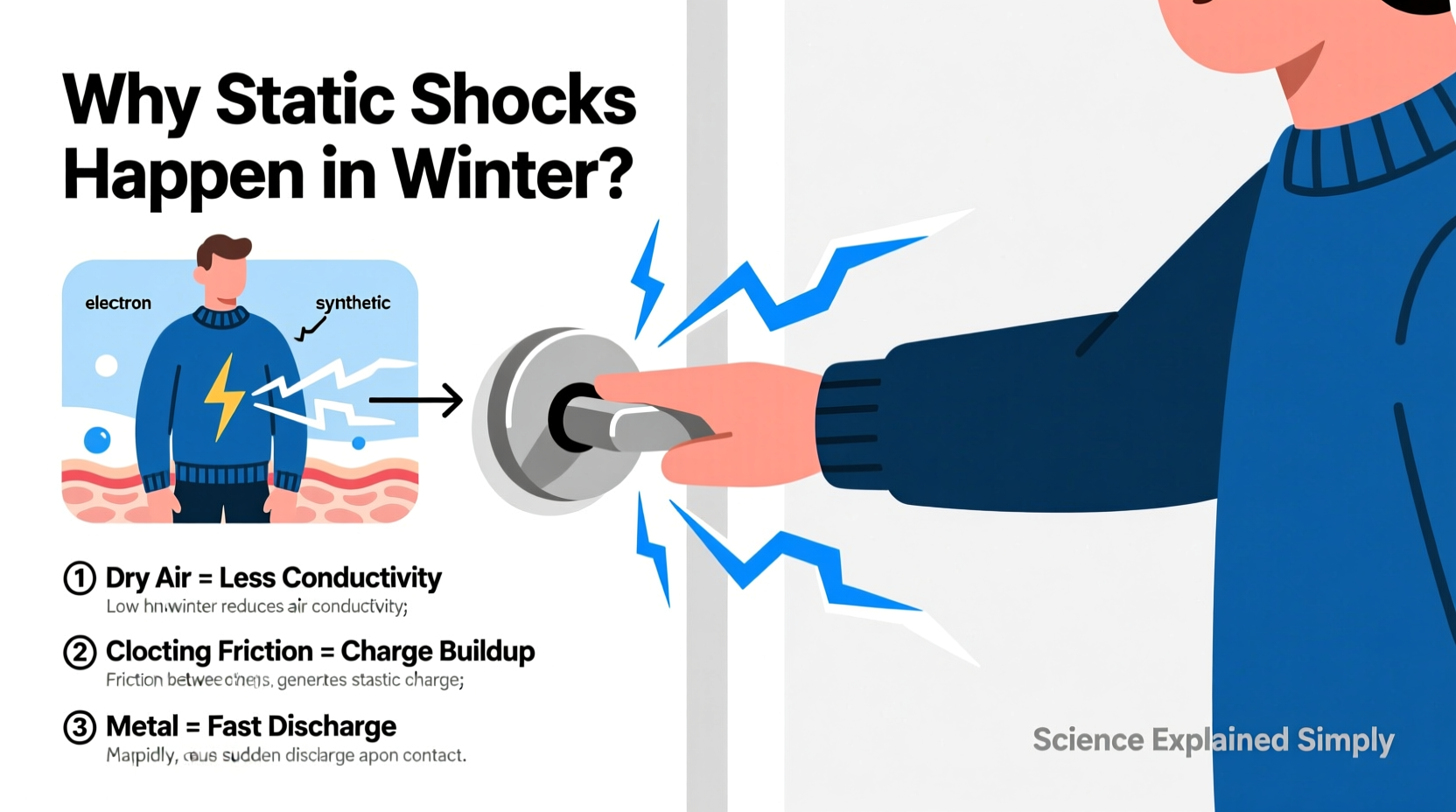
Static electricity occurs when there’s an imbalance of electric charges on the surface of a material. All matter is made up of atoms, which contain positively charged protons, neutral neutrons, and negatively charged electrons. Normally, atoms are balanced—equal numbers of protons and electrons—but when certain materials rub together, electrons can transfer from one surface to another.
This transfer creates an imbalance: one object becomes positively charged (losing electrons), while the other becomes negatively charged (gaining electrons). Since opposite charges attract, the built-up static charge seeks equilibrium. When you touch a conductive material like metal, that accumulated charge discharges rapidly, creating the familiar spark and shock sensation.
Metal is an excellent conductor of electricity, meaning it allows electrons to flow through it easily. That’s why shocks are most noticeable when touching metal objects. The sudden movement of electrons from your body into the metal is what produces the zap.
Why Winter Increases Static Shocks
Static shocks aren’t inherently seasonal, but they spike during winter due to environmental factors. The primary culprit is low humidity.
Air naturally contains water vapor, which helps dissipate electric charges. In humid conditions, moisture in the air acts as a conductor, allowing static charges to leak away gradually before they build up. However, cold winter air holds less moisture, and indoor heating further dries the air. This combination creates an ideal environment for static electricity to accumulate on surfaces—including your body.
According to the National Oceanic and Atmospheric Administration (NOAA), indoor relative humidity often drops below 30% in heated homes during winter, well below the recommended 40–60% range for comfort and static control.
In dry air, insulating materials like rubber-soled shoes, wool sweaters, and carpeted floors trap electrons effectively. As you walk across a carpet or remove a synthetic jacket, friction generates charge separation. Without moisture in the air to neutralize it, the charge remains on your body until you touch something conductive—like a metal doorknob or light switch plate.
“Winter’s low humidity turns our homes into static laboratories. The drier the air, the more likely electrons will cling to your clothes and skin.” — Dr. Alan Pierce, Physicist and Electrostatics Researcher
Common Situations That Trigger Static Discharge
Not all interactions produce shocks equally. Certain daily activities create perfect conditions for charge buildup and sudden discharge. Here are some typical scenarios:
- Walking across carpet: Synthetic carpets combined with rubber-soled shoes generate significant static through friction (known as triboelectric charging).
- Getting out of a car: Sliding across a vinyl or fabric seat builds charge, which discharges when you touch the metal frame upon exiting.
- Removing synthetic clothing: Pulling off a polyester sweater or hat can generate thousands of volts—enough to produce visible sparks in dark rooms.
- Touching electronics: Even small devices with metal casings can trigger a shock if your body is charged.
A real-world example illustrates this clearly: Sarah, a teacher in Minnesota, noticed she was getting shocked multiple times each day during January. After tracking her routine, she realized the shocks occurred mostly after walking down the school’s hallway (carpeted with nylon) and touching aluminum door handles. By switching to leather-soled shoes and using hand lotion regularly, she reduced her shocks by over 80% within a week.
Do’s and Don’ts: Managing Static Buildup
| Do’s | Don’ts |
|---|---|
| Use a humidifier to maintain indoor humidity above 40% | Run heaters constantly without monitoring humidity |
| Wear natural fibers like cotton or linen | Layer synthetic fabrics (polyester, acrylic, nylon) |
| Apply moisturizer to hands and skin daily | Go long periods without hydrating dry skin |
| Touch metal with a key or coin first to discharge safely | Reach directly for metal objects with bare fingers |
| Use anti-static sprays on carpets and upholstery | Ignore persistent shocks—they may indicate deeper issues |
Practical Steps to Reduce Winter Static Shocks
Preventing static shocks doesn’t require expensive equipment or major lifestyle changes. A few consistent habits can dramatically reduce the problem. Follow this step-by-step guide to minimize static buildup in your daily life.
- Measure indoor humidity. Use an inexpensive hygrometer to check levels in your home or office. If readings fall below 40%, consider adding moisture to the air.
- Install a humidifier. Whole-house models integrate with HVAC systems, but portable units work well in bedrooms or living areas. Aim to keep humidity between 40% and 50%.
- Switch footwear. Leather-soled shoes allow more charge dissipation than rubber soles. If you must wear rubber, try anti-static shoe straps or heel grounders.
- Choose clothing wisely. Layer cotton under sweaters, avoid wool-synthetic combinations, and use fabric softener when laundering clothes.
- Moisturize regularly. Dry skin is a better insulator, increasing charge retention. Applying lotion after washing hands improves conductivity and reduces shocks.
- Discharge before touching metal. Carry a metal object like a key or coin and touch it to a grounded surface first. This safely releases the charge without pain.
- Treat carpets and furniture. Anti-static sprays containing surfactants reduce surface resistance. Reapply monthly or after cleaning.
Frequently Asked Questions
Are static shocks dangerous?
For most people, static shocks are unpleasant but not harmful. The voltage can reach several thousand volts, but the current is extremely low and lasts only microseconds. However, individuals with sensitive medical devices like pacemakers should consult their doctor about repeated exposure. In rare industrial settings, static discharge can ignite flammable vapors, but household shocks pose no fire risk under normal conditions.
Can I prevent static shocks completely?
Eliminating them entirely is difficult, especially in very dry climates, but you can reduce their frequency and severity significantly. Combining humidity control, proper clothing choices, and grounding techniques makes shocks infrequent and often imperceptible. Complete prevention may not be necessary—managing them effectively is sufficient for comfort.
Why do I get shocked more than others?
Differences in body chemistry, footwear, gait, and clothing choices affect how much charge accumulates. People who shuffle their feet while walking generate more friction and thus more static. Others may naturally have drier skin or wear more synthetic materials without realizing it. It’s not personal—it’s physics interacting with lifestyle.
Expert Recommendations for Long-Term Prevention
Beyond immediate fixes, long-term strategies focus on modifying your environment and habits. Experts emphasize proactive measures rather than reactive ones.
Dr. Lena Torres, an environmental physicist at the University of Colorado, advises: “Think of static control as part of seasonal home maintenance—like changing furnace filters or sealing windows. Installing a central humidifier pays off in fewer shocks, better sleep, and improved respiratory health.”
She also recommends auditing high-shock zones: entryways, offices with synthetic flooring, and vehicles. Placing anti-static mats near doors, using ionizing air purifiers, or installing conductive floor finishes in problem areas can provide lasting relief.
“The best solution isn’t avoiding metal—it’s managing the charge before it builds up.” — Dr. Lena Torres, Environmental Physicist
Conclusion: Take Control of Winter Static
Static shocks when touching metal in winter are a predictable result of dry air, synthetic materials, and insulating footwear. While brief and generally harmless, they can disrupt daily comfort and even cause anxiety in sensitive individuals. Understanding the science empowers you to make informed choices—choosing breathable fabrics, maintaining indoor humidity, and adopting simple discharge techniques.
You don’t need to accept frequent zaps as an unavoidable winter annoyance. With consistent attention to your surroundings and habits, you can move through your days without bracing for the next shock. Start today by checking your home’s humidity, swapping out one synthetic layer for cotton, or carrying a key to discharge safely. Small actions lead to big improvements in comfort and peace of mind.




 浙公网安备
33010002000092号
浙公网安备
33010002000092号 浙B2-20120091-4
Comments
No comments yet. Why don't you start the discussion?