
Dreams have long fascinated both scientists and storytellers. Among the most unsettling and recurring dreams reported across cultures is the sensation of losing teeth—waking up in a cold sweat, heart racing, after watching your teeth crumble or fall out one by one. While not physically real, the emotional impact lingers. So why do so many people experience this strange and distressing dream? Psychologists and dream analysts suggest that dreams about missing teeth are rarely about dental health. Instead, they point to deeper psychological undercurrents tied to anxiety, transformation, self-image, and loss of control.
This phenomenon transcends geography and language. From ancient Mesopotamian dream tablets to modern psychoanalytic studies, tooth-loss dreams appear with surprising consistency. Whether you're clenching your jaw at work, navigating a major life change, or silently worrying about how others perceive you, these dreams may be your subconscious mind’s way of signaling internal tension. Understanding their meaning can offer clarity, reduce anxiety, and even inspire personal growth.
The Psychological Roots of Teeth-Loss Dreams
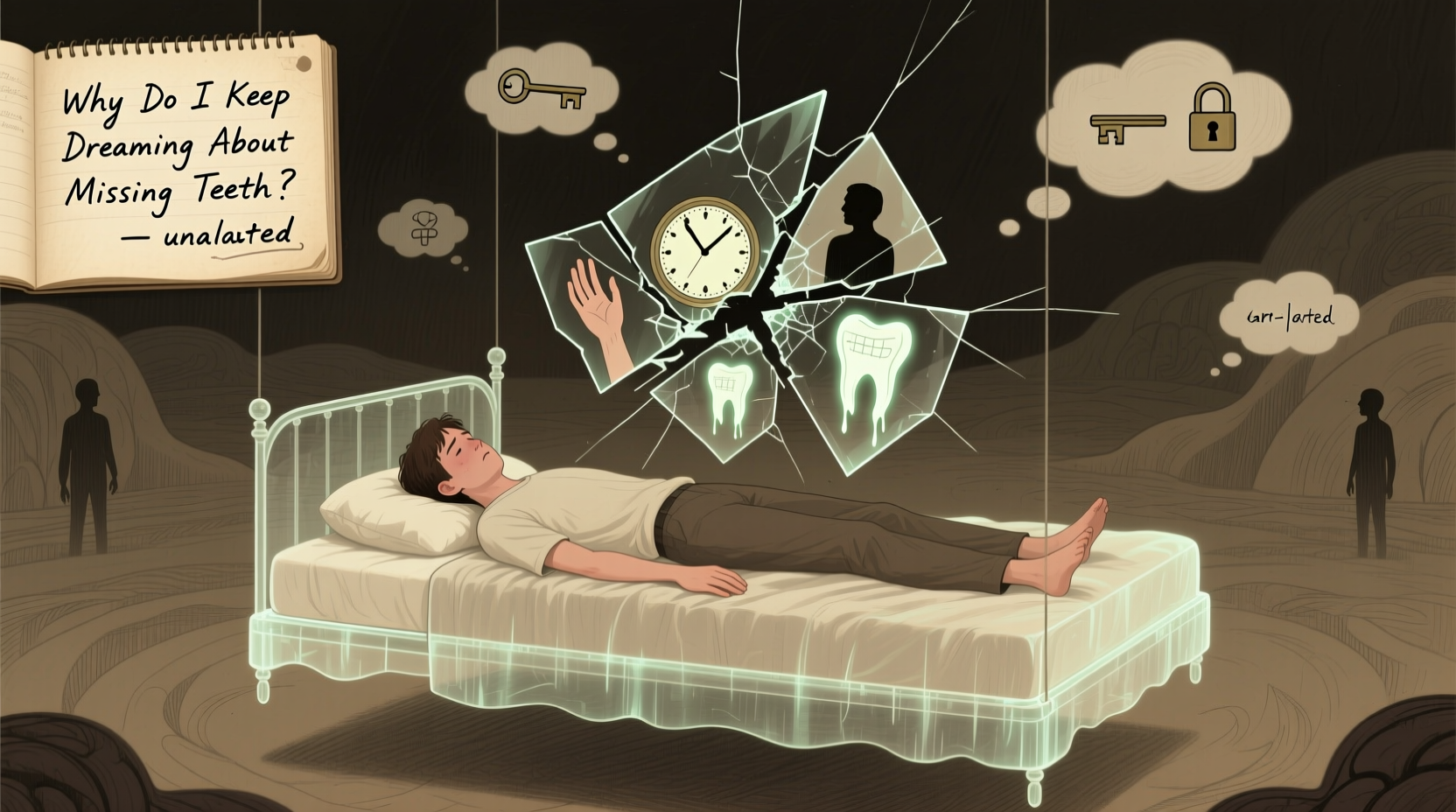
In dream analysis, teeth symbolize strength, confidence, communication, and attractiveness. When they fall out in a dream, it often reflects a perceived loss in one or more of these areas. Sigmund Freud, the pioneer of psychoanalysis, interpreted such dreams as expressions of repressed sexual desire or guilt. Carl Jung, his contemporary, viewed them differently—as signs of personal transformation or fears about aging and mortality.
Modern psychology leans toward a more nuanced understanding. Dr. Deirdre Barrett, a Harvard psychologist and dream researcher, explains:
“Teeth dreams are among the most universal symbols we see. They typically emerge during periods of high stress or transition—starting a new job, ending a relationship, facing public scrutiny. The mouth is where we speak and eat; it’s central to survival and social interaction. Losing teeth in a dream can symbolize a fear of being powerless in those domains.”
These dreams often surface when individuals feel exposed or vulnerable. For example, someone preparing for a high-stakes presentation might dream of their teeth crumbling mid-speech—an unconscious metaphor for fear of embarrassment or failure. Similarly, people undergoing identity shifts, such as career changes or breakups, report increased frequency of tooth-loss dreams.
Common Triggers Behind the Dream
While symbolic interpretations vary, research identifies several recurring triggers:
- Stress and Anxiety: High cortisol levels disrupt REM sleep and increase vivid, emotionally charged dreams.
- Life Transitions: Graduations, moves, divorces, or promotions can trigger subconscious fears of inadequacy.
- Poor Self-Esteem: Concerns about appearance, aging, or social acceptance often manifest in dreams about physical deterioration.
- Communication Fears: Difficulty expressing oneself or fear of saying the wrong thing may be symbolized by a failing mouth.
- Actual Dental Issues: Pain, grinding, or dental procedures can influence dream content through sensory feedback.
Cultural and Historical Perspectives on Tooth Dreams
The symbolism of teeth in dreams isn’t limited to Western psychology. In traditional Chinese dream interpretation, losing teeth signifies impending family conflict or the death of a relative. Middle Eastern folklore sometimes links such dreams to betrayal or financial loss. In contrast, some Indigenous traditions view tooth loss as a rite of passage—a sign that the dreamer is shedding old beliefs to make room for wisdom.
Despite cultural differences, the core emotion remains consistent: a sense of helplessness or change beyond one’s control. This universality suggests that tooth-loss dreams tap into a fundamental human concern—the fear of decline and the struggle to maintain agency in an unpredictable world.
A 2018 cross-cultural study published in the Journal of Sleep Research analyzed over 1,200 dream reports from six countries. It found that 67% of participants who reported teeth-loss dreams also scored high on anxiety scales, while 52% were experiencing significant life changes. The researchers concluded that “teeth dreams serve as emotional barometers,” reflecting internal stress more than literal dental concerns.
What Your Subconscious Might Be Telling You
Dreams don’t communicate in literal language. Instead, they use metaphors drawn from our daily experiences and deep-seated fears. When your subconscious presents you with a vision of crumbling teeth, consider what aspects of your waking life feel unstable or deteriorating.
For instance:
- If you’re starting a new role at work, the dream may reflect imposter syndrome—feeling like you don’t belong or aren’t qualified.
- If you’re in a strained relationship, the dream could symbolize fear of losing your voice or being unable to express your needs.
- If you’ve recently experienced a loss—of a loved one, a job, or a home—the dream may mirror grief and the feeling that something essential has been taken from you.
Interestingly, not all tooth-loss dreams are negative. Some people report dreams where teeth fall out painlessly, replaced by new, stronger ones. These variations may indicate readiness for renewal or relief after a difficult period.
Mini Case Study: Sarah’s Career Transition
Sarah, a 34-year-old graphic designer, began having recurring dreams about her front teeth cracking and falling out just weeks after accepting a promotion to creative director. Initially, she dismissed them as stress-related. But when the dreams persisted—sometimes multiple times a week—she started tracking them in a journal.
She noticed a pattern: the dreams occurred most frequently before team meetings or client presentations. Reflecting further, Sarah realized she felt unprepared for leadership. She feared making decisions that would affect her team and doubted her ability to command respect.
After discussing this with a therapist, Sarah recognized that her subconscious was highlighting a gap between her external success and internal confidence. With targeted coaching and mindfulness practices, her dreams gradually shifted—first to dreams of fixing her teeth, then to dreams of smiling confidently in meetings. Within three months, the tooth-loss dreams stopped entirely.
Do’s and Don’ts When Interpreting Your Dreams
Understanding dreams requires balance. While they offer valuable insights, they shouldn’t be treated as prophetic warnings. Use the following table to guide your interpretation without spiraling into anxiety.
| Do | Don't |
|---|---|
| Reflect on current stressors or transitions | Assume the dream predicts literal tooth loss or death |
| Look for emotional patterns (e.g., shame, fear, relief) | Ignore recurring dreams—frequency matters |
| Discuss troubling dreams with a therapist | Self-diagnose mental illness based on one dream |
| Use dreams as conversation starters with yourself | Obsess over finding a single \"correct\" interpretation |
| Practice grounding techniques if dreams cause anxiety | Suppress or avoid thinking about disturbing dreams |
How to Respond: A Step-by-Step Guide
If you’re repeatedly dreaming about missing teeth, here’s a practical approach to uncovering its meaning and reducing its impact:
- Record the Dream: As soon as you wake, jot down every detail—the number of teeth lost, whether it hurt, who was present, and how you felt afterward.
- Identify Triggers: Review recent events. Have you started a new job? Ended a relationship? Received criticism? Look for emotional parallels.
- Ask Guiding Questions:
- Where in my life do I feel powerless?
- Am I avoiding a difficult conversation?
- Do I feel judged or insecure about my appearance or abilities?
- Explore Symbolism: Replace \"teeth\" with \"confidence,\" \"voice,\" or \"control.\" Does the dream make more sense now?
- Take Action: If the dream points to unresolved stress, consider speaking with a counselor, setting boundaries, or practicing assertiveness skills.
- Monitor Changes: Track whether the dreams decrease as you address underlying issues. Improvement is a sign of progress, not imagination.
FAQ: Common Questions About Teeth-Loss Dreams
Does dreaming about missing teeth mean I’m going to lose them in real life?
No. There is no scientific evidence linking these dreams to actual dental problems. However, if you grind your teeth at night (bruxism), the physical sensation might influence your dreams. Consult a dentist if you suspect oral health issues.
Are teeth-loss dreams more common in certain age groups?
They occur across ages but are especially frequent in young adults (18–30) and midlife (40–55)—periods marked by major transitions like career building, parenting, or reevaluating life goals. Adolescents may also experience them during puberty, linked to body image concerns.
Can medication or diet affect these dreams?
Yes. Certain antidepressants, beta-blockers, and stimulants can alter dream vividness. Alcohol and heavy meals before bed may also increase intense dreaming. Consider adjusting timing or consulting your doctor if dreams become disruptive.
When to Seek Professional Help
Occasional disturbing dreams are normal. But if teeth-loss dreams are frequent, cause insomnia, or lead to daytime anxiety, it may be time to consult a mental health professional. Chronic nightmares can be symptoms of underlying conditions such as PTSD, generalized anxiety disorder, or unresolved trauma.
Therapies like Cognitive Behavioral Therapy for Insomnia (CBT-I) or Imagery Rehearsal Therapy (IRT) have proven effective in reshaping nightmare content. In IRT, patients rewrite distressing dreams into positive narratives, which can reduce recurrence over time.
“Dreams about losing teeth are not red flags—they’re signposts. They point toward areas of life where we feel vulnerable. Listening to them with curiosity, not fear, is the first step toward healing.” — Dr. Lena Torres, Clinical Psychologist and Dream Specialist
Final Thoughts: Turning Fear Into Insight
Dreams about missing teeth are not omens of doom. They are invitations to look inward. Like a check engine light, they signal that something in your emotional landscape needs attention. Rather than brushing them off—or panicking—approach them with compassion and curiosity.
By exploring what these dreams represent in your unique life context, you gain access to a powerful tool for self-awareness. You may discover hidden anxieties, unmet needs, or untapped strengths. Most importantly, you reclaim power—not over the dream, but over your response to it.




 浙公网安备
33010002000092号
浙公网安备
33010002000092号 浙B2-20120091-4
Comments
No comments yet. Why don't you start the discussion?