
If you’ve ever reached for a doorknob, petted your dog, or touched a car door only to feel a sudden zap, you’re not alone. Static shocks are especially common during winter months, turning everyday actions into mildly painful surprises. While they’re usually harmless, repeated jolts can be annoying—and sometimes startling enough to make you rethink touching metal altogether. The good news is that these shocks aren’t random acts of nature. They stem from well-understood principles of physics and environmental conditions. Understanding the science behind static electricity—and how winter amplifies it—can help you take control and reduce those shocks significantly.
The Science Behind Winter Static Shocks
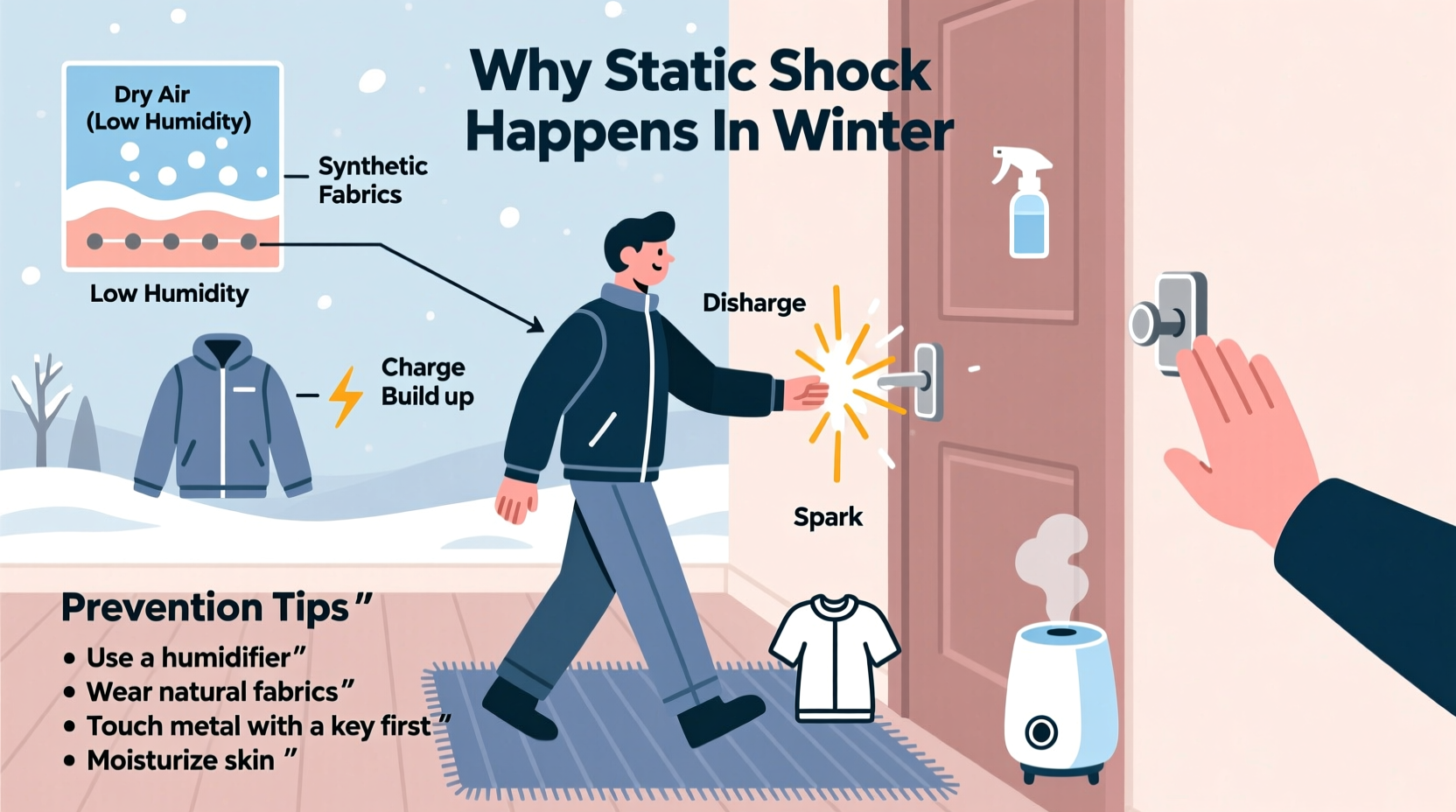
Static electricity occurs when there’s an imbalance of electric charges on the surface of materials. This imbalance builds up until it finds a way to discharge—often through you. When two different materials rub together, electrons transfer from one surface to another. For example, walking across a carpet in rubber-soled shoes causes electrons to move from the carpet to your body, leaving you negatively charged. When you then touch a conductor like a metal doorknob, the excess electrons jump rapidly to the metal, creating a spark you feel as a shock.
This process, known as triboelectric charging, happens year-round. But why does it seem so much worse in winter? The answer lies primarily in humidity—or rather, the lack of it. Cold winter air holds less moisture than warm air, leading to drier indoor environments, especially with heating systems running. Dry air is a poor conductor of electricity, which means charges build up more easily on surfaces and people instead of dissipating gradually.
In contrast, during humid summer months, water molecules in the air help conduct small electrical charges away before they accumulate. Without this natural discharge path, winter becomes prime time for static buildup. Even simple actions like removing a synthetic sweater or sliding off a vinyl car seat can generate thousands of volts—though at very low current, making them startling but rarely dangerous.
Why Indoor Heating Makes It Worse
Central heating systems, space heaters, and radiators all contribute to lower indoor humidity levels. As cold outdoor air is warmed indoors, its relative humidity drops dramatically—even if the absolute moisture content stays the same. For instance, outside air at 35°F (2°C) and 70% relative humidity will drop to about 20% relative humidity when heated to 70°F (21°C) inside your home.
At such low humidity levels, insulating materials like carpets, synthetic clothing, and plastic furniture become ideal surfaces for charge accumulation. Your body, acting as a conductor, picks up these charges easily. Since dry skin also has higher electrical resistance, the charge remains trapped longer, increasing the likelihood of a sudden discharge when you touch something grounded.
Additionally, modern homes are better insulated and sealed than in the past, reducing natural air exchange. While this improves energy efficiency, it also traps dry air inside, compounding the problem. Older homes with drafty windows may actually experience fewer static shocks simply because more moist outdoor air can enter.
“Low humidity is the single biggest factor in winter static. Keeping indoor air above 40% RH drastically reduces electrostatic events.” — Dr. Alan Pierce, Atmospheric Physicist, National Climate Lab
Common Situations That Trigger Static Shocks
Certain daily activities are notorious for generating static electricity. Recognizing these scenarios helps you anticipate and prevent shocks:
- Walking across carpet: Especially with synthetic fibers and rubber-soled shoes, this is one of the most common charge generators.
- Getting out of a car: Sliding across a polyester or vinyl seat builds charge; touching the metal frame discharges it through your hand.
- Removing synthetic clothing: Pulling off a fleece jacket or polyester hoodie often produces visible sparks in dark rooms.
- Touching electronics: Computer cases, TV screens, and even phone chargers can accumulate residual charge.
- Petting animals: Fur, especially dry winter fur, readily generates static when stroked.
Mini Case Study: Office Worker’s Shock Dilemma
Sarah, a marketing manager in Chicago, began noticing frequent shocks every time she touched her desk lamp or printer. Her office had wall-to-wall nylon carpet, overhead fluorescent lights, and constant forced-air heating. After consulting her building’s maintenance team, they discovered the indoor humidity was only 18%. Once portable humidifiers were placed near workstations and Sarah switched to leather-soled shoes, her shocks dropped by over 90% within a week. The solution wasn’t expensive—just informed.
Effective Prevention Tips to Reduce Static Shocks
You don’t need to live with constant zaps. With a few strategic changes, you can significantly reduce or even eliminate static shocks during winter.
1. Increase Indoor Humidity
Maintaining indoor relative humidity between 40% and 60% is the most effective way to prevent static buildup. Moist air allows charges to dissipate naturally. Use a hygrometer to monitor levels and adjust accordingly.
2. Choose Natural-Fiber Clothing
Synthetic fabrics like polyester, nylon, and acrylic are major contributors to static. Opt for cotton, wool, silk, or linen, which generate less charge and wick moisture better. Layering cotton under sweaters can make a noticeable difference.
3. Treat Carpets and Upholstery
Anti-static sprays containing surfactants can be applied to carpets, rugs, and car seats. These create a thin conductive layer that prevents charge accumulation. Alternatively, adding a fabric softener solution (one part softener to five parts water) to a spray bottle works as a DIY alternative.
4. Wear Leather-Soled Shoes
Rubber and synthetic soles insulate your body from the ground, allowing charge to build. Leather soles, on the other hand, allow slight conductivity, helping dissipate charge as you walk. If you must wear rubber-soled shoes, consider anti-static heel straps or grounding shoe inserts.
5. Ground Yourself Before Touching Metal
Before grabbing a doorknob or car door, touch a non-metal surface first—like a wooden door frame or concrete wall—to slowly discharge. Alternatively, carry a metal key and tap it against the object first. The spark will jump to the key, not your finger, minimizing pain.
| Prevention Method | Effectiveness | Cost | Effort Level |
|---|---|---|---|
| Use a humidifier | ★★★★★ | $$ | Low |
| Wear cotton clothing | ★★★★☆ | $ | Low |
| Apply anti-static spray | ★★★☆☆ | $ | Moderate |
| Switch to leather shoes | ★★★☆☆ | $$$ | Moderate |
| Ground yourself with a key | ★★★★☆ | Free | Very Low |
Step-by-Step Guide to a Static-Free Winter
Follow this timeline to systematically reduce static shocks in your daily life:
- Week 1: Assess Your Environment
Buy a hygrometer to measure indoor humidity. Check common shock zones: entryways, office chairs, cars. - Week 2: Introduce Humidity Control
Place a humidifier in your bedroom or main living area. Aim for 40–60% RH. - Week 3: Audit Your Wardrobe
Replace synthetic socks, sweaters, and pajamas with cotton or wool alternatives. Wash clothes with dryer sheets or wool dryer balls. - Week 4: Modify Daily Habits
Adopt grounding techniques—use a key to touch metal objects first. Keep skin moisturized to improve conductivity. - Ongoing: Maintain & Monitor
Reapply anti-static treatments monthly. Recheck humidity weekly. Adjust as needed based on comfort and shock frequency.
Frequently Asked Questions
Are static shocks dangerous?
For most healthy people, static shocks are harmless. They typically range from 5,000 to 15,000 volts but carry almost no current. However, individuals with pacemakers or sensitive medical devices should consult their doctor, as strong discharges near the chest could theoretically interfere with device function—though this is extremely rare in everyday situations.
Why do I get shocked more at work than at home?
Workplaces often have large carpeted areas, synthetic office chairs, and centralized HVAC systems that dry the air. Add in frequent movement and contact with electronic equipment, and you’ve got a perfect storm for static buildup. Consider placing a small humidifier at your desk and wearing natural-fiber socks under dress shoes.
Can drinking more water reduce static shocks?
Indirectly, yes. Hydrated skin has better conductivity and is less prone to holding onto static charge. While drinking water won’t change the air’s humidity, it can improve your body’s ability to dissipate small charges before they build up.
Final Checklist: Stay Shock-Free This Winter
- ✅ Measure indoor humidity with a hygrometer
- ✅ Run a humidifier in frequently used rooms
- ✅ Switch to cotton or wool clothing and bedding
- ✅ Use dryer sheets or wool dryer balls in laundry
- ✅ Apply anti-static spray to carpets and car seats
- ✅ Wear leather-soled shoes indoors when possible
- ✅ Moisturize skin regularly, especially hands and arms
- ✅ Carry a metal key to discharge before touching metal
- ✅ Avoid dragging feet on carpeted floors
- ✅ Ground yourself after standing up or removing layers
Conclusion
Static shocks in winter aren’t a mystery—they’re the result of predictable physical processes amplified by dry indoor air and synthetic materials. By understanding the science and taking practical steps, you can reclaim your comfort and avoid those jarring little surprises. Small changes in clothing, environment, and habits add up to big improvements. Don’t wait for another painful zap to act. Start today by checking your home’s humidity and choosing one prevention method to implement right away. A shock-free winter is within reach.




 浙公网安备
33010002000092号
浙公网安备
33010002000092号 浙B2-20120091-4
Comments
No comments yet. Why don't you start the discussion?