
Procrastination is often misunderstood as laziness or poor time management. But what happens when you have nothing else to do—no deadlines, no distractions—and still can't bring yourself to start a task? That’s when it becomes clear: the problem isn’t time, it’s emotion. Procrastination in free time reveals something deeper than disorganization; it exposes an internal resistance rooted in fear. Understanding this fear is the first step toward breaking the cycle.
People assume that with open schedules, productivity should soar. Yet many find themselves scrolling endlessly, reorganizing their desk, or suddenly “needing” to deep-clean the kitchen instead of writing that essay, starting therapy, or launching a side project. The irony is stark: freedom doesn’t always liberate action—it can amplify avoidance.
The Myth of Motivation
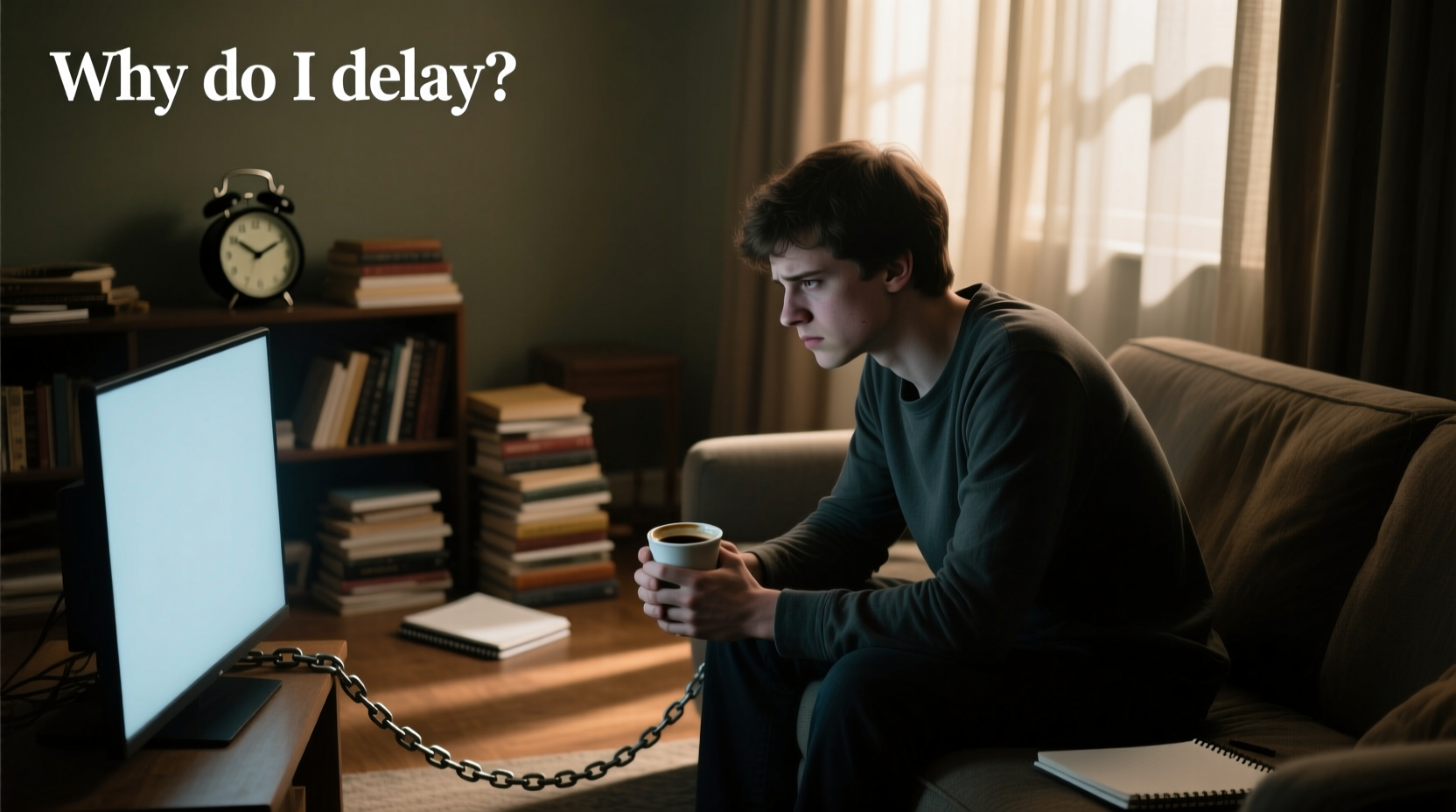
Motivation is not a prerequisite for action—it’s often a byproduct. Waiting to feel motivated before beginning a task gives emotional states too much power over behavior. When we say, “I’ll do it when I’m in the mood,” we hand control to fleeting feelings rather than intention.
This reliance on motivation masks a deeper issue: discomfort. Tasks avoided during free time are typically those tied to identity, self-worth, or long-term goals—writing a book, applying for jobs, ending a toxic relationship. These aren’t just chores; they’re decisions that force us to confront who we are and who we might become.
What Fear Hides Behind Free-Time Procrastination
When external pressures are removed, the reasons for delay shift inward. There’s no boss breathing down your neck, no teacher demanding submission. So why stall?
The answer lies in four core fears that often go unnamed:
- Fear of failure: Even when no one is watching, failing feels like proof of inadequacy. Starting means risking imperfection.
- Fear of success: Achieving a goal may bring new expectations, visibility, or responsibility—changes that feel threatening.
- Fear of judgment: Sharing creative work, setting boundaries, or asserting needs invites scrutiny, real or imagined.
- Fear of self-discovery: Some tasks force introspection—journaling, therapy, career planning—that risks uncovering truths we’d rather avoid.
These fears don’t announce themselves. They operate silently, shaping behavior through subtle avoidance. You might tell yourself you’re “not in the right headspace” or “waiting for clarity,” but beneath that language is a protective instinct: better to do nothing than risk discomfort.
“Procrastination is not about managing time; it’s about managing emotions. We delay tasks that trigger anxiety, insecurity, or shame—even when those tasks matter deeply.” — Dr. Tim Pychyl, author of *Solving the Procrastination Puzzle*
How Perfectionism Fuels Avoidance
Perfectionism is one of the most common drivers of procrastination during free time. It masquerades as a high standard but functions as a defense mechanism. If you never finish—or never begin—you can’t be judged for the quality of your work.
Consider the aspiring writer who spends years collecting notebooks, researching fonts, and reading about plot structure but never writes a chapter. Their environment is optimized, their knowledge vast—but their fear of producing something imperfect keeps them stuck.
Perfectionism creates an impossible standard: the work must be flawless before it exists. This leads to paralysis. And because free time removes urgency, there’s no external push to override the inner critic.
| Perfectionist Thought | Reality Check |
|---|---|
| \"If it's not perfect, it's worthless.\" | No meaningful work starts perfect. First drafts are supposed to be messy. |
| \"People will think less of me if I make mistakes.\" | Growth requires errors. Most admire courage to try more than polished results. |
| \"I should already know how to do this.\" | Learning involves uncertainty. Not knowing is part of the process. |
A Step-by-Step Guide to Uncover Your Root Fear
To stop procrastinating when you have time, you must identify what you're really avoiding. Use this five-step reflection process:
- Choose the avoided task: Name it specifically—e.g., “start my resume,” “email my therapist,” “publish my article.”
- Pause before distraction: Next time you reach for your phone or switch tasks, pause for 10 seconds. Ask: What am I escaping right now?
- Journal the resistance: Write freely about the task. Include phrases like: “What I’m afraid of is…” or “If I do this, people might think…”
- Identify the worst-case scenario: What’s the disaster you’re trying to prevent? Failure? Rejection? Being seen as incompetent?
- Test the fear: Ask: Has this outcome happened before? Was it as bad as feared? Can I handle it if it does?
This process doesn’t eliminate fear—it makes it visible. Once named, fear loses some of its power. You begin to see that avoidance isn’t protecting you; it’s limiting you.
Mini Case Study: Sarah and the Unsent Manuscript
Sarah, a 34-year-old teacher, spent three years writing a novel in her spare time. She had weekends free, supportive friends, and no urgent obligations. Yet she never submitted her manuscript to agents.
She told herself she was “refining the ending” and “waiting for the right moment.” In reality, she was terrified of two things: that no agent would respond (rejection), and that one might—and then she’d have to become a “real writer” (identity shift).
During therapy, she completed the fear identification exercise. Her journal revealed: “If someone likes my book, they’ll expect another. I don’t know if I can deliver. And if they hate it, it means I wasted years.”
Once these fears were exposed, Sarah didn’t magically send her manuscript. But she stopped judging herself. She began sharing chapters with trusted readers. Six months later, she submitted to five agents—two requested fulls. Whether she gets representation matters less than this: she acted despite fear.
Do’s and Don’ts of Emotional Procrastination Management
| Do | Don’t |
|---|---|
| Validate your fear without obeying it | Tell yourself you \"shouldn't\" feel afraid |
| Start small to build tolerance for discomfort | Wait until you feel “ready” or “confident” |
| Use curiosity: “What happens if I try?” | Assume the outcome based on worst-case thinking |
| Separate worth from performance | Let one task define your value as a person |
| Reflect on past successes doing hard things | Focus only on current resistance as proof of inability |
Building Tolerance for Emotional Discomfort
Procrastination isn’t solved by better planners or stricter routines. It’s reduced by increasing your capacity to sit with unease. Like building muscle, emotional resilience grows through repeated, manageable exposure.
Practice this daily: choose one tiny action linked to a feared task. Send one email. Write 100 words. Make the appointment. The goal isn’t completion—it’s proving to yourself that discomfort is survivable.
Over time, your nervous system learns: “I felt anxious, I did it anyway, and I’m okay.” This rewires the subconscious belief that avoidance is necessary for safety.
“The ability to tolerate discomfort is the single most important skill in overcoming procrastination. Action precedes confidence—not the other way around.” — Dr. Neff, Clinical Psychologist & Self-Compassion Researcher
Checklist: Breaking Free from Fear-Based Procrastination
- ☑ Identify one task you’ve been avoiding despite having time
- ☑ Write down the specific fear associated with starting it
- ☑ Challenge the fear: Is it based on fact or assumption?
- ☑ Commit to a two-minute version of the task today
- ☑ Reflect afterward: What did you learn about the fear vs. reality?
- ☑ Repeat with increasing difficulty over the next week
FAQ
Isn’t procrastination just about poor discipline?
No. While discipline helps, chronic procrastination—especially when time is available—is emotionally driven. It’s a coping mechanism for anxiety, fear of judgment, or identity threats. Addressing the emotional root is more effective than forcing willpower.
How do I know if I’m procrastinating due to fear or genuine lack of interest?
Ask: Does the thought of doing the task make me tense, restless, or mentally foggy? Fear-based avoidance comes with internal resistance. Lack of interest feels more like apathy or neutrality. If you feel guilt or mental blocks, it’s likely fear.
Can self-compassion really help with procrastination?
Yes. Research shows self-compassionate individuals procrastinate less. Why? Because they don’t fear self-punishment for imperfection. Treating yourself with kindness reduces the emotional threat of failure, making action easier.
Conclusion: Move With Fear, Not Without It
Having free time should be liberating, but for many, it amplifies inner conflict. When nothing is stopping you except yourself, the truth emerges: you’re not avoiding the task—you’re avoiding what the task represents.
The path forward isn’t perfection, discipline, or waiting for fear to disappear. It’s acknowledgment. Name the fear. Understand its origin. Then act anyway, starting small. Every time you move forward while feeling afraid, you weaken procrastination’s grip.
You don’t need more time. You need more willingness—to be imperfect, to be judged, to grow into someone who does the thing even when it’s hard.




 浙公网安备
33010002000092号
浙公网安备
33010002000092号 浙B2-20120091-4
Comments
No comments yet. Why don't you start the discussion?