
Procrastination is not always about laziness. In fact, many people who struggle with putting off tasks are highly motivated, capable, and genuinely want to complete their work. Yet, they find themselves paralyzed—staring at a blank document, avoiding an important call, or scrolling endlessly through social media instead of starting. This phenomenon, known as task paralysis, is rooted in neuroscience, psychology, and emotional regulation. Understanding why it happens—and how to move through it—is essential for anyone striving to be productive without sacrificing mental well-being.
The Paradox of Wanting to Work But Not Starting
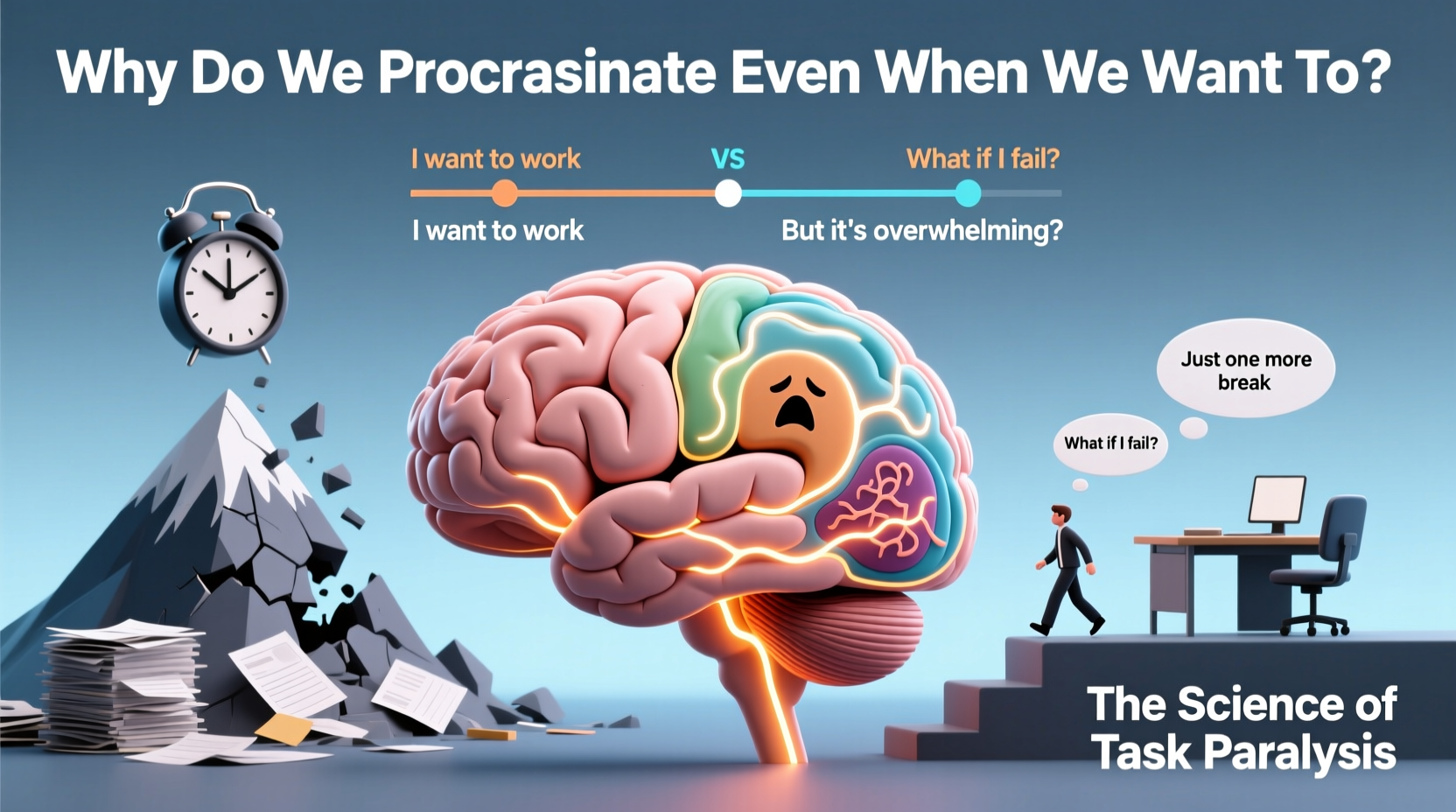
Task paralysis occurs when there’s a disconnect between intention and action. You know what needs to be done. You may even feel urgency or anxiety about it. But when it comes time to begin, something inside resists. This isn’t a failure of discipline; it’s often a protective mechanism triggered by your brain.
Neuroscientists have found that when we anticipate a task—especially one perceived as difficult, boring, or emotionally charged—the limbic system (the brain’s emotional center) activates before the prefrontal cortex (responsible for planning and decision-making). The limbic system doesn’t distinguish between physical threats and psychological discomfort. To it, a looming deadline or a high-stakes presentation feels like danger. So it pushes back, urging you toward immediate relief—distraction, delay, comfort.
This explains why willpower alone rarely works. You’re not weak-willed; you’re caught in a biological response designed to avoid pain—even if that pain is just mild stress or uncertainty.
The Role of Emotion Regulation in Procrastination
Modern research shows that procrastination is less about time management and more about mood regulation. Dr. Fuschia Sirois, a leading researcher on procrastination, explains: “People delay tasks not because they don’t care, but because they’re trying to cope with negative emotions associated with the task.”
“We procrastinate to feel better in the short term, but at a long-term cost to our performance and well-being.” — Dr. Fuschia Sirois, Health Psychologist
Common emotional triggers include:
- Fear of failure: Worry that your work won’t meet expectations.
- Perfectionism: Believing that anything less than flawless output is unacceptable.
- Overwhelm: Facing a large or ambiguous task with no clear starting point.
- Imposter syndrome: Doubting your ability despite evidence of competence.
- Boredom or lack of intrinsic motivation: Tasks that feel meaningless or repetitive.
Each of these generates discomfort. And because your brain seeks homeostasis—emotional balance—it defaults to behaviors that offer quick relief: checking email, organizing your desk, or watching videos. These aren’t distractions by accident; they’re emotional coping mechanisms.
Breaking Down Task Paralysis: A Step-by-Step Approach
Overcoming task paralysis requires working with your brain, not against it. Here’s a science-backed method to get unstuck:
- Identify the emotional barrier. Ask: What am I afraid will happen if I start? Is this task tied to self-worth? Does it feel too big?
- Lower the activation energy. Make starting as easy as possible. Open the document. Write one sentence. Set a timer for two minutes.
- Focus on process, not outcome. Shift from “I need to finish this report” to “I’ll spend 15 minutes drafting an outline.”
- Use implementation intentions. Plan specific triggers: “When I sit at my desk after breakfast, I will open my project file and write for 10 minutes.”
- Reframe progress. Acknowledge small wins. Starting is an achievement when paralysis is the obstacle.
The goal isn’t to eliminate discomfort but to build tolerance for it. Like a muscle, your capacity to act despite unease grows with practice.
Do’s and Don’ts When Facing Task Paralysis
| Do’s | Don’ts |
|---|---|
| Break tasks into micro-actions (e.g., “Open notebook,” “Write heading”) | Try to “just push through” using willpower alone |
| Name the emotion you're feeling (“This feels overwhelming”) | Label yourself as lazy or undisciplined |
| Use a 2-minute rule: commit to working for only 120 seconds | Wait until you “feel ready” or motivated |
| Work in short bursts with scheduled breaks (Pomodoro technique) | Attempt to finish everything in one sitting |
| Practice self-compassion when you stall | Criticize yourself harshly for delaying |
A Real Example: How Sarah Overcame Her Writing Block
Sarah, a graduate student, had been avoiding her thesis for three weeks. She wanted to work—she set goals, created schedules, and even cleared her weekends—but each time she sat down, she’d end up browsing academic forums or cleaning her apartment. She felt guilty and confused.
In coaching, she realized her paralysis stemmed from perfectionism. She believed her introduction had to be “perfect” to justify continuing. The pressure made the task feel existential: if the intro wasn’t brilliant, the whole thesis would fail.
With guidance, she shifted her approach:
- She renamed her draft file “Terrible First Draft” to reduce pressure.
- She committed to writing one paragraph in 10 minutes, no editing allowed.
- She scheduled writing for 15 minutes right after her morning coffee—a consistent trigger.
Within days, she completed a rough draft. It wasn’t perfect. But it existed. And once it did, revising felt manageable. The emotional weight lifted, and momentum built naturally.
Sarah’s experience illustrates a key truth: action often precedes motivation, not the other way around.
Strategies That Build Sustainable Momentum
To prevent recurring paralysis, integrate habits that support consistent action:
1. Pre-commitment Rituals
Create a short routine before working: pour water, close unnecessary tabs, play focus music. These signals train your brain that work is beginning.
2. Environmental Design
Reduce friction. Keep your workspace clean and task-specific. If you write daily, leave your document open and visible.
3. Emotional Check-Ins
Before starting, pause and ask: “How am I feeling about this task?” Naming emotions reduces their intensity and increases self-awareness.
4. Progress Tracking Without Judgment
Use a simple log: “Started at 10:15 AM, wrote for 12 minutes.” Focus on behavior, not results. Over time, patterns emerge that help refine your approach.
FAQ: Common Questions About Task Paralysis
Is procrastination a sign of low motivation?
Not necessarily. Many chronic procrastinators are deeply motivated—they care intensely about outcomes. The issue isn’t lack of desire, but emotional interference that blocks action. High stakes often increase pressure, making it harder to start.
Can ADHD explain persistent task paralysis?
Yes. For individuals with ADHD, executive function challenges—such as initiating tasks, sustaining attention, and regulating emotions—can make task paralysis more frequent and intense. However, even those without ADHD experience similar patterns under stress or fatigue.
Why do I procrastinate on things I enjoy?
Even enjoyable tasks can trigger avoidance if they carry emotional weight—like fear of disappointing others, losing creative inspiration, or disrupting identity (e.g., “If I’m not brilliant, am I still a good writer?”). The emotional load, not the task itself, drives the delay.
Checklist: How to Move Forward When Stuck
Next time you feel paralyzed, walk through this checklist:
- ☐ Pause and breathe for 60 seconds.
- ☐ Name the emotion you’re feeling (e.g., anxious, overwhelmed, bored).
- ☐ Break the task into the smallest possible first step.
- ☐ Set a timer for 2–5 minutes and commit to doing only that step.
- ☐ After the timer, decide whether to continue or stop—no guilt either way.
- ☐ Reward yourself for starting, even if you didn’t finish.
- ☐ Reflect afterward: What helped? What could be easier next time?
This process shifts your mindset from self-criticism to problem-solving. Over time, it rewires your relationship with difficulty.
Conclusion: Redefining Productivity Through Self-Understanding
Task paralysis is not a personal flaw. It’s a signal—a message from your nervous system that something feels unsafe, uncertain, or emotionally taxing. By treating it with curiosity rather than judgment, you unlock a deeper form of productivity: one rooted in self-awareness, compassion, and sustainable effort.
You don’t need more willpower. You need better strategies for navigating internal resistance. Start small. Be kind to yourself. Celebrate beginnings, not just completions. Every time you gently guide yourself back to action, you strengthen the neural pathways that make future starts easier.




 浙公网安备
33010002000092号
浙公网安备
33010002000092号 浙B2-20120091-4
Comments
No comments yet. Why don't you start the discussion?