
It’s a familiar pattern: a deadline approaches, urgency builds, yet instead of acting, you find yourself scrolling through social media, reorganizing your desk, or suddenly deciding it's the perfect time to deep-clean the kitchen. You know the task matters. You want to succeed. So why can’t you start?
Contrary to popular belief, procrastination isn’t about laziness or poor time management. For many, especially high achievers, it’s rooted in something deeper—fear of failure. This emotional barrier masquerades as avoidance, manifesting not in defiance but in delay. Understanding this connection is the first step toward breaking the cycle and reclaiming productivity.
The Hidden Psychology Behind Procrastination
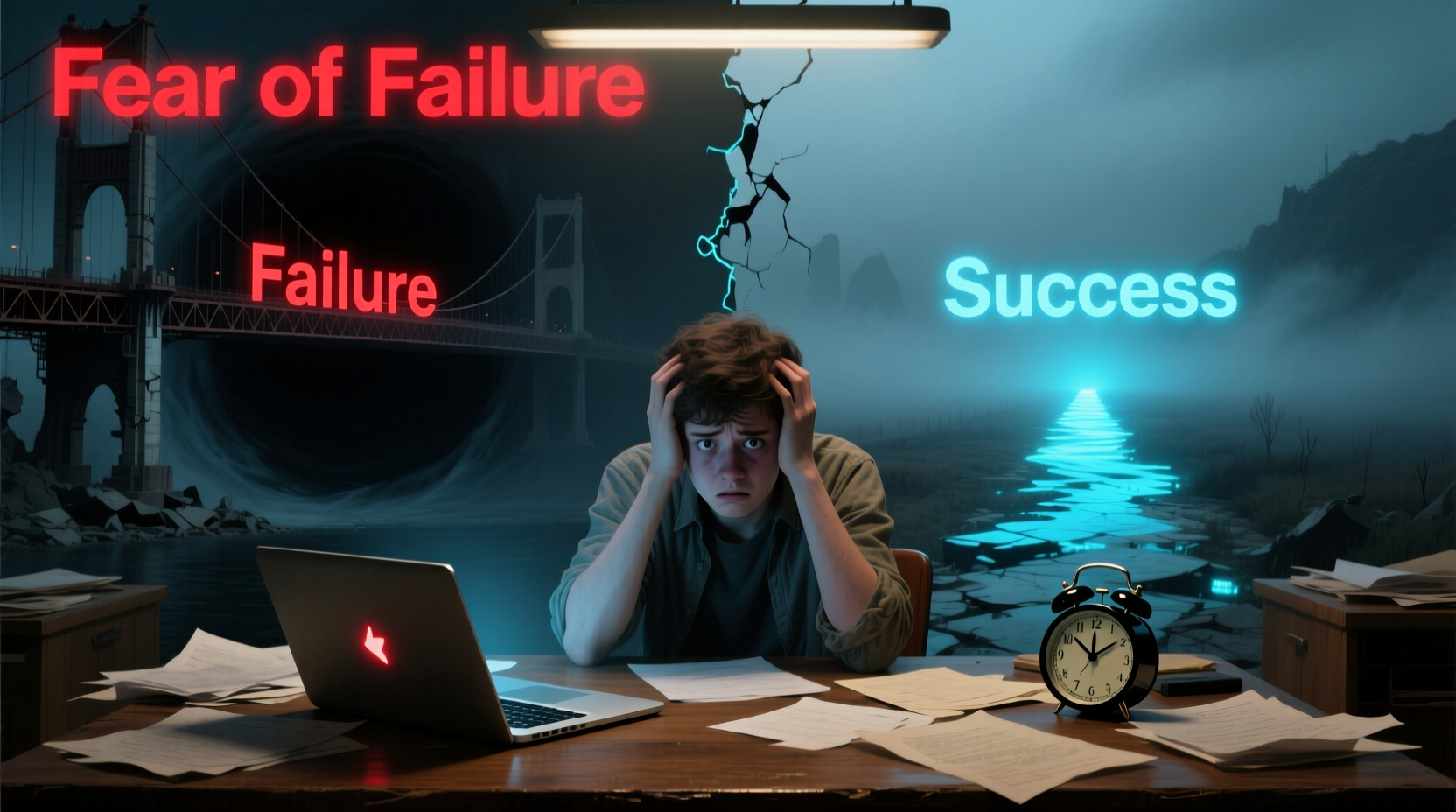
Procrastination is often misunderstood as a failure of discipline. But research in cognitive psychology reveals a more nuanced truth: it’s an emotional regulation problem, not a time management one. When a task triggers anxiety, self-doubt, or fear of not meeting expectations, the brain seeks immediate relief. Delaying the task provides that relief—temporarily.
Dr. Tim Pychyl, a leading researcher on procrastination at Carleton University, explains:
“Procrastination is about feeling bad now and wanting to feel better now. We delay tasks not because we’re lazy, but because we’re trying to escape negative emotions associated with them.” — Dr. Tim Pychyl, Procrastination Researcher
Fear of failure intensifies these emotions. The higher the stakes, the greater the pressure to perform perfectly. And when perfection feels unattainable, the mind defaults to avoidance. It’s not that you don’t care; it’s that you care too much.
How Fear of Failure Fuels the Procrastination Cycle
Fear of failure doesn’t always announce itself dramatically. It operates subtly, shaping behavior through subconscious beliefs like:
- “If I fail, it means I’m not good enough.”
- “Others will think less of me if my work isn’t flawless.”
- “Success should come easily—if I struggle, I must be inadequate.”
These beliefs create a paradox: the desire to succeed becomes so intense that the risk of falling short feels unbearable. Procrastination then serves as a protective mechanism. By delaying, you create an excuse: “I didn’t fail because I’m incapable—I failed because I started late.” This preserves self-esteem, even as performance suffers.
This is known as self-handicapping. You unconsciously sabotage your own success to protect your identity from the blow of potential failure.
Breaking the Pattern: A Step-by-Step Guide to Overcoming Fear-Based Procrastination
Escaping the procrastination trap requires more than willpower. It demands a shift in mindset and habits. Here’s a practical, evidence-based approach:
- Identify the Emotion Driving Delay
Pause before avoiding a task. Ask: “What am I feeling right now?” Is it anxiety? Shame? Overwhelm? Naming the emotion reduces its power. - Reframe Failure as Feedback
Instead of viewing mistakes as proof of inadequacy, see them as data. Each misstep teaches you what doesn’t work, bringing you closer to what does. - Start with the Smallest Possible Action
Open the document. Write one sentence. Set a timer for five minutes. Momentum builds from motion, not motivation. - Separate Creation from Evaluation
Write the draft without editing. Sketch the idea without judging. Allow imperfection in the first phase—refinement comes later. - Use Implementation Intentions
Replace vague plans (“I’ll work on it later”) with specific ones: “I will write 300 words at 9 a.m. at my desk.” Clarity reduces decision fatigue.
Do’s and Don’ts of Managing Fear-Driven Procrastination
| Do | Don't |
|---|---|
| Break tasks into micro-steps (e.g., “Outline section one”) | Try to complete everything in one sitting |
| Set process goals (“Work for 25 minutes”) instead of outcome goals (“Finish report”) | Measure success solely by completion |
| Practice self-compassion when you slip up | Criticize yourself for procrastinating |
| Use a distraction list: jot down intrusive thoughts and return to them later | Let distractions derail your entire session |
| Reflect weekly: What triggered delay? How did you respond? | Ignore patterns and assume each delay is isolated |
A Real Example: From Chronic Procrastinator to Consistent Producer
Sarah, a graduate student in psychology, consistently waited until the night before to write her research papers—despite having weeks to prepare. She wasn’t disorganized; she was terrified. “If I spend weeks on a paper and it gets a B, that means I’m not smart,” she admitted in therapy.
Her fear of failure made starting unbearable. Only when panic outweighed anxiety could she act. Her breakthrough came when her advisor suggested she submit a deliberately imperfect first draft. “Just get it wrong,” he said. “We’ll fix it together.”
That permission to fail freed her. The draft was rough—but it existed. With feedback, she revised it confidently. Over time, she began submitting early drafts regularly. The quality of her work improved, not because she worked harder, but because she started sooner and iterated more.
Sarah’s story illustrates a key insight: perfectionism isn’t the enemy of procrastination. Fear of imperfection is.
Action Checklist: Building Resilience Against Procrastination
Use this checklist weekly to strengthen your response to fear-driven delay:
- ☑ Identify one upcoming task that triggers avoidance
- ☑ Name the emotion behind the resistance (e.g., fear, shame, overwhelm)
- ☑ Break the task into the smallest possible first step
- ☑ Schedule a 10-minute window to complete that step
- ☑ After acting, reflect: “Was it as bad as I expected?”
- ☑ Reward effort, not just results (e.g., “I showed up—that counts”)
- ☑ Review progress every Friday—what worked, what didn’t?
When Perfectionism Masks as Productivity
Some of the most prolific procrastinators are also the most productive—just not on their most important tasks. They overprepare, over-research, or endlessly tweak minor details to avoid the real work: producing something that might be judged.
This is called active procrastination—choosing to delay while staying busy with related but non-essential activities. It feels productive, but it’s still avoidance. The key difference? Passive procrastinators do nothing. Active ones do everything except the thing that matters.
To counter this, apply the 90% rule: If a task contributes less than 90% to your main goal, question whether it’s necessary right now. Often, it’s just procrastination in disguise.
FAQ: Common Questions About Fear and Procrastination
Isn’t procrastination just about poor time management?
No. While time management skills help, the root cause is often emotional. People procrastinate on tasks they care about deeply, not just those they dislike. Time management tools fail when the issue is fear, not scheduling.
Can self-compassion really reduce procrastination?
Yes. Studies show that individuals who practice self-compassion after procrastinating are more likely to take action afterward. Self-criticism increases shame, which fuels further delay. Kindness creates psychological safety to try again.
What if I’m not afraid of failing, but afraid of succeeding?
Fear of success is also common. It may involve worries about increased expectations, loss of balance, or imposter syndrome. The solution is similar: identify the hidden fear, challenge its validity, and take small steps anyway.
Conclusion: Reclaim Your Agency One Imperfect Step at a Time
Procrastination under deadlines isn’t a character flaw—it’s a signal. It tells you that something feels emotionally risky. When fear of failure drives delay, the solution isn’t to push harder, but to understand deeper.
You don’t need to eliminate fear to move forward. You just need to act alongside it. Start small. Be kind to yourself. Redefine success as courage, not perfection. Every time you begin despite doubt, you weaken the hold of fear and strengthen your sense of agency.
The work doesn’t have to be flawless. It just has to exist. And once it does, you’re no longer stuck. You’re in motion.




 浙公网安备
33010002000092号
浙公网安备
33010002000092号 浙B2-20120091-4
Comments
No comments yet. Why don't you start the discussion?