
Procrastination is a universal experience, yet one of the most misunderstood behaviors. It’s easy to assume that putting off work happens only when deadlines loom or schedules are packed. But what about when you have days—or even weeks—to complete a task? Why, then, does inaction persist? The truth is, having ample time doesn’t eliminate procrastination; sometimes, it makes it worse. Understanding the psychological roots behind this behavior is essential to breaking the cycle and reclaiming productivity.
Contrary to popular belief, procrastination isn’t a time management issue—it’s an emotional regulation problem. When you delay a task despite knowing the consequences, it’s rarely because you’re lazy or disorganized. Instead, it’s often your brain trying to protect you from discomfort. This article explores the science behind procrastination, identifies key triggers, and offers actionable solutions to help you act sooner, stress less, and accomplish more—especially when time is on your side.
The Myth of Time as a Cure for Procrastination
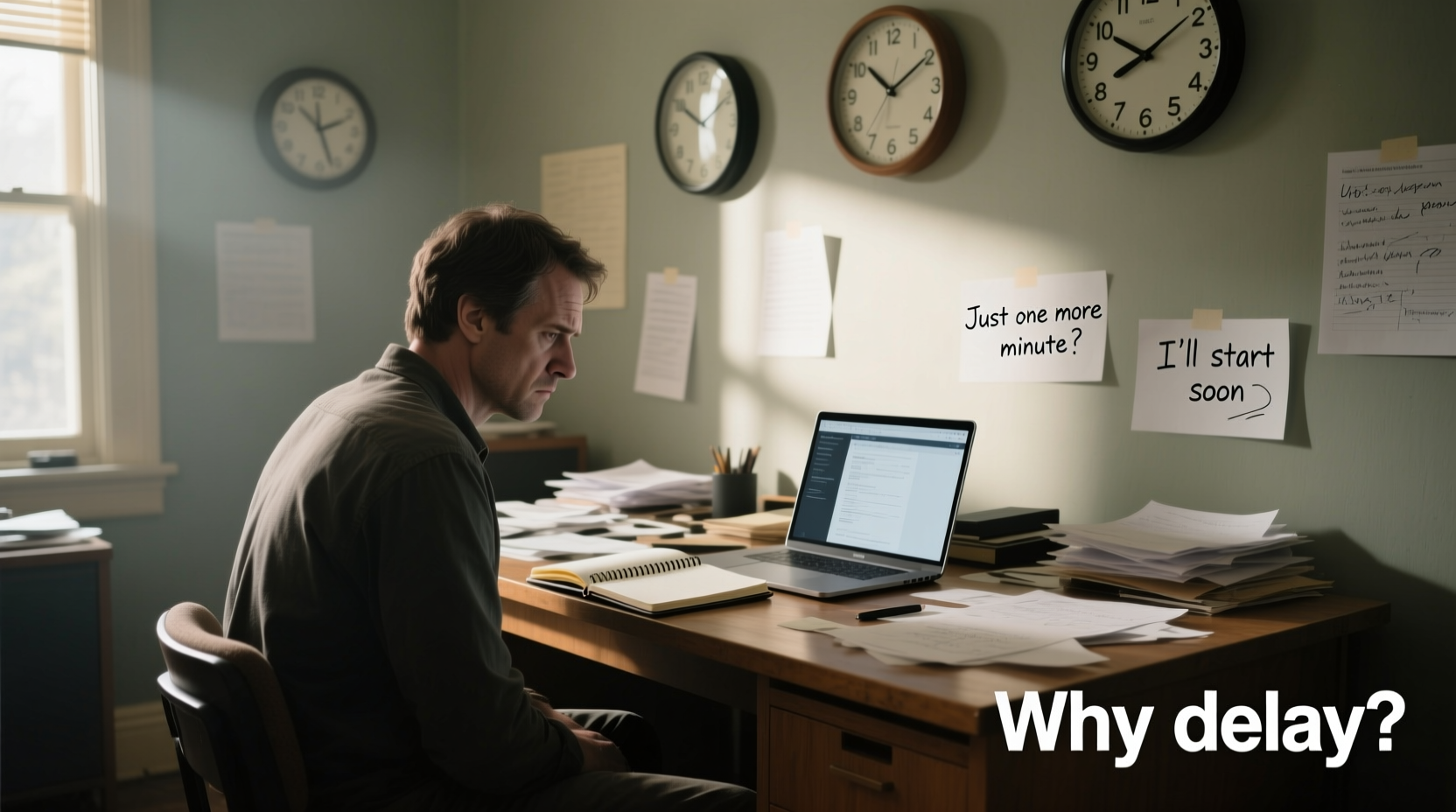
Many people assume that if they just had more time, they’d be able to focus and get things done. Yet, when given extra days or even weeks, the same patterns of delay often repeat. This paradox reveals a critical misunderstanding: procrastination isn’t caused by lack of time—it’s driven by how we respond to the task itself.
When a task feels overwhelming, boring, ambiguous, or emotionally taxing, your brain registers it as a threat. In response, it seeks immediate relief through distraction. Scrolling social media, checking emails, or doing minor chores suddenly feel productive because they offer instant rewards. Meanwhile, the main task remains untouched—not because you don’t have time, but because you’re avoiding the discomfort it brings.
Psychological Triggers Behind Delayed Action
Several cognitive and emotional factors contribute to procrastination, especially when time pressure is low. Here are the most common culprits:
- Fear of failure: Even with time to spare, the possibility of not doing well can paralyze action. The longer you wait, the more plausible your excuses become.
- Perfectionism: A desire to produce flawless work can prevent starting at all. If you believe anything less than perfect is unacceptable, beginning feels risky.
- Lack of intrinsic motivation: Tasks that feel meaningless or disconnected from your values are easily postponed, regardless of deadline flexibility.
- Task aversiveness: Some activities are inherently unpleasant—filling out forms, writing reports, making difficult calls. Your brain naturally resists them.
- Present bias: Humans are wired to favor immediate rewards over future benefits. The relief of avoiding discomfort now outweighs the long-term gain of completing the task.
“Procrastination is an emotion regulation problem, not a time management problem.” — Dr. Tim Pychyl, Psychologist and Procrastination Researcher
Why Extra Time Can Make Procrastination Worse
Ironically, having too much time can amplify procrastination. Without external pressure, internal resistance becomes the primary obstacle. Consider these dynamics:
| Situation | Risk of Procrastination | Reason |
|---|---|---|
| Tight deadline (e.g., due tomorrow) | Moderate | Urgency forces action, even if stressful |
| Flexible deadline (e.g., due in 3 weeks) | High | No urgency; discomfort lingers without consequence |
| No deadline (e.g., personal goal) | Very High | Zero accountability; motivation must be self-sustained |
With distant deadlines, there’s no “fire” to force movement. You keep telling yourself, “I’ll do it later,” while the emotional weight of the task accumulates. By the time you finally act, the accumulated anxiety often makes the task feel harder than it originally was.
A Real Example: The Thesis That Never Started
Consider Maria, a graduate student given six months to complete her thesis. She had full access to resources, supportive advisors, and no conflicting obligations. Yet, three months passed with minimal progress. Each week, she told herself she’d start “next Monday.”
What was really happening? The idea of writing a high-stakes academic paper triggered fears of inadequacy. She worried her arguments weren’t original enough, her data wasn’t strong enough. Rather than confront those feelings, she cleaned her apartment, reorganized files, and watched educational videos “to prepare.” These activities gave her a sense of control without facing the emotional risk of writing.
It wasn’t until she broke the project into micro-tasks and committed to writing just 200 words a day—regardless of quality—that momentum began. The turning point wasn’t more time; it was reducing the emotional barrier to starting.
Strategies to Overcome Procrastination When Time Is Not the Issue
Since the root cause is emotional, not logistical, solutions must address how you relate to the task. Here are proven methods to build action habits even when deadlines are distant.
1. Reframe the Task: Focus on Starting, Not Finishing
The pressure to complete a task perfectly or entirely can be paralyzing. Instead, shift your goal to simply beginning. Tell yourself: “I don’t have to finish—I just have to start.” Often, once you begin, continuation becomes easier.
2. Break Work into Smallest Possible Units
Vague or large tasks feel intimidating. Break them down until each step feels trivial. For example:
- Instead of: “Write report” → Try: “Open document and write three bullet points.”
- Instead of: “Plan vacation” → Try: “Search flights for one destination.”
Small wins build confidence and reduce resistance.
3. Schedule Emotionally Honest Work Blocks
Use time blocking, but assign tasks based on your energy, not just availability. If a task feels draining, schedule it for when you’re most resilient—typically morning for many people. Pair it with a reward afterward: a walk, coffee, or five minutes of music.
4. Practice Self-Compassion
Research shows that people who forgive themselves for past procrastination are less likely to delay in the future. Shame amplifies avoidance; kindness reduces it.
“Self-compassion leads to greater motivation and less procrastination because it reduces fear of failure.” — Dr. Fuschia Sirois, Health Psychologist
Action Checklist: How to Start When You Keep Putting It Off
Use this checklist the next time you notice yourself avoiding a task—even when you “have time.”
- Identify the emotion behind the delay (boredom, fear, uncertainty).
- Break the task into the smallest possible first step.
- Set a timer for 2–5 minutes and commit to doing only that step.
- After starting, decide whether to continue or stop—no pressure.
- If you stop, schedule the next tiny step for the following day.
- Reflect afterward: What felt hard? What helped?
- Repeat with slightly larger steps as comfort increases.
Common Misconceptions About Procrastination
Addressing myths helps dismantle unhelpful beliefs that sustain delay:
- Myth: Procrastinators are lazy.
Truth: They often work hard—just under pressure or on less aversive tasks. - Myth: Waiting improves creativity.
Truth: While incubation matters, chronic delay usually reduces quality due to rushed execution. - Myth: You need to feel motivated to start.
Truth: Motivation follows action, not the other way around.
FAQ: Frequently Asked Questions
Isn’t procrastination just poor time management?
No. While time management tools can help, procrastination stems from emotional regulation challenges. You can have a perfect schedule and still avoid tasks that trigger anxiety, boredom, or self-doubt.
Can procrastination ever be useful?
In rare cases, strategic delay—known as \"structured procrastination\"—can allow higher-priority tasks to surface. However, chronic, unintentional procrastination harms well-being, performance, and self-trust.
How do I know if my procrastination is serious?
If it consistently leads to missed opportunities, relationship strain, guilt, or physical symptoms like insomnia or stomach issues, it may require deeper intervention—such as cognitive behavioral therapy (CBT), which has proven effective for chronic procrastination.
Conclusion: Take Back Control—One Small Step at a Time
Having plenty of time doesn’t prevent procrastination—it merely changes its shape. Without external pressure, the battle shifts inward, demanding emotional awareness and self-regulation. The solution isn’t more discipline or stricter schedules. It’s learning to move forward gently, with curiosity instead of judgment.
Start by acknowledging the real reason you’re hesitating. Then, lower the bar for beginning. Write one sentence. Open one file. Set a timer for 90 seconds. These micro-actions disrupt the inertia of avoidance and rebuild your sense of agency.
You don’t need to transform overnight. You just need to start before the clock runs out—not because you’re running out of time, but because you value peace over pressure, progress over perfection.




 浙公网安备
33010002000092号
浙公网安备
33010002000092号 浙B2-20120091-4
Comments
No comments yet. Why don't you start the discussion?