
It’s a familiar scene: you have hours—maybe even days—before a deadline. There’s no rush, no immediate pressure. Yet instead of starting, you scroll through your phone, tidy your desk, or rewatch an old show. The work sits untouched, growing heavier in your mind with each passing minute. Why, when time is on your side, do you choose to delay?
Procrastination isn’t just about poor time management. It’s not laziness. At its core, procrastination is an emotional regulation problem—an unconscious strategy to avoid discomfort, fear, or uncertainty tied to a task. Understanding the psychology behind avoidance can transform how you relate to work, deadlines, and self-expectation.
The Emotional Roots of Procrastination
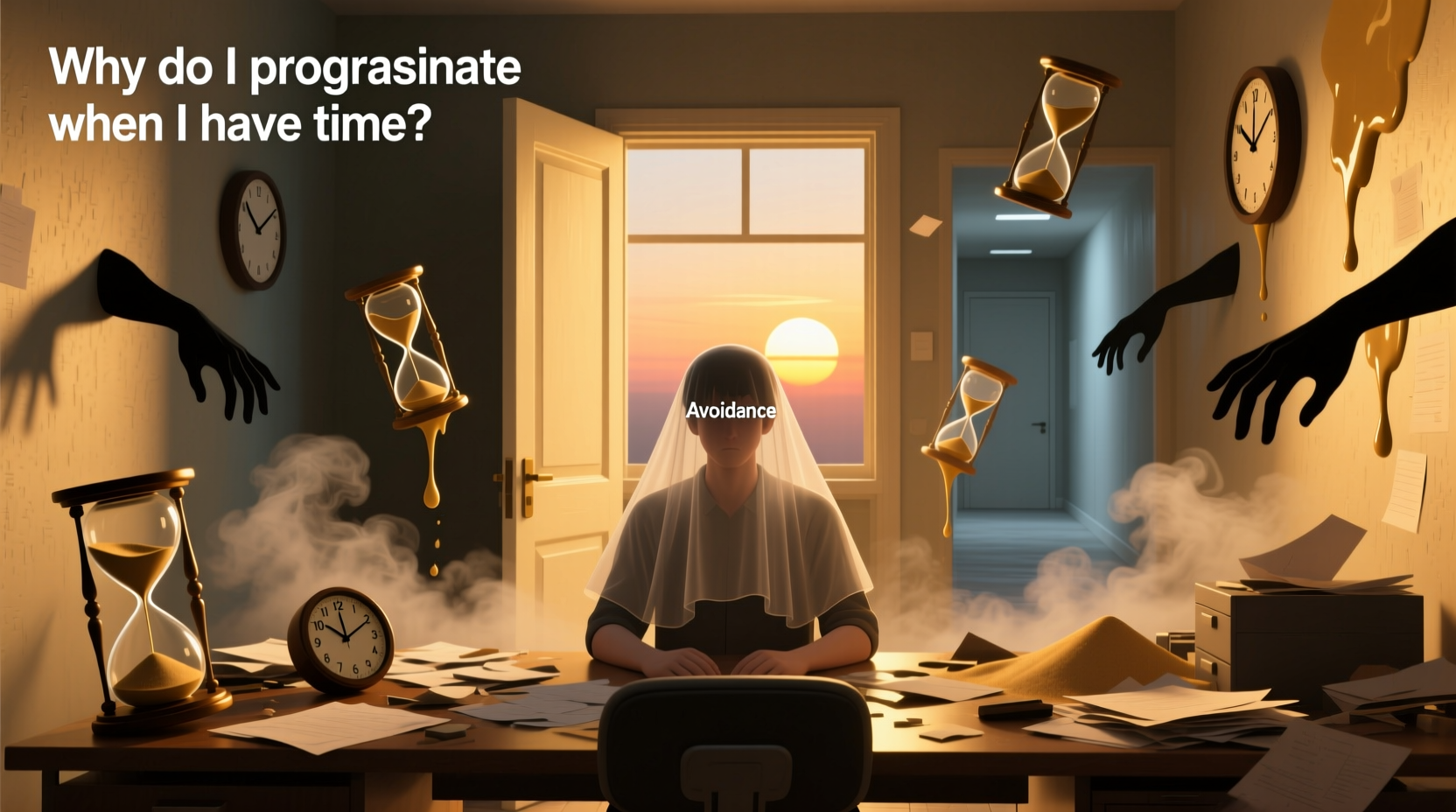
Most people assume procrastination stems from disorganization or lack of motivation. But research consistently shows that emotion plays a far greater role than logic. When you delay a task, it’s rarely because you don’t know what to do. It’s because doing it feels emotionally threatening.
Tasks that trigger anxiety, fear of failure, perfectionism, or feelings of inadequacy are prime candidates for delay. Your brain, wired for survival, perceives these emotional threats as real dangers. In response, it seeks immediate relief—distraction, entertainment, anything to reduce discomfort. That’s where procrastination comes in: not as rebellion against productivity, but as a coping mechanism.
“Procrastination is not a time management issue; it’s an emotion regulation issue.” — Dr. Tim Pychyl, Professor of Psychology and Procrastination Researcher, Carleton University
This insight reframes procrastination. Instead of judging yourself for “wasting time,” you begin to see it as a signal—a sign that something beneath the surface needs attention.
Fear of Failure and Perfectionism
Perfectionists often procrastinate because they tie their self-worth to flawless performance. The thought of producing work that falls short triggers intense anxiety. So rather than risk imperfection, they delay starting altogether. This creates a paradox: the higher the standards, the less likely action becomes.
In this cycle, failure isn’t just a possibility—it’s a self-fulfilling prophecy. By waiting until the last minute, you create conditions under which subpar results are inevitable. Then, if the outcome is disappointing, you can tell yourself, “I would’ve done better if I’d had more time,” preserving your self-image.
The Role of Task Aversion and Mental Resistance
Some tasks feel inherently unpleasant—not because they’re difficult, but because they’re boring, ambiguous, or emotionally draining. This aversion creates mental resistance, making it hard to initiate action. The brain prefers immediate rewards over delayed benefits, so checking email or watching a video offers instant gratification, while writing a report offers only future payoff.
This imbalance is rooted in our evolutionary wiring. Our ancestors prioritized immediate threats and rewards (food, danger, shelter). Long-term planning wasn’t essential for survival. Today, however, we’re expected to make decisions that benefit us weeks or months later—like saving money, studying for exams, or building a career. This mismatch explains why willpower often fails.
The Temporal Discounting Effect
Psychologists call this tendency “temporal discounting”—the idea that the further a reward is in the future, the less motivating it becomes. A deadline three weeks away feels abstract. The discomfort of starting now feels real and urgent. So your brain chooses short-term comfort over long-term gain.
Overcoming this requires restructuring how you perceive time and consequence. You must make the future cost of delay feel tangible—and the present act of starting feel manageable.
Breaking the Cycle: Strategies That Work
Changing your relationship with procrastination doesn’t require monumental effort. Small, consistent shifts in mindset and behavior can dismantle avoidance patterns over time.
1. Reframe the Task
Instead of viewing a project as a monolithic challenge (“Write a 10-page paper”), break it into micro-actions (“Open document and write one paragraph”). The goal isn’t completion—it’s initiation. Starting is the hardest part; momentum builds from there.
2. Use the 5-Minute Rule
Tell yourself you’ll work on the task for just five minutes. Often, beginning reduces resistance, and you continue well beyond the initial commitment. Even if you stop after five minutes, you’ve disrupted the inertia of avoidance.
3. Schedule Emotionally Honest Time Blocks
Traditional time-blocking assumes you’ll follow the plan. But if you know you tend to avoid certain tasks, schedule them during low-energy times and pair them with small rewards. For example: “After 20 minutes of tax prep, I’ll watch one episode of my favorite show.”
| Strategy | How It Works | Best For |
|---|---|---|
| 5-Minute Rule | Lowers the barrier to entry by minimizing perceived effort | High-anxiety or vague tasks |
| Task Segmentation | Makes large projects feel manageable by breaking them down | Long-term goals or complex assignments |
| Implementation Intentions | Uses “if-then” planning to anticipate obstacles | People with strong habits of distraction |
| Self-Compassion Breaks | Reduces shame-driven delay by normalizing struggle | Perfectionists and high achievers |
Mini Case Study: From Chronic Delay to Consistent Action
Sarah, a graduate student, consistently left her thesis chapters until the night before submission. She had months of available time but spent most of it paralyzed by the pressure to produce “brilliant” work. Her advisor noticed a pattern: Sarah was highly capable, yet her best ideas emerged only under extreme stress.
Through counseling, she identified her core fear: “If my writing isn’t exceptional, I’m not smart enough.” This belief made every blank page feel like a test of her intelligence. Once she recognized this, she began using the 5-minute rule and committed to writing one flawed paragraph daily. She also started journaling her fears before working.
Within six weeks, her output improved dramatically—not because she worked longer hours, but because she stopped avoiding the work. The quality of her writing increased precisely because she gave herself space to be imperfect.
A Step-by-Step Guide to Overcoming Avoidance
Use this actionable sequence the next time you catch yourself delaying:
- Pause and Name the Emotion: Ask, “What am I feeling right now?” Is it anxiety? Boredom? Fear of judgment? Naming the emotion reduces its power.
- Challenge the Thought Behind It: If you think, “This has to be perfect,” ask, “Is that true? What’s the cost of being good enough?”
- Set a Micro-Goal: Define the smallest possible next step—opening a file, writing a heading, sketching an outline.
- Use a Timer: Commit to 5–10 minutes of focused effort. No distractions. Just start.
- Reflect Afterward: Did starting feel worse than imagined? What helped? Record insights to build self-awareness.
Repeat this process regularly. Over time, you train your brain to associate action with relief—not dread.
Checklist: Building Resilience Against Avoidance
- ☑ Identify your top three procrastination triggers (e.g., fear of failure, boredom, ambiguity)
- ☑ Practice self-compassion when you delay—shame fuels the cycle
- ☑ Break every major task into steps of 30 minutes or less
- ☑ Use implementation intentions: “When I feel overwhelmed, I will open the document and write one sentence.”
- ☑ Schedule “procrastination windows” — short, timed breaks for guilt-free distraction
- ☑ Celebrate small wins—acknowledge every time you start, regardless of outcome
FAQ: Common Questions About Procrastination
Isn’t procrastination just laziness?
No. Laziness implies a lack of desire to act. Procrastinators often want to act—they’re just blocked by emotional barriers. Many chronic procrastinators are highly ambitious and hardworking; they simply struggle with initiating tasks that provoke discomfort.
Can procrastination ever be beneficial?
In rare cases, “active procrastination”—choosing to delay in order to work under pressure—can yield results for some individuals. However, research shows it’s linked to higher stress, lower-quality outcomes, and reduced well-being. Relying on last-minute pressure is risky and unsustainable.
How is procrastination different from strategic delay?
Strategic delay is intentional. It involves postponing a decision or action to gather more information, improve timing, or prioritize other tasks. Procrastination, by contrast, is passive and accompanied by regret, anxiety, or self-criticism.
Conclusion: Reclaiming Agency Over Your Time and Mind
Procrastination isn’t a moral failing. It’s a signal—one that points to unmet emotional needs, unrealistic expectations, or misaligned values. When you stop fighting yourself and start listening, you gain the power to change.
The goal isn’t to eliminate delay entirely. That’s neither realistic nor necessary. The goal is to respond with awareness rather than autopilot. To recognize avoidance not as weakness, but as a cue to approach yourself with curiosity and care.
Start small. Name the emotion. Take one tiny step. Repeat. Over time, you’ll rebuild trust in your ability to act—even when it’s uncomfortable. And in that shift lies not just productivity, but greater self-understanding and resilience.




 浙公网安备
33010002000092号
浙公网安备
33010002000092号 浙B2-20120091-4
Comments
No comments yet. Why don't you start the discussion?