
Many people report waking up with unusually vivid or disturbing dreams after a night of drinking. While alcohol is often seen as a relaxant that helps people fall asleep faster, its impact on sleep architecture is far more complex—and often detrimental. One of the most common side effects of alcohol consumption before bed is increased dream recall. But why does this happen? The answer lies in how alcohol alters your sleep cycle, particularly affecting rapid eye movement (REM) sleep, the stage most closely associated with dreaming.
This article explores the connection between alcohol, disrupted sleep patterns, and enhanced dream memory. We’ll break down the science behind REM rebound, examine real-world experiences, and provide actionable steps to minimize negative effects on sleep quality.
How Alcohol Affects the Sleep Cycle
Sleep is structured into four main stages: N1, N2, N3 (non-REM), and REM. These stages repeat in cycles lasting about 90 minutes throughout the night. Each plays a distinct role in physical restoration, memory consolidation, and emotional regulation.
Alcohol initially acts as a sedative, helping you fall asleep faster by increasing adenosine, a chemical that promotes sleep. However, this effect is short-lived. As alcohol metabolizes in the liver—typically over 2–4 hours—its influence wanes, leading to disruptions in the second half of the night.
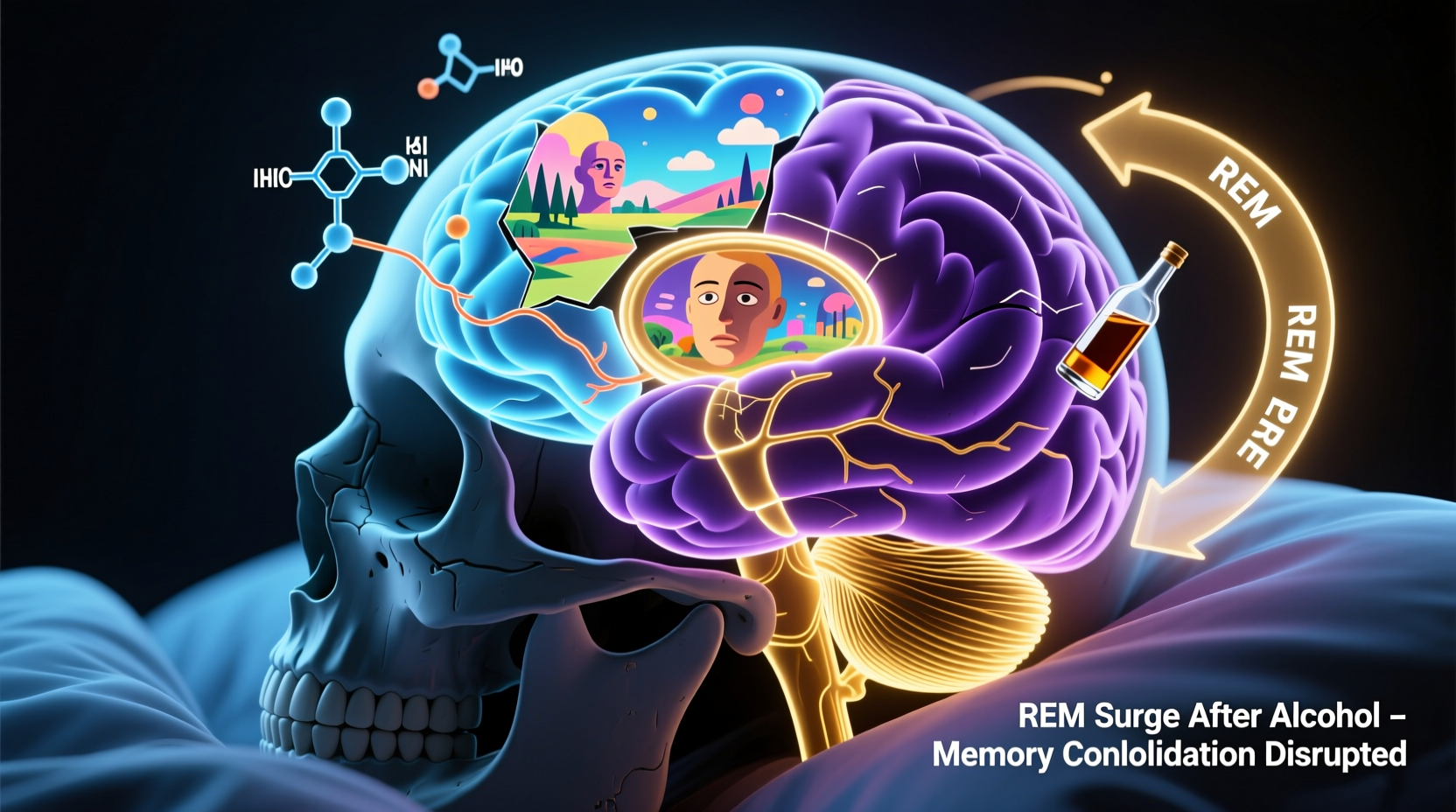
The most significant impact occurs during the latter part of the sleep cycle, where alcohol suppresses REM sleep early on but triggers a \"rebound\" effect later. This means that while the first few sleep cycles may have little or no REM activity, the final cycles compensate with prolonged and intensified REM periods.
“Alcohol may help initiate sleep, but it severely fragments the natural progression of sleep stages, especially REM. This disruption is what leads to more vivid and memorable dreams.” — Dr. Rebecca Robbins, Sleep Scientist at Harvard Medical School
Why Dream Recall Increases After Drinking
Dreams occur predominantly during REM sleep, but not all dreams are remembered. Memory consolidation during sleep depends on stable brainwave patterns and uninterrupted transitions between stages. When alcohol distorts this process, several factors contribute to heightened dream recall:
- REM Rebound: After suppression in early sleep, the brain compensates with longer and more intense REM episodes in the second half of the night. These extended REM phases increase the likelihood of dreaming—and remembering those dreams.
- Fragmented Sleep: Alcohol causes frequent micro-awakenings, especially as it wears off. Waking up during or immediately after a dream makes it easier for the brain to encode that experience into short-term memory.
- Altered Neurochemistry: Alcohol affects neurotransmitters like acetylcholine and serotonin, both involved in dream formation and memory processing. Imbalances can lead to more emotionally charged or bizarre dreams.
- Increased Brain Activity: During REM rebound, brain metabolism rises significantly. This hyperactivity can produce more vivid, narrative-rich dreams that stand out upon waking.
Sleep Stage Changes After Alcohol Consumption
| Sleep Stage | Normal Pattern | Effect of Alcohol |
|---|---|---|
| N1 (Light Sleep) | Brief transition phase (~5% of total sleep) | Slightly shortened due to faster sleep onset |
| N2 (Stable Sleep) | Main portion of light-to-moderate sleep (~45–55%) | Increased duration; deeper initial sedation |
| N3 (Deep Sleep) | Restorative slow-wave sleep (~15–25%) | May increase slightly early in the night |
| REM Sleep | ~20–25% of total sleep; evenly distributed | Suppressed early, rebound late; fragmented and intense |
| Total Sleep Efficiency | High (85–95%) | Reduced due to awakenings and instability |
As shown, alcohol doesn’t eliminate REM sleep—it delays and distorts it. The brain’s attempt to \"catch up\" on REM in the final hours results in prolonged dream states that are more likely to be recalled.
A Real-World Example: Sarah’s Weekend Pattern
Sarah, a 32-year-old marketing professional, noticed a recurring pattern every weekend. After socializing and having a few drinks Friday or Saturday night, she’d fall asleep quickly but wake up multiple times between 2 a.m. and 5 a.m. More strikingly, she began remembering her dreams in vivid detail—sometimes nightmares involving falling, being chased, or surreal scenarios.
Concerned, she started tracking her sleep using a wearable device. Over three weeks, the data showed consistent trends: on nights without alcohol, her REM sleep was steady across cycles and totaled about 90 minutes. On nights with two or more drinks, her first-half REM dropped to nearly zero, followed by a spike in the last two cycles—peaking at 35 minutes of continuous REM compared to her usual 20-minute average.
When she discussed this with her doctor, she learned that her fragmented sleep and dream recall were classic signs of alcohol-induced REM rebound. By switching to non-alcoholic beverages after dinner and practicing wind-down routines, Sarah reduced her dream disturbances within two weeks.
Step-by-Step Guide to Minimize Alcohol’s Impact on Dreams
If you want to enjoy alcohol occasionally without sacrificing sleep quality or enduring unsettling dreams, follow this practical timeline:
- Set a cutoff time: Stop drinking alcohol at least 3–4 hours before bedtime. This allows your body sufficient time to metabolize most of the substance before entering critical sleep phases.
- Hydrate strategically: Alternate alcoholic drinks with water. Dehydration worsens sleep fragmentation and intensifies hangover symptoms, which further disrupt rest.
- Limit quantity: Stick to moderate consumption—one drink for women, two for men per day—as defined by the CDC. Higher amounts exponentially increase sleep disruption.
- Avoid mixing substances: Combining alcohol with caffeine, nicotine, or medications amplifies sleep interference. These substances delay REM onset and increase arousal during the night.
- Optimize your sleep environment: Use blackout curtains, maintain a cool room temperature (60–67°F), and reduce screen exposure an hour before bed to support natural sleep rhythms.
- Track your patterns: Use a sleep journal or app to log alcohol intake and note changes in dream intensity or wakefulness. Patterns will help you identify personal thresholds.
- Reintroduce gradually: If abstaining temporarily, reintroduce alcohol slowly to assess tolerance and observe how your sleep responds.
Common Myths About Alcohol and Dreaming
Several misconceptions persist about alcohol and sleep. Clarifying these can help you make informed decisions:
- Myth: Alcohol improves sleep quality because I fall asleep faster.
Reality: Falling asleep quickly doesn’t mean better sleep. Alcohol reduces overall sleep efficiency and disrupts vital restorative processes. - Myth: Vivid dreams after drinking mean I’m sleeping deeply.
Reality: Vivid dreams are a sign of REM rebound and sleep fragmentation—not deep, restful sleep. - Myth: Nightcaps help with insomnia long-term.
Reality: Regular use leads to tolerance, dependence, and worsening insomnia over time.
Checklist: Reducing Alcohol-Related Dream Disturbances
Use this checklist to evaluate and improve your habits:
- ✅ Consume alcohol only during daytime or early evening
- ✅ Limit drinks to moderate levels (1–2 max)
- ✅ Drink water between alcoholic beverages
- ✅ Avoid alcohol if already stressed or anxious
- ✅ Maintain a consistent sleep schedule
- ✅ Practice relaxation techniques before bed (e.g., meditation, reading)
- ✅ Monitor sleep quality with a tracker or journal
- ✅ Consult a healthcare provider if sleep issues persist
Frequently Asked Questions
Can alcohol cause nightmares?
Yes. Due to REM rebound and altered brain chemistry, alcohol increases the frequency of intense, emotionally charged dreams—often interpreted as nightmares. People with anxiety or trauma histories may be especially vulnerable.
Will quitting alcohol stop vivid dreams?
Initially, vivid dreams may continue or even intensify during the first week of abstinence as the brain recalibrates REM activity. Over time, typically within 2–4 weeks, dream patterns normalize and become less disruptive.
Is it safe to drink alcohol if I have sleep apnea?
No. Alcohol relaxes throat muscles, worsening obstructive sleep apnea. It also suppresses breathing responses and increases snoring, leading to greater oxygen drops and more fragmented sleep.
Conclusion: Taking Control of Your Sleep Health
Remembering dreams more frequently after drinking isn't just a curious side effect—it's a signal that your sleep architecture is being disturbed. While occasional alcohol use may not cause lasting harm, regular consumption can erode sleep quality, impair cognitive function, and contribute to mood disorders over time.
The key is awareness and moderation. Understanding how alcohol shifts your sleep stages empowers you to make choices that protect your rest. Whether it’s adjusting your drinking window, reducing portions, or creating alcohol-free wind-down rituals, small changes can yield significant improvements in how you feel each morning.




 浙公网安备
33010002000092号
浙公网安备
33010002000092号 浙B2-20120091-4
Comments
No comments yet. Why don't you start the discussion?