
It starts subtly—a tingle in the nose, a tickle at the back of the throat—then, suddenly, a powerful sneeze erupts moments after biting into a chili-laced dish. If this sounds familiar, you're not alone. Many people report sneezing shortly after consuming spicy foods, especially those rich in capsaicin, the compound that gives chilies their heat. While it might seem odd or even concerning, this reaction is more common—and more explainable—than most realize. This article explores the physiological mechanisms behind this phenomenon, evaluates its normalcy, and offers practical insights for those who experience it regularly.
The Science Behind Spicy Food and Nasal Reactions
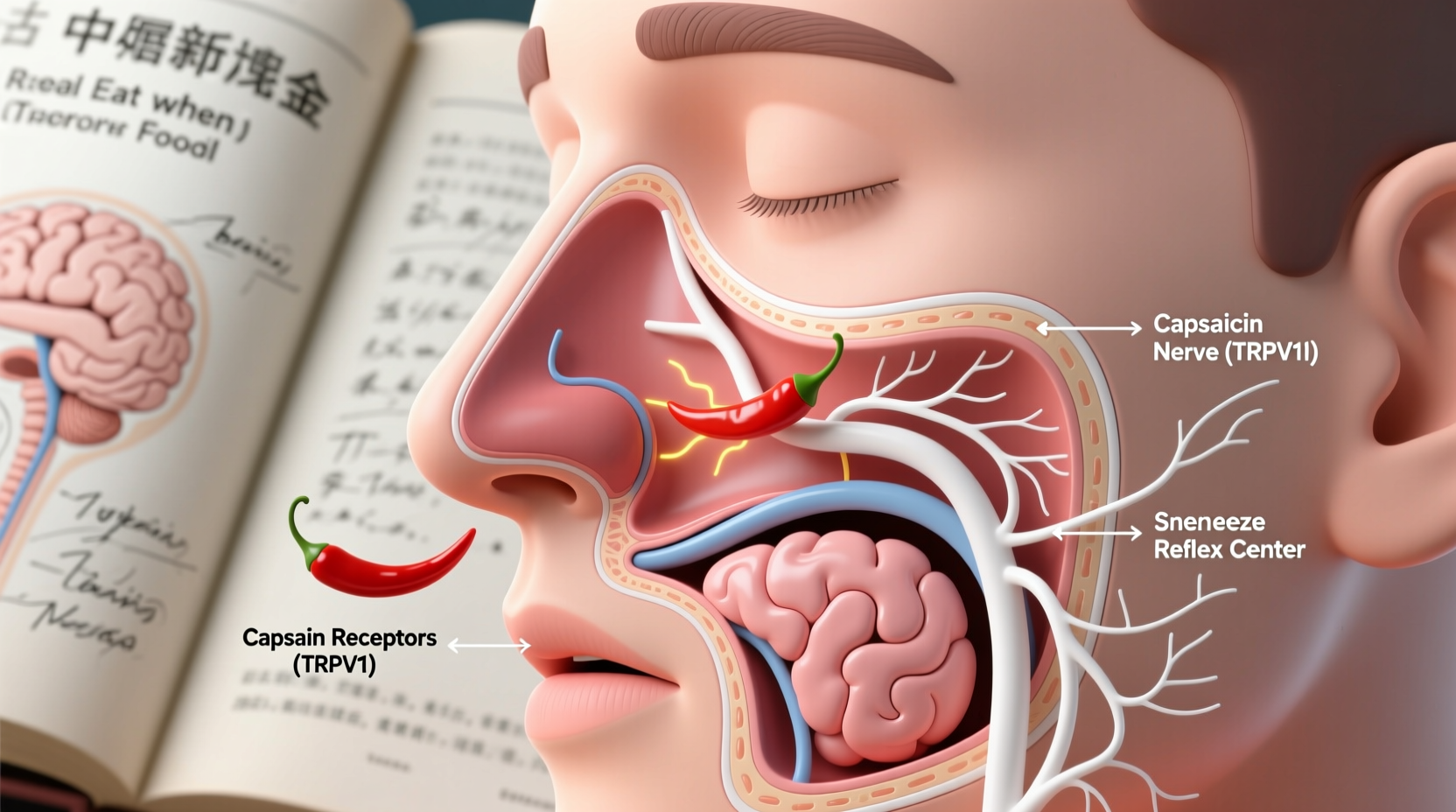
Spicy foods trigger a cascade of sensory responses, primarily through activation of the trigeminal nerve—a major cranial nerve responsible for facial sensation and motor functions like chewing. Unlike taste, which is processed by the gustatory system on the tongue, the \"heat\" from chili peppers is actually a pain and temperature signal detected by nerve endings throughout the mouth, throat, and nasal passages.
Capsaicin, the active component in chili peppers, binds to a receptor called TRPV1 (transient receptor potential vanilloid 1), which normally responds to heat, acidity, and physical abrasion. When capsaicin activates TRPV1, the brain interprets the signal as actual burning—even though no tissue damage occurs. This misinterpretation prompts a range of defensive reactions: sweating, flushing, increased salivation, and, in many cases, nasal discharge and sneezing.
The connection between the oral cavity and nasal passages is direct and well-mapped. The nasopalatine nerve, a branch of the trigeminal system, runs along the roof of the mouth and connects to the nasal mucosa. When stimulated by capsaicin-rich food, this nerve can send signals that mimic an irritant entering the nasal cavity, prompting the body to initiate a sneeze reflex to expel the perceived threat.
“Spicy foods don’t just affect the tongue—they activate pain and thermal receptors throughout the upper airway. The sneeze response is a protective reflex, even if the stimulus isn’t actually in the nose.” — Dr. Lena Patel, Neurologist & Sensory Specialist, Johns Hopkins Medicine
Is Sneezing After Eating Spicy Food Normal?
Yes, sneezing after eating spicy food is generally considered normal, especially among individuals with heightened sensitivity in their trigeminal pathways. It falls under a category of reflexes known as *gustatory rhinitis*—a condition where eating, particularly hot or pungent foods, triggers nasal symptoms such as runny nose, postnasal drip, and sneezing.
Gustatory rhinitis is not an allergy but rather a neurogenic response. It’s commonly seen in people who consume curry, wasabi, horseradish, black pepper, or heavily spiced dishes. The prevalence increases in individuals with pre-existing nasal sensitivity, such as those with non-allergic rhinitis or vasomotor rhinitis, where blood vessels in the nose overreact to environmental stimuli.
Unlike allergic rhinitis, gustatory rhinitis does not involve immunoglobulin E (IgE) or histamine release. Therefore, antihistamines are typically ineffective. Instead, the response is mediated by the autonomic nervous system, particularly the parasympathetic division, which controls involuntary functions like mucus production and glandular secretion.
Common Triggers and Their Effects
Not all spicy foods provoke the same response. Some ingredients are far more likely than others to induce sneezing due to their chemical composition and volatility.
| Food/Ingredient | Active Compound | Likelihood of Sneezing | Notes |
|---|---|---|---|
| Chili Peppers (e.g., jalapeño, habanero) | Capsaicin | Moderate to High | Delayed onset; builds with repeated exposure |
| Wasabi, Horseradish | Allyl isothiocyanate | Very High | Volatile compound reaches nasal cavity directly via retronasal olfaction |
| Black Pepper | Piperine | Moderate | Dry particles may physically irritate nasal passages |
| Curry Dishes (complex blends) | Mixture of spices | High | Synergistic effect of multiple irritants |
| Hot Sauces (e.g., Tabasco, Sriracha) | Capsaicin + vinegar | High | Acidity enhances irritation and mucus production |
The volatility of certain compounds plays a key role. For example, allyl isothiocyanate in wasabi vaporizes easily, traveling up the back of the throat into the nasal sinuses during chewing. This creates an almost immediate burning sensation and often a rapid sneeze—sometimes within seconds of consumption.
When Sneezing Might Signal Something Else
While occasional sneezing after spicy food is benign, frequent or severe reactions may warrant further evaluation, especially if accompanied by other symptoms. Consider the following red flags:
- Sneezing only with specific foods that aren't notably spicy
- Swelling of lips, tongue, or throat
- Wheezing, shortness of breath, or dizziness
- Hives or skin rash after eating
- Reactions occurring hours after eating, rather than immediately
These could indicate a true food allergy rather than a neurogenic reflex. Allergies to spices themselves—though rare—are possible. More commonly, cross-reactivity occurs in individuals with pollen allergies (oral allergy syndrome), where proteins in certain spices resemble pollen antigens.
Another consideration is *non-allergic rhinitis with eosinophilia syndrome (NARES)*, a chronic condition involving nasal inflammation without IgE involvement. People with NARES often have exaggerated responses to spicy foods, strong odors, and changes in temperature.
“If a patient reports sneezing every time they eat curry, but also has persistent congestion and facial pressure, we look beyond simple gustatory rhinitis. Chronic inflammation can amplify these reflexes.” — Dr. Marcus Tran, Otolaryngologist, Mayo Clinic
Practical Strategies to Reduce Sneezing Episodes
You don’t need to give up spicy cuisine to avoid sneezing fits. With a few adjustments, you can enjoy bold flavors while minimizing nasal disruption.
Step-by-Step Guide to Managing Spicy Food Reactions
- Start with milder versions: Choose dishes labeled “mild” or “medium” and gradually increase spice tolerance over time.
- Pair with dairy: Consume yogurt, milk, or cheese alongside spicy food. Casein in dairy helps dissolve capsaicin, reducing its binding to nerve receptors.
- Avoid volatile spices on an empty stomach: Eating a small carbohydrate-based snack before a spicy meal can buffer irritation.
- Breathe through your mouth: During and after eating, inhale orally to reduce airflow through the nasal passages, limiting retronasal stimulation.
- Rinse with cool liquid: Sip water, milk, or a starchy drink like rice milk after a bite to wash away residual irritants.
- Wait before drinking hot beverages: Hot tea or coffee can reactivate capsaicin receptors. Opt for room-temperature drinks immediately after eating.
Checklist: Eat Spicy Food Comfortably
- ✅ Assess your current nasal health (avoid if congested)
- ✅ Have dairy or starch on hand (e.g., naan, yogurt)
- ✅ Eat slowly and chew thoroughly
- ✅ Stay hydrated with non-carbonated fluids
- ✅ Avoid mixing multiple irritants (e.g., alcohol + chili)
- ✅ Monitor for delayed reactions beyond 30 minutes
Real-Life Example: A Frequent Diner’s Experience
Rajiv, a 34-year-old software engineer and self-described “spice enthusiast,” noticed he began sneezing violently within minutes of eating his favorite Thai green curry. Initially amused, he grew concerned when the episodes started triggering headaches and eye watering. He consulted an ENT specialist, who confirmed he had vasomotor rhinitis—his nasal membranes were hyperresponsive.
After eliminating allergens and acid reflux as causes, the doctor advised Rajiv to modify his eating habits rather than eliminate spicy food entirely. By switching to coconut milk-based curries (which contain natural fats that bind capsaicin), eating smaller portions, and always starting with a spoonful of plain rice, Rajiv reduced his sneezing episodes by over 70%. He still enjoys spicy food—now with fewer interruptions.
Frequently Asked Questions
Can spicy food cause permanent nasal issues?
No, occasional sneezing due to spicy food does not lead to long-term damage. However, chronic overstimulation of nasal nerves in sensitive individuals may contribute to persistent rhinitis. Moderation is key.
Why do some people sneeze while others don’t?
Genetic differences in TRPV1 receptor density and neural sensitivity play a major role. Some people simply have more reactive trigeminal systems. Cultural dietary patterns may also desensitize receptors over time.
Is there a way to build tolerance to prevent sneezing?
Yes. Regular, gradual exposure to capsaicin can downregulate TRPV1 receptors, reducing sensitivity. This is why populations with high chili consumption—such as in India, Thailand, or Mexico—often show fewer acute reactions.
Conclusion: Embrace the Heat—Mindfully
Sneezing after eating spicy food is a fascinating intersection of neurology, chemistry, and human physiology. Far from being abnormal, it’s a testament to the body’s intricate defense mechanisms—misfiring in a harmless but dramatic way. Understanding the science behind it empowers you to make informed choices without fear.
Whether you're a cautious taster or a full-on chili challenger, the key lies in awareness and adaptation. Use dairy buffers, pace your bites, and listen to your body’s signals. There’s no need to abandon flavor for comfort—only to refine how you engage with it.




 浙公网安备
33010002000092号
浙公网安备
33010002000092号 浙B2-20120091-4
Comments
No comments yet. Why don't you start the discussion?