
Waking up at 3 a.m. with no obvious reason—no noise, no full bladder, no dream—is a surprisingly common experience. You drift off easily enough, only to find yourself wide awake in the dead of night, staring at the ceiling while your mind races through unfinished tasks, worst-case scenarios, or nothing at all. This pattern isn’t just frustrating—it disrupts deep restorative sleep, impacts mood, and can erode long-term health. The good news: it’s usually not a sign of serious illness, and more importantly, it’s fixable.
Understanding why this happens requires looking at the interplay between circadian biology, stress, lifestyle habits, and even spiritual or psychological interpretations some people report. More than just “bad sleep,” waking at 3 a.m. often reflects deeper imbalances in routine, mental load, or metabolic regulation. Addressing it effectively means going beyond sleeping pills or quick fixes and making sustainable changes that support natural sleep architecture.
The Science Behind Waking at 3 a.m.
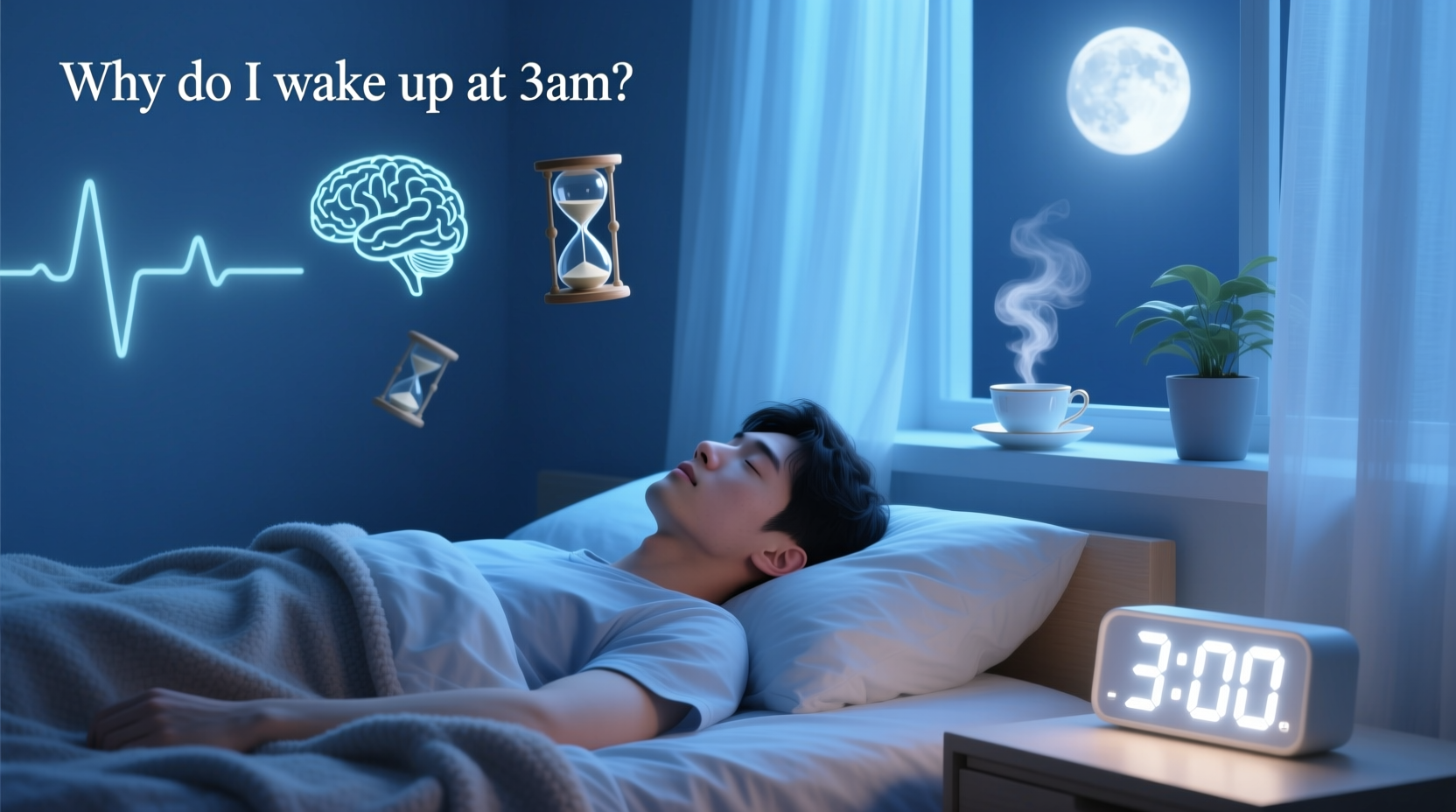
Your body follows a precise internal rhythm governed by the suprachiasmatic nucleus (SCN) in the brain, which regulates the sleep-wake cycle over a roughly 24-hour period. This circadian clock influences hormone release, body temperature, and alertness levels throughout the day and night.
Between 2 a.m. and 4 a.m., your body is typically in its lowest point of core temperature and melatonin production begins to taper off. This phase coincides with the final stages of slow-wave sleep transitioning into REM (rapid eye movement) sleep, when brain activity increases. If your sleep is fragile—due to stress, poor sleep hygiene, or underlying conditions—you may become conscious during this vulnerable transition window.
Dr. Matthew Walker, neuroscientist and author of *Why We Sleep*, explains:
“Even minor disruptions in sleep pressure or circadian timing can cause micro-arousals that pull you out of sleep, especially during lighter phases like late-cycle REM. At 3 a.m., the brain is metabolically active again, and if anxiety or cortisol spikes are present, awakening becomes much more likely.” — Dr. Matthew Walker, Neuroscientist and Sleep Researcher
In essence, 3 a.m. awakenings aren’t random—they occur when biological vulnerability meets environmental or psychological triggers.
Common Causes of 3 a.m. Wakefulness
Several factors contribute to repeated early awakenings. Most fall into one of four categories: physiological, psychological, environmental, or behavioral.
1. Blood Sugar Imbalance
If you eat dinner late, consume high-sugar meals, or skip protein-rich foods, your blood glucose may spike and crash overnight. When blood sugar drops too low (hypoglycemia), the body releases cortisol and adrenaline to compensate—hormones that promote alertness and can jolt you awake.
2. Stress and Anxiety
Nighttime is often the first time your mind slows down enough to process unresolved emotions. With fewer distractions, worries about work, relationships, or finances surface. Elevated cortisol levels—especially if chronic—can shift your sleep architecture, increasing nighttime arousals.
Some researchers refer to this as “the 3 a.m. panic window,” where rumination peaks due to reduced prefrontal cortex inhibition during partial arousal states.
3. Circadian Rhythm Disruption
Irregular sleep schedules, excessive screen exposure after sunset, or shift work can desynchronize your internal clock. Even small inconsistencies—like sleeping in on weekends—can delay melatonin onset and fragment deep sleep later in the night.
4. Sleep Apnea and Breathing Issues
Obstructive sleep apnea (OSA) causes breathing interruptions during sleep, leading to frequent micro-awakenings. These are often unnoticed but result in non-restorative sleep and early morning wakefulness. Risk factors include obesity, alcohol use, and anatomical airway narrowing.
5. Hormonal Shifts
Women may experience 3 a.m. awakenings due to hormonal fluctuations during menstruation, pregnancy, or perimenopause. Declining progesterone (a natural sedative) and rising cortisol can reduce sleep continuity.
6. Spiritual or Cultural Interpretations
While not scientifically validated, many cultures associate 3 a.m. with spiritual significance—the “witching hour” or a time of heightened intuition. Some individuals report vivid dreams, feelings of presence, or existential thoughts during these awakenings. Though symbolic meaning varies, the psychological weight of such beliefs can amplify anxiety upon waking.
Do’s and Don’ts: Managing 3 a.m. Wakeups
| Do | Don't |
|---|---|
| Maintain a consistent sleep schedule—even on weekends | Use your phone or turn on bright lights when you wake up |
| Practice relaxation techniques before bed (e.g., meditation, breathwork) | Check emails, social media, or the clock repeatedly |
| Keep your bedroom cool, dark, and quiet | Consume caffeine after 2 p.m. or alcohol close to bedtime |
| Eat a light, protein-rich snack if hungry at night (e.g., cottage cheese, nuts) | Force yourself back to sleep—this increases frustration |
| Get daylight exposure within 30 minutes of waking | Sleep in longer to “make up” for lost sleep |
A Real-Life Example: Sarah’s Journey Back to Restful Sleep
Sarah, a 38-year-old marketing manager, began waking at 3 a.m. three times a week after a major project deadline. Initially, she dismissed it as temporary stress. But after six weeks, the awakenings became habitual—even on weekends. She’d lie awake for hours, heart racing, mentally replaying meetings or worrying about her children’s future.
She tried melatonin supplements and herbal teas with little success. Then, she started tracking her habits using a sleep journal. She noticed patterns: dinners high in refined carbs, late-night scrolling, and inconsistent bedtimes. After consulting a sleep coach, she implemented structured wind-down routines, eliminated screens two hours before bed, and added 20 minutes of yoga nidra.
Within three weeks, her nighttime awakenings dropped to once a week. By week six, she was sleeping through the night consistently. Her key insight? “It wasn’t just stress—it was how I was managing my energy all day that ruined my sleep at night.”
Step-by-Step Guide to Stop Waking at 3 a.m.
Fixing chronic 3 a.m. awakenings requires a multi-day strategy focused on consistency, not perfection. Follow this 7-day reset plan to stabilize your sleep cycle:
- Day 1–2: Audit Your Current Habits
Create a sleep log noting bedtime, wake time, food intake, screen use, stress levels, and nighttime awakenings. Identify patterns over 48 hours. - Day 3: Optimize Light Exposure
Get 10–15 minutes of morning sunlight within 30 minutes of waking. Reduce blue light exposure after 8 p.m. Use red-tinted bulbs or blue-light-blocking glasses if needed. - Day 4: Adjust Evening Nutrition
Eat dinner earlier (by 7 p.m.) and include protein and fiber. Consider a small bedtime snack like almond butter on whole grain toast if blood sugar crashes are suspected. - Day 5: Build a Wind-Down Routine
Start 60 minutes before bed: dim lights, write down worries in a journal, practice box breathing (4-7-8 method), and read a physical book. - Day 6: Modify Bedroom Environment
Set room temperature to 65–68°F (18–20°C). Use blackout curtains. Remove visible clocks. Try white noise if external sounds disturb you. - Day 7: Implement the 20-Minute Rule
If you wake and can’t fall back asleep within 20 minutes, get out of bed. Go to another room and do something calming (e.g., gentle stretching, listening to soft music) until drowsy.
After the initial week, maintain these practices daily. Consistency over two to four weeks typically resets sleep continuity.
When to See a Doctor
While most 3 a.m. awakenings stem from lifestyle factors, recurring insomnia could signal an underlying condition. Seek medical evaluation if you experience:
- More than three nights per week of early awakening for over a month
- Excessive daytime fatigue, irritability, or cognitive fog
- Loud snoring, gasping, or witnessed breathing pauses during sleep
- Symptoms of depression or generalized anxiety disorder
A sleep study (polysomnography) may be recommended to rule out sleep apnea, periodic limb movement disorder, or other parasomnias.
Frequently Asked Questions
Is waking at 3 a.m. a sign of depression?
Yes, it can be. Early-morning awakening—waking significantly earlier than desired and being unable to return to sleep—is a diagnostic criterion for major depressive disorder. However, it doesn’t mean every person who wakes at 3 a.m. is depressed. Context matters: if accompanied by low mood, loss of interest, or hopelessness, consult a mental health professional.
Can diet really affect 3 a.m. wakeups?
Absolutely. High-glycemic meals (white bread, pasta, sugary desserts) cause insulin spikes followed by reactive hypoglycemia during the night. This triggers adrenaline release, which promotes wakefulness. Eating balanced meals with protein, fiber, and healthy fats stabilizes blood sugar and supports uninterrupted sleep.
Why does my mind race when I wake at 3 a.m.?
During partial arousal from REM sleep, the brain regains consciousness before full cognitive control returns. This creates a state where emotional centers (like the amygdala) are active, but rational regulation (via the prefrontal cortex) is offline. The result? Intense, unfiltered thoughts that feel overwhelming. Journaling before bed can help \"offload\" these thoughts proactively.
Final Checklist: How to Fix 3 a.m. Wakeups for Good
Here’s what you can start tonight:
- ✅ Set a fixed bedtime and wake-up time (within 30 minutes, even on weekends)
- ✅ Stop caffeine after 2 p.m. and avoid alcohol within 3 hours of bed
- ✅ Dim lights and stop screen use 90 minutes before sleep
- ✅ Practice a 10-minute breathing or meditation routine before bed
- ✅ Keep a notebook by your bed to jot down intrusive thoughts
- ✅ If awake past 20 minutes, leave the bedroom and do something relaxing
- ✅ Get sunlight exposure within 30 minutes of waking each morning
Conclusion: Reclaim Your Night and Restore Your Energy
Waking up at 3 a.m. every night doesn’t have to become your new normal. While it may start with stress or poor habits, it can quickly evolve into a conditioned response—one that trains your brain to expect disruption. The solution lies not in sedation, but in recalibration: aligning your daily rhythms, managing mental load, and creating a sleep environment that supports uninterrupted rest.
You don’t need drastic measures. Small, consistent actions compound over time. Whether it’s adjusting dinner timing, reducing screen exposure, or learning to let go of nighttime thoughts without fighting them, each step moves you closer to deeper, more resilient sleep.




 浙公网安备
33010002000092号
浙公网安备
33010002000092号 浙B2-20120091-4
Comments
No comments yet. Why don't you start the discussion?