
If you consistently wake up at 3am and struggle to fall back asleep, you’re not alone—and it might not be insomnia. For centuries, humans slept in two distinct phases with a period of quiet wakefulness in between. This natural rhythm, known as biphasic or segmented sleep, may explain why your body wakes you in the early hours. Modern expectations of uninterrupted eight-hour sleep can make this biological pattern feel like a disorder, when in fact, it could be a remnant of ancestral rest cycles.
Understanding this shift in sleep culture helps reframe middle-of-the-night awakenings not as a malfunction, but as a potential echo of how humans once rested. By examining historical records, scientific research, and modern sleep science, we can uncover why 3am awakenings are more common than you think—and how to respond without anxiety.
The Forgotten Pattern: Segmented Sleep in History
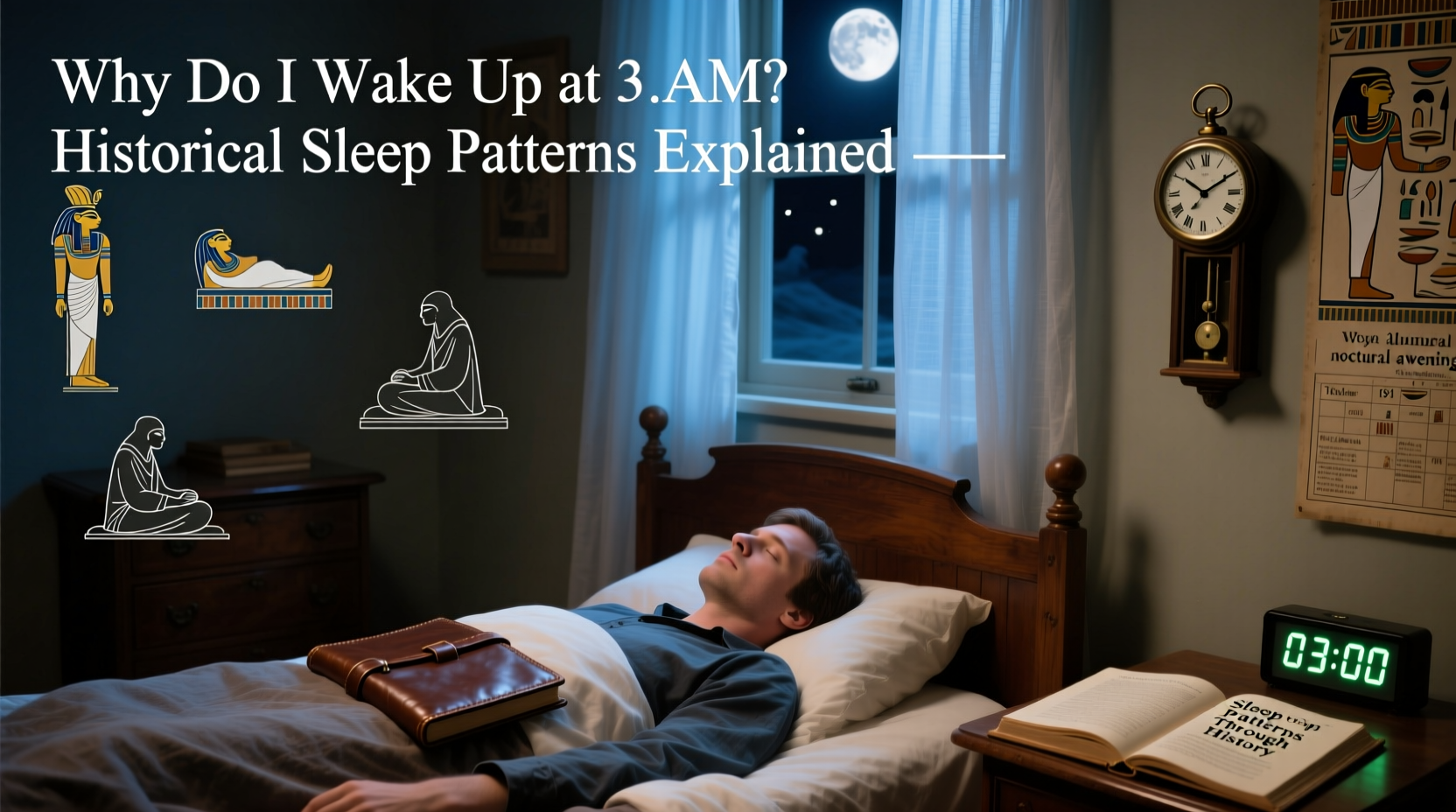
Before the industrial era and electric lighting, most people didn’t sleep through the night in one continuous block. Instead, they followed a biphasic sleep pattern: first sleep, a period of wakefulness, then second sleep.
Historian A. Roger Ekirch spent decades researching pre-industrial sleep habits and uncovered over 500 references to segmented sleep in literature, court records, diaries, and medical texts across Europe and North America. His findings, published in the book *At Day’s Close: Night in Times Past*, reveal that “first sleep” typically began after dusk, lasting three to four hours. People would then wake naturally around midnight or 1–2am for one to two hours before returning to “second sleep” until dawn.
During this waking interval, individuals engaged in quiet, reflective activities: prayer, reading by candlelight, tending to fires, conversing with bed partners, or even visiting neighbors. The time was often described as peaceful and meditative—far from the anxiety many experience today when they wake at night.
“People knew about first sleep and second sleep. During the waking period, they did everything from praying to smoking… It was a time of high creativity.” — A. Roger Ekirch, Historian
This pattern wasn’t limited to Europe. Anthropological studies of pre-industrial societies in Africa, South America, and Southeast Asia show similar bimodal sleep behaviors. Without artificial light extending the day, human circadian rhythms aligned closely with natural light-dark cycles, reinforcing this two-phase rest structure.
Why 3am? The Biology Behind the Wake-Up
Modern neuroscience offers insight into why many people still wake around 3am. Our sleep is divided into cycles of approximately 90 minutes, each consisting of stages from light sleep to deep slow-wave sleep and REM (rapid eye movement) sleep.
By 3am, most adults have completed three or four full cycles. The final cycle often includes longer REM periods, during which brain activity increases and dreaming intensifies. Waking up during or immediately after REM sleep is common—and because the mind is more active, it’s easier to remember dreams or become alert.
Additionally, cortisol levels begin rising around 3–4am as part of the body’s preparation for waking. Melatonin production drops sharply during this window. These hormonal shifts can trigger awakening, especially if sleep is already light or fragmented.
For those genetically predisposed to early waking or with slightly advanced circadian clocks (common in older adults), 3am may mark the end of consolidated sleep. But rather than labeling this as insomnia, it may reflect an evolutionarily normal pattern now out of sync with social demands.
How Industrialization Changed Our Sleep
The shift toward monophasic (one-block) sleep began in the 17th century but accelerated dramatically during the Industrial Revolution. Factory work required punctuality, standardized shifts, and rigid schedules. Workers needed to be alert at sunrise or earlier, making segmented sleep impractical.
The widespread adoption of street lighting and later, electric indoor lighting, extended productive hours into the night. With lamps and bulbs pushing back darkness, bedtime was delayed, compressing the traditional first sleep-wake-second sleep rhythm into a single, consolidated block.
By the late 19th century, doctors and sleep manuals began pathologizing nighttime awakenings. What was once considered normal became labeled as “middle-of-the-night insomnia.” As psychologist Gregg Jacobs notes, “The idea that we should sleep straight through the night is largely a myth created by modern society.”
In essence, we’ve medicalized a natural biological rhythm. The pressure to conform to eight consecutive hours of sleep has led millions to misinterpret their own bodies’ signals.
What Science Says: Studies on Biphasic Sleep
In the 1990s, psychiatrist Thomas Wehr conducted a landmark study at the National Institute of Mental Health. Participants were exposed to 14 hours of darkness per night for several weeks. In the absence of artificial light, their sleep naturally shifted to a segmented pattern.
After a few weeks, subjects began sleeping in two distinct blocks: about four hours of sleep, followed by one to two hours of calm wakefulness, then another four-hour sleep period. Brainwave monitoring showed that the intervening period was marked by elevated prolactin levels—a hormone associated with relaxation and sexual satisfaction—suggesting this phase had restorative qualities.
Wehr concluded that biphasic sleep may be the body’s default mode under natural lighting conditions. He wrote: “Humans have retained the capacity for divided sleep,” indicating that our physiology hasn’t fully adapted to modern sleep norms.
Further research supports this. A 2015 study published in the *Journal of Clinical Endocrinology & Metabolism* found that exposure to natural light during the day and darkness at night leads to longer melatonin secretion and more stable sleep architecture—including increased likelihood of nocturnal wakefulness.
| Sleep Pattern | Time Period | Typical Behavior | Modern Equivalent |
|---|---|---|---|
| First Sleep | ~9pm – 12am/1am | Deep, restorative slow-wave sleep | Early part of night sleep |
| Wakeful Interval | ~1am – 3am | Prayer, reflection, intimacy, light chores | Middle-of-night awakening |
| Second Sleep | ~3am – 5am/6am | More REM sleep, lighter rest | Late-night or early-morning sleep |
Managing 3am Awakenings: A Practical Guide
Waking at 3am isn’t inherently problematic unless it causes distress or daytime fatigue. The key is managing your response. Here’s how to handle these awakenings constructively:
Step-by-Step: Responding to 3am Wakefulness
- Stay Calm: Remind yourself that brief awakenings are normal. Panic increases heart rate and cortisol, making re-entry into sleep harder.
- Avoid Clock-Watching: Turn your clock away or cover it. Tracking time fuels anxiety about lost sleep.
- Keep Lights Low: If you must get up, use dim red-toned lighting. Bright or blue-rich light suppresses melatonin and signals wakefulness.
- Engage Quietly: Read a physical book (not a screen), journal, meditate, or pray. Avoid stimulating content or tasks.
- Return to Bed When Sleepy: Don’t force sleep. Wait until drowsiness returns before lying down again.
- Limit Duration: Keep awake periods under 60 minutes to avoid resetting your internal clock too early.
Checklist: Optimize Your Environment for Natural Sleep Patterns
- ✅ Use blackout curtains to enhance melatonin production
- ✅ Eliminate blue light exposure 1–2 hours before bed
- ✅ Maintain a cool bedroom temperature (60–67°F / 15–19°C)
- ✅ Establish a consistent bedtime and wake time—even on weekends
- ✅ Spend time outdoors during daylight to regulate circadian rhythm
- ✅ Reserve bed for sleep and intimacy only (no work or screens)
Real-Life Example: Sarah’s Shift to Acceptance
Sarah, a 42-year-old teacher from Vermont, struggled for years with 3am awakenings. She’d lie in bed frustrated, scrolling her phone, worrying about not getting enough rest. Over time, chronic fatigue affected her mood and focus.
After reading about historical sleep patterns, she reframed her experience. Instead of fighting wakefulness, she began using the time for gentle stretching, writing in a gratitude journal, and listening to soft instrumental music. She avoided screens and returned to bed when sleepy.
Within weeks, her anxiety decreased. Though she still woke around 3am, she no longer felt broken. Her overall sleep quality improved—not because she slept longer, but because she stopped resisting her natural rhythm.
“I realized I wasn’t failing at sleep—I was just following an older, quieter way of resting. Once I accepted that, the stress disappeared.” — Sarah T., Educator
Frequently Asked Questions
Is waking up at 3am a sign of a sleep disorder?
Not necessarily. Occasional or regular awakenings at 3am can be part of normal sleep architecture. It becomes a concern only if you feel excessively tired during the day or spend prolonged periods awake with distress. If so, consult a sleep specialist to rule out conditions like sleep apnea or anxiety-related insomnia.
Can I train myself to sleep through the night?
You can encourage consolidated sleep by aligning with your circadian rhythm: get morning sunlight, avoid late meals, reduce evening stimulation, and maintain a consistent schedule. However, some people naturally lean toward biphasic patterns, and forcing continuous sleep may increase stress. Focus on total sleep quality and duration, not just continuity.
Should I stay in bed if I’m awake at 3am?
If you’re not anxious and feel calm, staying in bed quietly is fine. But if you start ruminating or feeling restless, get up and do something relaxing in low light. Staying in bed while frustrated can condition your brain to associate bed with wakefulness.
Conclusion: Reclaiming Rest on Your Own Terms
Waking up at 3am may not be a flaw in your biology, but a glimpse into humanity’s deeper sleep heritage. For generations, people honored this quiet interlude as a sacred pause between rest periods—a time for reflection, connection, and inner stillness. Today, we pathologize what was once normalized.
Rather than viewing nighttime awakenings as failure, consider them an invitation to reconnect with a gentler, more intuitive way of resting. Adjust your environment, manage your mindset, and allow space for quiet wakefulness without judgment. Sleep isn’t just about duration; it’s about harmony with your body’s rhythms.




 浙公网安备
33010002000092号
浙公网安备
33010002000092号 浙B2-20120091-4
Comments
No comments yet. Why don't you start the discussion?