
You go to bed at a reasonable hour, get your full eight hours, and still drag yourself out of bed feeling like you barely slept. If this sounds familiar, you're not alone. Millions of people assume that hitting the recommended sleep duration guarantees restfulness—but the reality is more complex. Sleep quality matters just as much as quantity. Waking up exhausted despite sufficient time in bed often signals underlying disruptions in your sleep architecture, lifestyle habits, or health conditions. Understanding why this happens is the first step toward waking up refreshed and energized.
The Myth of the 8-Hour Rule
The idea that everyone needs exactly eight hours of sleep is a generalization. While it's a useful benchmark, individual needs vary based on age, genetics, activity level, and overall health. More importantly, how you feel upon waking depends less on total hours logged and more on how deeply and efficiently you sleep.
Sleep occurs in cycles lasting about 90 minutes each, consisting of four stages: light sleep (N1 and N2), deep sleep (N3), and REM (rapid eye movement) sleep. Deep sleep is crucial for physical restoration—tissue repair, immune function, and hormone regulation. REM sleep supports cognitive functions like memory consolidation and emotional processing. If your sleep is frequently interrupted or if you’re not spending enough time in these critical phases, even eight hours won’t leave you feeling restored.
Common Causes of Poor Sleep Quality
Several factors can sabotage sleep quality without significantly reducing total sleep time. These issues often go unnoticed because they don’t prevent you from falling asleep—they simply degrade its restorative value.
1. Sleep Apnea and Breathing Disorders
Obstructive sleep apnea (OSA) is one of the most common yet underdiagnosed causes of non-restorative sleep. It occurs when throat muscles relax during sleep, briefly blocking the airway and causing breathing to stop and start repeatedly. These micro-awakenings may last only seconds but are enough to disrupt deep and REM sleep.
Symptoms include loud snoring, gasping during sleep, morning headaches, dry mouth, and excessive daytime fatigue—even after long sleep durations. Left untreated, OSA increases the risk of high blood pressure, heart disease, and stroke.
“Many patients report sleeping eight hours a night but still feel exhausted. When we diagnose sleep apnea, their lives transform almost overnight with proper treatment.” — Dr. Lena Patel, Sleep Medicine Specialist
2. Fragmented Sleep Due to Environmental Disturbances
Noise, light, temperature fluctuations, and uncomfortable bedding can fragment sleep without fully waking you. Urban dwellers, for example, may experience frequent micro-arousals due to traffic noise or streetlights filtering through curtains. Even subtle disturbances can prevent sustained periods of deep sleep.
Similarly, sharing a bed with a restless partner or pets can lead to repeated disruptions. Over time, these small interruptions accumulate, leaving you chronically fatigued despite adequate sleep duration.
3. Poor Sleep Hygiene Habits
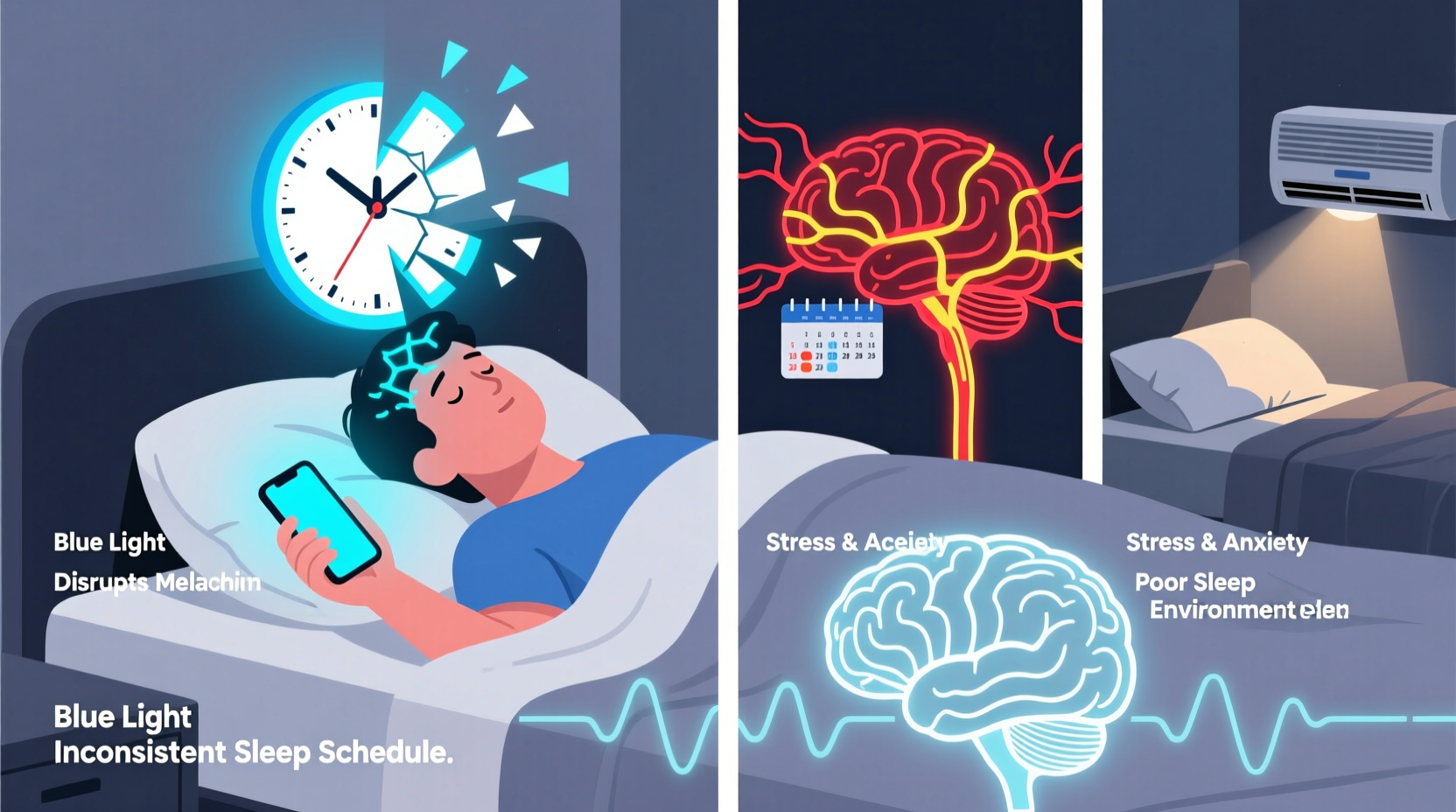
Your daily routines directly impact how well you sleep. Common culprits include:
- Using screens (phones, tablets, TVs) within an hour of bedtime
- Consuming caffeine late in the day
- Inconsistent sleep schedules
- Eating heavy meals close to bedtime
- Exercising too close to bedtime
These behaviors interfere with melatonin production—the hormone responsible for regulating sleep—and make it harder to enter and maintain deep sleep stages.
4. Underlying Medical or Mental Health Conditions
Chronic pain, acid reflux, thyroid disorders, diabetes, and neurological conditions like restless legs syndrome (RLS) can all impair sleep quality. RLS, for instance, causes uncomfortable sensations in the legs and an irresistible urge to move them, typically worsening at night and disrupting sleep onset.
Mental health plays a major role as well. Anxiety and depression are strongly linked to insomnia and fragmented sleep. Rumination—repetitive negative thinking—can keep the brain in a state of hyperarousal, preventing deep relaxation even when physically tired.
5. Alcohol and Medication Effects
While alcohol may help you fall asleep faster, it severely disrupts sleep architecture. It suppresses REM sleep early in the night and causes rebound arousal later, leading to lighter, more fragmented sleep during the second half of the night. The result? You may sleep for eight hours but spend little time in restorative phases.
Certain medications—including some antidepressants, beta-blockers, corticosteroids, and decongestants—can also interfere with sleep continuity and depth.
Sleep Efficiency: What It Is and Why It Matters
Sleep efficiency measures the percentage of time spent asleep while in bed. For example, if you spend eight hours in bed but only six and a half are actually spent sleeping, your sleep efficiency is 81%. Experts consider 85% or higher to be good; below 80% indicates inefficient sleep.
Low sleep efficiency means you're spending too much time lying awake or in very light sleep, which fails to restore energy. Improving sleep efficiency involves minimizing disruptions and optimizing conditions for uninterrupted rest.
| Sleep Efficiency | Interpretation | Action Needed? |
|---|---|---|
| ≥ 85% | Good – restful sleep likely | No major changes needed |
| 75–84% | Fair – minor improvements possible | Review habits and environment |
| < 75% | Poor – significant disruption | Consult healthcare provider |
Real-Life Example: Sarah’s Journey to Better Sleep
Sarah, a 38-year-old marketing manager, consistently slept seven to eight hours per night but woke up groggy and unrefreshed. She relied on multiple cups of coffee to stay alert and often felt irritable by mid-afternoon. After tracking her sleep with a fitness watch, she noticed low REM and deep sleep percentages despite long sleep duration.
A sleep study revealed mild obstructive sleep apnea. With a CPAP (continuous positive airway pressure) machine prescribed, Sarah began experiencing deeper, uninterrupted sleep. Within two weeks, she reported waking up alert, having sustained energy throughout the day, and no longer needing afternoon naps. Her case illustrates how undiagnosed conditions can silently erode sleep quality—even when time spent in bed seems sufficient.
Step-by-Step Guide to Improve Sleep Quality
If you're logging eight hours but still waking up tired, follow this practical plan to enhance your sleep quality over the next 30 days:
- Track Your Sleep: Use a smartwatch, app, or journal to record bedtime, wake time, perceived restfulness, and any nighttime awakenings.
- Optimize Your Bedroom Environment: Keep the room cool (60–67°F), dark, and quiet. Consider blackout curtains, white noise machines, or earplugs if needed.
- Establish a Wind-Down Routine: Spend 30–60 minutes before bed doing calming activities like reading, stretching, or meditation. Avoid screens and stimulating conversations.
- Limit Caffeine and Alcohol: Cut off caffeine after 2 PM and avoid alcohol within three hours of bedtime.
- Get Morning Sunlight: Expose yourself to natural light within 30 minutes of waking to regulate circadian rhythms.
- Exercise Regularly—but Not Too Late: Aim for at least 30 minutes of moderate activity daily, finishing at least three hours before bed.
- Seek Professional Help If Needed: If fatigue persists after improving habits, consult a sleep specialist to rule out sleep apnea, RLS, or other disorders.
Checklist: Signs You Might Have Poor Sleep Quality
Use this checklist to assess whether your tiredness stems from low-quality sleep:
- ☑ Wake up feeling unrested despite 7–9 hours of sleep
- ☑ Snore loudly or have been told you stop breathing at night
- ☑ Experience frequent nighttime awakenings
- ☑ Rely heavily on caffeine to stay awake
- ☑ Feel sleepy during meetings, driving, or quiet activities
- ☑ Notice mood swings, poor concentration, or low motivation
- ☑ Use alcohol to help you fall asleep
- ☑ Have chronic pain, anxiety, or acid reflux
If you checked three or more items, it’s worth investigating further. Poor sleep quality is treatable once the root cause is identified.
Frequently Asked Questions
Can stress really affect my sleep even if I fall asleep quickly?
Yes. Stress activates the sympathetic nervous system, increasing cortisol and adrenaline levels. Even if you fall asleep fast, your body may remain in a state of physiological tension, reducing deep sleep and increasing light, fragmented sleep. This leads to non-restorative rest despite adequate duration.
Is it better to prioritize sleep quality over quantity?
Both matter, but quality often has a greater impact on how you feel. Six hours of high-quality, uninterrupted sleep can leave you more refreshed than eight hours of broken, shallow sleep. Focus on creating conditions that support deep and REM sleep rather than fixating solely on clock time.
How soon can I expect improvements after changing my habits?
Some people notice differences within a few nights—especially from reducing screen time or adjusting room temperature. Others may take two to four weeks to see consistent improvement, particularly when addressing ingrained habits or medical issues. Patience and consistency are key.
Conclusion: Take Control of Your Rest
Waking up tired after eight hours isn't normal—it's a signal. Your body is telling you that something is interfering with the restorative power of sleep. Whether it’s an undiagnosed condition, environmental disruption, or lifestyle habit, the solution starts with awareness and action.
Don’t accept fatigue as inevitable. By evaluating your sleep quality, making targeted adjustments, and seeking professional guidance when necessary, you can transform your mornings from sluggish to energized. Start tonight: dim the lights, put the phone away, and create the conditions for truly deep, healing sleep. Your mind and body will thank you tomorrow—and every day after.




 浙公网安备
33010002000092号
浙公网安备
33010002000092号 浙B2-20120091-4
Comments
No comments yet. Why don't you start the discussion?