
You go to bed at a reasonable hour, clock in a solid eight hours, and still drag yourself out of bed feeling like you barely slept. If this sounds familiar, you're not alone. Millions of people assume that hitting the recommended sleep duration guarantees restfulness—yet fatigue persists. The truth is, sleep quantity matters far less than sleep quality. While eight hours may be the average benchmark, it’s what happens during those hours that determines whether you wake up refreshed or drained.
Sleep isn’t just about unconscious downtime. It’s a dynamic process involving cycles of brain activity, hormone regulation, tissue repair, and memory consolidation. When these processes are disrupted—even subtly—you may log sufficient time in bed but fail to achieve restorative rest. Understanding why poor sleep quality undermines recovery is the first step toward waking up energized, focused, and ready for the day.
The Myth of the 8-Hour Rule
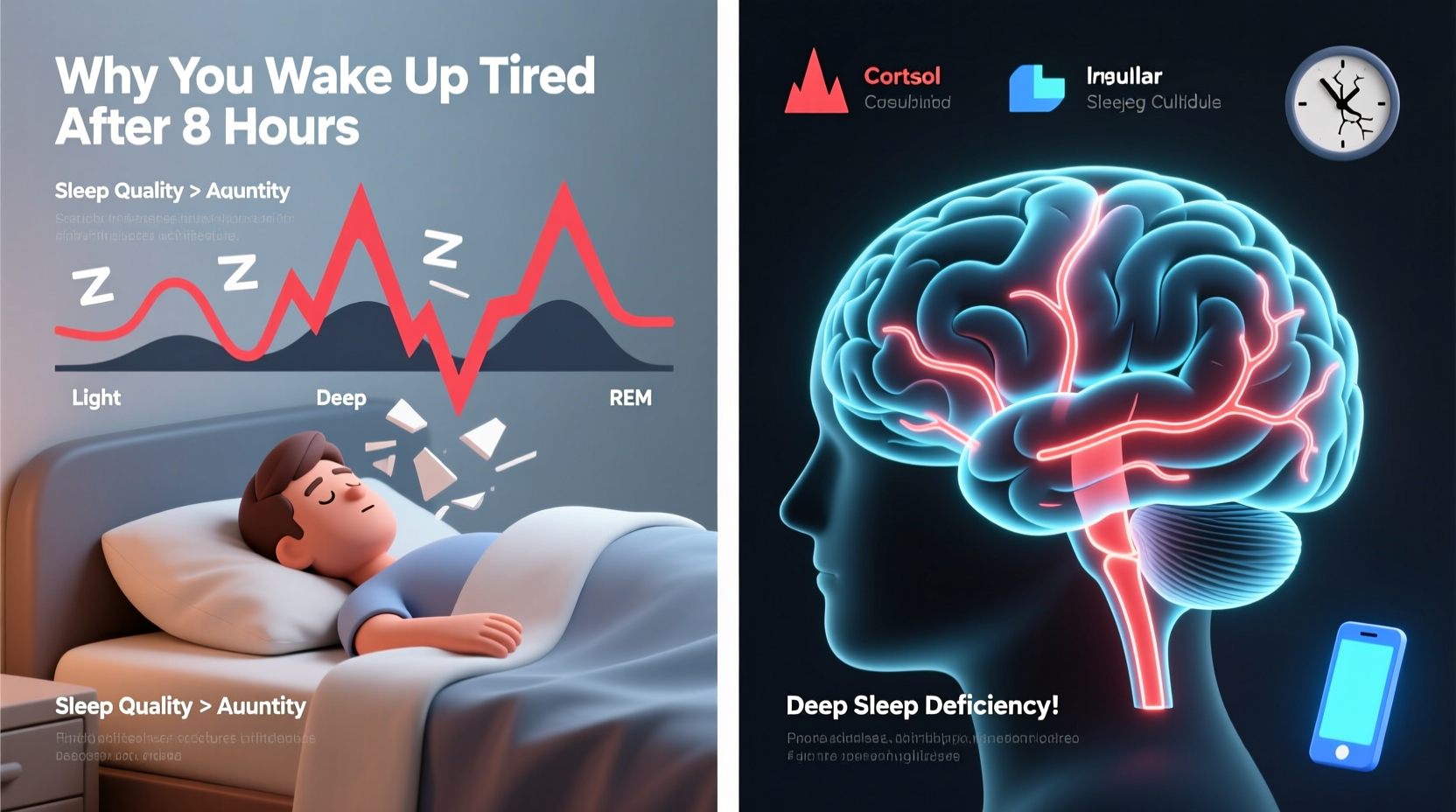
The idea that everyone needs exactly eight hours of sleep is more cultural shorthand than medical mandate. While guidelines from organizations like the National Sleep Foundation recommend 7–9 hours for adults, individual needs vary based on age, genetics, lifestyle, and health status. More importantly, time spent asleep doesn't equate to effective rest.
Imagine two people both sleeping eight hours:
- Person A falls asleep quickly, stays in deep and REM sleep for most of the night, and wakes with minimal interruptions.
- Person B tosses and turns, experiences multiple awakenings, spends little time in restorative stages, and feels unrested despite equal duration.
Clearly, the quality of sleep makes all the difference. Poor sleep architecture—the structure and progression of sleep cycles—can leave you physically and mentally exhausted, regardless of how long you were technically “asleep.”
What Is Sleep Quality and Why Does It Matter?
Sleep quality refers to how well you sleep, not just how long. It encompasses several measurable factors:
- Latency: How long it takes to fall asleep (ideally under 20 minutes).
- Continuity: Number of awakenings during the night.
- Depth: Proportion of time spent in deep (slow-wave) and REM sleep.
- Regularity: Consistency of sleep schedule across days.
High-quality sleep involves uninterrupted progression through four distinct stages, cycling every 90–120 minutes:
- Stage 1 (N1): Light sleep, transition phase.
- Stage 2 (N2): Body temperature drops; heart rate slows.
- Stage 3 (N3): Deep sleep crucial for physical recovery and immune function.
- REM Sleep: Brain activity surges; dreaming occurs; essential for emotional regulation and cognitive processing.
Missing or shortening deep and REM phases—due to stress, noise, alcohol, or sleep disorders—prevents your body from completing its nightly restoration work.
“Sleep efficiency—time actually spent sleeping versus time in bed—is a stronger predictor of daytime alertness than total sleep duration.” — Dr. Rebecca Robbins, Sleep Scientist, Harvard Medical School
Common Causes of Poor Sleep Quality
Even if you avoid screens before bed and keep a regular schedule, hidden factors can sabotage your sleep quality. Here are the most frequent culprits:
1. Sleep Apnea and Breathing Disorders
Obstructive sleep apnea (OSA) causes repeated breathing interruptions during sleep, leading to micro-awakenings that fragment sleep cycles. Many sufferers don’t recall waking up but experience chronic fatigue, morning headaches, and dry mouth. OSA is often undiagnosed, especially in women and non-overweight individuals.
2. Stress and Hyperarousal
Chronic stress keeps the nervous system in a state of high alert, making it difficult to enter deep sleep. Elevated cortisol levels interfere with melatonin production, delaying sleep onset and reducing sleep continuity.
3. Alcohol and Caffeine Consumption
While alcohol may help you fall asleep faster, it suppresses REM sleep and increases nighttime awakenings. Similarly, caffeine—even when consumed six hours before bedtime—can reduce total sleep time by up to one hour and impair sleep depth.
4. Poor Sleep Environment
Noise, light, uncomfortable bedding, or room temperatures above 68°F (20°C) disrupt sleep continuity. Even subtle disturbances like a partner’s snoring or street traffic can prevent sustained deep sleep.
5. Irregular Sleep Schedule
Going to bed and waking at different times each day confuses your circadian rhythm, weakening the signal for melatonin release and reducing sleep efficiency. This is common among shift workers and weekend “catch-up” sleepers.
6. Underlying Health Conditions
Conditions such as restless legs syndrome, acid reflux, chronic pain, depression, and hypothyroidism can all degrade sleep quality. Medications for these issues may also contribute to fragmented sleep.
| Cause | Effect on Sleep | Solution Path |
|---|---|---|
| Sleep Apnea | Repeated breathing pauses, fragmented sleep | CPAP therapy, sleep study |
| Alcohol Use | Reduces REM, increases awakenings | Avoid 3+ hours before bed |
| Stress/Anxiety | Delays sleep onset, reduces deep sleep | Mindfulness, therapy, journaling |
| Poor Sleep Hygiene | Disrupts circadian rhythm | Consistent schedule, dark/cool room |
| Diet & Digestion | Acid reflux, bloating at night | Avoid late heavy meals |
How to Improve Your Sleep Quality: A Step-by-Step Guide
Better sleep isn’t about drastic changes—it’s about consistent, science-backed habits. Follow this timeline to gradually enhance your sleep quality over four weeks:
Week 1: Audit Your Current Routine
- Track your bedtime, wake time, and how you feel each morning.
- Note consumption of caffeine, alcohol, and food after 7 PM.
- Identify environmental disruptions (noise, light, pet movements).
Week 2: Optimize Your Sleep Environment
- Set bedroom temperature between 60–67°F (15–19°C).
- Use blackout curtains or an eye mask.
- Invest in a supportive mattress and pillows.
- Eliminate electronic lights or use blue-light filters.
Week 3: Establish a Wind-Down Ritual
- Begin a 60-minute pre-sleep routine: dim lights, read, stretch, or meditate.
- Stop screen use at least one hour before bed.
- Avoid emotionally charged conversations or work emails.
- Try a warm bath or herbal tea (chamomile, valerian root).
Week 4: Address Lifestyle Factors
- Limit caffeine to mornings only.
- Avoid alcohol within three hours of bedtime.
- Exercise daily, but finish intense workouts at least three hours before sleep.
- Expose yourself to natural sunlight within 30 minutes of waking to reinforce circadian rhythm.
Mini Case Study: Sarah’s Transformation
Sarah, a 38-year-old project manager, consistently slept seven to eight hours but woke each morning with brain fog and irritability. She attributed her fatigue to work stress and assumed nothing could be done. After tracking her habits, she discovered patterns: nightly wine, irregular bedtimes, and using her phone in bed.
With guidance from a sleep coach, Sarah eliminated alcohol, set a fixed bedtime of 10:30 PM, and replaced late-night scrolling with reading. Within three weeks, she reported deeper sleep, fewer awakenings, and increased daytime focus. A home sleep test later revealed mild sleep apnea, which was treated with a mandibular device. Today, she wakes naturally before her alarm, feeling genuinely rested for the first time in years.
Her story underscores a key point: symptoms of poor sleep quality are often mistaken for normal stress or aging. But they’re usually correctable with targeted interventions.
Sleep Quality Checklist: Are You on Track?
Use this checklist to evaluate your current sleep hygiene. Aim to meet at least 8 of the 10 criteria consistently:
- ☑ Fall asleep within 20–30 minutes of lying down
- ☑ Wake up no more than once per night
- ☑ Spend at least 85% of time in bed actually asleep
- ☑ Wake feeling alert and refreshed
- ☑ Maintain a consistent bedtime and wake time (within 30 mins)
- ☑ Avoid caffeine after noon
- ☑ Stop drinking alcohol at least 3 hours before bed
- ☑ Keep your bedroom cool, dark, and quiet
- ☑ Power down screens 60 minutes before sleep
- ☑ Engage in a relaxing pre-sleep routine
If fewer than six apply, your sleep quality likely needs improvement. Start with one or two changes and build from there.
Frequently Asked Questions
Can I make up for poor sleep quality with more sleep?
No. Extra sleep cannot fully compensate for disrupted or shallow sleep. While sleeping longer might temporarily reduce fatigue, it doesn’t restore the missing deep and REM stages essential for cognitive and physical recovery. In fact, oversleeping can worsen grogginess and disrupt circadian rhythms.
How do I know if I’m getting enough deep sleep?
Consumer sleep trackers (like Oura Ring or Fitbit) estimate deep and REM sleep, though their accuracy varies. More reliable indicators include how you feel: consistent mental clarity, stable mood, and physical energy suggest adequate restorative sleep. Frequent yawning, reliance on caffeine, or midday crashes signal deficits.
Is it normal to wake up briefly during the night?
Yes. Brief awakenings (under a minute) are normal and often unremembered. However, if you’re frequently aware of being awake, struggle to fall back asleep, or notice declining energy, your sleep continuity is compromised. Address underlying causes like stress, bladder issues, or environmental noise.
Conclusion: Prioritize Quality Over Quantity
Waking up tired despite eight hours of sleep isn’t a personal failing—it’s a sign that your body isn’t getting the restorative rest it needs. Sleep quality governs how refreshed, focused, and resilient you feel each day. By addressing the root causes of fragmented or shallow sleep, you can transform your energy, mood, and long-term health.
Start small. Adjust one habit this week—whether it’s cutting evening wine, setting a bedtime alarm, or upgrading your pillow. Track how you feel over time. If fatigue persists, consider consulting a sleep specialist. Millions have reclaimed their mornings by treating sleep as a pillar of wellness, not just a passive pause. You deserve the same.




 浙公网安备
33010002000092号
浙公网安备
33010002000092号 浙B2-20120091-4
Comments
No comments yet. Why don't you start the discussion?