
Sleeping eight hours a night is often hailed as the gold standard for restful recovery. Yet, many people consistently hit that mark and still drag themselves out of bed feeling exhausted. If you’ve ever asked yourself, “Why do I wake up tired even after 8 hours sleep?” you're not alone. Research shows that nearly one in three adults regularly experience unrefreshing sleep—despite logging sufficient time in bed.
The answer lies beyond mere duration. Sleep quality, circadian alignment, lifestyle habits, and underlying health conditions all play critical roles in how restored—or drained—you feel upon waking. This article dives deep into the physiological and behavioral factors behind non-restorative sleep and offers actionable steps to transform your mornings from sluggish to energized.
The Myth of the 8-Hour Rule
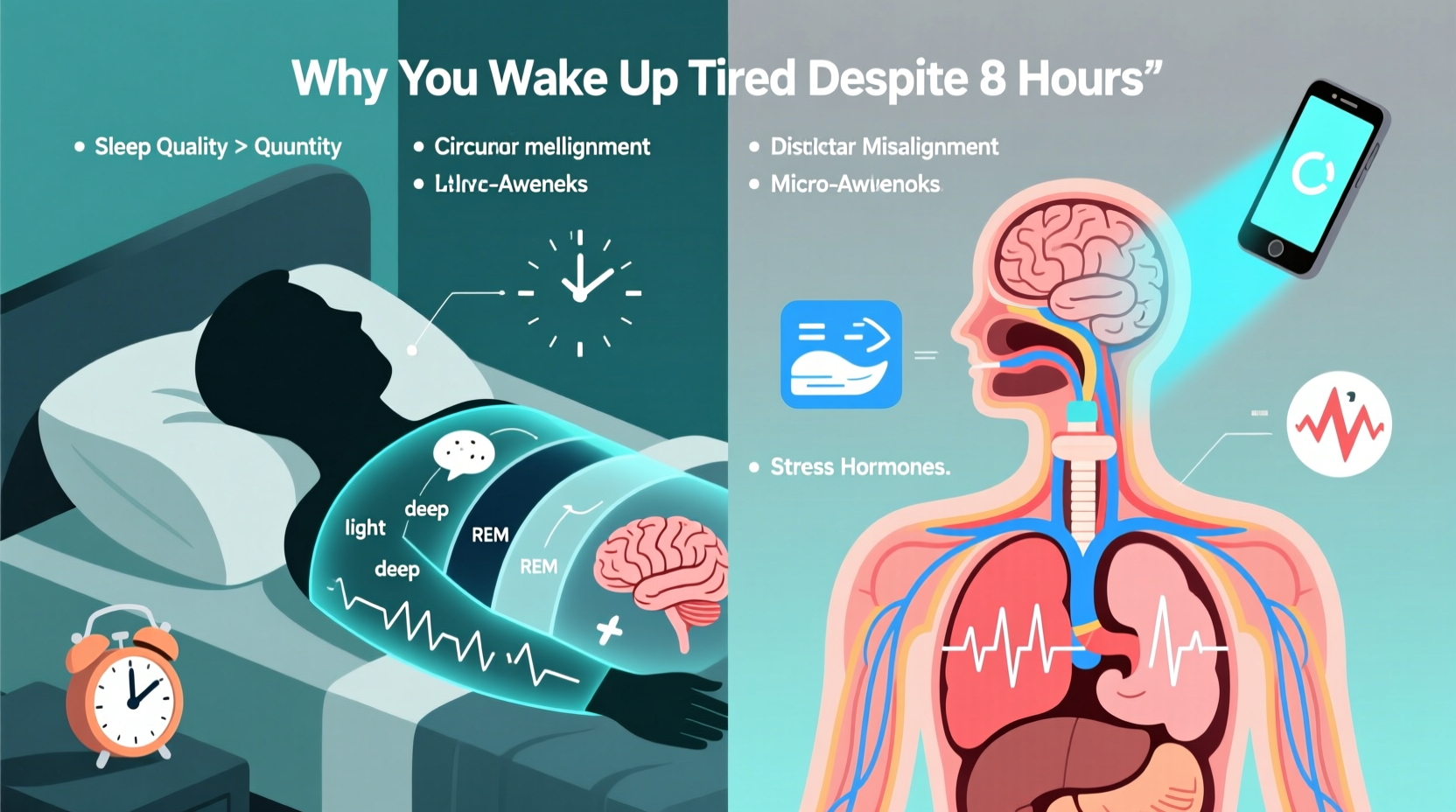
While eight hours is a useful average, it’s not a universal prescription. Individual sleep needs vary based on age, genetics, activity level, and mental health. More importantly, quantity doesn’t guarantee quality. You could spend nine hours in bed but only achieve fragmented, light-stage sleep—leaving your body and brain under-recovered.
Sleep occurs in cycles lasting about 90 minutes each, composed of four stages: N1 (light), N2 (deeper), N3 (deep or slow-wave sleep), and REM (rapid eye movement). Deep sleep is crucial for physical restoration, immune function, and hormone regulation, while REM supports memory consolidation and emotional processing. Waking up during or just before a deep or REM cycle can leave you disoriented and fatigued—a phenomenon known as sleep inertia.
Common Causes of Non-Restorative Sleep
Several interrelated factors can disrupt the architecture of your sleep, preventing you from reaching or maintaining restorative phases. Below are the most prevalent culprits:
1. Poor Sleep Hygiene
Irregular bedtimes, screen exposure before sleep, caffeine consumption late in the day, and an uncomfortable sleep environment interfere with falling and staying asleep. Blue light from phones and tablets suppresses melatonin production, delaying sleep onset and reducing overall sleep efficiency.
2. Sleep Apnea and Breathing Disorders
Obstructive sleep apnea (OSA) causes repeated breathing interruptions throughout the night, leading to micro-awakenings that fragment sleep. Many people with OSA don’t recall waking up—but their brain never enters sustained deep sleep. Symptoms include loud snoring, gasping during sleep, dry mouth upon waking, and excessive daytime fatigue.
“Even if patients log eight hours in bed, untreated sleep apnea can reduce effective sleep by two to three hours due to constant arousal.” — Dr. Lisa Chen, Board-Certified Sleep Specialist
3. Circadian Rhythm Misalignment
Your internal biological clock regulates when you feel alert and sleepy. When this rhythm is out of sync—due to shift work, jet lag, or social jet lag (staying up late on weekends)—you may sleep for eight hours but at suboptimal times. This misalignment reduces melatonin release and impairs sleep depth.
4. Stress and Hyperarousal
Chronic stress keeps the nervous system in a heightened state, making it difficult to transition into deep, restful sleep. Elevated cortisol levels, especially in the evening, prevent relaxation and suppress slow-wave sleep. Anxiety-related rumination can also prolong the time it takes to fall asleep and increase nighttime awakenings.
5. Medical and Nutritional Factors
Conditions like anemia, hypothyroidism, chronic pain, acid reflux, and diabetes can all contribute to poor sleep quality. Nutrient deficiencies—particularly in iron, magnesium, vitamin D, and B12—also impact energy metabolism and sleep regulation.
Hidden Lifestyle Triggers That Drain Your Energy
Beyond clinical causes, daily habits significantly influence how refreshed you feel. These subtle yet powerful factors are often overlooked:
- Inconsistent sleep schedule: Going to bed and waking up at different times—even on weekends—disrupts circadian rhythms.
- Alcohol consumption: While alcohol may help you fall asleep faster, it suppresses REM sleep and causes rebound awakenings in the second half of the night.
- Late-night eating: Heavy meals within two hours of bedtime can cause indigestion and reduce sleep continuity.
- Lack of morning sunlight: Exposure to natural light within 30–60 minutes of waking helps reset your circadian clock and boosts daytime alertness.
- Over-reliance on alarms: Repeated snoozing fragments your final sleep cycles and worsens sleep inertia.
Step-by-Step Guide to Achieving Restorative Sleep
Improving sleep quality requires a structured approach. Follow this seven-day timeline to reset your sleep patterns and wake up feeling truly refreshed.
- Day 1–2: Audit Your Current Routine
Track your bedtime, wake time, caffeine intake, screen use, and how you feel upon waking. Use a notebook or sleep app to identify patterns. - Day 3: Optimize Your Sleep Environment
Set bedroom temperature between 60–67°F (15–19°C). Invest in blackout curtains, remove electronics, and use white noise if needed. Ensure your mattress and pillows support proper spinal alignment. - Day 4: Establish a Wind-Down Ritual
Begin a 60-minute pre-sleep routine: dim lights, read a book, practice gentle stretching or meditation. Avoid stimulating content or conversations. - Day 5: Regulate Light Exposure
Spend at least 15 minutes outside in the morning sun. Limit blue light after 8 PM using device settings or amber-tinted glasses. - Day 6: Adjust Diet and Timing
Stop caffeine after 2 PM. Avoid alcohol within three hours of bed. Eat dinner earlier and keep it light. - Day 7: Set a Consistent Schedule
Go to bed and wake up at the same time every day—even on weekends. Use this consistency to train your internal clock.
Do’s and Don’ts of Morning Energy Management
| Do | Don’t |
|---|---|
| Drink a glass of water immediately upon waking to rehydrate. | Reach for coffee before drinking water—dehydration worsens fatigue. |
| Get natural sunlight within 30 minutes of waking. | Check your phone first thing—blue light and stress-inducing content hinder alertness. |
| Eat a protein-rich breakfast to stabilize blood sugar. | Grab sugary pastries or skip breakfast—both lead to mid-morning crashes. |
| Move your body gently—stretch or take a short walk. | Stay in bed scrolling or rush into high-stress tasks immediately. |
Mini Case Study: From Exhausted to Energized
Mark, a 38-year-old software developer, consistently slept 7.5 to 8.5 hours per night but woke up feeling like he hadn’t slept at all. He relied on two strong coffees just to start his workday and experienced frequent afternoon crashes. After tracking his habits, he discovered several red flags: nightly screen use until midnight, weekend sleep-ins of up to two hours, and regular late dinners with wine.
With guidance from a sleep coach, Mark implemented a strict wind-down routine, eliminated screens after 10 PM, moved dinner earlier, and committed to a fixed wake-up time—even on weekends. Within two weeks, he reported deeper sleep and significantly reduced morning fatigue. A home sleep test later ruled out apnea, confirming that lifestyle adjustments were the key.
“I thought I was doing everything right,” Mark said. “But it wasn’t about sleeping longer—it was about sleeping smarter.”
When to Seek Medical Help
If you’ve optimized your sleep hygiene and still wake up tired, it may be time to consult a healthcare provider. Persistent symptoms such as loud snoring, choking at night, restless legs, or unexplained fatigue could indicate an underlying condition.
A sleep study (polysomnography) can diagnose disorders like sleep apnea, periodic limb movement disorder, or narcolepsy. Blood tests can reveal hormonal imbalances or nutrient deficiencies contributing to low energy. Early diagnosis often leads to highly effective treatments—from CPAP therapy for apnea to thyroid medication or iron supplements.
FAQ
Can I be getting enough sleep and still feel tired?
Yes. Duration doesn’t equal quality. Even eight hours of fragmented or shallow sleep fails to provide restorative benefits. Conditions like sleep apnea, insomnia, or circadian misalignment can result in non-refreshing sleep despite adequate time in bed.
Does sleeping too much make me more tired?
Possibly. Oversleeping (more than 9 hours regularly) can disrupt circadian rhythms, lower serotonin levels, and lead to hypersomnia—a condition marked by excessive sleep without relief from fatigue. It’s also linked to higher risks of cardiovascular disease and depression.
How long does it take to fix poor sleep quality?
Most people notice improvements in energy and sleep depth within 1–3 weeks of consistent changes. However, full circadian realignment and resolution of chronic issues may take several months. Patience and persistence are essential.
Checklist: 7 Steps to Wake Up Refreshed
- ✅ Maintain a consistent sleep and wake time (within 30 minutes)
- ✅ Create a dark, cool, and quiet sleep environment
- ✅ Avoid screens and bright lights 60–90 minutes before bed
- ✅ Limit caffeine after 2 PM and avoid alcohol near bedtime
- ✅ Get morning sunlight exposure within 60 minutes of waking
- ✅ Stay hydrated and eat balanced meals throughout the day
- ✅ Consult a doctor if fatigue persists despite lifestyle changes
Conclusion: Reclaim Your Mornings
Waking up tired after eight hours of sleep isn't normal—and it's not inevitable. The root cause is rarely laziness or lack of effort. It’s usually a mismatch between your biology and your habits. By understanding sleep cycles, addressing hidden disruptions, and aligning your routine with your natural rhythm, you can transform your mornings from a struggle into a source of energy and clarity.
Sleep isn’t just downtime—it’s active recovery. Every night is an opportunity to repair, restore, and prepare for the next day. Start tonight. Make one small change. Protect your sleep like your health depends on it—because it does.




 浙公网安备
33010002000092号
浙公网安备
33010002000092号 浙B2-20120091-4
Comments
No comments yet. Why don't you start the discussion?