
Sleep is supposed to be restorative. After eight hours in bed, most people expect to rise feeling refreshed and alert. Yet millions wake up groggy, drained, or mentally foggy despite logging a full night’s rest. This disconnect between sleep duration and sleep quality points to deeper issues—many of which go unnoticed until they become chronic.
The truth is, quantity doesn’t guarantee quality. Even if your sleep tracker shows eight solid hours, disruptions in sleep architecture, underlying health conditions, or lifestyle habits can sabotage how rested you feel. Understanding why you wake up tired isn't just about counting sheep—it's about identifying the root causes and making targeted changes that lead to truly restful sleep.
Sleep Architecture: Why Quality Matters More Than Quantity
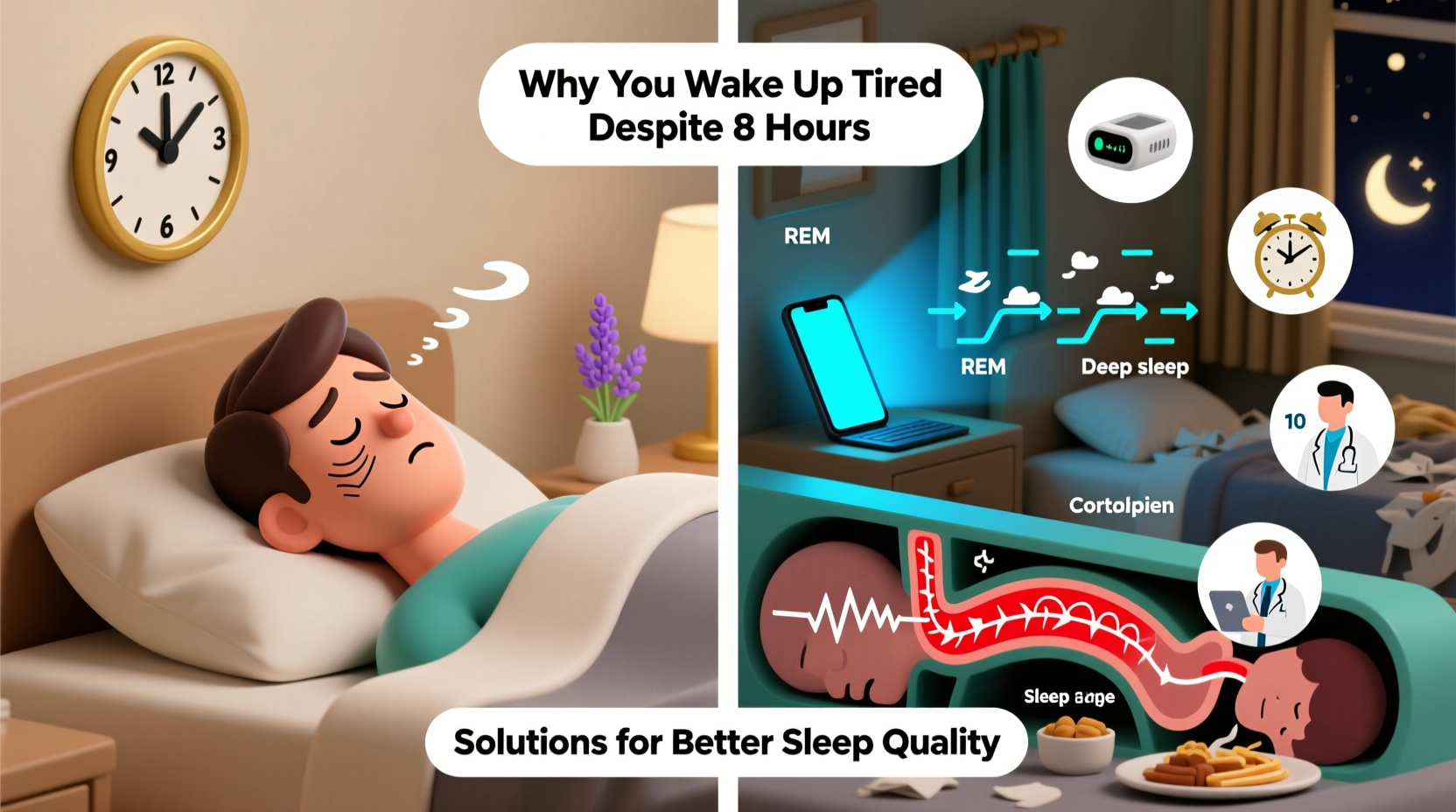
Sleep isn’t a uniform state. It cycles through four distinct stages—three non-REM (NREM) phases and one REM (rapid eye movement) phase—each playing a unique role in physical restoration, memory consolidation, and emotional regulation. A full sleep cycle lasts about 90 minutes and repeats four to six times per night.
For optimal recovery, you need sufficient time in deep NREM (Stage 3) and REM sleep. Deep sleep supports tissue repair, immune function, and hormonal balance, while REM sleep enhances cognitive processing and mood stability. If these stages are consistently interrupted or shortened, you may spend eight hours asleep but never reach true restoration.
“Sleep efficiency—how much of your time in bed is spent in restorative sleep—is more important than total sleep time.” — Dr. Rebecca Robbins, Sleep Scientist, Harvard Medical School
Common Causes of Waking Up Tired Despite 8 Hours
Even with adequate time in bed, several factors can degrade sleep quality. Below are the most frequent culprits behind unrefreshing sleep:
1. Sleep Apnea and Breathing Disorders
Obstructive sleep apnea (OSA) causes repeated pauses in breathing during sleep due to airway blockage. Each pause triggers a micro-arousal—brief enough that you may not remember it—but disruptive enough to prevent deep sleep. Common signs include loud snoring, gasping at night, and excessive daytime fatigue.
2. Poor Sleep Hygiene
Inconsistent bedtimes, screen exposure before sleep, caffeine intake late in the day, and irregular wake-up times all interfere with your circadian rhythm. These habits fragment sleep and reduce time spent in restorative stages.
3. Stress and Anxiety
Mental hyperarousal keeps the nervous system active during sleep, increasing time in lighter stages and reducing deep sleep. Chronic stress elevates cortisol levels, which can delay sleep onset and disrupt continuity.
4. Blood Sugar Imbalances
Nocturnal hypoglycemia (low blood sugar at night) can trigger adrenaline release, causing awakenings around 2–4 a.m. People on restrictive diets or with insulin resistance are especially vulnerable.
5. Nutrient Deficiencies
Lack of magnesium, vitamin D, B12, or iron can impair sleep regulation. Iron deficiency, for example, is linked to restless legs syndrome (RLS), which causes uncomfortable sensations in the legs at night and leads to frequent leg movements that disrupt sleep.
6. Medications and Substances
Antidepressants, beta-blockers, alcohol, and even some over-the-counter cold medicines can alter sleep architecture. Alcohol may help you fall asleep faster but suppresses REM sleep, leading to less refreshing rest.
7. Circadian Rhythm Misalignment
If your internal clock is out of sync with your schedule—common in shift workers or those with delayed sleep phase disorder—you may sleep for eight hours but at suboptimal times. The body expects deep sleep during biological night; misalignment reduces its effectiveness.
Evidence-Based Fixes to Wake Up Refreshed
Fixing unrefreshing sleep requires a multi-pronged approach. Start by addressing lifestyle factors, then investigate medical causes if improvements don’t follow.
Step-by-Step Guide to Better Morning Energy
- Track Your Sleep Patterns: Use a wearable or sleep journal to monitor bedtime, wake time, awakenings, and how you feel upon rising. Look for patterns over two weeks.
- Optimize Your Sleep Environment: Keep the bedroom cool (60–67°F), dark, and quiet. Consider blackout curtains, white noise machines, or earplugs.
- Limit Blue Light Exposure: Avoid screens for at least one hour before bed. Use blue light filters on devices if necessary.
- Establish a Consistent Schedule: Go to bed and wake up at the same time every day—even on weekends. This stabilizes your circadian rhythm.
- Reduce Evening Stimulants: Cut off caffeine after 2 p.m. and avoid heavy meals, alcohol, and nicotine within three hours of bedtime.
- Incorporate Wind-Down Rituals: Practice relaxation techniques like reading, gentle stretching, meditation, or deep breathing to signal your brain it’s time to rest.
- Check for Sleep Disorders: If you snore loudly, wake frequently, or feel exhausted despite long sleep, consult a sleep specialist. A sleep study can diagnose apnea or other conditions.
Do’s and Don’ts for Restorative Sleep
| Do | Don’t |
|---|---|
| Stick to a consistent sleep schedule | Use your bed for work or watching TV |
| Exercise regularly (but not within 3 hours of bedtime) | Consume caffeine late in the day |
| Expose yourself to natural light in the morning | Hit snooze repeatedly—disrupts sleep cycles |
| Create a calming pre-sleep routine | Engage in stressful conversations before bed |
| Treat diagnosed conditions like sleep apnea | Ignore persistent fatigue—seek medical advice |
Real-Life Example: Sarah’s Journey to Better Mornings
Sarah, a 38-year-old marketing manager, consistently slept eight hours but woke up each morning feeling like she hadn’t slept at all. She relied on multiple cups of coffee to stay alert and often experienced afternoon crashes. After tracking her sleep, she noticed frequent nighttime awakenings and vivid dreams—signs of disrupted REM sleep.
She eliminated evening wine (which she thought helped her relax) and replaced it with herbal tea. She also invested in a CPAP machine after being diagnosed with mild sleep apnea. Within three weeks, her sleep efficiency improved from 78% to 92%. “I didn’t realize how much fragmented my sleep was,” she said. “Now I wake up before my alarm, and my energy stays steady all day.”
When to Seek Medical Help
While lifestyle adjustments help many, some causes require professional intervention. See a doctor if you experience any of the following:
- Loud snoring or witnessed breathing pauses during sleep
- Uncontrollable urge to move legs at night
- Frequent awakenings with no clear cause
- Daytime sleepiness that interferes with work or safety
- Persistent fatigue lasting more than two weeks
Blood tests can reveal deficiencies in iron (ferritin), vitamin D, or thyroid function—all of which impact energy and sleep. Polysomnography (a sleep study) remains the gold standard for diagnosing disorders like sleep apnea, narcolepsy, or periodic limb movement disorder.
“Treating sleep-disordered breathing can be life-changing. Patients often report improved mood, focus, and energy within days of starting therapy.” — Dr. Neomi Shah, Director of Sleep Medicine, Mount Sinai Hospital
FAQ: Common Questions About Unrefreshing Sleep
Can you be well-rested without dreaming?
Dreaming occurs during REM sleep, which is essential for emotional processing and memory. While you may not recall dreams every night, consistently missing REM sleep can affect mental clarity and mood. Lack of dreaming isn’t the issue—it’s whether you’re cycling through all stages properly.
Is waking up tired normal as you age?
While sleep patterns change with age—older adults often have lighter sleep and earlier wake times—feeling chronically tired is not a normal part of aging. Underlying issues like sleep apnea, medication side effects, or poor sleep hygiene should still be addressed.
How long does it take to fix unrefreshing sleep?
With consistent changes, many notice improvement in 2–4 weeks. However, treating medical conditions like sleep apnea or correcting nutrient deficiencies may take longer. Patience and persistence are key.
Final Checklist: Action Steps to Wake Up Energized
- ✅ Assess your sleep environment for noise, light, and temperature
- ✅ Maintain a consistent sleep-wake schedule
- ✅ Eliminate screens and blue light 60 minutes before bed
- ✅ Avoid caffeine after 2 p.m. and alcohol close to bedtime
- ✅ Track your sleep for at least one week to identify patterns
- ✅ Consult a healthcare provider if symptoms persist
- ✅ Get tested for sleep apnea if you snore or gasp at night
- ✅ Check blood levels for iron, vitamin D, and B12 if fatigue continues
Conclusion: Take Control of Your Sleep Quality
Waking up tired after eight hours of sleep is a sign that something is off—not with your commitment to rest, but with the conditions enabling true recovery. By focusing on sleep quality rather than just duration, you can uncover hidden barriers to restfulness and address them with precision.
Start small: pick one habit to improve this week, whether it’s setting a bedtime alarm or swapping evening coffee for decaf. Over time, these choices compound into deeper sleep, sharper focus, and sustained energy. Don’t accept fatigue as inevitable. With the right strategies, you can finally wake up feeling like you’ve truly rested.




 浙公网安备
33010002000092号
浙公网安备
33010002000092号 浙B2-20120091-4
Comments
No comments yet. Why don't you start the discussion?