
Waking up with a headache is more than just an inconvenience—it can derail your entire day before it even begins. While occasional morning headaches might seem harmless, frequent occurrences signal underlying issues often tied to lifestyle, sleep environment, or bodily function. Among the most overlooked yet prevalent culprits are dehydration and improper pillow use. These factors may not cause immediate pain during sleep, but their effects accumulate overnight, leading to tension, pressure, and discomfort by morning.
Understanding the root causes empowers you to make simple, effective changes. This article explores how hydration levels and pillow selection directly influence morning headaches, backed by medical insight and practical solutions.
The Link Between Dehydration and Morning Headaches
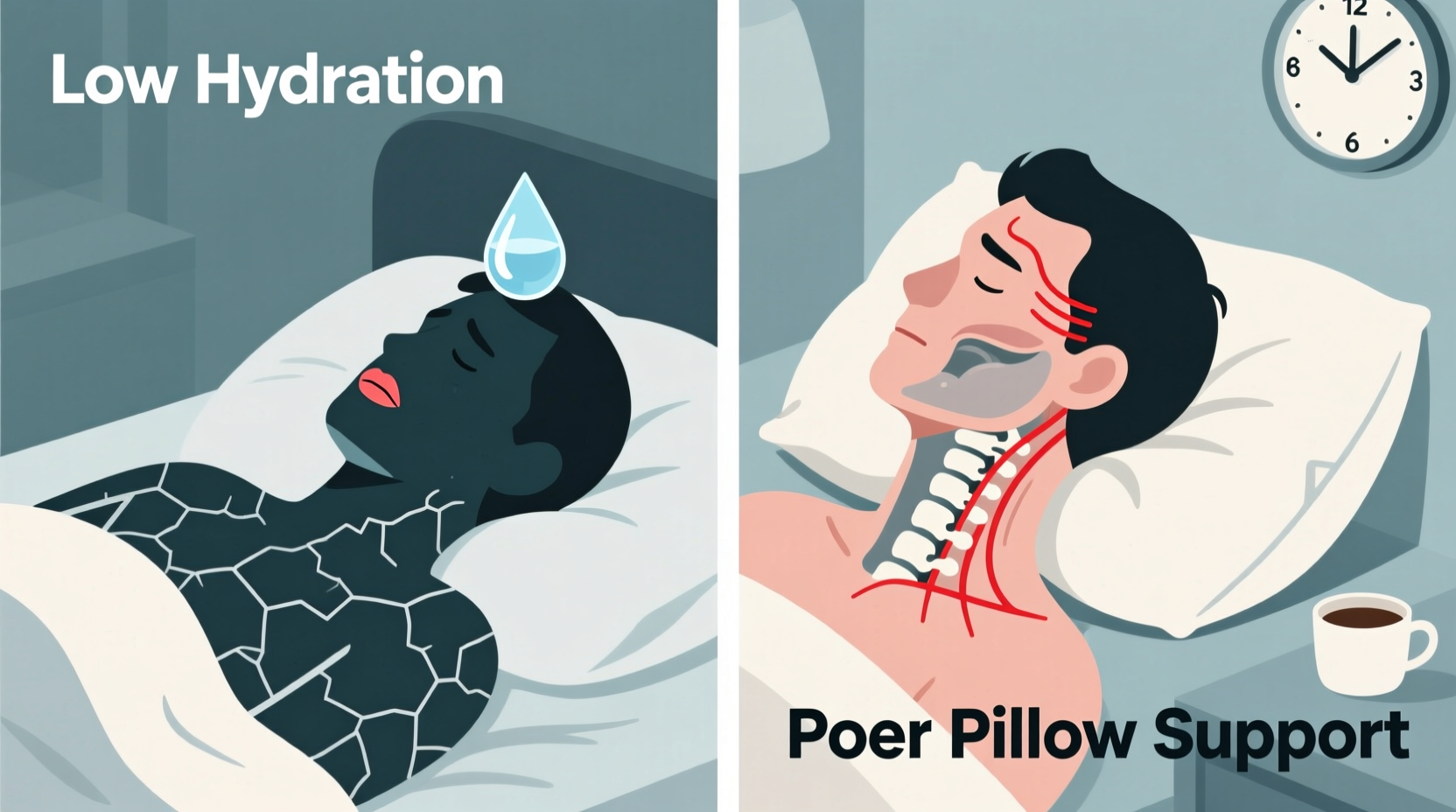
Dehydration is one of the top physiological reasons for waking up with a headache. During sleep, your body continues to lose water through respiration and minimal perspiration. If you go to bed even slightly dehydrated—or fail to replenish fluids lost overnight—the brain can temporarily contract from fluid loss, causing pain.
The brain sits in a fluid-filled sac that cushions it from the skull. When hydration drops, this cushioning effect weakens, increasing sensitivity to movement and pressure. The result? A dull, throbbing ache typically felt on both sides of the head—often mistaken for a tension or sinus headache.
“Even mild dehydration can trigger headaches, especially after several hours without fluid intake. People who don’t drink enough water during the day are particularly vulnerable by morning.” — Dr. Lena Peterson, Neurologist and Sleep Specialist
Factors that worsen overnight dehydration include:
- Consuming alcohol before bed (a diuretic that increases urine production)
- Sleeping in a dry or overheated room
- Snoring or mouth breathing, which dries out mucous membranes and increases fluid loss
- Inadequate water intake throughout the day
How Your Pillow Affects Head and Neck Alignment
Your pillow plays a critical role in spinal alignment while you sleep. An unsuitable pillow—too high, too flat, too firm, or too soft—can misalign your neck and compress nerves or muscles, leading to cervicogenic headaches. These originate from disorders in the cervical spine and are commonly experienced as steady pain starting at the base of the skull and radiating forward.
When your head tilts too far up or down during sleep, muscles in the neck and upper back remain strained for hours. This sustained tension reduces blood flow and irritates nerves connected to the scalp and face. Over time, this chronic strain becomes a predictable source of morning discomfort.
Pillow-related issues vary by sleeping position:
| Sleep Position | Recommended Pillow Height | Common Problems |
|---|---|---|
| Back Sleeper | Low to medium height (4–5 inches) | Overly thick pillows push the head forward, straining the neck |
| Side Sleeper | Higher loft (5–7 inches), firm support | Flat pillows allow shoulder drop, misaligning spine |
| Stomach Sleeper | Very thin or no pillow | Thick pillows hyperextend the neck, compressing vertebrae |
Material also matters. Memory foam offers contouring support but can retain heat; latex provides resilience and breathability; down adjusts easily but lacks structural integrity over time. Choosing based on your anatomy and habits—not trends—is essential.
Hidden Contributors: Sleep Apnea and Bruxism
While hydration and pillows are primary suspects, other conditions often coexist and amplify morning headaches. Two notable ones are obstructive sleep apnea (OSA) and bruxism (teeth grinding).
Sleep apnea causes repeated breathing interruptions during the night. Each pause reduces oxygen levels, prompting micro-arousals that disrupt deep sleep. The resulting hypoxia and fragmented rest contribute to vascular changes in the brain, triggering cluster-like or migraine-type headaches upon waking. Snoring, gasping at night, and excessive daytime fatigue are red flags.
Bruxism, often stress-related, involves clenching or grinding teeth unconsciously during sleep. This overworks the temporalis and masseter muscles, leading to tension headaches and jaw pain. Many people aren't aware they grind until a dentist notices enamel wear or a partner hears the noise.
“Morning headaches linked to sleep-disordered breathing or nocturnal bruxism require targeted intervention. Simply adjusting hydration or pillows won’t resolve these deeper issues.” — Dr. Alan Zhou, Sleep Medicine Physician
Mini Case Study: Sarah’s Breakthrough After Months of Morning Pain
Sarah, a 38-year-old graphic designer, had been waking up with a tight band-like headache three to four times a week. She assumed it was stress-related and relied on ibuprofen. After months of worsening symptoms, she consulted a sleep specialist.
Her evaluation revealed two key problems: chronic under-hydration and using a feather pillow that flattened completely by midnight. She drank less than 40 oz of water daily and frequently consumed wine before bed. Her side-sleeping posture left her neck unsupported, creating constant strain.
She implemented a few changes:
- Started drinking 64 oz of water daily, with one glass before bed and another upon waking.
- Switched to a contoured memory foam pillow designed for side sleepers.
- Stopped alcohol consumption within three hours of bedtime.
Within two weeks, her morning headaches decreased to once every 10 days. By six weeks, they were gone entirely. A follow-up sleep study ruled out apnea, confirming lifestyle adjustments were sufficient.
Step-by-Step Guide to Eliminate Morning Headaches
If you're struggling with recurrent morning headaches, follow this structured approach to identify and correct the cause:
- Track your symptoms for one week: Note when the headache occurs, its location, severity, and any patterns (e.g., after drinking alcohol, certain sleep positions).
- Assess your hydration habits: Monitor daily water intake. Aim for half your body weight (in pounds) in ounces (e.g., 150 lbs = 75 oz). Reduce evening caffeine and alcohol.
- Evaluate your pillow: Lie down and check if your neck is aligned with your spine. Your ear should be in line with your shoulder. Replace pillows older than 18–24 months.
- Optimize your bedroom environment: Keep room temperature between 60–67°F (15–19°C). Use a humidifier if air feels dry, especially in winter.
- Rule out sleep disorders: If snoring, choking sensations, or unrefreshing sleep persist despite improvements, consult a sleep clinic for evaluation.
- Practice gentle neck stretches before bed: Perform slow chin tucks and lateral rotations to release muscle tension.
- Reassess after 3 weeks: If headaches continue, seek medical advice to explore neurological or dental causes.
Checklist: Prevent Morning Headaches Tonight
- ✅ Drink a full glass of water 30 minutes before bed
- ✅ Replace old or unsupportive pillows
- ✅ Avoid alcohol and heavy meals within 3 hours of sleep
- ✅ Align your neck with your spine using proper pillow height
- ✅ Use a humidifier if indoor air is dry
- ✅ Practice relaxation techniques (deep breathing, meditation) to reduce nighttime tension
- ✅ Schedule a dental checkup to rule out bruxism
Frequently Asked Questions
Can drinking water before bed really prevent headaches?
Yes—especially if you're prone to dehydration. Sipping 8–12 oz of water before sleep helps maintain fluid balance overnight. However, avoid chugging large amounts right before bed to prevent disruptive nighttime urination.
How often should I replace my pillow?
Every 18 to 24 months, depending on material and usage. Signs it's time for replacement include lumps, flattening, yellowing, or waking up with increased stiffness. Regular fluffing and washing (if applicable) extend lifespan but don’t restore structural support.
Is it better to sleep without a pillow?
Only for stomach sleepers or those with very specific anatomical needs. For most people—especially side and back sleepers—a properly sized pillow is crucial for maintaining neutral spinal alignment. Going pillowless often leads to hyperextension or collapse of the cervical curve.
Conclusion: Take Control of Your Mornings
Morning headaches don’t have to be a normal part of your routine. More often than not, they stem from correctable issues like inadequate hydration and poor pillow support—factors within your control. By making small, intentional changes to your pre-sleep habits and sleep setup, you can eliminate these headaches and start each day with clarity and comfort.
Don’t wait for the pain to escalate. Begin tonight: refill your water bottle, assess your pillow, and commit to one improvement. Your body will respond faster than you think. Share your experience or tips with others facing the same struggle—because better mornings start with informed choices.




 浙公网安备
33010002000092号
浙公网安备
33010002000092号 浙B2-20120091-4
Comments
No comments yet. Why don't you start the discussion?