
Morning headaches can turn the start of your day into a struggle before it even begins. You wake up with a dull throb, a tight band around your head, or a sharp pain behind one eye — and you're left wondering: is this because I didn’t drink enough water last night, or is my pillow failing me? The truth is, both dehydration and poor pillow support are common culprits, but they manifest differently and require distinct solutions. Understanding the root cause is essential for long-term relief.
Unlike headaches that develop during the day due to stress or screen fatigue, morning headaches often point to nighttime habits, sleep quality, or physiological imbalances. This article dives deep into how dehydration and pillow-related issues contribute to waking up with a headache, how to differentiate between them, and what actionable steps you can take to stop them for good.
How Dehydration Causes Morning Headaches
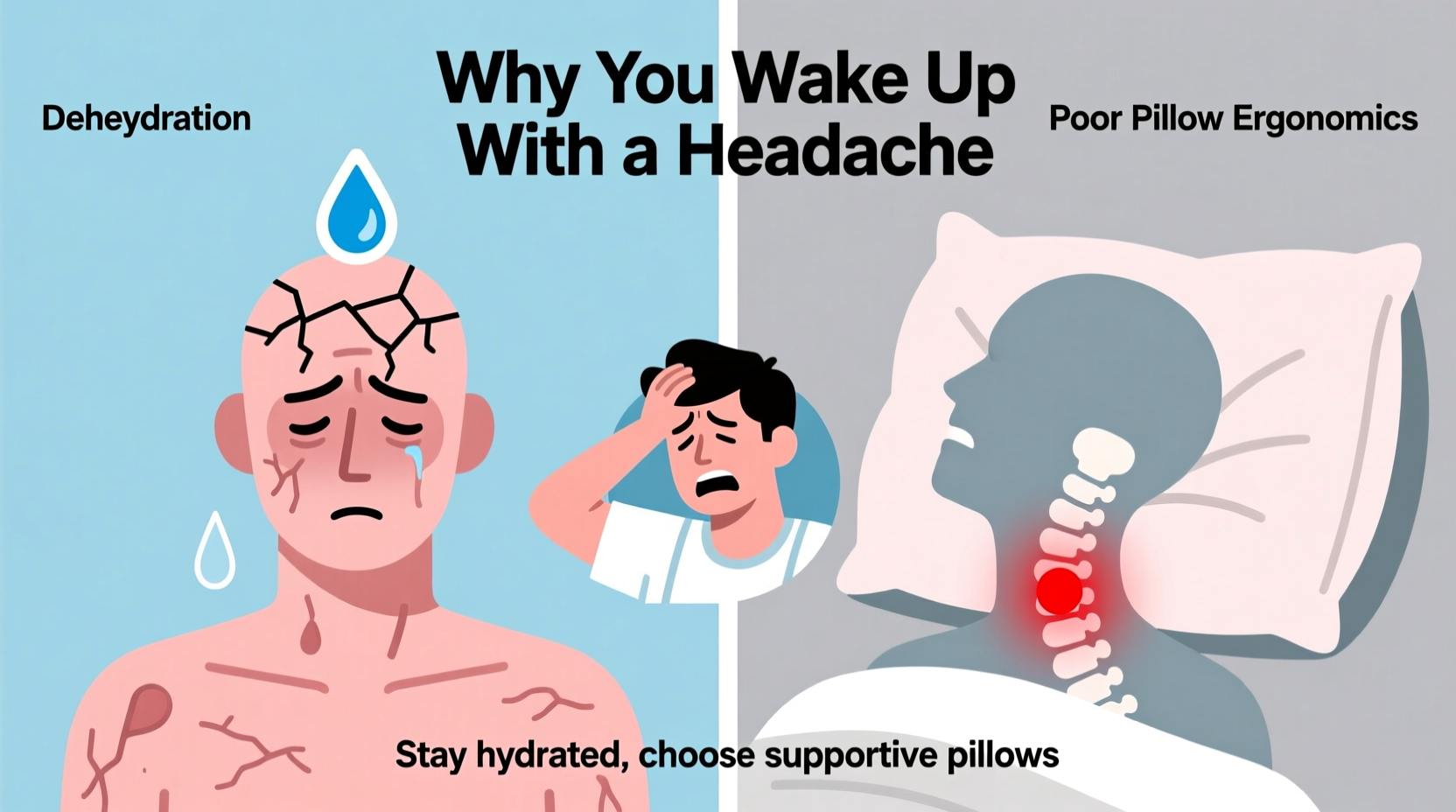
Your body loses fluids throughout the night through breathing, sweating (even if slightly), and metabolic processes. If you don’t consume enough water during the day or consume alcohol or caffeine in the evening, your body may enter a state of mild dehydration by morning. When brain tissues lose fluid, they temporarily contract or shrink, pulling away from the skull. This triggers pain receptors, resulting in a dehydration headache.
Dehydration headaches are typically described as a pulsating or throbbing sensation, often felt on both sides of the head. They may worsen with movement, bending over, or physical activity. Other signs include dry mouth, dark urine, fatigue, and dizziness — though these may not be immediately noticeable upon waking.
A 2021 study published in Clinical Neurology and Neurosurgery found that individuals who reported chronic morning headaches were significantly more likely to have below-average daily water intake compared to those without such symptoms. Even a 1–2% drop in body hydration can impair cognitive function and trigger headaches.
When Your Pillow Is the Real Problem
Your pillow plays a critical role in maintaining proper spinal alignment while you sleep. If your pillow is too high, too flat, too firm, or simply outdated, it can strain your neck muscles and compress nerves, leading to cervicogenic headaches — headaches that originate in the neck but are felt in the head.
Pillows that fail to support the natural curve of your cervical spine force your head into awkward positions. Side sleepers may tilt their head downward if the pillow doesn’t fill the space between shoulder and ear. Back sleepers may experience hyperextension if the pillow elevates the head too much. Stomach sleepers are especially vulnerable, as this position often twists the neck sideways for hours.
The result? Tightened suboccipital muscles at the base of the skull, compressed vertebral arteries, and referred pain that radiates upward into the forehead, temples, or behind the eyes. These headaches usually start at the back of the head and may feel stiff or pressure-like rather than throbbing.
“Poor pillow choice is one of the most overlooked causes of recurrent morning headaches. A mismatch between sleeping posture and pillow support can create chronic muscle tension.” — Dr. Lena Patel, Sleep Medicine Specialist
Telling the Difference: Dehydration vs. Pillow-Induced Headaches
Distinguishing between these two causes is key to effective treatment. While there can be overlap, certain characteristics help identify the primary source.
| Symptom | Dehydration Headache | Pillow-Related Headache |
|---|---|---|
| Pain Type | Throbbing, generalized | Dull, pressure-like, localized |
| Location | Frontal or bilateral | Base of skull, radiating forward |
| Time of Relief | Improves within 30–60 minutes of drinking water | Persists or improves slowly with stretching/movement |
| Neck Stiffness | Rare | Common |
| Other Symptoms | Dry mouth, fatigue, dark urine | Shoulder tension, reduced neck mobility |
| Aggravated By | Physical activity, heat | Awkward sleeping posture, old pillow |
If your headache fades quickly after hydration and doesn’t return later in the day, dehydration is likely the main factor. But if you consistently wake with neck stiffness and the same pattern of head pain regardless of fluid intake, your pillow — or sleep posture — deserves closer inspection.
Step-by-Step Guide to Preventing Morning Headaches
Eliminating morning headaches isn't about quick fixes — it's about creating sustainable habits. Follow this five-step process to identify and address the root cause.
- Track Your Symptoms for One Week
Keep a simple journal each morning. Note:- Headache location and intensity (1–10)
- Fluid intake the previous day
- Alcohol or caffeine consumption
- How rested you feel
- Neck or shoulder discomfort
- Optimize Daily Hydration
Increase water intake gradually. Aim for half your body weight (in pounds) in ounces per day. For example, a 150-pound person should drink about 75 ounces (roughly 9 cups). Distribute intake evenly — avoid chugging large amounts right before bed, which can disrupt sleep with bathroom trips. - Evaluate Your Pillow Setup
Lie down in your usual sleep position and assess:- Is your neck aligned with your spine?
- Does your head tilt up or down?
- Is the pillow lumpy or over 18 months old?
- Adjust Sleep Environment
Use a humidifier if your bedroom air is dry — especially in winter — to reduce fluid loss through respiration. Avoid alcohol within three hours of bedtime, as it dehydrates and disrupts sleep cycles. - Test Interventions Separately
For one week, focus only on hydration. The next week, keep fluids consistent but upgrade your pillow. Observe which change leads to improvement. This helps isolate the true cause.
Mini Case Study: Sarah’s Breakthrough After Years of Morning Pain
Sarah, a 38-year-old graphic designer, had suffered from morning headaches for nearly five years. She assumed it was stress-related until she started tracking her habits. Her log revealed she rarely drank more than 30 ounces of water daily and regularly consumed wine with dinner. She also used a memory foam pillow she’d had since college — now flattened and misshapen.
She first increased her water intake to 80 ounces daily. Within three days, her headaches became less intense but still occurred. Then, she replaced her pillow with a contoured cervical model suited for side sleeping. On the second night with the new pillow, she woke headache-free for the first time in years.
Further observation showed that skipping hydration on a given day would bring back mild symptoms, but never as severe as before. The combination of proper hydration and spinal support made the critical difference. Today, Sarah keeps a water bottle on her nightstand and replaces her pillow every 18 months like clockwork.
Checklist: Eliminate Morning Headaches for Good
- ✅ Drink at least 80% of your daily water goal by 7 PM
- ✅ Keep a glass of water beside your bed
- ✅ Replace your pillow every 18–24 months
- ✅ Choose a pillow based on your sleep position (side, back, stomach)
- ✅ Avoid alcohol and excessive caffeine after 6 PM
- ✅ Use a humidifier in dry climates or heated rooms
- ✅ Stretch your neck and shoulders before bed
- ✅ Track headaches for 7 days to identify patterns
Frequently Asked Questions
Can sleeping with your mouth open cause dehydration headaches?
Yes. Mouth breathing, especially during sleep due to allergies or nasal congestion, increases fluid loss through evaporation. This can lead to overnight dehydration even if you drank enough water earlier. Consider addressing nasal airflow issues or using a saline nasal spray before bed.
What type of pillow is best for preventing headaches?
The best pillow depends on your sleep position:
- Side sleepers: Medium-high loft with firm support to keep the spine neutral.
- Back sleepers: Medium-loft pillow that supports the natural neck curve without lifting the head too high.
- Stomach sleepers: Very thin pillow or none at all to minimize neck twisting.
Why do I get a headache every morning even when I sleep well?
Sleep duration and quality don’t rule out dehydration or postural strain. You might sleep eight hours but still be dehydrated or use a pillow that misaligns your neck. Additionally, undiagnosed sleep apnea or teeth grinding (bruxism) can also cause morning headaches. If lifestyle changes don’t help, consult a healthcare provider to rule out medical conditions.
Conclusion: Take Control of Your Mornings
Waking up with a headache shouldn’t be normal. Whether it’s a lack of hydration or an unsupportive pillow, the solution lies in awareness and small, consistent changes. You don’t need expensive treatments or medications — just attention to your daily habits and sleep environment. Start tonight: refill your water bottle, check your pillow’s condition, and commit to tracking how you feel tomorrow morning. Most people see improvement within a week. Your mornings can be clear-headed, energized, and pain-free. It starts with recognizing that the problem isn’t inevitable — it’s fixable.




 浙公网安备
33010002000092号
浙公网安备
33010002000092号 浙B2-20120091-4
Comments
No comments yet. Why don't you start the discussion?