
As the holiday season approaches, homeowners across neighborhoods begin decorating their homes with festive lights. Among the most popular choices are icicle lights—those cascading strands of bulbs that mimic frozen droplets hanging from eaves. When done well, they create a magical winter wonderland effect. But too often, the result is less enchanting: clumped, crooked, or uneven rows that disrupt the illusion. Why do icicle lights look uneven on some rooftops? And more importantly, how can you fix it?
The issue isn’t just about aesthetics—it’s about technique. Even minor inconsistencies in spacing, height, or installation method can throw off the entire visual rhythm. The good news is that with the right approach, anyone can achieve a professional-grade display. This guide dives into the science behind uneven appearances, common pitfalls, and actionable strategies to ensure your icicle lights hang straight, even, and stunning.
Why Icicle Lights Appear Uneven: The Hidden Causes
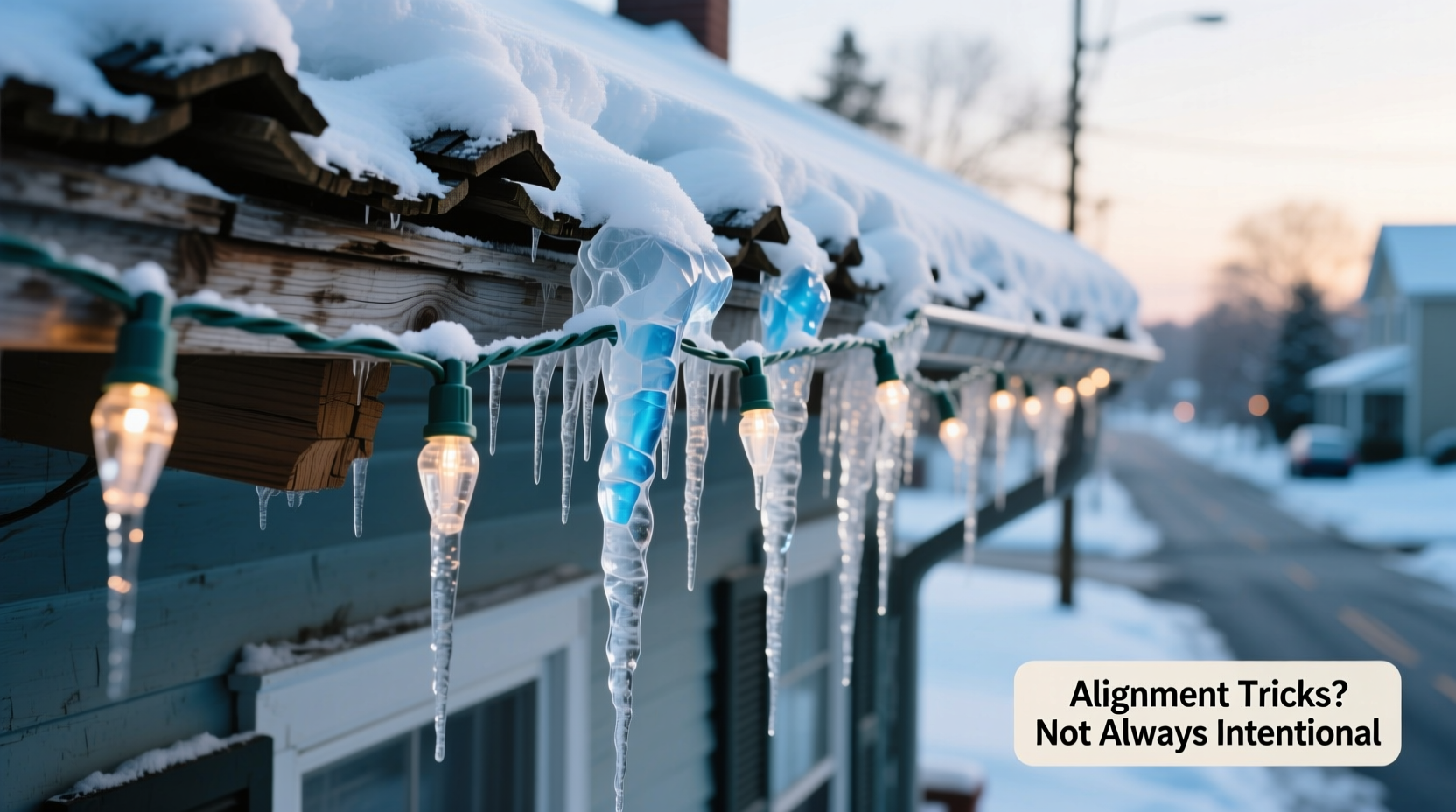
At first glance, uneven icicle lighting might seem like bad luck or poor-quality products. In reality, the problem almost always stems from installation technique and environmental factors. Understanding these root causes is the first step toward a polished look.
- Inconsistent Spacing Between Strands: If one strand is hung closer to the edge than its neighbor, the vertical drops won’t align, creating a jagged appearance.
- Varying Drop Lengths: Many pre-made icicle light sets feature random drop lengths to simulate real icicles. While this adds realism, it can also lead to visual chaos if not arranged intentionally.
- Improper Mounting Height: Installing lights too high or too low on the fascia board changes the viewing angle, making some sections appear denser or sparser.
- Wind and Weather Distortion: Over time, wind, snow, or rain can shift lightweight plastic clips or dislodge hooks, causing once-even strands to sag or bunch.
- Non-Level Rooflines: Not all eaves are perfectly level. A slight slope may go unnoticed during the day but becomes glaringly obvious when lit at night.
These issues compound quickly. A half-inch misalignment per clip may seem negligible, but over a 20-foot span, it results in a full foot of drift—enough to ruin symmetry.
Step-by-Step Guide to Perfect Icicle Light Alignment
Achieving uniform icicle lighting requires planning, precision, and patience. Follow this proven sequence to install lights that look professionally done.
- Inspect Your Roofline: Walk around your home and observe the eaves from multiple angles. Note any areas where the roof dips or corners aren't square. These will require special attention.
- Choose Consistent-Length Sets (or Modify Them): Opt for icicle lights with uniform drop patterns if you want symmetry. Alternatively, mix different sets deliberately—place longer drops near downspouts and shorter ones near corners for a balanced organic look.
- Measure and Mark Clip Locations: Decide on spacing—typically 6 to 8 inches apart works best. Use a tape measure and marker to place dots along the fascia. For multi-story homes, use a ladder and have a partner verify alignment from the ground.
- Install Mounting Clips Levelly: Attach adhesive-backed gutter clips or hanger hooks precisely at your marked points. Use a small level to ensure each is horizontal. Avoid relying solely on visual estimation.
- Hang Lights from the Top Down: Begin at one end and work left to right. Secure the top wire tightly so it runs parallel to the roofline. Gently tug each drop into position as you go.
- Adjust for Natural Flow: Once all strands are up, walk back and adjust individual icicles to avoid clustering. Rotate or reposition any that cross or touch adjacent strands.
- Test Before Finalizing: Turn on the lights at dusk to evaluate the effect. Make micro-adjustments while illuminated—what looks fine in daylight may reveal gaps or crowding after dark.
This methodical process eliminates guesswork and ensures consistency across large surfaces. It takes more time upfront but saves hours of frustration later.
Do’s and Don’ts of Icicle Light Installation
Even experienced decorators make mistakes. Refer to this comparison table to avoid common errors and adopt best practices.
| Do | Don’t |
|---|---|
| Use a laser level to mark clip positions on long eaves | Rely on eye-balling distances between clips |
| Overlap strands slightly (1–2 inches) to prevent visible gaps | Leave spaces between strings, creating \"stripes\" of darkness |
| Secure the main wire tautly to prevent sagging | Let the top wire droop, which pulls icicles out of alignment |
| Check alignment from street-level viewpoint | Judge placement only from the ladder or close-up |
| Use UV-resistant clips designed for outdoor use | Use indoor-only tape or flimsy adhesives |
One overlooked detail: color temperature. Mixing warm white and cool white strands—even within the same run—can create a patchy appearance. Stick to one Kelvin rating (e.g., 2700K for warm white) across all lights.
Real Example: Transforming a Crooked Display in Suburban Chicago
Consider the case of Maria Thompson, a homeowner in Naperville, Illinois. Each year, she installed her icicle lights with enthusiasm—but neighbors often commented that they “looked lopsided.” One winter, she decided to troubleshoot.
Maria started by photographing her roofline from the curb. Reviewing the images, she noticed that her left eave was nearly level, but the right side sloped downward by about three inches over 18 feet. She had unknowingly followed the roof's contour, causing the icicles to fan outward at an angle.
She removed the lights and remeasured using a string line anchored at both ends and adjusted with a line level. She then placed clips every 7 inches along this straight reference line—not the actual roof edge. After reinstalling, the transformation was immediate: the drops now fell vertically in unison, creating a clean, curtain-like effect.
“I thought I was being precise,” Maria said. “But I was just copying an uneven surface. Straightening the base line made all the difference.”
Her experience underscores a key principle: aesthetic alignment doesn’t mean following architectural lines exactly—it means creating optical harmony from the viewer’s perspective.
“Perfect holiday lighting isn’t about covering more area—it’s about controlling the eye’s movement. Uniform spacing guides attention smoothly across the façade.” — Daniel Reeves, Professional Holiday Lighting Designer
Pro Tips for Long-Term Consistency
Getting it right the first time is only part of the battle. Maintaining evenness throughout the season—and year after year—requires foresight.
- Use Reusable Anchoring Systems: Invest in permanent gutter clips or track systems that allow you to snap lights in and out annually. This eliminates the need to remeasure every year.
- Document Your Layout: Take photos or sketch a diagram showing clip locations and strand paths. Include notes like “start with Set B here” or “overlap by 1.5 inches.”
- Inspect Mid-Season: After a heavy storm, check for shifted lights. A five-minute adjustment can preserve weeks of effort.
- Consider LED Rope Lights with Fixed Drops: Some premium models feature molded, evenly spaced icicles that resist tangling and maintain shape better than traditional bulb-and-wire sets.
For multi-story homes, prioritize visibility. Focus precision on lower eaves seen from sidewalks or driveways. Upper levels can tolerate slightly looser spacing since they’re viewed from farther away.
FAQ: Common Questions About Icicle Light Alignment
How far apart should icicle light clips be spaced?
For optimal coverage without gaps or overcrowding, space clips 6 to 8 inches apart. Wider spacing risks visible breaks between drops; tighter spacing can make the display look dense or unnatural.
Can I fix uneven lights without taking them all down?
Yes—minor adjustments can be made in place. Use insulated gloves and a stable ladder to gently reposition sagging wires or crossed icicles. For major corrections, partial removal may be necessary to reset the top rail.
Should icicle lights touch the ground?
No. Ideally, the longest drops should stop 6 to 12 inches above the ground or shrubbery. This prevents moisture damage, tripping hazards, and snow accumulation from burying the bottom bulbs.
Final Checklist Before Turning On the Lights
Run through this final verification list to ensure your display is crisp and cohesive:
- ✅ All mounting clips are installed at consistent intervals
- ✅ Top support wire is taut and level across the entire span
- ✅ Adjacent strands overlap slightly to eliminate dark seams
- ✅ No icicles are twisted, tangled, or touching other strands
- ✅ Viewing angle from street level shows even density and flow
- ✅ All connections are secure and protected from moisture
- ✅ Lights are turned on and inspected after dark
Skipping even one item can compromise the overall effect. Treat this checklist as non-negotiable—just like a pilot’s pre-flight routine.
Conclusion: Elevate Your Holiday Display with Precision
Uneven icicle lights don’t reflect poor taste—they reflect unseen inconsistencies in execution. With the right tools, techniques, and attention to detail, any homeowner can transform a haphazard stringing job into a breathtaking seasonal statement.
The secret lies not in spending more, but in planning better. Measure twice, install once, and view from the sidewalk. Let symmetry guide your hand and patience steady your ladder. When neighbors slow down to admire your home, you’ll know the extra effort was worth it.




 浙公网安备
33010002000092号
浙公网安备
33010002000092号 浙B2-20120091-4
Comments
No comments yet. Why don't you start the discussion?