
Introversion isn’t a flaw, a social deficiency, or something that needs fixing. It’s a fundamental aspect of personality rooted in how individuals process stimuli and manage mental energy. For introverts, social interaction—no matter how enjoyable—often comes at an energetic cost. Unlike extroverts, who gain energy from being around others, introverts expend it. This isn’t about shyness or discomfort; it’s about neurological wiring and cognitive load. Understanding this dynamic is the first step toward sustainable well-being for introverted individuals navigating a world that often prioritizes constant connectivity and group engagement.
The experience of feeling \"drained\" after socializing is so common among introverts that it has become a defining trait. Yet, many still struggle to explain it—or worse, feel guilty for needing solitude afterward. The truth is, managing social energy isn’t about avoiding people altogether. It’s about recognizing personal limits, planning interactions strategically, and building recovery into daily routines. With the right approach, introverts can participate fully in relationships, work, and community life without burning out.
The Science Behind Social Energy Drain
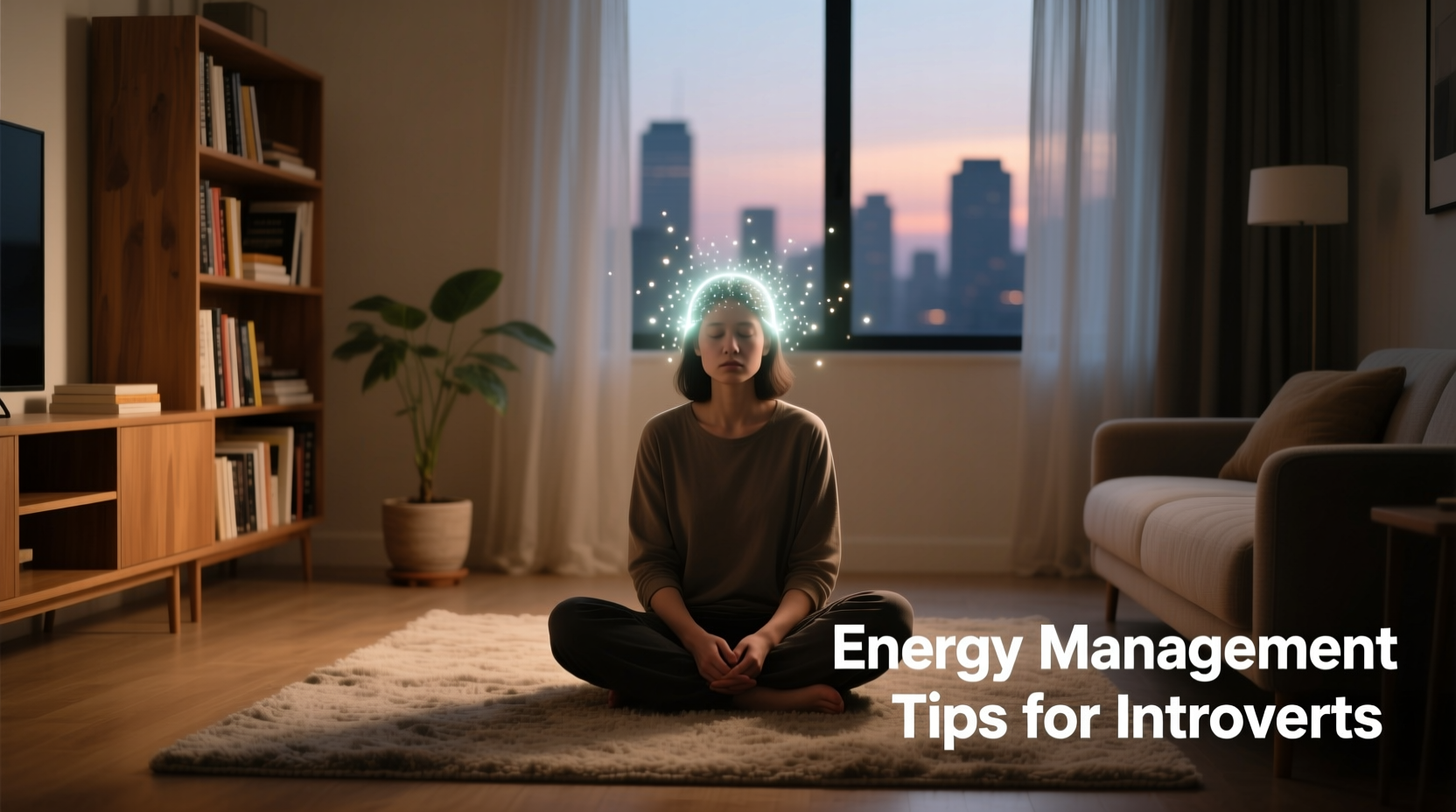
Neuroscience offers compelling insights into why introverts are more susceptible to social fatigue. Research indicates that introverts tend to have higher activity in the brain's frontal lobe—the region associated with problem-solving, memory, and abstract thinking. This area also plays a role in self-reflection and internal processing. When engaged in conversation or group settings, introverts may unconsciously analyze tone, intent, word choice, and nonverbal cues simultaneously, leading to cognitive overload over time.
Additionally, dopamine—the neurotransmitter linked to reward and motivation—functions differently in introverts compared to extroverts. While both groups produce similar levels of dopamine, extroverts appear to have a more active dopamine reward pathway in response to external stimulation (like conversation or novelty). Introverts, on the other hand, are more sensitive to dopamine and can become overstimulated more quickly. As a result, what feels energizing to an extrovert might feel overwhelming to an introvert after just a short period.
This biological sensitivity means that even positive social experiences—such as attending a birthday party, giving a presentation, or catching up with close friends—can deplete mental reserves. The key is not to eliminate these moments but to anticipate their impact and plan accordingly.
“Introverts aren’t anti-social—they’re selectively social. Their brains are wired to go deep rather than wide, which requires significant mental energy.” — Dr. Marti Olsen Laney, author of *The Introvert Advantage*
Recognizing Your Energy Thresholds
One of the most powerful tools for energy management is self-awareness. Introverts benefit greatly from learning to identify early signs of depletion before reaching full burnout. These signals vary from person to person but often include:
- Mental fog or difficulty concentrating
- Irritability or impatience during conversations
- Physical fatigue, especially around the eyes or neck
- A strong desire to be alone, even mid-conversation
- Reduced listening capacity or zoning out
Keeping a simple journal for one week can help map patterns. Note the type of interaction (one-on-one, group meeting, networking event), duration, environment (loud, quiet, formal), and how you felt immediately afterward and several hours later. Over time, trends will emerge—perhaps you tolerate small gatherings better than open-office chit-chat, or video calls drain you faster than phone calls.
Practical Energy Management Strategies
Once you understand your triggers and thresholds, you can implement proactive strategies to preserve and restore energy. These aren’t about isolation—they’re about sustainability.
1. Schedule Social Time Like Appointments
Treat social engagements as you would any resource-intensive task. Block time before and after for preparation and recovery. For example, if you have a team lunch at noon, avoid scheduling back-to-back meetings. Leave space to decompress—ideally with silence, low light, or solitary activity like walking or reading.
2. Set Boundaries with Grace
You don’t need to justify your need for downtime. Practice polite but firm language such as:
- “I’d love to join for the first hour, but I’ll need to step out early.”
- “I’m recharging this weekend, but let’s connect next week.”
- “I’m not up for a call today—can we exchange emails instead?”
These statements protect your energy without cutting ties.
3. Optimize the Environment
When attending events, choose seats near exits or quieter corners. Bring noise-canceling headphones for commutes or breaks. If possible, suggest alternative meeting formats—walking meetings, written brainstorming, or asynchronous communication—which reduce pressure while maintaining connection.
4. Recharge Intentionally
Solitude is not passive—it’s an active restoration practice. Effective recharging involves activities that engage the mind gently and allow inward focus. Examples include journaling, sketching, gardening, meditation, or listening to music without multitasking.
5. Leverage Micro-Restoration
You don’t always need hours alone to recover. Even five minutes of closing your eyes, deep breathing, or stepping outside can reset your nervous system during a busy day.
| Interaction Type | Typical Energy Cost (Low/Med/High) | Recommended Recovery Time |
|---|---|---|
| One-on-one coffee with close friend | Low-Medium | 15–30 minutes solo time |
| Team meeting (6+ people) | Medium | 30–60 minutes downtime |
| Networking event or party | High | Several hours or next-day rest |
| Public speaking/presentation | High | Half-day to full-day recovery |
| Email or text exchange | Low | Minimal or none |
Real-Life Example: Managing Energy in a High-Demand Role
Sarah, a senior project manager at a tech startup, identifies as a strong introvert. Her role requires daily stand-ups, client calls, and cross-team collaboration—activities that, left unchecked, left her exhausted and irritable by midweek.
She began tracking her energy levels and noticed that back-to-back Zoom meetings were her biggest drain. She proposed a team norm: no meetings scheduled after 3 PM on Tuesdays and Thursdays. She used those blocks for focused work and quiet recovery. She also started joining video calls with her camera off when appropriate and replaced some group syncs with shared documents.
Within a month, her productivity improved, and she reported feeling more present during essential interactions. Her team noticed no drop in engagement—in fact, her clarity and follow-through increased. Sarah didn’t change who she was; she redesigned her workflow to align with her natural energy rhythms.
Step-by-Step Guide to Building an Energy-Smart Routine
Creating a sustainable rhythm takes intention. Follow this six-step process to build a personalized energy management system:
- Assess: Track your social interactions and energy levels for 7 days. Use notes or a simple app.
- Analyze: Identify high-drain situations and common recovery patterns (e.g., scrolling vs. reading).
- Prioritize: Decide which social commitments are essential and which can be reduced or declined.
- Plan: Schedule buffer time before and after draining events. Block “recharge zones” in your calendar.
- Practice: Test new habits—short walks, mindful breathing, or saying no—and refine based on results.
- Review: At the end of each week, reflect: Did you maintain energy balance? What needs adjusting?
This cycle fosters long-term awareness and adaptability. Over time, energy management becomes second nature.
Frequently Asked Questions
Is it normal to feel tired after spending time with close friends?
Yes. Even positive, meaningful interactions require mental effort. Introverts often invest deeply in conversations, analyzing subtext and emotional nuance. Fatigue doesn’t mean you didn’t enjoy it—it means your brain worked hard to be present.
Can introverts become more extroverted with practice?
You can develop social skills and comfort in certain settings, but core temperament tends to remain stable. Acting extroverted may be useful in specific contexts, but it usually comes at an energy cost. Sustainable growth comes from working with your nature, not against it.
How do I explain my need for alone time to family or partners?
Use clear, non-defensive language. Try: “I value our time together, and I also need quiet time to recharge. When I take that time, I show up more fully afterward.” Framing solitude as a way to enhance relationships—not escape them—helps others understand.
Checklist: Daily Energy Protection Habits
- Start the day with 5 minutes of silence or mindfulness
- Review the day’s social load and schedule recovery blocks
- Limit multitasking during conversations to conserve focus
- Take short breaks between meetings (stand up, stretch, breathe)
- End the day with a low-stimulus activity (reading, light music)
- Resist the urge to fill every gap with digital or social input
- Reflect nightly: What drained me? What restored me?
“We often measure productivity by output, but for introverts, true effectiveness includes input—time to process, reflect, and renew.” — Cal Newport, author of *Deep Work*
Conclusion: Embrace Your Rhythm, Maximize Your Impact
Being drained by social interaction isn’t a weakness—it’s a signal. It tells you that your mind is deeply engaged, that you’re processing more than surface-level chatter, and that your inner world matters. Rather than seeing this as a limitation, reframe it as a strength: your capacity for depth, thoughtfulness, and sustained focus is rare and valuable.
By mastering energy management, introverts don’t just survive in a fast-paced, hyper-connected world—they thrive. You don’t need to become louder, more outgoing, or constantly available. You need to become more intentional. Protect your energy like the precious resource it is. Schedule recovery like you schedule meetings. Honor your rhythm, and you’ll find that your contributions become sharper, your relationships richer, and your sense of self stronger.




 浙公网安备
33010002000092号
浙公网安备
33010002000092号 浙B2-20120091-4
Comments
No comments yet. Why don't you start the discussion?