
Final Fantasy, Persona, Xenoblade Chronicles—these titles are beloved not only for their rich stories and intricate worlds but also for one consistent trait: they take a long time to complete. A typical mainline JRPG often clocks in between 60 to over 100 hours for a single playthrough. That’s significantly longer than most Western RPGs or action-adventure games. But why? Is it simply filler, or is there a deeper design philosophy at work?
The extended length of Japanese Role-Playing Games (JRPGs) isn’t accidental. It stems from deliberate choices in narrative pacing, gameplay systems, cultural context, and player expectations. While some critics label these games as “bloated,” fans argue that the journey itself is the reward. To understand this phenomenon, we need to examine the interplay between pacing and content—and how both contribute to the genre’s signature marathon experiences.
The Cultural Roots of Extended Gameplay
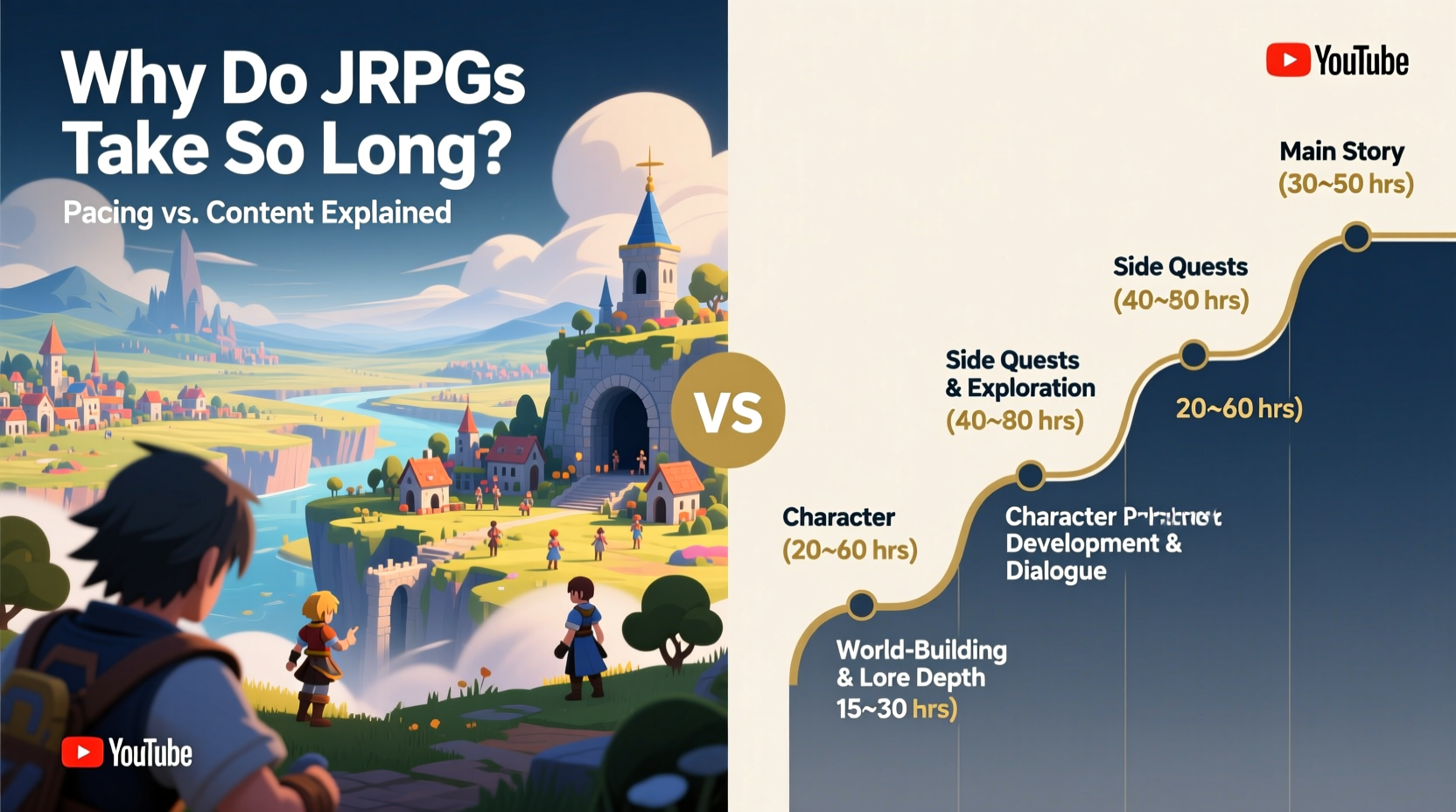
In Japan, video games are often viewed not just as entertainment but as immersive experiences akin to serialized novels or television dramas. This perspective shapes development priorities. Unlike Western studios, which may emphasize tight pacing and streamlined narratives, Japanese developers frequently prioritize depth, world-building, and emotional investment over efficiency.
Game designer Hironobu Sakaguchi, creator of Final Fantasy, once stated: “I wanted players to feel like they were living another life.” This sentiment underpins much of JRPG design. These games are built to be companions over weeks or months, not weekend distractions. The extended runtime allows for gradual character development, evolving relationships, and a slow burn of plot reveals—similar to a multi-season anime series.
Additionally, the Japanese market has historically favored high-value products. A game that offers dozens of hours of content is seen as more worthwhile, especially given the premium pricing of physical releases. This economic incentive encourages developers to pack in side quests, mini-games, and optional dungeons, all contributing to increased completion time.
Narrative Pacing: Slow Burn Over Instant Gratification
JRPG storytelling often follows a “slow burn” model. The first 10–15 hours might focus on introducing characters, establishing relationships, and exploring quiet moments before any major plot developments occur. Compare this to many Western RPGs, where the inciting incident often happens within the first hour.
This deliberate pacing serves several purposes:
- Character immersion: Players grow attached to party members through dialogue trees, personal quests, and shared battles.
- World familiarity: Towns, lore, and political dynamics are introduced gradually, avoiding infodumps.
- Emotional payoff: Major story beats feel earned because they’re preceded by significant buildup.
Take Persona 5, for example. The game spans an entire in-game year, with calendar-based progression dictating when events unfold. You can’t accelerate time—you must live through each week, balancing school, social links, and dungeon raids. This structure forces engagement with downtime, making victories feel more meaningful.
“We didn’t want players to skip the quiet moments. Those are what make the climaxes matter.” — Katsura Hashino, Director, Atlus
Content Density: More Than Just Filler
Critics often accuse JRPGs of padding, but much of the extra content serves functional or emotional roles. Let’s break down common elements that extend playtime—and whether they add value.
| Content Type | Purpose | Value to Player |
|---|---|---|
| Side Quests | Expand lore, develop minor characters, provide gear | High – often reveal hidden story layers |
| Mini-Games | Breach gameplay variety, offer rewards | Mixed – some are skippable, others integral |
| Optional Dungeons | Challenge skilled players, unlock endgame gear | High for completionists, low for casuals |
| Grinding | Balancing progression, encourage strategic planning | Controversial – modern games reduce this |
| Collectibles | Encourage exploration, reward curiosity | Moderate – enhances replayability |
While not every side quest is essential, many tie into broader themes. In Xenoblade Chronicles X, seemingly trivial fetch missions gradually expose geopolitical tensions between factions. Skipping them means missing subtle world-building cues. Similarly, in Blue Reflection, helping classmates with personal issues directly affects combat abilities and ending conditions.
The key difference lies in integration. When side content feels organic rather than tacked on, it enriches the experience instead of dragging it down.
Gameplay Systems That Extend Playtime
JRPGs are known for complex, layered mechanics that require time to master. These systems aren’t just cosmetic—they incentivize prolonged engagement.
Progression Loops
Most JRPGs use multiple progression tracks: level grinding, skill tree advancement, equipment crafting, affinity building, and more. Each system operates on different timelines, encouraging players to engage with various aspects of the game over dozens of hours.
Turn-Based Combat & Strategic Depth
Unlike real-time combat systems that favor reflexes, turn-based mechanics emphasize planning and adaptation. Battles take longer, both per encounter and across the full game. However, this also allows for deeper tactical engagement—players learn enemy patterns, optimize party composition, and experiment with synergies.
Resource Management
Limited healing items, stamina systems (e.g., in Tales of Arise), and restricted fast travel force players to manage resources carefully. This slows movement across the world map and increases reliance on preparation—another factor extending playtime.
Real Example: The Case of Final Fantasy X
Final Fantasy X provides a compelling case study in how pacing and content intersect to create a lengthy yet cohesive experience.
At around 70 hours for a standard playthrough, FFX doesn’t pad its runtime with excessive grinding or trivial side content. Instead, its length comes from:
- A linear but emotionally dense narrative spanning Spira’s religious and cultural decay.
- The absence of random encounters—battles occur visibly in the environment, reducing frustration but maintaining engagement.
- The Sphere Grid system, which allows deep customization but requires substantial grinding to fully explore.
- Extended cutscenes and voice acting that enhance dramatic weight.
One player, Sarah Kim, shared her experience: “I played FFX during my summer break. At first, I thought it was moving too slowly—spending days in Macalania Woods felt tedious. But by the end, when Yuna’s pilgrimage reached its conclusion, I realized those quiet moments made the finale devastating. I wouldn’t have traded the length for anything.”
This illustrates a core truth: in many JRPGs, the time investment isn’t a bug—it’s a feature designed to foster emotional attachment.
How Modern JRPGs Are Evolving
Newer entries show signs of adapting to global expectations. Games like NieR: Automata and Trials of Mana (2020 remake) streamline progression while retaining narrative depth. Features now common include:
- Adjustable encounter rates
- Faster traversal options
- Recap tools and quest markers
- Dual audio support (Japanese/English)
Even traditionally rigid franchises are changing. Final Fantasy XVI adopts a more cinematic, action-oriented approach with a tighter 40–50 hour runtime. This shift reflects growing influence from Western design principles—but also risks alienating fans who cherished the genre’s methodical pace.
The challenge for developers is balancing accessibility with authenticity. Can a JRPG feel expansive without being exhausting? Some studios are finding middle ground through modular design—offering core paths for newcomers and deep dives for veterans.
Checklist: How to Approach Long JRPGs Without Burnout
If you're diving into a 80+ hour JRPG, use this checklist to maintain momentum and enjoyment:
- Set realistic play goals: Aim for 1–2 chapters per session, not completion.
- Use fast-travel wisely: Save it for backtracking, not skipping exploration.
- Balance主线 and side content: Complete key quests first, then revisit towns later.
- Take breaks: Step away after intense story moments to process emotions.
- Adjust difficulty: Lower settings if grinding feels punitive, not strategic.
- Track progress: Note milestones (e.g., “Just finished Zanarkand arc”) to appreciate growth.
- Embrace the pace: Accept that silence and routine are part of the journey.
FAQ
Are JRPGs really longer than other RPGs?
Yes, on average. According to HowLongToBeat.com, top JRPGs range from 50–100+ hours, while Western RPGs like The Witcher 3 or Starfield average 30–50 hours for main story + extras. However, open-world Western games often have comparable total content—just delivered differently.
Is all the extra content necessary?
Not always. Some side quests and mini-games are clearly filler. However, many contribute to endings, character arcs, or post-game challenges. If you care about full understanding or 100% completion, much of it is worth experiencing.
Can I skip parts without missing important story?
It depends on the title. In older JRPGs (Final Fantasy VII), side content rarely affects the main plot. In newer ones (Persona 5, Tears of the Kingdom), relationships and decisions in downtime directly impact outcomes. Always check community guides if unsure.
Conclusion: Time as an Investment, Not a Cost
The length of JRPGs isn’t a flaw—it’s a reflection of a design philosophy centered on immersion, emotional resonance, and sustained engagement. Where other genres aim to deliver a punchy, efficient experience, JRPGs invite players to settle in, form bonds, and grow alongside their characters.
Understanding the reasons behind the pacing and content density transforms frustration into appreciation. What seems like sluggishness is often intentionality; what looks like filler may be foreshadowing. The next time you find yourself walking through a moonlit forest with no immediate objective, remember: you’re not wasting time. You’re living it.




 浙公网安备
33010002000092号
浙公网安备
33010002000092号 浙B2-20120091-4
Comments
No comments yet. Why don't you start the discussion?