
Korean skincare has captivated global beauty enthusiasts not just for its glowing results, but for its seemingly elaborate, ritualistic approach. At first glance, a 10-step routine may appear excessive—cleanser, toner, essence, serum, sheet mask, ampoule, moisturizer, eye cream, sunscreen, and more. But beneath the surface lies a methodical philosophy rooted in dermatological science, ingredient synergy, and long-term skin resilience. The abundance of steps isn't about complexity for complexity’s sake; it's about precision, layering, and maximizing the bioavailability of active compounds. Understanding the science behind this layering technique reveals how each step serves a distinct physiological purpose, ultimately leading to healthier, more balanced skin.
The Philosophy Behind Layered Skincare
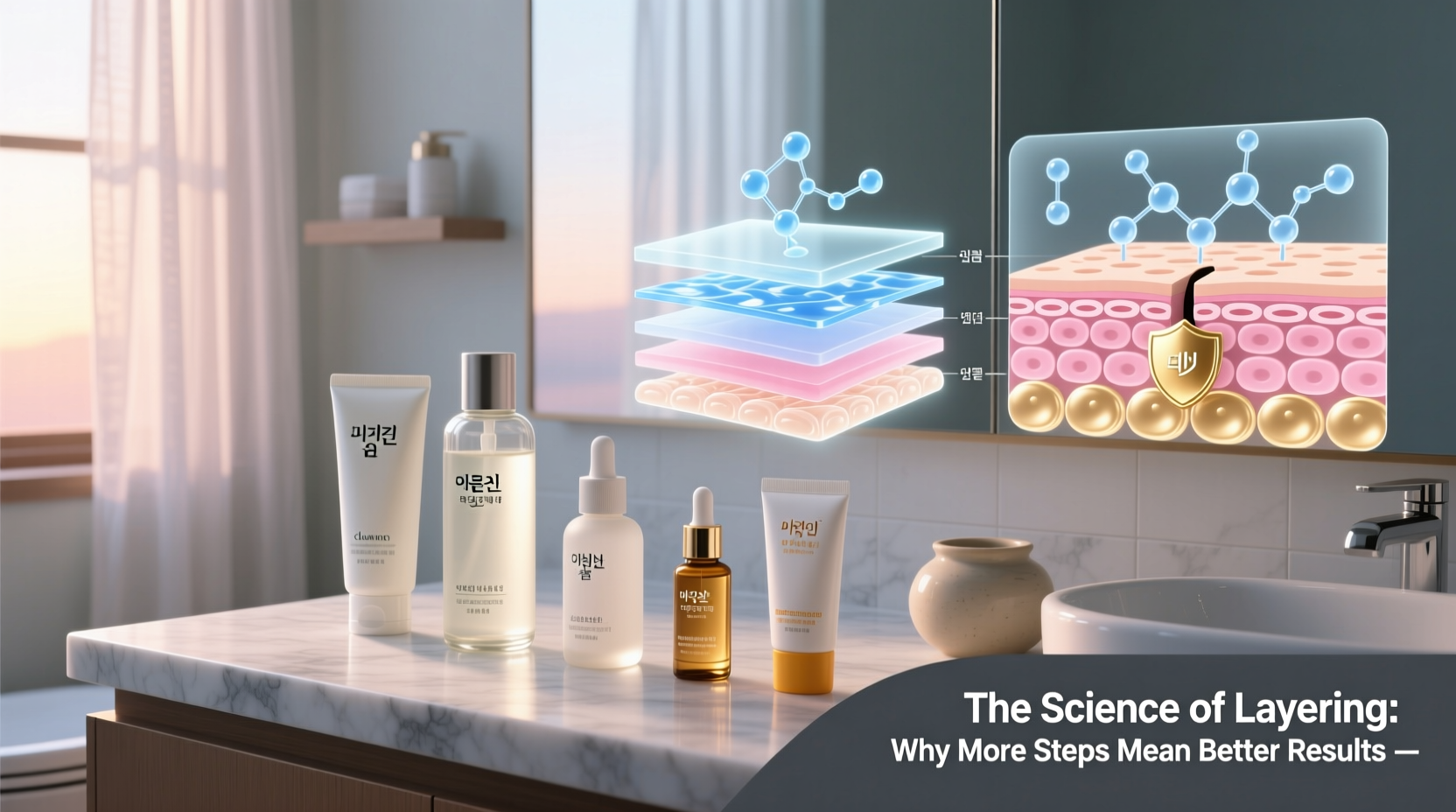
In Western beauty culture, skincare often focuses on treating visible problems—acne, wrinkles, dryness—with reactive solutions. In contrast, Korean skincare emphasizes prevention, consistency, and holistic maintenance. This preventive mindset is embedded in daily rituals that begin as early as adolescence. The goal isn’t just to fix issues, but to build a strong skin barrier over time through incremental nourishment.
This philosophy aligns with the Korean concept of “skin cycling”—a continuous process of cleansing, hydrating, repairing, and protecting. Each product in the routine targets a specific layer or function within the skin’s structure. Rather than relying on one potent treatment, the strategy uses multiple lightweight formulations that work cumulatively. Think of it like building layers in a lasagna: each layer adds flavor and structure, and the final result is far greater than any single component.
The Science of Skin Absorption and Product Layering
The effectiveness of a skincare routine depends not only on ingredients but on how well those ingredients penetrate the skin. The stratum corneum—the outermost layer of the epidermis—acts as a selective barrier, allowing some molecules to pass while blocking others. For active ingredients like hyaluronic acid, niacinamide, or vitamin C to be effective, they must reach deeper layers where cellular activity occurs.
Layering works because it creates an optimal environment for penetration. Lighter, water-based products applied first prep the skin by increasing hydration and slightly loosening tight junctions between skin cells. This “priming” effect improves the delivery of subsequent, more concentrated treatments.
For example, a hydrating toner increases the skin’s water content, which enhances the diffusion of serums applied afterward. Studies show that hydrated skin absorbs topical actives up to 30% more efficiently than dehydrated skin (Journal of Cosmetic Dermatology, 2020). This is why skipping toner—or using thick creams too early—can reduce the efficacy of later steps.
How Molecular Weight Affects Penetration
Not all ingredients penetrate equally. Low molecular weight compounds (like glycolic acid or certain peptides) can slip through the lipid matrix more easily, while high molecular weight molecules (such as standard hyaluronic acid) remain on the surface to provide occlusion and hydration.
Korean formulations often use hydrolyzed or fragmented versions of large molecules to improve penetration. For instance, “low molecular weight hyaluronic acid” can reach deeper dermal layers, stimulating collagen production, whereas regular HA forms a protective film on top. By layering both types at different stages, users achieve both immediate plumping and long-term structural benefits.
“Layering isn’t excess—it’s strategic sequencing. Each product modifies the skin’s condition to accept the next one more effectively.” — Dr. Ji-hyun Park, Dermatologist & Cosmetic Formulation Scientist, Seoul National University Hospital
The Role of the Skin Barrier in Multi-Step Routines
A core principle of Korean skincare is maintaining a healthy skin barrier. The barrier, composed of lipids, ceramides, and natural moisturizing factors (NMFs), prevents transepidermal water loss (TEWL) and shields against environmental aggressors like pollution and UV radiation.
Over-cleansing or using harsh products disrupts this barrier, leading to sensitivity, redness, and increased acne. Korean routines counteract this by incorporating gentle, pH-balanced cleansers followed by barrier-supportive ingredients like panthenol, madecassoside, and fermented extracts. These components are typically found in essences and ampoules—products unique to Asian skincare that bridge the gap between toners and serums.
Fermented ingredients, such as those derived from rice, soy, or yeast, are particularly valued. Fermentation breaks down large molecules into smaller, bioavailable forms while producing beneficial byproducts like lactic acid and antioxidants. Research indicates that fermented skincare enhances microbial balance on the skin and strengthens barrier function over time.
| Product Type | Primary Function | Key Ingredients | Penetration Depth |
|---|---|---|---|
| Toner | Hydration & pH reset | Hyaluronic acid, green tea extract | Surface to upper epidermis |
| Essence | Cell renewal & moisture infusion | Fermented extracts, niacinamide | Middle epidermis |
| Serum/Ampoule | Targeted treatment | Vitamin C, retinol, peptides | Deep epidermis to upper dermis |
| Moisturizer | Occlusion & lipid support | Ceramides, squalane | Surface barrier reinforcement |
| Sunscreen | UV protection | Zinc oxide, chemical filters | Topical shield (no penetration needed) |
Step-by-Step Breakdown: What Each Layer Does
While not every routine requires ten steps, understanding the function of each stage helps customize regimens based on individual needs. Here’s a typical sequence and its scientific rationale:
- Oil Cleanser: Removes sunscreen, sebum, and makeup via “like dissolves like” chemistry. Oil-based cleansers emulsify lipid-soluble impurities without stripping natural oils.
- Water-Based Cleanser: Clears sweat, dirt, and residual debris. Maintains skin’s pH around 5.5, crucial for enzyme activity and microbiome balance.
- Exfoliator (2–3x/week): Chemical exfoliants (AHAs/BHAs) dissolve dead skin cells, improving texture and enabling better product absorption. Over-exfoliation damages the barrier, so frequency is carefully managed.
- Toner: Replenishes moisture lost during cleansing and prepares skin for subsequent layers. Some toners contain mild acids or soothing agents to refine pores and calm irritation.
- Essence: Lightweight formula rich in humectants and cell-communicating ingredients. Encourages turnover and boosts hydration at the cellular level.
- Ampoule/Serum: High-concentration actives target concerns like pigmentation, aging, or dehydration. Applied while skin is damp to lock in moisture and enhance delivery.
- Sleeping Mask or Sheet Mask (1–3x/week): Occlusive hydration under semi-permeable films creates a “closed environment,” boosting ingredient penetration through mild occlusion and hydration.
- Eye Cream: Delicate orbital area has thinner skin and fewer oil glands. Specialized formulas address fine lines and puffiness with gentle peptides and caffeine derivatives.
- Moisturizer: Seals in previous layers with occlusives (e.g., shea butter) and emollients (e.g., fatty acids). Prevents TEWL and supports lipid bilayer integrity.
- Sunscreen (AM only): Non-negotiable final step. Physical or chemical filters block UVA/UVB rays, preventing photoaging and DNA damage.
Mini Case Study: From Reactive to Preventive Care
Sarah, a 32-year-old marketing executive in Chicago, struggled with persistent breakouts and dullness despite using high-end anti-acne treatments. After consulting a dermatologist familiar with K-beauty principles, she shifted from a two-step routine (cleanser + spot treatment) to a six-step morning and evening regimen focused on hydration and barrier repair.
Within four weeks, her skin showed noticeable improvement: fewer breakouts, reduced redness, and increased radiance. Lab-grade corneometer readings revealed a 40% increase in skin hydration and a 25% reduction in TEWL. Her dermatologist attributed the success not to any single “miracle” product, but to the cumulative effect of properly layered, low-pH, non-irritating formulas that restored her skin’s natural equilibrium.
“I used to think more steps meant more irritation,” Sarah said. “But now I see it’s about giving my skin what it actually needs at each level—hydration first, then treatment, then protection.”
Common Misconceptions About Multi-Step Routines
Many assume that a 10-step routine is mandatory for good skin. In reality, customization is key. Koreans adapt their routines seasonally and based on skin condition—fewer steps in humid summers, more layers in dry winters.
Another myth is that layering causes overload. However, most Korean products are formulated to be ultra-lightweight and fast-absorbing. Unlike heavy Western creams, they avoid occlusive waxes and instead rely on smart delivery systems like liposomes and nano-emulsions to transport actives efficiently.
The real risk isn’t too many steps—it’s poor sequencing or incompatible ingredients. For example, applying a high-pH cleanser before a vitamin C serum can neutralize the acid’s effectiveness. Similarly, using niacinamide and pure vitamin C together in high concentrations may cause flushing in sensitive individuals—though newer stabilized forms have minimized this issue.
📋 **Skincare Layering Checklist**- ✅ Cleanse gently, twice daily
- ✅ Apply products from thinnest to thickest
- ✅ Use toner to rehydrate and balance pH
- ✅ Layer essences and serums on damp skin
- ✅ Seal with a moisturizer suited to your climate
- ✅ Never skip sunscreen in the morning
- ✅ Adjust steps based on seasonal changes
- ❌ Avoid mixing incompatible actives (e.g., retinoids + strong acids) without buffering
Frequently Asked Questions
Do I really need 10 steps for healthy skin?
No. While 10 steps are traditional, most people benefit from a streamlined 5–7 step routine tailored to their skin type. The number of steps matters less than consistency, ingredient quality, and correct application order.
Can layering cause breakouts or irritation?
Only if products are improperly formulated or layered incorrectly. Using overly rich creams too early, combining irritating ingredients (like alcohol-heavy toners with retinoids), or not patch-testing new products can lead to issues. Start slowly and introduce one new product at a time.
Is there scientific evidence supporting multi-step routines?
Yes. Clinical studies on hydration, transepidermal water loss, and ingredient penetration confirm that sequential, targeted application improves outcomes. A 2021 study in the International Journal of Dermatology found that participants using layered hydrating products showed significantly improved barrier function compared to those using single moisturizers.
Conclusion: Quality Over Quantity, Science Over Hype
The proliferation of steps in Korean skincare isn’t arbitrary—it’s a reflection of deep dermatological insight and cultural emphasis on long-term skin wellness. Each layer serves a purpose grounded in biochemistry and physiology, working synergistically to enhance absorption, reinforce the skin barrier, and deliver visible results over time.
Adopting this approach doesn’t mean blindly following a rigid 10-step template. It means understanding your skin’s needs and choosing products that complement one another in both formulation and function. Whether you use three steps or eight, the principle remains the same: thoughtful layering leads to stronger, more resilient skin.




 浙公网安备
33010002000092号
浙公网安备
33010002000092号 浙B2-20120091-4
Comments
No comments yet. Why don't you start the discussion?