
K-pop music videos are renowned for their visual extravagance, meticulous choreography, and above all, striking fashion. One consistent element across countless productions is the layered styling of idols—outfits composed of multiple garments stacked with intentional precision. At first glance, this may seem like a purely aesthetic choice driven by trend. However, the decision to layer clothing in K-pop MVs stems from a complex interplay of artistic direction, practical needs, brand partnerships, and cultural expression. Understanding why idols wear so many layers reveals how fashion functions as both narrative device and performance tool in one of the world’s most visually driven music industries.
The Role of Visual Storytelling in K-Pop Music Videos
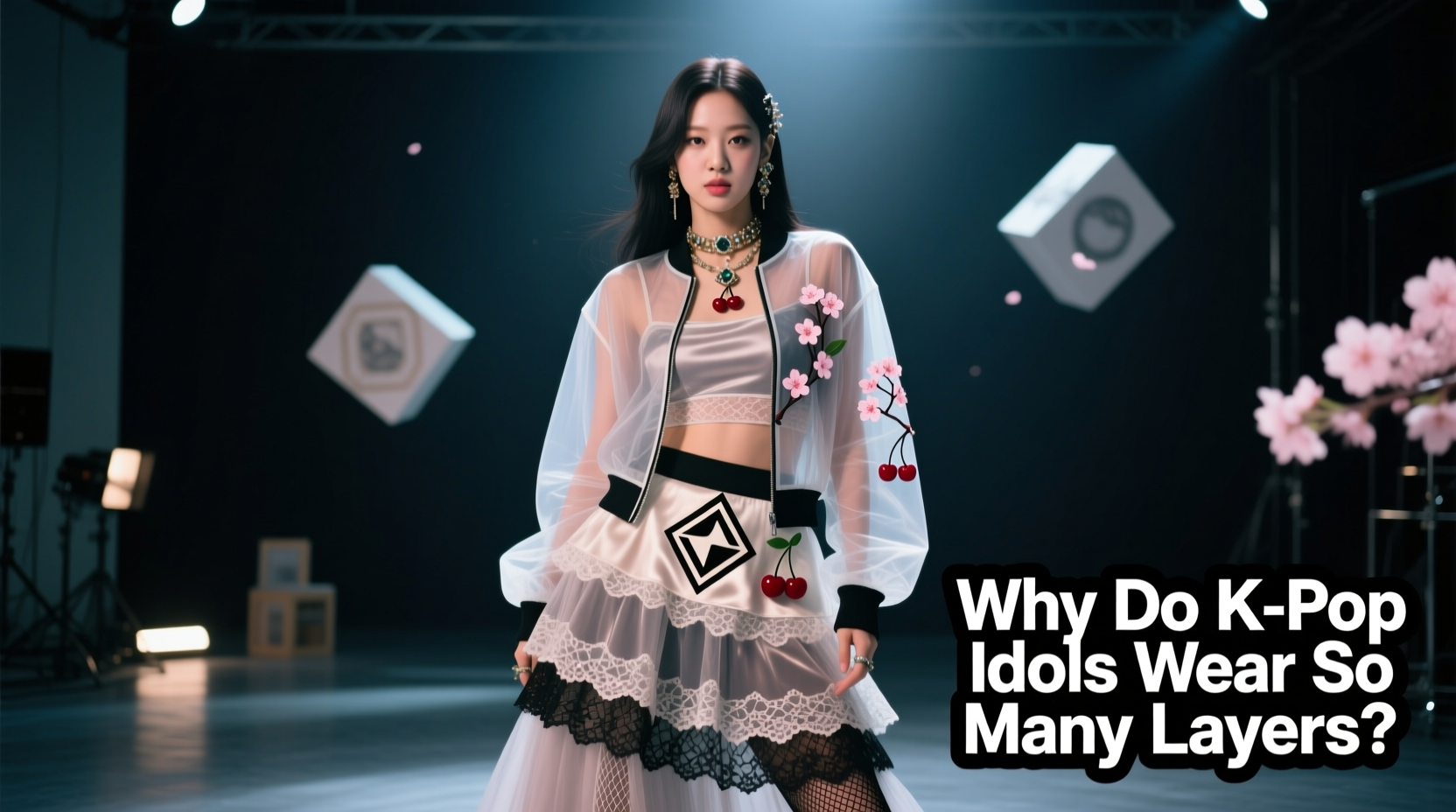
In K-pop, music videos are not mere promotional tools—they are cinematic experiences designed to enhance the song’s emotional arc and thematic depth. Every frame is curated, and costume choices are central to that curation. Layering garments allows stylists and directors to build visual complexity that mirrors lyrical content. For example, a concept centered around duality—light versus dark, innocence versus rebellion—might be expressed through contrasting textures and colors in layered pieces: a pristine white shirt beneath a ripped black jacket, or a delicate lace top under a structured military coat.
This method of visual storytelling aligns with South Korea’s emphasis on \"koncept,\" where each comeback (new release) presents a distinct identity. Idols become characters within a broader narrative, and their clothing helps define those roles. In BTS’s “Blood Sweat & Tears,” members wear ornate, symbolic outfits combining religious iconography with opulent fabrics. The layers aren’t random; they’re metaphors—representing temptation, guilt, and spiritual conflict.
“Costume in K-pop isn’t just about looking good—it’s about becoming someone else entirely. Layers allow us to tell stories without words.” — Ji-hyun Park, Former Stylist at SM Entertainment
Fashion as Identity and Brand Expression
Idol groups often represent specific aesthetics—boyish charm, futuristic cyberpunk, vintage glamor, or streetwear dominance. Layering enables stylists to amplify these identities while maintaining versatility across scenes. A single outfit can evolve throughout a video, revealing new elements as jackets are removed or zippers undone, keeping the audience visually engaged.
Moreover, K-pop fashion frequently draws from global trends, especially avant-garde and high-fashion movements. Designers like Demna Gvasalia (Balenciaga) and Virgil Abloh (Off-White) popularized exaggerated silhouettes and strategic layering, which K-pop stylists have adopted and adapted. These influences reflect an industry deeply connected to international runways, yet tailored for mass appeal.
Consider BLACKPINK’s Lisa in “How You Like That”—wearing a cropped hoodie over a mesh top, paired with voluminous pants and accessories. Each layer contributes to a bold, confident persona aligned with the track’s assertive tone. The look is both trendy and character-defining, reinforcing her image as a fashion-forward performer.
Functional Reasons Behind Layered Outfits
Beyond symbolism, layering serves several practical purposes essential to the production process:
- Temperature regulation: Music videos are filmed indoors under hot studio lights or outdoors in unpredictable weather. Lightweight inner layers allow idols to adjust comfort without compromising appearance.
- Choreography adaptability: Dance-heavy routines generate body heat. Removable outerwear lets performers stay cool while preserving the integrity of the look for different shots.
- Wardrobe continuity: Multiple takes mean repeated changes. Having base layers ensures consistency even if outer pieces are swapped between scenes.
- Camera movement optimization: Flowing layers create dynamic motion when captured in slow motion or wide-angle shots, enhancing visual impact.
Additionally, some layers serve protective functions. Mesh sleeves or sheer overlays prevent skin exposure that might be deemed inappropriate for broadcast standards in certain regions, allowing provocative designs to pass censorship while still appearing edgy.
Mini Case Study: Seventeen’s “Home” Performance Video
In the emotionally charged performance video for “Home,” Seventeen members wear layered sweaters, button-ups, and scarves in warm earth tones. While aesthetically cozy, the layering had functional intent. Filmed in a large warehouse space with inconsistent heating, temperatures dropped significantly between takes. The stylists anticipated this by designing outfits with removable cardigans and thermal underlayers, ensuring the members remained comfortable during extended filming hours. Yet, from a viewer’s perspective, the warmth of the clothing reinforced the song’s theme of belonging and nostalgia—proving that function and meaning can coexist seamlessly.
Brand Collaborations and Product Placement
One of the most underdiscussed reasons for excessive layering is commercial strategy. K-pop idols are walking billboards for luxury and streetwear brands alike. Stylists often incorporate multiple sponsored items into a single look to maximize visibility. A single idol might wear a designer jacket, branded t-shirt, limited-edition sneakers, and statement accessories—all in one frame.
To showcase more products without overcrowding the silhouette, layering becomes a logistical necessity. Instead of piling accessories, brands are integrated into the clothing structure itself: a visible logo tee under an open blazer, or a signature-print scarf draped over a plain coat.
| Idol/Group | Music Video | Brands Featured via Layering | Purpose |
|---|---|---|---|
| Jungkook (BTS) | Dynamite | Gucci, Nike, Oakley | Global campaign synergy |
| IVE | LOVE DIVE | Saint Laurent, New Balance | Luxury youth appeal |
| Stray Kids | God’s Menu | Palace, Supreme, Dr. Martens | Street credibility |
| Twice | Fancy | Prada, Converse | Cute-meets-luxury contrast |
These placements are rarely accidental. Stylists coordinate closely with management and brand partners to ensure optimal exposure. In some cases, contracts stipulate how many seconds a product must be visible, making layered integration a precise science.
Styling Techniques and Industry Standards
The art of layering in K-pop follows established principles that balance aesthetics with feasibility:
- Texture Contrast: Combining materials like leather, silk, wool, and mesh adds depth without bulk.
- Color Grading: Layers use tonal variations (e.g., navy over black) to avoid muddiness on camera.
- Proportion Control: Oversized outerwear is balanced with slim-fit bottoms to maintain mobility.
- Fastening Strategy: Zippers, buttons, and straps are positioned for easy removal during transitions.
- Seamless Integration: Inner layers are chosen to remain presentable if outer garments are taken off mid-scene.
Stylists also consider post-production needs. Green screen shoots require neutral inner layers to avoid chroma key interference, while outdoor scenes demand weather-appropriate bases regardless of what’s visible on camera.
Checklist: Key Elements of Effective K-Pop Layering
- ✅ Aligns with the song’s concept or theme
- ✅ Incorporates at least one brand partnership naturally
- ✅ Allows freedom of movement for dancing
- ✅ Includes removable components for temperature control
- ✅ Uses complementary textures and colors
- ✅ Maintains visual interest from multiple angles
- ✅ Survives long shooting schedules without wrinkling or damage
FAQ: Common Questions About K-Pop Idol Layering
Do idols choose their own outfits?
No, outfits are selected by professional styling teams in collaboration with the agency, creative director, and sometimes the artist’s personal stylist. Idols may give input, but final decisions are made collectively based on concept, choreography, and brand deals.
Isn’t it uncomfortable wearing so many clothes while dancing?
It can be, especially under stage lights. That’s why breathable fabrics and strategic ventilation are prioritized. Many inner layers are made from moisture-wicking materials, and quick-release fasteners allow for adjustments between takes.
Why don’t we see this level of layering in Western pop videos?
Western artists often prioritize simplicity or realism in visuals. K-pop, by contrast, embraces hyper-stylization as part of its entertainment model. The genre treats fashion as integral to performance, not just accessory. Additionally, Korean fashion culture has a long tradition of experimental dressing, particularly among youth subcultures that influence idol aesthetics.
Conclusion: More Than Just Clothes
The layered looks seen in K-pop music videos are far more than fashion statements. They are carefully engineered components of a larger artistic vision—blending storytelling, functionality, branding, and cultural nuance into every stitch. What appears on screen as effortless style is the result of meticulous planning, technical expertise, and deep understanding of audience perception.
Next time you watch a K-pop MV, observe how the clothing evolves throughout the video. Notice when layers are added or removed, how textures interact with lighting, and how outfits shift with the music’s mood. You’ll begin to see fashion not as decoration, but as dialogue—a silent language spoken through fabric, cut, and coordination.




 浙公网安备
33010002000092号
浙公网安备
33010002000092号 浙B2-20120091-4
Comments
No comments yet. Why don't you start the discussion?