
Every autumn, a quiet transformation sweeps across forests and neighborhoods alike. Trees that stood green through summer suddenly burst into brilliant hues of red, orange, yellow, and purple. This seasonal spectacle isn’t just beautiful—it’s deeply rooted in plant biology and environmental cues. Understanding why leaves change color involves exploring photosynthesis, pigments, and the delicate balance between light, temperature, and water availability.
The process is neither random nor merely decorative. It’s a carefully orchestrated survival strategy for deciduous trees preparing for winter. As days shorten and temperatures drop, trees begin shutting down their food production systems, reclaiming valuable nutrients before shedding their leaves. The result? A stunning display driven by chemistry and evolution.
The Role of Chlorophyll and Photosynthesis
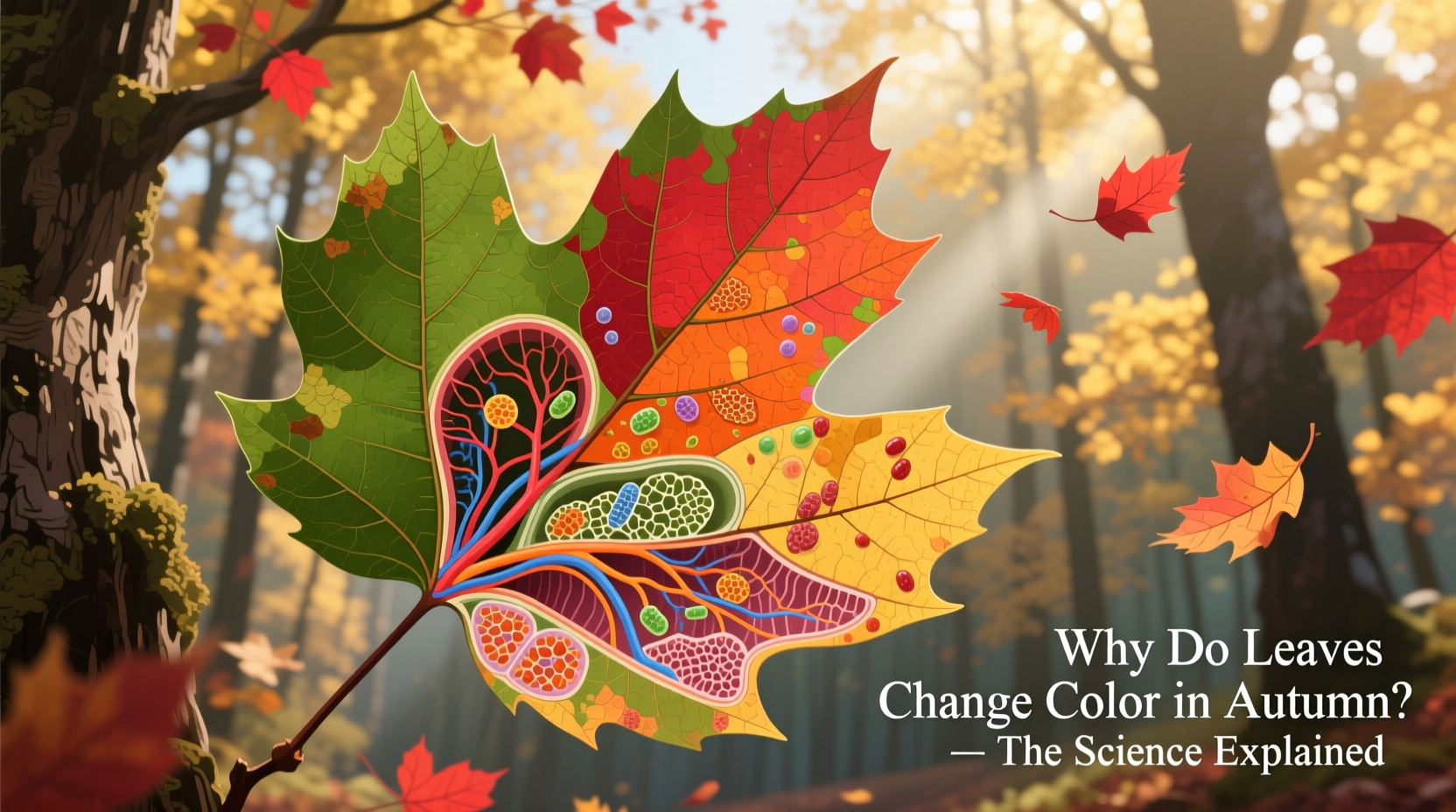
During spring and summer, leaves are dominated by chlorophyll—the green pigment essential for photosynthesis. This process allows plants to convert sunlight, carbon dioxide, and water into glucose (sugar), which fuels growth and sustenance. Chlorophyll molecules absorb blue and red light but reflect green, giving leaves their characteristic color.
Chlorophyll is not a permanent compound; it breaks down under sunlight and must be continuously replenished. As long as conditions support active growth—ample daylight, warmth, and moisture—trees keep producing new chlorophyll, maintaining the green canopy.
But when autumn approaches, changes in daylight duration (photoperiod) signal trees to begin senescence—the natural aging process of leaves. With reduced daylight, chlorophyll synthesis slows and eventually stops. As existing chlorophyll degrades, other pigments previously masked by its dominance become visible.
Unmasking Hidden Pigments: Carotenoids and Anthocyanins
Beneath the green surface, leaves contain a palette of pigments that only emerge when chlorophyll fades. These include carotenoids and anthocyanins, each responsible for distinct colors and triggered by different biological processes.
- Carotenoids: Present year-round, these pigments produce yellow, orange, and brown tones. Examples include beta-carotene (found in carrots) and xanthophylls. Unlike chlorophyll, they don’t break down as quickly, so as green fades, golds and ambers appear naturally.
- Anthocyanins: These are not present during the growing season but are actively produced in autumn under specific conditions. They give rise to vivid reds, purples, and crimson shades seen in sugar maples, dogwoods, and sumacs. Their formation depends on bright light and excess sugars trapped in leaf cells.
Anthocyanin production increases when cool nights prevent sugars from moving out of leaves. Sunlight interacting with these sugars triggers chemical reactions forming the red pigments. This explains why sunny fall days followed by crisp nights lead to the most intense red displays.
“Fall foliage is a window into the biochemical intelligence of trees. They’re not just dying—they’re recycling and protecting themselves.” — Dr. Laura Bennett, Plant Physiologist, University of Vermont
Environmental Factors That Influence Color Intensity
While genetics determine a tree’s potential color range, weather conditions play a critical role in how vibrant the display becomes. The timing, duration, and brilliance of autumn colors depend on a combination of temperature, moisture, and sunlight.
| Factor | Optimal Condition | Effect on Foliage |
|---|---|---|
| Temperature | Cool nights (above freezing), warm days | Promotes anthocyanin production; enhances reds |
| Sunlight | Abundant daytime sun | Increases sugar production, boosting red pigments |
| Rainfall | Moderate; drought reduces intensity | Dry summers stress trees, leading to early browning |
| Wind & Storms | Low wind, no early frosts | Prevents premature leaf drop; extends viewing period |
A wet summer followed by dry, sunny autumn days with cool nights typically produces the best color shows. Conversely, severe drought or unseasonably warm falls can dull the display, causing leaves to turn brown and drop prematurely without showing peak color.
Tree Species and Their Signature Colors
Different trees exhibit predictable color patterns based on their biochemistry. Observing these trends helps identify species even after leaf shapes are gone.
- Sugar Maple (Acer saccharum): Famous for fiery reds and oranges, especially where nights are cool and days are sunny.
- Yellow Birch (Betula alleghaniensis): Turns bright yellow due to high carotenoid content.
- Oak (Quercus spp.): Often shifts to russet, bronze, or deep red-brown; some species retain leaves into winter.
- Aspen and Poplar (Populus spp.): Uniform golden-yellow displays, thanks to strong carotenoid presence.
- Sumac (Rhus spp.): Produces intense reds and purples via abundant anthocyanins.
This variation isn’t just aesthetic—it reflects evolutionary adaptations. Some researchers suggest that bright red foliage may deter insect pests by mimicking signs of a healthy, chemically defended leaf, offering an ecological advantage beyond mere senescence.
Mini Case Study: New England’s Peak Season Forecast
In 2022, forecasters in Vermont predicted one of the most vibrant foliage seasons in a decade. After a balanced growing season with steady rainfall and minimal heatwaves, September brought consistent cool nights and clear skies. By early October, sugar maples across the Green Mountains exploded into deep reds, while birches added sweeping bands of gold.
Tourism officials reported a 17% increase in visitors compared to the previous year, attributing the boost to both favorable weather and improved public forecasting tools based on satellite imaging and ground reports. This real-world example underscores how closely human activity—and local economies—can align with botanical rhythms.
Step-by-Step: How Leaves Prepare for Winter
The journey from green leaf to colorful farewell follows a precise biological sequence:
- Photoperiod Detection: Trees sense shortening days through photoreceptors like phytochrome.
- Hormonal Shift: Reduced daylight triggers abscisic acid production, initiating dormancy.
- Chlorophyll Breakdown: Green pigment degrades, revealing underlying carotenoids.
- Nutrient Reclamation: Nitrogen, phosphorus, and other minerals are pulled back into twigs and trunk.
- Anthocyanin Production: In certain species, sugars accumulate and react to form red pigments.
- Leaf Abscission: A layer of cells forms at the base of the petiole, sealing off the leaf and allowing it to detach cleanly.
This entire process conserves resources and protects trees from water loss and damage during winter. Once leaves fall, they decompose and return nutrients to the soil, completing a vital cycle in forest ecosystems.
Frequently Asked Questions
Why don’t evergreen trees change color?
Evergreens have needle-like or waxy leaves adapted to retain water and resist cold. They contain chlorophyll year-round and shed needles gradually, not seasonally. Some conifers, like larches, do turn golden and lose needles annually—but most pines, spruces, and firs remain green throughout winter.
Can climate change affect fall colors?
Yes. Warmer fall temperatures delay chlorophyll breakdown and reduce anthocyanin production, potentially dulling reds. Increased drought frequency stresses trees, leading to earlier browning and leaf drop. Studies project that peak foliage seasons may shift later or diminish in intensity across parts of North America and Europe over the coming decades.
Do all deciduous trees change color?
No. While most temperate deciduous trees undergo color changes, some simply turn brown and drop. This occurs when tannins—waste products in leaves—become concentrated without significant carotenoid or anthocyanin presence. Beech and certain oak varieties may cling to tan, dried leaves well into winter.
Conclusion: Embracing the Science Behind the Beauty
The changing colors of autumn leaves are far more than a seasonal backdrop—they are a testament to nature’s intricate design. From cellular pigments to environmental signals, every shade tells a story of adaptation, efficiency, and survival. Next time you walk beneath a canopy of crimson and gold, remember: you're witnessing a masterclass in plant physiology, millions of years in the making.




 浙公网安备
33010002000092号
浙公网安备
33010002000092号 浙B2-20120091-4
Comments
No comments yet. Why don't you start the discussion?