
LED lighting has transformed homes with its energy efficiency, longevity, and crisp illumination. But nothing disrupts comfort quite like a bulb that flickers without warning—especially when it happens in the middle of the evening. Unlike incandescent bulbs, LEDs are sensitive to electrical nuances, making them prone to flickering under certain conditions. The good news? Most causes are fixable without calling an electrician. Understanding the root of the issue is the first step toward restoring steady, reliable lighting.
Understanding LED Flicker: Not Always a Bulb Problem
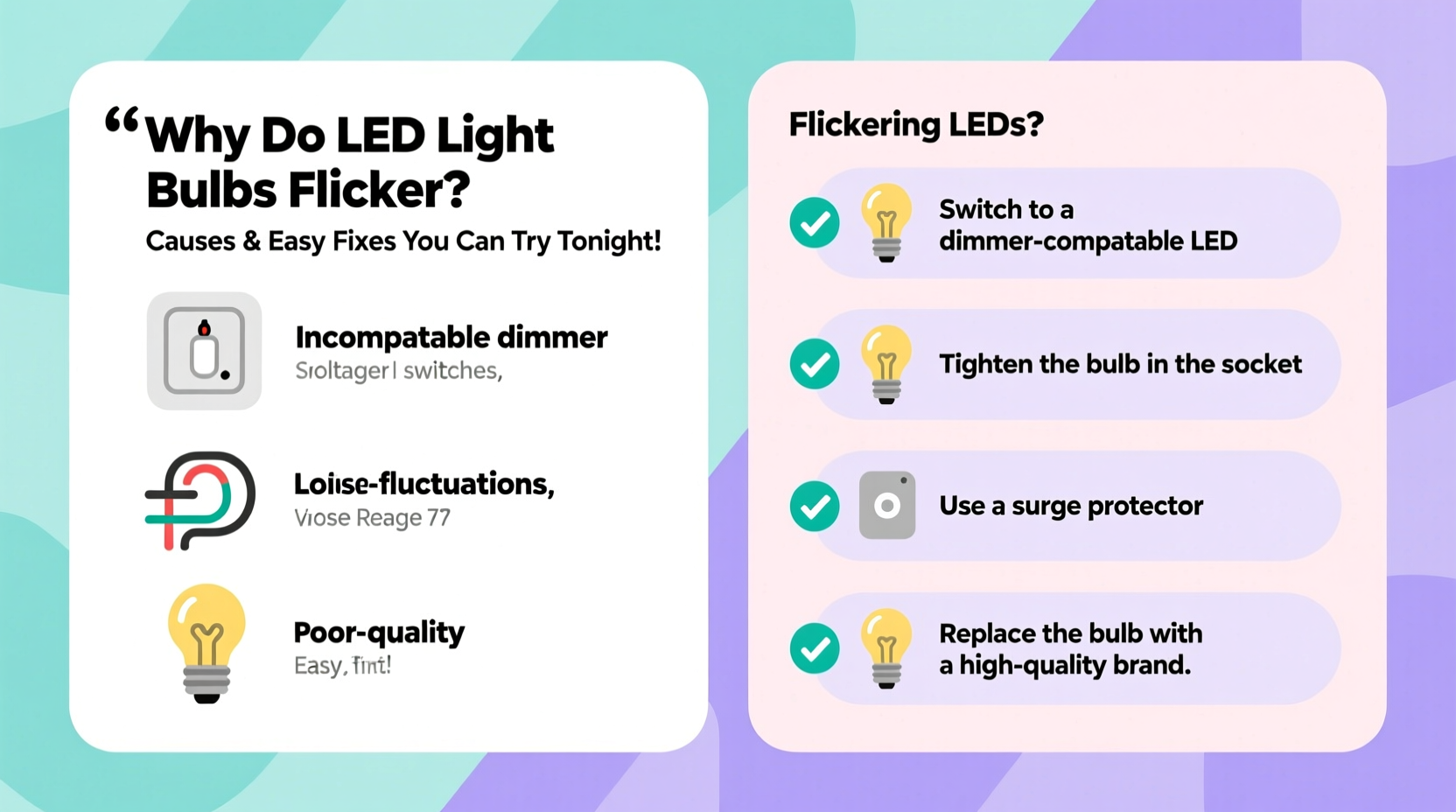
Flickering in LED bulbs isn’t always due to a faulty bulb. In fact, the issue often lies outside the bulb itself—in the wiring, switches, dimmers, or even household voltage fluctuations. LEDs operate on low voltage and use internal drivers to convert standard AC power into usable DC current. Any instability in this process can result in visible flickering, sometimes subtle, other times pronounced.
Unlike older lighting technologies, LEDs respond almost instantly to changes in current. This responsiveness makes them efficient but also more likely to reveal underlying electrical inconsistencies. While occasional flicker might seem harmless, persistent or random blinking can indicate deeper issues that affect not only comfort but also the lifespan of your bulbs.
Common Causes of Random LED Flickering
Several factors can trigger erratic LED behavior. Identifying the cause is essential before applying a solution.
1. Incompatible Dimmer Switches
Many homes still use dimmers designed for incandescent bulbs. These older models reduce voltage by rapidly cutting parts of the AC waveform—a method known as \"phase-cut dimming.\" LEDs, which require a steady minimum current, often struggle with this inconsistent power delivery, resulting in flickering, especially at lower brightness levels.
2. Loose Bulb or Fixture Connection
A bulb that isn’t screwed in tightly can create intermittent contact, causing on-and-off flickering. Similarly, loose wiring in the socket or junction box disrupts consistent power flow. This is one of the easiest issues to check and resolve.
3. Poor-Quality LED Drivers
The driver—essentially the power supply inside or attached to the LED—converts household AC to low-voltage DC. Cheap or poorly designed drivers may not regulate current effectively, leading to flicker under load variations or temperature changes.
4. Voltage Fluctuations
Large appliances like refrigerators, air conditioners, or washing machines draw significant power when starting up. This sudden demand can cause brief voltage drops across the circuit, visible as momentary LED flicker. While minor dips are normal, frequent or severe flickering suggests overloaded circuits or inadequate home wiring.
5. Overheating Protection
Some LED bulbs have built-in thermal protection. If installed in enclosed fixtures without proper ventilation, they heat up and automatically dim or shut off temporarily. Once cooled, they reactivate—creating a cycle that looks like random flickering.
6. Electrical Noise from Other Devices
Modern homes are full of electronic devices—smart speakers, phone chargers, Wi-Fi routers—that introduce electromagnetic interference (EMI) into the circuit. This noise can disrupt the delicate electronics in LED drivers, causing erratic behavior.
“LED flicker is rarely about the bulb alone. It’s usually a symptom of mismatched components or system-level electrical stress.” — Dr. Alan Reyes, Electrical Systems Engineer, Smart Home Institute
Solutions You Can Try Tonight
Before calling an electrician or replacing every bulb, test these practical fixes. Most take less than 15 minutes and cost nothing or very little.
Step-by-Step Fix: Diagnose and Resolve
- Check the bulb seating. Turn off the power and ensure the LED is fully screwed into the socket. A loose connection is a common culprit.
- Swap the bulb. Test with a known-working LED from another fixture. If the flickering stops, the original bulb may be defective.
- Inspect the fixture. Look for signs of scorching, warping, or corrosion in the socket. Replace damaged fixtures promptly.
- Test on a non-dimmer switch. Move the flickering bulb to a regular switch-controlled light. If it works fine, the issue is likely dimmer compatibility.
- Observe timing patterns. Does flickering happen when the AC kicks in? Or only at night? Pattern recognition helps isolate causes.
When Dimmers Are the Culprit: Upgrading for Compatibility
If your flickering occurs only on dimmed circuits, the dimmer switch is likely incompatible. Traditional “leading-edge” dimmers work poorly with LEDs. Instead, modern “trailing-edge” (electronic low-voltage) dimmers provide smoother control and are designed for low-wattage loads.
Upgrading involves replacing the switch—but only if you’re comfortable working with household wiring. Otherwise, hire a licensed electrician.
| Dimmer Type | Best For | LED Compatibility | Typical Flicker Risk |
|---|---|---|---|
| Leading-Edge (TRIAC) | Incandescent/Halogen | Poor | High |
| Trailing-Edge (ELV) | LED/CFL | Excellent | Low |
| Universal/Multi-Load | Mixed Bulbs | Good | Moderate |
Always check the dimmer manufacturer’s compatibility list before purchasing bulbs. Brands like Lutron, Leviton, and Philips Hue offer detailed guides matching their dimmers with specific LED models.
Mini Case Study: The Kitchen Light That Wouldn’t Stay On
Homeowner Maria R. noticed her under-cabinet LED strips flickered every time she turned on the microwave. At first, she assumed the bulbs were failing. After replacing two strips with no improvement, she called an electrician. The diagnosis? Shared circuit overload. The microwave and kitchen lights were on the same 15-amp circuit. When the microwave started, it caused a voltage dip, destabilizing the LED drivers.
The solution was simple: move the lighting to a separate circuit. As a temporary fix, the technician recommended using higher-quality LED strips with better surge tolerance. Within a week, Maria had both stable lighting and a plan to rewire during her next kitchen upgrade.
This case illustrates how appliance-related flicker isn’t random—it’s predictable and solvable with the right diagnostic approach.
Prevention Checklist: Stop Flickering Before It Starts
- ✅ Use only dimmable LEDs with compatible trailing-edge dimmers
- ✅ Avoid enclosing non-rated LEDs in airtight fixtures
- ✅ Tighten bulbs regularly, especially in high-vibration areas like garages
- ✅ Choose reputable brands with UL/ETL certification and long warranties
- ✅ Install dedicated circuits for high-load appliances to prevent voltage drops
- ✅ Use plug-in surge protectors for sensitive electronics near lighting circuits
- ✅ Label problematic switches and prioritize upgrades during home maintenance
FAQ: Quick Answers to Common Concerns
Can LED flickering be dangerous?
Occasional flicker due to appliance startup is usually harmless. However, persistent flickering caused by loose wiring or arcing can pose fire risks. If you notice buzzing sounds, burning smells, or flickering across multiple rooms, consult an electrician immediately.
Why do my new LED bulbs flicker even when turned off?
This “ghost flicker” occurs when small currents leak through the circuit—often due to illuminated switches (with pilot lights) or capacitive coupling in long cable runs. Installing a bypass resistor or snubber device across the fixture can absorb residual current and stop the glow.
Do all LED bulbs flicker less than others?
No—quality varies widely. High-frequency PWM (pulse-width modulation) drivers in premium bulbs minimize perceptible flicker. Look for specifications like “flicker-free” or “low ripple current.” Some manufacturers publish flicker percentage data; aim for under 5% for optimal visual comfort.
Final Thoughts: Take Control of Your Lighting Environment
Random LED flickering doesn’t have to be a mystery—or a permanent annoyance. With a methodical approach, most issues can be diagnosed and resolved in a single evening. Start with the simplest explanations: loose bulbs, incompatible dimmers, or overheating. Then work your way toward broader electrical considerations. Investing in quality components pays off in reliability, safety, and peace of mind.
Don’t tolerate flickering lights as just part of modern living. Your eyes—and your home’s electrical health—deserve better. By applying these solutions tonight, you’re not just fixing a bulb—you’re improving your entire lighting experience.




 浙公网安备
33010002000092号
浙公网安备
33010002000092号 浙B2-20120091-4
Comments
No comments yet. Why don't you start the discussion?