
LED lighting has transformed homes and offices with its energy efficiency, longevity, and crisp illumination. But for many users, a subtle yet persistent problem undermines the experience: an audible buzzing or humming noise. Unlike the soft glow of incandescent bulbs, this high-pitched or low-frequency hum can be distracting—especially in quiet environments like bedrooms, home offices, or reading nooks. The good news is that most causes of LED buzzing are identifiable and fixable. Understanding the root causes and applying targeted solutions can eliminate the noise and restore peace to your space.
What Causes LED Lights to Buzz?
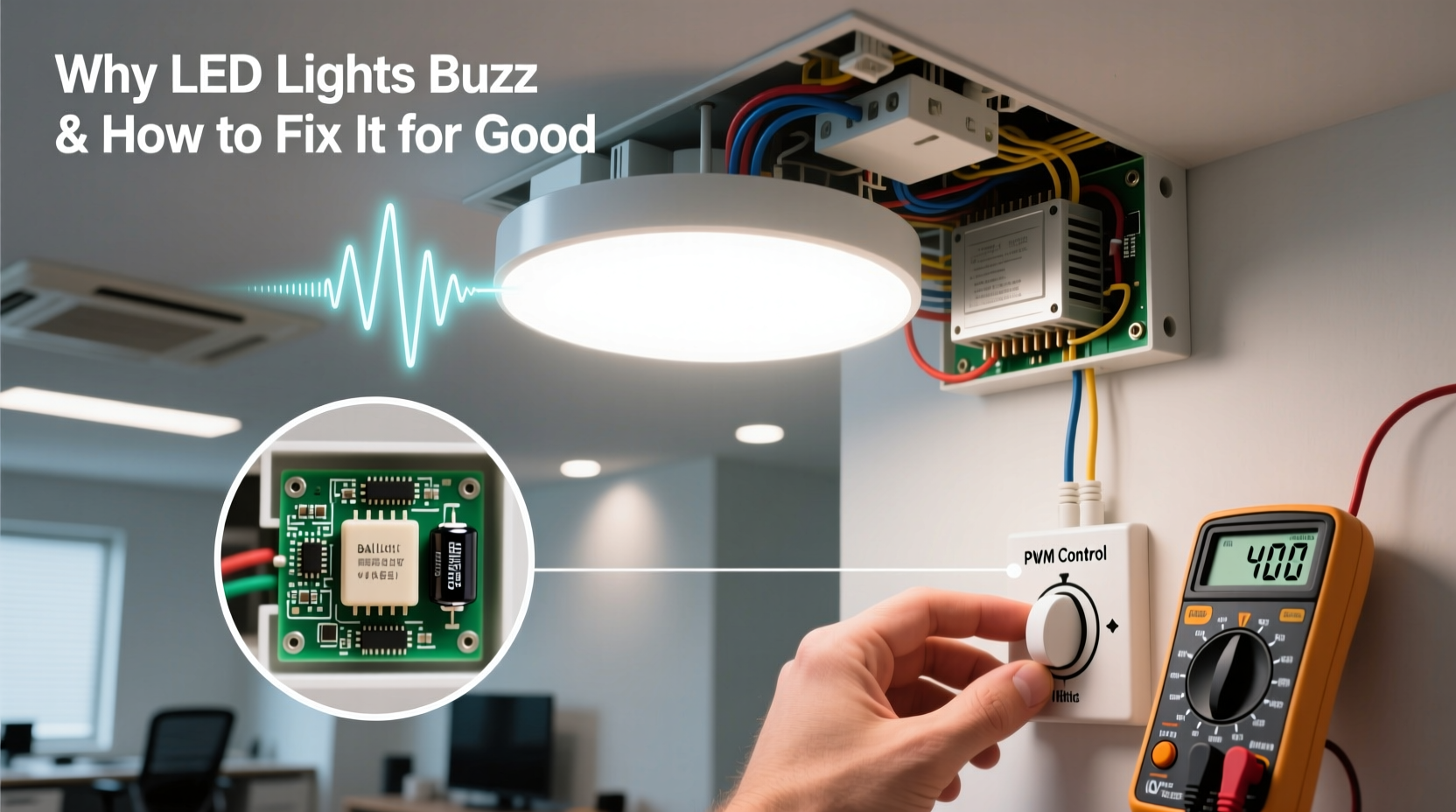
The buzzing in LED lights isn’t due to filaments vibrating, as with older fluorescent or incandescent bulbs. Instead, it stems from electrical components within the fixture or its control system. LEDs operate on direct current (DC), but household power is alternating current (AC). This mismatch requires conversion via drivers or transformers, which can generate electromagnetic vibrations under certain conditions.
The primary sources of buzzing include:
- Low-quality or incompatible LED drivers – These convert AC to DC. Poorly designed drivers may oscillate at audible frequencies.
- Dimmable LEDs paired with outdated dimmers – Traditional TRIAC dimmers, designed for incandescent loads, often conflict with modern LED electronics.
- Electrical interference or voltage fluctuations – Unstable power supply can cause inconsistent current flow, leading to coil whine in drivers.
- Overloaded circuits or poor wiring – Loose connections or circuit overloads create arcing or fluctuating current, contributing to noise.
- Poorly manufactured components – Cheap capacitors, inductors, or coils may vibrate audibly when energized.
These issues don’t always appear immediately. Some LED systems begin buzzing after months or years of use, especially as components degrade or environmental conditions change.
How Dimming Technology Affects LED Noise
Dimming is one of the most common triggers of LED buzzing. While dimmable LEDs offer flexibility in ambiance and energy savings, they require compatible dimming systems. Most residential dimmers were built for high-wattage incandescent bulbs that draw continuous current. LEDs, by contrast, consume far less power and rely on electronic switching.
When a traditional dimmer reduces voltage through phase-cutting (TRIAC dimming), it creates abrupt on-off cycles. For LEDs, this choppy waveform can cause the driver’s internal components—particularly inductors and capacitors—to vibrate. This phenomenon, known as coil whine, produces the familiar buzzing sound.
Modern solutions include:
- ELV (Electronic Low Voltage) dimmers – Use reverse-phase cutting and are gentler on LED drivers.
- MLV (Magnetic Low Voltage) dimmers – Designed for magnetic transformers but sometimes used with LEDs if matched correctly.
- Smart dimmers with PWM (Pulse Width Modulation) – Adjust brightness by rapidly pulsing the current at frequencies beyond human hearing.
“Mismatched dimmers are responsible for over 70% of reported LED buzzing cases. Upgrading to compatible controls resolves the issue in nearly all instances.” — James Lin, Electrical Systems Engineer, Building Efficiency Institute
Step-by-Step Guide to Eliminate LED Buzzing
Resolving buzzing doesn’t have to be complicated. Follow this systematic approach to diagnose and fix the problem permanently.
- Identify the source: Turn off all lights except the buzzing one. Confirm whether the noise comes from the bulb, fixture, switch, or nearby wall. Sometimes the hum originates at the dimmer switch, not the light itself.
- Check compatibility: Verify that both the LED bulb and dimmer switch are labeled as “dimmable” and compatible with each other. Consult manufacturer specifications online.
- Test without dimming: Set the dimmer to full brightness. If the buzzing stops, the dimmer is likely the culprit.
- Swap out the dimmer: Replace old TRIAC dimmers with an LED-compatible model such as Lutron CL-i or Leviton DZ600P.
- Replace the LED driver: In recessed or integrated fixtures, the driver may be internal. Upgrade to a high-frequency, silent-rated driver.
- Try a different bulb: Not all “dimmable” LEDs behave the same. Brands like Philips Hue, Sylvania, and GE Enbrighten are known for quieter performance.
- Inspect wiring: Ensure all connections in the switch box and fixture are tight. Arcing from loose wires can induce noise.
- Use a bypass capacitor (advanced): Installing a snubber capacitor across the switch terminals can suppress voltage spikes and reduce hum.
Real Example: Fixing a Bedroom Ceiling Light
Sarah in Portland installed new dimmable LED downlights in her bedroom, excited about energy savings and mood lighting. Within days, she noticed a faint but persistent buzz whenever the lights were dimmed below 50%. She tried different brands, thinking it was a faulty batch, but the issue persisted.
After consulting an electrician, she discovered her wall dimmer was a 20-year-old model designed for 60W incandescent bulbs. The electrician replaced it with a Lutron Diva DVCL-153P digital dimmer rated for LEDs. The buzzing stopped immediately. Sarah now enjoys smooth, silent dimming—even at the lowest levels.
This case highlights how legacy infrastructure can clash with modern technology. Even high-end LEDs can’t overcome incompatible controls.
Do’s and Don’ts When Troubleshooting LED Buzzing
| Do’s | Don’ts |
|---|---|
| Use dimmers specifically rated for LED loads | Assume all “dimmable” LEDs work with any dimmer |
| Check for loose wire connections in switches and fixtures | Ignore buzzing that changes with brightness level |
| Upgrade to high-frequency drivers for integrated fixtures | Overload a single dimmer with too many LED units |
| Choose reputable LED brands with proven quiet operation | Use incandescent-only dimmers with LED lights |
| Consult an electrician if you suspect circuit instability | Disregard persistent buzzing as “normal” |
Prevention Checklist: How to Avoid LED Buzzing From the Start
Prevention is more effective—and less frustrating—than troubleshooting after the fact. Use this checklist before installing new LED lighting:
- ✅ Confirm all components are labeled “dimmable” if using dimming controls
- ✅ Match LED bulbs and fixtures with compatible dimmer switches (check manufacturer compatibility charts)
- ✅ Choose high CRI (>90) and high-frequency (>20kHz) drivers for silent operation
- ✅ Avoid mixing LED and incandescent bulbs on the same dimmer circuit
- ✅ Install dedicated LED drivers in retrofit or new construction projects
- ✅ Test one fixture first before full installation
- ✅ Keep spare compatible bulbs and dimmers for future replacements
Frequently Asked Questions
Can non-dimmable LEDs buzz?
Yes, though less commonly. Non-dimmable LEDs may buzz if exposed to voltage fluctuations, poor-quality drivers, or electromagnetic interference from nearby appliances. Faulty wiring or shared circuits with motors (like HVAC systems) can also induce noise.
Is LED buzzing dangerous?
Occasional, mild buzzing is usually harmless. However, loud or worsening hum—especially accompanied by flickering, overheating, or burning smells—can indicate electrical faults. These should be inspected by a licensed electrician to prevent fire hazards or component failure.
Why do my LED lights buzz only at night?
This often relates to household voltage changes. At night, when overall demand drops, voltage can rise slightly (a phenomenon called “voltage swell”). This increased voltage stresses drivers and amplifies coil vibration. It may also coincide with the operation of other devices like refrigerators or sump pumps that introduce electrical noise into the circuit.
Final Thoughts: Silence Is Achievable
LED buzzing is not an inevitable side effect of energy-efficient lighting. It’s a solvable engineering mismatch between components. By understanding the interplay between drivers, dimmers, and electrical conditions, homeowners and facility managers can achieve truly silent illumination.
The key is attention to compatibility and quality. Investing in certified LED-compatible dimmers, reliable bulbs, and professional-grade drivers pays off in comfort and longevity. Once resolved, the benefits of LED lighting—long life, low energy use, and excellent color rendering—can be enjoyed without distraction.
If you’ve been tolerating buzzing lights, don’t assume it’s normal. Diagnose the cause, apply the right fix, and reclaim the quiet serenity your space deserves.




 浙公网安备
33010002000092号
浙公网安备
33010002000092号 浙B2-20120091-4
Comments
No comments yet. Why don't you start the discussion?