
Lizards are among the most expressive reptiles in the animal kingdom, and one of their most recognizable behaviors is the rhythmic up-and-down motion often described as \"push-ups.\" This movement, frequently observed in species like the western fence lizard or anole lizards, might look like exercise to the untrained eye. But in reality, it's a sophisticated form of nonverbal communication deeply rooted in survival, reproduction, and social hierarchy. Far from random physical activity, these push-ups convey specific signals that help lizards navigate complex social dynamics across their environments.
From asserting dominance to attracting mates and defending territory, lizard push-ups serve multiple functions depending on context, species, and individual status. Understanding this behavior offers insight into the hidden language of reptiles and reveals how even seemingly simple creatures have evolved intricate ways to communicate without sound.
The Science Behind Lizard Push-Ups
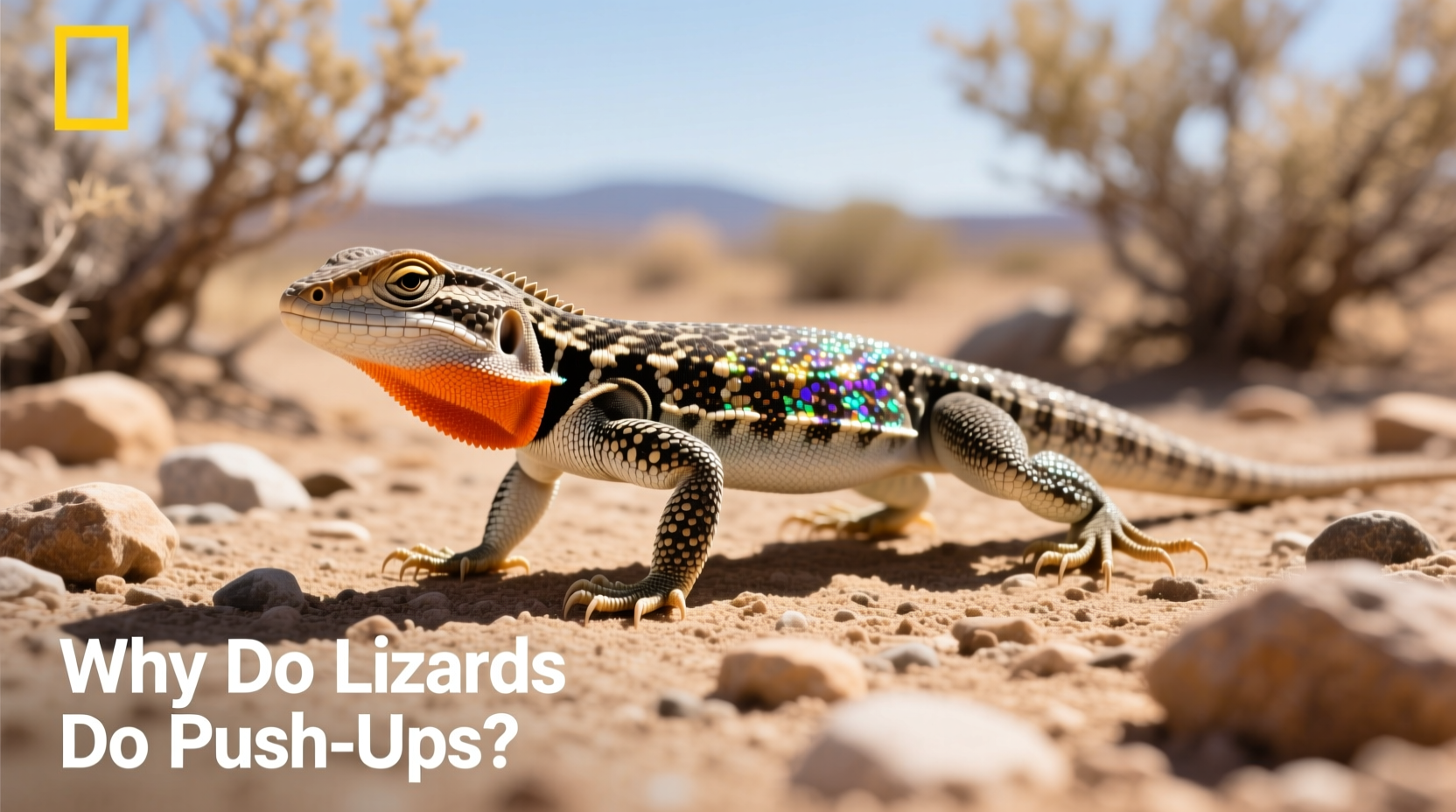
Lizard push-ups are not a form of physical conditioning but rather a visual display used primarily for intraspecific communication—communication between members of the same species. The motion typically involves raising and lowering the body using the front limbs while often combining head bobbing or dewlap extension (a flap of skin under the throat). These movements create a conspicuous signal visible over distances, especially in open or sunlit areas where many lizards reside.
Biologists classify this behavior as part of a broader category known as display behavior, which includes postures, colors, and movements designed to send messages. Because lizards rely heavily on vision and lack vocal complexity, visual signals like push-ups become critical tools for interaction. Research has shown that the frequency, speed, and pattern of these motions can encode different meanings.
For example, rapid, high-amplitude push-ups may indicate aggression or territorial defense, while slower, more deliberate ones could be courtship displays aimed at females. In some species, such as the green anole (Anolis carolinensis), males perform push-ups alongside extending a bright red dewlap to enhance visibility and impact.
“Lizard push-ups are a textbook example of ritualized behavior—evolved actions that reduce the need for actual combat by clearly signaling intent.” — Dr. Elena Torres, Behavioral Ecologist, University of Arizona
Territorial Signaling: Marking Boundaries Without Fighting
One of the primary reasons lizards perform push-ups is to establish and defend territory. Males, in particular, use these displays to warn rival males away from their space, which often contains valuable resources such as basking spots, food sources, and potential mates. By performing push-ups on elevated surfaces like rocks, fences, or tree trunks, lizards maximize their visibility and broadcast their presence across a wide area.
This preemptive signaling helps avoid costly physical confrontations. Actual fights between male lizards can result in injury or death, so visual displays act as a safer alternative for assessing strength and willingness to compete. A dominant male will often perform frequent, vigorous push-ups, sometimes combined with lateral compression of the body to appear larger. Subordinate males may respond with fewer or smaller movements—or retreat entirely.
In urban and suburban settings, lizards often adapt their display locations to human structures, using walls, railings, and windowsills as strategic vantage points. This adaptation underscores the flexibility and importance of visual signaling in their daily lives.
Mating Displays: Attraction Through Movement
Beyond territorial defense, push-ups play a crucial role in courtship. Male lizards use modified versions of the display to attract females and demonstrate fitness. Unlike aggressive push-ups, which are fast and forceful, mating-related movements tend to be more rhythmic and controlled, often paired with vibrant color changes or dewlap extensions.
Female lizards assess potential mates based on the quality and consistency of these displays. Studies have found that females prefer males who perform longer and more elaborate sequences, interpreting them as indicators of good health, stamina, and genetic quality. In species like the ornate tree lizard (Urosaurus ornatus), males with brighter throat patches and more energetic push-up routines achieve higher mating success.
The timing of these displays is also significant. Breeding seasons vary by region and species, but generally coincide with warmer months when lizards are most active. During this period, males increase both the frequency and intensity of their push-up performances, turning entire habitats into arenas of silent competition.
Key Elements of a Successful Mating Display
- Consistent rhythm and repetition
- Combination with colorful dewlap extension
- Use of elevated perches for maximum visibility
- Synchronization with environmental conditions (e.g., peak sunlight)
Species-Specific Differences in Push-Up Behavior
Not all lizards use push-ups in the same way. While the general function remains consistent—communication through movement—the specifics vary significantly across species. Below is a comparison of common lizard types and how they utilize push-up-like displays.
| Species | Display Type | Primary Purpose | Unique Features |
|---|---|---|---|
| Western Fence Lizard (Sceloporus occidentalis) | Rapid push-ups with head bobbing | Territory defense | Blue abdominal patches flashed during display |
| Green Anole (Anolis carolinensis) | Push-ups + red dewlap extension | Mating & rivalry | Dewlap size correlates with dominance |
| Desert Iguana (Dipsosaurus dorsalis) | Slow, deliberate push-ups | Thermoregulation aid + signaling | Often performed after basking |
| Spiny Lizard (Sceloporus magister) | Vigorous push-ups with body inflation | Aggression warning | Used when rivals approach closely |
This variation highlights how evolution has fine-tuned push-up behavior to suit ecological niches and social systems. Even within closely related species, slight differences in display patterns can prevent miscommunication and hybridization.
Environmental Influences on Push-Up Frequency
External factors heavily influence when and how often lizards perform push-ups. Temperature, light levels, habitat structure, and population density all play roles in shaping display behavior.
As ectotherms, lizards depend on external heat sources to regulate body temperature. They are most active during midday when temperatures are optimal, which also coincides with peak display activity. Cooler mornings or overcast days typically see reduced push-up frequency due to lower energy levels.
Habitat openness affects visibility and, therefore, signaling effectiveness. In dense forests, lizards may rely more on short-range cues, whereas those in open deserts or grasslands perform longer, more repetitive displays to reach distant observers.
Population density also matters. In areas with high lizard concentrations, competition intensifies, leading to more frequent and intense push-up displays. Conversely, isolated individuals may rarely perform them unless a new competitor enters the area.
Mini Case Study: Urban Lizards and Altered Communication
In Tucson, Arizona, researchers studied urban populations of side-blotched lizards (Uta stansburiana) living along hiking trails and residential zones. They found that males in busier areas performed faster, more exaggerated push-ups compared to their rural counterparts. Scientists believe this adaptation compensates for increased visual noise—such as moving humans, pets, and vehicles—that might otherwise distract or obscure signals.
Additionally, urban lizards were observed selecting darker surfaces (like asphalt or painted wood) for their displays, possibly to increase contrast against their bodies and improve signal detection. This behavioral plasticity demonstrates how lizards adjust their communication strategies in response to changing environments.
Common Misconceptions About Lizard Push-Ups
Despite growing scientific understanding, several myths persist about why lizards do push-ups:
- Myth: Lizards do push-ups to warm up their muscles.
Reality: While basking serves thermoregulatory purposes, push-ups themselves are communicative. Any muscle warming is incidental. - Myth: All lizards perform push-ups.
Reality: Only certain diurnal, visually oriented species use this behavior. Nocturnal or burrowing lizards rarely exhibit it. - Myth: Push-ups mean the lizard is friendly or trying to interact with humans.
Reality: These displays are directed at other lizards, not people. A lizard doing push-ups near a window isn’t acknowledging you—it’s likely responding to its reflection, mistaking it for a rival.
Frequently Asked Questions
Do female lizards ever do push-ups?
Yes, though less commonly. Some female lizards, particularly in species with strong female-female competition for nesting sites or resources, will perform push-ups to assert dominance. However, their displays are usually shorter and less intense than those of males.
Can I stop my pet lizard from doing push-ups?
You shouldn’t try to stop this natural behavior. In captivity, push-ups may occur if your lizard sees its reflection in glass or perceives another lizard nearby. To reduce stress, cover reflective surfaces or separate enclosures visually. Otherwise, the behavior is healthy and normal.
Are push-ups always aggressive?
No. While often associated with aggression, push-ups can also signal courtship or general alertness. Context is key: observe accompanying behaviors like dewlap extension, color change, or proximity to other lizards to interpret the message accurately.
Actionable Checklist: Observing and Interpreting Lizard Push-Ups
If you’re interested in observing lizard behavior in your yard, park, or local trail, follow this checklist to better understand what you're seeing:
- Choose the right time: Observe between late morning and mid-afternoon when lizards are most active.
- Look for elevated perches: Check fences, rocks, walls, and low branches where lizards often display.
- Note the speed and rhythm: Fast, jerky movements often indicate aggression; slow, rhythmic ones may suggest courtship.
- Watch for additional signals: Dewlap extension, throat puffing, or color changes add meaning to the display.
- Check for audience: Determine whether another lizard is nearby—this confirms the social purpose of the behavior.
- Avoid interference: Stay quiet and at a distance to prevent altering natural behavior.
Conclusion: Decoding Nature’s Silent Language
Lizard push-ups are far more than quirky curiosities—they are precise, evolved forms of communication essential to survival and reproduction. Whether staking a claim on a sun-drenched rock or wooing a potential mate with a well-timed performance, lizards rely on these movements to navigate their world silently but effectively. Each push-up carries information shaped by millions of years of evolution, offering a glimpse into the rich social lives of animals we often overlook.
By learning to read these signals, we gain not only a deeper appreciation for reptilian intelligence and adaptability but also a greater connection to the natural rhythms unfolding in our own backyards. Next time you see a small lizard pulsing up and down on a fencepost, take a moment to watch. You’re witnessing a conversation written in motion—one that speaks volumes without uttering a sound.




 浙公网安备
33010002000092号
浙公网安备
33010002000092号 浙B2-20120091-4
Comments
No comments yet. Why don't you start the discussion?