
Cats are often perceived as silent companions, but many owners—especially those with male cats—know just how vocal these animals can be. From persistent early-morning serenades to loud calls during the night, excessive meowing in male cats can be puzzling, even frustrating. Unlike wild felines, domestic cats have developed a complex system of vocal communication primarily directed at humans. Understanding why male cats meow so much requires insight into their biology, social behavior, and environmental triggers. This article explores the science behind feline vocalization, examines gender-specific tendencies, and offers practical guidance for interpreting and managing your cat’s meows.
The Evolution of Feline Vocalization
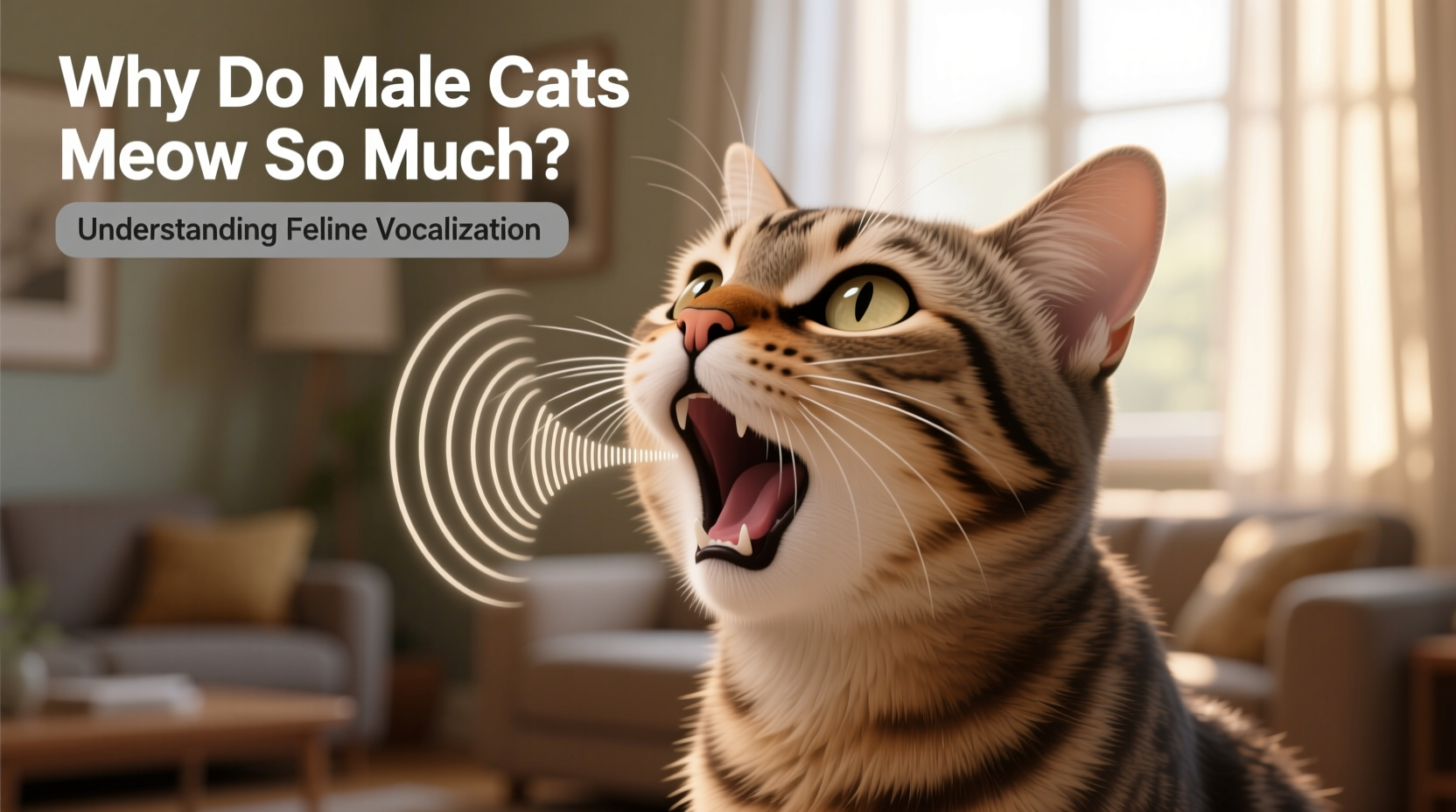
In the wild, adult cats rarely meow at one another. Meowing is primarily a behavior kittens use to communicate with their mothers—signaling hunger, discomfort, or fear. As cats mature, this vocalization typically diminishes among cat-to-cat interactions. However, domesticated cats have retained and repurposed meowing as a tool to interact with humans. Over thousands of years of cohabitation, cats have learned that meowing effectively captures human attention and elicits responses such as feeding, petting, or opening doors.
Dr. Karen Overall, a renowned veterinary behaviorist, explains:
“Domestic cats have fine-tuned their meows to manipulate human caregivers. These sounds are not random—they’re shaped by reinforcement. When a cat meows and gets food, the behavior is strengthened.”
This learned behavior is especially pronounced in male cats, particularly those who are unneutered. Their vocalizations often serve territorial, mating, or dominance-related purposes, which amplifies both frequency and intensity.
Why Male Cats Tend to Be More Vocal
While both male and female cats can be vocal, intact (unneutered) males are statistically more likely to meow excessively. Hormonal influences play a significant role. Testosterone increases territorial instincts and drives related behaviors, including vocalization. Unneutered males may yowl—longer, deeper meows—to assert dominance, challenge rivals, or attract mates. These yowls are distinct from typical meows and are often heard at night when outdoor activity peaks.
Even neutered males can remain vocal, though usually less intensely. Some breeds, such as Siamese or Oriental Shorthairs, are naturally predisposed to being talkative regardless of sex. However, male cats across breeds still exhibit higher rates of persistent vocalization due to ingrained behavioral patterns established before neutering or through learned habits.
Common Reasons for Excessive Meowing in Male Cats
Not all meowing is problematic. Much of it is normal communication. However, sudden changes in vocalization—either in volume, frequency, or tone—can signal underlying issues. The following are common causes of increased meowing in male cats:
- Hunger or feeding time anticipation: Cats quickly learn schedules and may meow insistently before meals.
- Attention-seeking: Male cats, especially affectionate ones, may meow to initiate play or cuddling.
- Territorial behavior: Outdoor or indoor-outdoor males may yowl to mark boundaries or respond to intruders.
- Mating calls: Intact males will yowl loudly when they detect a female in heat, sometimes for hours.
- Stress or anxiety: Changes in environment, new pets, or loud noises can trigger vocal distress.
- Medical conditions: Hyperthyroidism, cognitive decline (in older cats), or pain can lead to increased vocalization.
When Meowing Signals Health Problems
Persistent, plaintive, or disoriented meowing—especially at night—can indicate medical concerns. Older male cats are prone to hyperthyroidism and hypertension, both of which can cause restlessness and vocalization. Cognitive dysfunction syndrome (CDS), similar to dementia in humans, may result in confusion, pacing, and nighttime calling.
A study published in the *Journal of Feline Medicine and Surgery* found that over 40% of cats over the age of 10 exhibited signs of CDS, with increased vocalization being one of the earliest symptoms. If your senior male cat suddenly becomes more vocal without an obvious reason, a veterinary checkup is essential.
Decoding Your Cat's Meows: A Practical Guide
Understanding your cat’s vocal language involves observing context, tone, and body language. Here’s a simple framework to help interpret common meow types:
| Type of Meow | Tone & Pattern | Most Likely Meaning |
|---|---|---|
| Short, high-pitched | Single chirp or soft trill | Greeting or acknowledgment |
| Mid-length, medium pitch | Clear, repeated | Request for food or attention |
| Long, drawn-out yowl | Loud, mournful | Pain, distress, or mating call |
| Rapid, insistent series | Repetitive and urgent | Agitation or frustration |
| Low-pitched growl or hiss | Harsh, guttural | Threat or fear |
Mini Case Study: Max the Talkative Tabby
Max, a 3-year-old unneutered male tabby, began yowling every night around 2 a.m. His owner, Sarah, initially assumed he wanted to go outside. After letting him out multiple times, she noticed the behavior continued regardless of access. Concerned, she consulted her vet. Upon examination, Max showed no physical illness, but the vet suspected hormonal influence. After neutering, Max’s nighttime yowling decreased by over 80% within three weeks. Occasional meows remained—mostly for food or play—but the disruptive vocalization ceased. This case illustrates how neutering can resolve hormonally driven meowing in male cats.
Managing Excessive Meowing: A Step-by-Step Approach
If your male cat meows excessively, follow this timeline to identify and address the root cause:
- Observe and record: Note when, where, and how your cat meows. Keep a log for 3–5 days.
- Check basic needs: Ensure food, water, litter box cleanliness, and environmental enrichment are adequate.
- Assess recent changes: Has there been a move, new pet, or schedule shift? These can trigger stress-related vocalization.
- Consult your vet: Rule out medical issues, especially in older cats or those with sudden behavioral changes.
- Consider neutering: If your male cat is intact, discuss neutering with your veterinarian—even adult cats benefit behaviorally.
- Modify responses: Avoid reinforcing unwanted meowing by giving attention or treats mid-meow. Wait for quiet moments to reward.
- Enrich the environment: Provide toys, climbing structures, and interactive play to reduce boredom-induced vocalization.
Do’s and Don’ts of Responding to Excessive Meowing
| Do’s | Don’ts |
|---|---|
| Respond calmly to urgent meows (e.g., trapped in a room) | Yell at or punish your cat for meowing |
| Establish consistent routines for feeding and play | Give treats or attention while the cat is still meowing |
| Use puzzle feeders to engage natural hunting instincts | Ignore potential medical symptoms |
| Gradually desensitize to triggers like doorbells or other animals | Assume all meowing is “just personality” without investigation |
Frequently Asked Questions
Why does my male cat meow at night?
Nighttime meowing in male cats is often linked to territorial behavior, mating instincts (if unneutered), or age-related conditions like cognitive dysfunction. Indoor cats may also be responding to outdoor animal activity they hear or see. Ensuring enrichment during the day and a calming evening routine can help reduce nocturnal vocalization.
Is it normal for a male cat to meow more than females?
Generally, yes—especially if the male is unneutered. Hormonal drives make male cats more likely to yowl for mating or territory. However, individual personality and breed also play major roles. Some female cats, particularly Siamese, can be equally or more vocal.
Can I train my cat to meow less?
You can’t eliminate meowing entirely—it’s a natural form of communication—but you can reduce excessive or inappropriate vocalization. Use positive reinforcement to reward quiet behavior, maintain routines, and address underlying causes like boredom or anxiety. Consistency is key.
Conclusion: Building a Quieter, Happier Bond
Excessive meowing in male cats isn’t just noise—it’s communication. By learning to interpret what your cat is trying to tell you, you deepen your understanding and strengthen your relationship. Whether the cause is hormonal, environmental, or medical, most cases of persistent meowing can be managed with patience, observation, and proactive care. Neutering, veterinary evaluation, and behavioral adjustments often yield dramatic improvements. Remember, your cat isn’t trying to annoy you; he’s speaking his language. The more attentively you listen, the more effectively you can respond.




 浙公网安备
33010002000092号
浙公网安备
33010002000092号 浙B2-20120091-4
Comments
No comments yet. Why don't you start the discussion?