
It starts with a faint buzz in your ear, followed by a tiny prick on the skin—then, within minutes, an irresistible urge to scratch takes over. Mosquito bites are one of the most common yet frustrating encounters with nature. While they rarely pose serious health risks in many regions, their persistent itch can disrupt sleep, cause discomfort, and even lead to infection if not managed properly. The root of this irritation lies not in the bite itself, but in your body’s immune response—specifically, a cascade triggered by histamine. Understanding this biological process demystifies the itch and empowers you to respond more effectively.
The Biology Behind the Bite
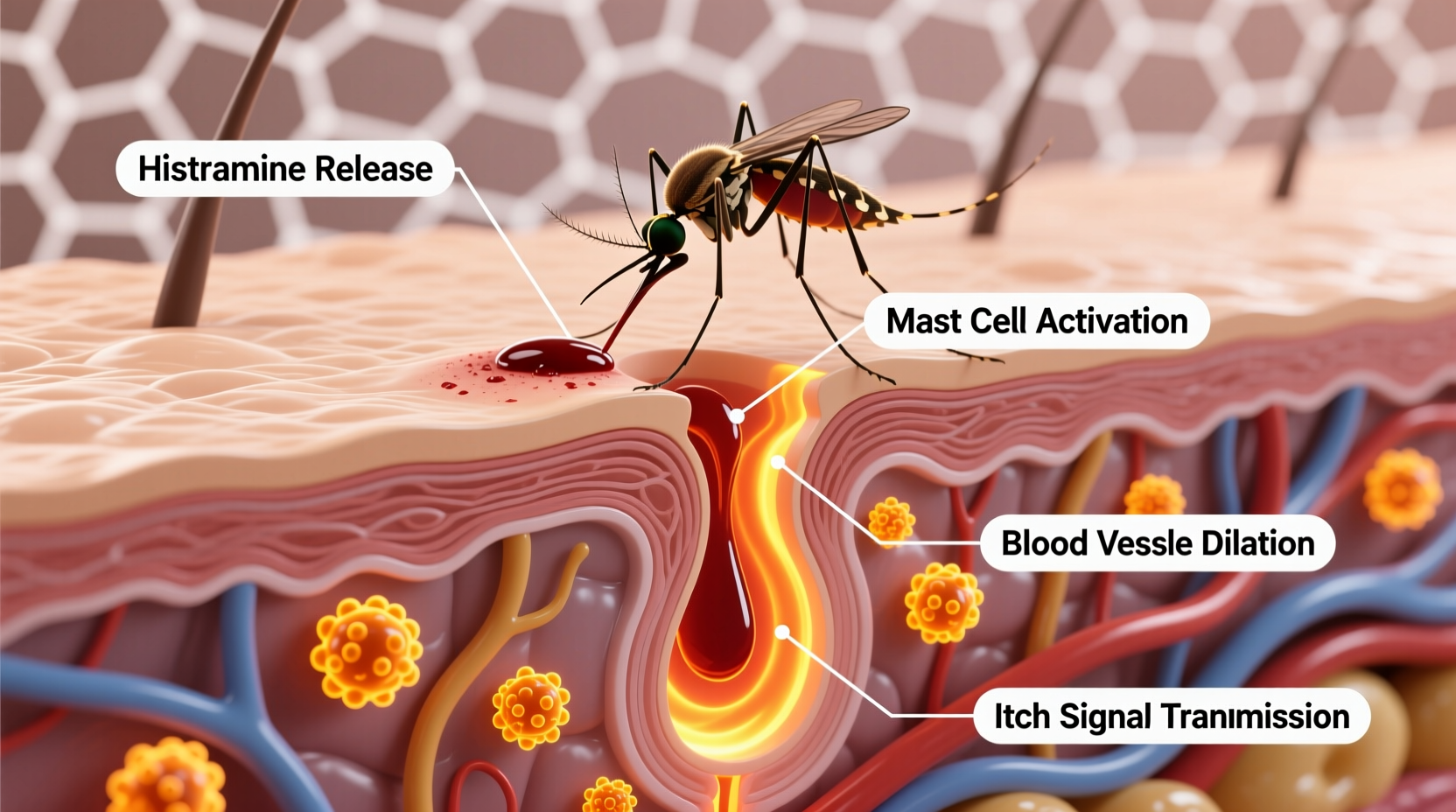
When a female mosquito lands on your skin, she isn’t just piercing you to drink blood—she’s injecting a complex cocktail of proteins through her saliva. Blood is essential for her to develop eggs, but drawing it efficiently requires overcoming your body’s natural defenses. Her saliva contains anticoagulants to prevent clotting, vasodilators to keep blood flowing, and immune-modulating compounds that help her feed undetected.
Unfortunately for her—and unfortunately for you—your immune system doesn’t appreciate uninvited guests. As soon as these foreign proteins enter your bloodstream, your body identifies them as potential threats. This activates a defensive chain reaction involving white blood cells, antibodies, and chemical messengers like histamine. It’s not the physical puncture that causes the itch; it’s your body’s attempt to neutralize what it perceives as an invader.
Histamine: The Itch Trigger
Histamine is a key player in your body’s allergic and inflammatory responses. Stored in mast cells throughout your skin and connective tissues, it’s released when your immune system detects allergens or pathogens. In the case of a mosquito bite, histamine floods the area around the bite site almost immediately after the mosquito departs.
Once released, histamine binds to receptors (specifically H1 receptors) on nearby nerve endings and blood vessels. This binding has several effects:
- Vasodilation: Blood vessels widen, increasing blood flow to the area. This brings immune cells to fight potential infection but also causes redness and warmth.
- Increased permeability: Capillaries become more porous, allowing fluid and white blood cells to leak into surrounding tissue. This leads to localized swelling or a small bump (wheal).
- Nerve stimulation: Histamine directly excites sensory nerves responsible for transmitting itch signals to your brain.
The result? That familiar, maddening itch. Your nervous system interprets histamine activity as an irritation that needs attention—hence the urge to scratch. But scratching only worsens the situation by damaging the skin and potentially introducing bacteria, which may lead to secondary infections.
“Histamine is like a fire alarm—it alerts the body to danger, but sometimes it goes off too loudly for something as small as a mosquito bite.” — Dr. Lena Patel, Immunologist at Boston Medical Research Institute
Why Reactions Vary Between Individuals
Not everyone experiences mosquito bites the same way. Children often have stronger reactions than adults because their immune systems are still learning to recognize mosquito saliva proteins. Conversely, people who live in high-mosquito areas may become less reactive over time due to repeated exposure—a form of natural desensitization.
This variation is partly genetic and partly immunological. Some individuals produce higher levels of IgE antibodies specific to mosquito antigens, leading to exaggerated histamine release. Others may have fewer mast cells in their skin or lower sensitivity to histamine signaling.
In rare cases, people experience severe reactions known as \"skeeter syndrome\"—characterized by large areas of swelling, heat, and pain, sometimes accompanied by fever or blistering. This condition resembles cellulitis and can be mistaken for infection, though it's purely an allergic response.
| Reaction Type | Symptoms | Duration | Treatment Approach |
|---|---|---|---|
| Mild Reaction | Small red bump, mild itch | 1–3 days | Cool compress, OTC antihistamines |
| Moderate Reaction | Larger swelling, persistent itch | 3–7 days | Topical corticosteroids, oral antihistamines |
| Skeeter Syndrome | Extensive swelling, heat, blistering | Up to 10 days | Medical evaluation, prescription anti-inflammatories |
Managing the Itch: A Step-by-Step Guide
While you can’t stop a mosquito from biting, you can control how your body responds—and minimize suffering afterward. Here’s a science-backed timeline for managing mosquito bites effectively:
- Immediately After the Bite (0–15 minutes): Wash the area gently with soap and water to remove residual saliva and reduce infection risk. Apply a cold pack for 10–15 minutes to constrict blood vessels and slow histamine diffusion.
- Within the First Hour: Use an over-the-counter topical anti-itch cream containing hydrocortisone (1%) or calamine lotion. These reduce inflammation and soothe nerve irritation.
- First 24 Hours: Take an oral antihistamine such as cetirizine (Zyrtec), loratadine (Claritin), or diphenhydramine (Benadryl). Non-drowsy formulas are ideal during the day; sedating ones can help at night if itching disrupts sleep.
- Days 1–3: Avoid scratching. Keep nails short and consider wearing light gloves at night. Reapply soothing lotions as needed. Monitor for signs of infection: increasing redness, pus, or spreading warmth.
- If Swelling Persists Beyond Day 4: Consult a healthcare provider. Persistent inflammation may require prescription-strength corticosteroids or further evaluation to rule out infection or allergic complications.
Prevention Strategies That Work
The best way to avoid the histamine reaction altogether is to prevent bites before they happen. While no method is 100% effective, combining multiple strategies significantly reduces your risk:
- Use EPA-registered insect repellents containing DEET, picaridin, or oil of lemon eucalyptus.
- Wear long sleeves and pants during dawn and dusk, when mosquitoes are most active.
- Install or repair window and door screens to keep mosquitoes out of living spaces.
- Eliminate standing water around your home—mosquitoes breed in stagnant pools as small as a bottle cap.
- Consider using mosquito nets while sleeping outdoors or in poorly screened rooms.
Interestingly, research suggests certain factors make some people more attractive to mosquitoes than others. These include higher body temperature, elevated carbon dioxide output (e.g., during exercise), and specific skin microbiomes. Wearing dark clothing and consuming alcohol can also increase attractiveness.
Mini Case Study: Sarah’s Summer Camping Trip
Sarah, a 28-year-old teacher, went camping in northern Minnesota last July. Despite using bug spray, she woke up each morning covered in new bites. By the third day, her arms and legs were dotted with swollen, red welts. She began taking daily doses of cetirizine and switched to wearing lightweight long-sleeved shirts and pants. She also started applying a 1% hydrocortisone cream twice a day. Within 48 hours, the new bites caused far less itching, and existing ones began to fade faster. Her proactive approach didn’t stop all bites—but it drastically reduced her discomfort and prevented any infections from scratching.
FAQ: Common Questions About Mosquito Bites and Histamine
Can antihistamines prevent mosquito bites?
No, antihistamines cannot prevent bites. However, taking them prophylactically (before exposure) may reduce the severity of the immune response if bitten. Some people take a daily non-drowsy antihistamine during peak mosquito season to minimize itching and swelling.
Are there long-term health effects from frequent mosquito bites?
In most cases, no. However, in tropical and subtropical regions, repeated bites increase the risk of vector-borne diseases such as dengue, Zika, chikungunya, and malaria. Even in low-risk areas, chronic scratching can lead to scarring or bacterial infections like impetigo.
Why do older bites turn into dark spots?
Post-inflammatory hyperpigmentation occurs when the skin produces excess melanin after trauma. This is especially common in individuals with darker skin tones. The discoloration usually fades over weeks or months but can be accelerated with gentle exfoliation and sunscreen use.
Checklist: How to Respond to a Mosquito Bite
- ✅ Wash the bite area with mild soap and water
- ✅ Apply a cold compress for 10–15 minutes
- ✅ Use a topical anti-itch cream (calamine or hydrocortisone)
- ✅ Take an oral antihistamine if needed
- ✅ Avoid scratching—keep nails short or wear gloves at night
- ✅ Monitor for signs of infection (pus, increasing pain, fever)
- ✅ Seek medical advice if swelling spreads or lasts more than a week
Conclusion: Take Control of the Itch
The itch from a mosquito bite is not a random annoyance—it’s a sophisticated immune response driven by histamine release. By understanding the science behind it, you shift from passive suffering to informed action. You can reduce discomfort, prevent complications, and even lessen future reactions through smart prevention and timely care. Knowledge transforms irritation into empowerment. Whether you're hiking in the woods, enjoying a backyard barbecue, or traveling abroad, being prepared means you don’t have to let mosquitoes ruin your peace.




 浙公网安备
33010002000092号
浙公网安备
33010002000092号 浙B2-20120091-4
Comments
No comments yet. Why don't you start the discussion?