
Every holiday season, millions of homes come alive with the warm glow of multicolored Christmas lights. From classic incandescent strands to modern LED varieties, these festive displays are more than decoration—they’re tradition. Yet, many homeowners notice a frustrating pattern: by the third or fourth season, some colors appear duller than others. Reds may still shine brightly while greens look washed out, and blues can seem almost invisible. This uneven fading isn’t random—it’s rooted in science, materials, and exposure. Understanding why it happens is the first step toward preserving the brilliance of your seasonal lighting for years to come.
The Science Behind Light Fading
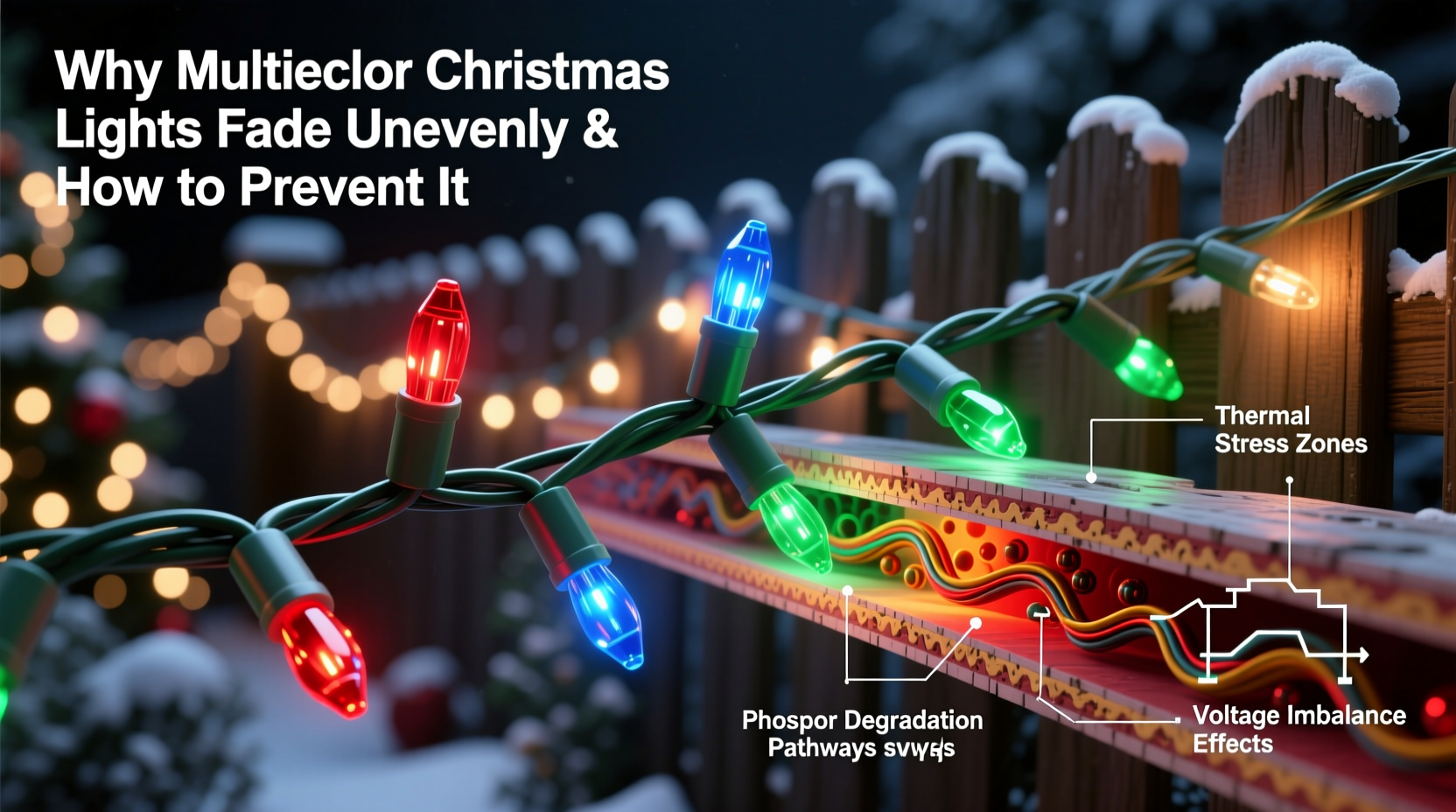
All colored lights rely on either tinted glass (in older bulbs) or colored lenses and phosphor coatings (in LEDs) to produce their hues. Over time, exposure to ultraviolet (UV) radiation from sunlight, heat cycles, moisture, and electrical stress degrades these materials at different rates. The key factor behind uneven fading is that not all pigments and dyes respond equally to environmental stressors.
For example, red and yellow dyes tend to be more stable under UV exposure because they absorb shorter, more energetic wavelengths less aggressively. In contrast, blue and green dyes often contain organic compounds that break down faster when exposed to sunlight. This phenomenon—known as photodegradation—is especially pronounced in outdoor installations where lights face direct sun for months when not in use.
In incandescent bulbs, colored glass filters block certain wavelengths, allowing only the desired color to pass through. These filters can develop micro-cracks or lose pigment density over time due to thermal expansion and contraction during repeated heating and cooling cycles. LEDs, while more efficient, use plastic diffusers and phosphor layers that also degrade—particularly cheaper models with lower-grade encapsulants.
Material Differences That Accelerate Uneven Wear
Not all Christmas lights are created equal. The construction quality of both the bulb housing and the coloring agents plays a major role in longevity. Lower-cost sets often use economy-grade plastics and dyes that sacrifice durability for affordability. Higher-end commercial-grade strings employ UV-stabilized polymers and inorganic pigments, which resist fading significantly longer.
A 2021 study by the Lighting Research Center at Rensselaer Polytechnic Institute found that consumer-grade green LED lenses lost up to 38% of luminance after three years of seasonal outdoor use, compared to just 12% in red counterparts under identical conditions. This disparity stems from molecular instability in the chromophores—the parts of dye molecules responsible for color absorption.
Beyond color chemistry, physical design matters too. Lights mounted vertically on eaves may experience pooling water if seals fail, leading to accelerated corrosion in lower sections. Similarly, strings draped over metal gutters can suffer galvanic corrosion when dissimilar metals interact in damp environments, affecting nearby bulbs disproportionately.
“Color stability in holiday lighting depends less on brand and more on material formulation. Look for products labeled ‘UV-resistant’ or ‘commercial grade’—they’re engineered for real-world exposure.” — Dr. Alan Pierce, Senior Researcher, National Institute of Lighting Technologies
Environmental Factors That Worsen Fading
Sunlight is the primary culprit in color degradation, but it’s rarely the only one. Temperature swings, humidity, wind abrasion, and airborne pollutants all contribute to premature wear. Outdoor lights endure extreme conditions: freezing nights followed by midday thawing, summer heat baking stored coils in sheds, and salty air near coastal regions accelerating oxidation.
Thermal cycling causes repeated expansion and contraction of plastic housings. Over time, this leads to tiny fractures in the lens surface, increasing surface area exposed to UV rays and trapping moisture. Once inside, moisture promotes delamination of color coatings and fosters internal condensation, further scattering light output and reducing perceived brightness.
Even indoor lights aren’t immune. Artificial lighting, particularly halogen or fluorescent sources, emits small amounts of UV. While minimal, prolonged exposure over multiple storage seasons can still affect sensitive dyes. Additionally, dust accumulation acts like a filter, dimming lights uniformly—but making already-faded colors appear even weaker.
How Exposure Conditions Affect Common Colors
| Color | Fade Risk Level | Main Cause of Degradation | Lifespan Expectancy (Outdoor Use) |
|---|---|---|---|
| Red | Low | Minimal UV absorption | 7–10 years |
| Yellow/Amber | Low-Moderate | Mild thermal stress | 5–7 years |
| Green | High | Organic dye breakdown | 3–5 years |
| Blue | Very High | High-energy wavelength sensitivity | 2–4 years |
| Purple/Pink | High | Dual-layer coating separation | 3–4 years |
Step-by-Step Guide to Preventing Uneven Fading
Preserving the vibrancy of multicolor Christmas lights requires proactive care before, during, and after each holiday season. Follow this timeline-based maintenance plan to extend the life of your display:
- Before Installation – Inspect and Test
Unpack lights carefully and check each strand for cracked bulbs, frayed wires, or discoloration. Plug them in to identify any dead sections. Replace damaged segments early to avoid overloading working circuits. - During Display – Minimize Environmental Stress
Avoid placing lights in direct southern exposure if possible. Use clips instead of nails to reduce housing stress. Install surge protectors to guard against voltage spikes that degrade LED drivers. - Mid-Season Check (December)
After two weeks of use, inspect for flickering or dimming. Clean dust gently with a dry microfiber cloth. If outdoors, ensure no snow buildup is pressing on wires. - After Removal – Clean and Dry Thoroughly
Wipe down each strand with a dry or slightly damp cloth. Never submerge entire strings unless manufacturer-approved. Allow full air drying for 24–48 hours in a well-ventilated area before storage. - Storage – Protect Against Future Damage
Wrap lights around cardboard reels or use specialized spools to prevent tangling and pressure cracks. Store in labeled, sealed bins made of opaque plastic. Include silica gel packs to control moisture.
Real-World Example: The Lakefront Home Dilemma
Consider the case of the Thompson family in Milwaukee, Wisconsin. For seven years, they used the same set of budget multicolor LED lights along their lakeside porch railing. By the fifth year, the display looked unbalanced—bright reds and yellows stood out, but blues and greens had faded to pastel tones. Neighbors began commenting that it looked “washed out.”
An electrician inspected the setup and identified several contributing factors: constant exposure to lake-spray salt mist, full afternoon sun, and storage in a damp basement without climate control. The green and blue LEDs showed visible lens hazing and minor pitting. After switching to marine-rated, UV-stabilized lighting and implementing proper coiling and desiccant storage, their new string maintained uniform color for six consecutive seasons—with no noticeable fading.
This scenario illustrates how environmental synergy—not just time—drives deterioration. Addressing one factor (like upgrading materials) helped, but lasting results came from a holistic approach.
Essential Checklist for Long-Lasting Holiday Lights
- ✅ Choose UV-resistant or commercial-grade light strings for outdoor use
- ✅ Avoid direct southern sun exposure during display months
- ✅ Clean lights gently before storing—no harsh chemicals
- ✅ Dry completely before packing away
- ✅ Store in opaque, sealed containers with moisture absorbers
- ✅ Use reels or spools to prevent wire strain and lens cracking
- ✅ Rotate older strands to less visible areas annually
- ✅ Retire sets showing significant color imbalance or electrical issues
Frequently Asked Questions
Can I mix old and new light strands safely?
You can physically connect them if they share the same voltage and plug type, but doing so often highlights fading differences. Newer bulbs typically emit brighter, truer colors, making older ones look duller by comparison. For a cohesive look, replace entire sections rather than patching in new lights.
Do LED lights fade less than incandescent ones?
Yes, generally—but with caveats. High-quality LEDs have superior lifespan and color retention due to solid-state construction and better materials. However, cheap LEDs often use inferior phosphors and plastics that degrade quickly. Always verify specifications; look for terms like “50,000-hour rated life” and “UV-protected lens.”
Is it worth repairing individual bulbs?
Rarely. Most modern strands are sealed units. Replacing a single bulb risks damaging adjacent connections and voids safety certifications. It’s more cost-effective and safer to retire heavily degraded strings and invest in durable replacements.
Final Thoughts: Preserve the Magic Year After Year
The joy of a glowing holiday display shouldn’t diminish with time. Uneven fading doesn’t have to be inevitable. By understanding the interplay between color chemistry, environmental exposure, and storage practices, you can maintain a vibrant, balanced look across seasons. Invest in better materials upfront, handle your lights with care, and treat storage as seriously as installation. These habits don’t just prolong life—they preserve the emotional impact of your display.
Your lights tell a story every December. Make sure that story remains bright, bold, and beautiful for years to come.




 浙公网安备
33010002000092号
浙公网安备
33010002000092号 浙B2-20120091-4
Comments
No comments yet. Why don't you start the discussion?