
It’s a familiar story: you finish a tough workout feeling strong, maybe even invincible. Two days later, you can barely walk up the stairs. Your muscles ache, feel stiff, and protest every movement. Why does this happen so late? And more importantly, is it normal or a sign of injury?
This phenomenon—muscle soreness peaking 24 to 72 hours after exercise—is known as Delayed Onset Muscle Soreness (DOMS). Far from being a myth or just “part of the process,” DOMS has a clear physiological basis. Understanding why it occurs, how it develops, and what you can do about it transforms discomfort into insight.
The Science Behind Delayed Onset Muscle Soreness
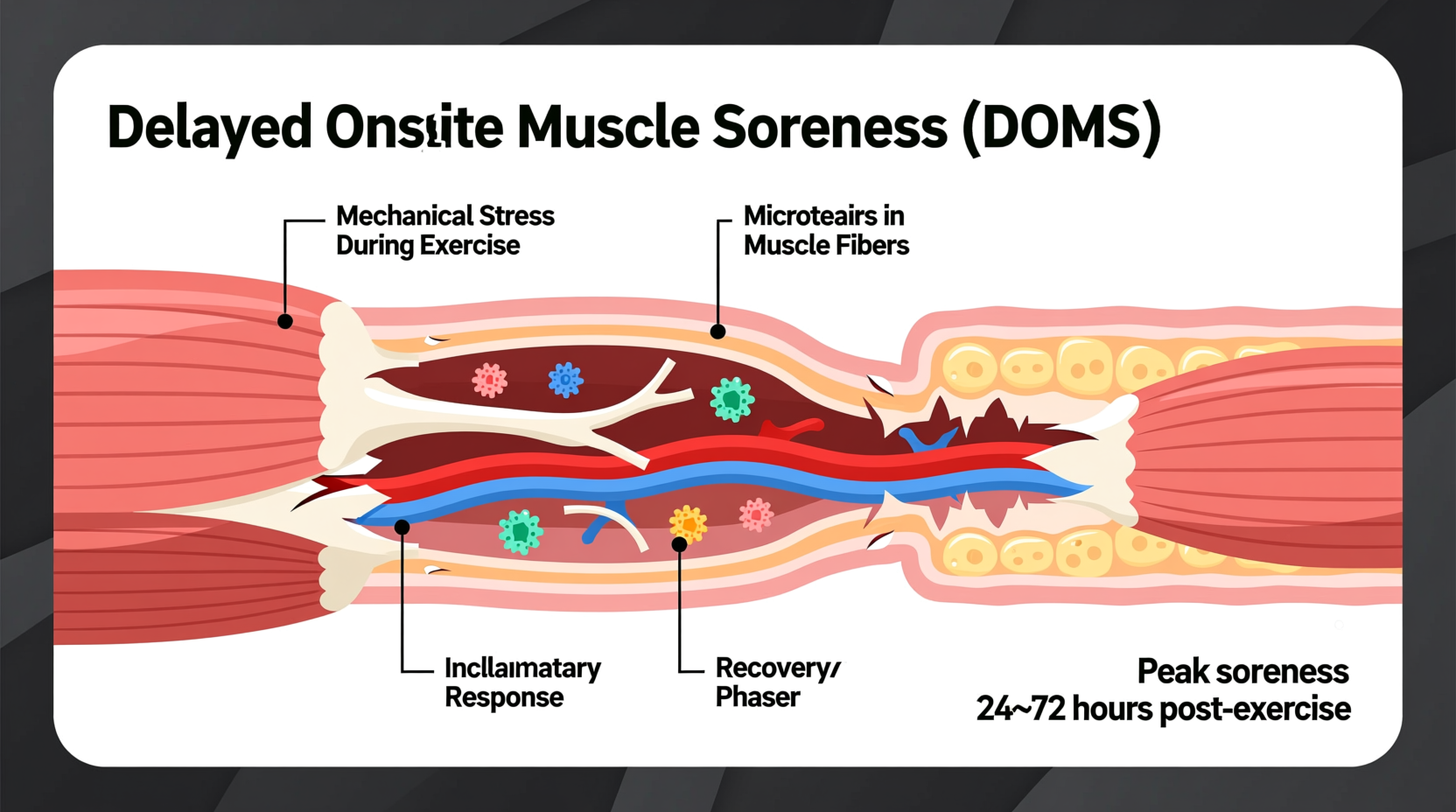
Contrary to popular belief, DOMS is not caused by lactic acid buildup. That burning sensation during intense exercise? That’s lactic acid—but it clears from your system within an hour after training. The soreness that hits two days later is something entirely different.
DOMS results from microscopic damage to muscle fibers during physical activity, especially when the movement involves eccentric contractions—when the muscle lengthens under tension. Examples include lowering weights during bicep curls, descending stairs, or the downward phase of a squat.
During eccentric actions, individual sarcomeres (the basic functional units of muscle fibers) experience uneven stress. Some stretch too far while others remain contracted, leading to structural disruption in the muscle cell membranes and surrounding connective tissue. This microtrauma triggers an inflammatory response.
Inflammation brings immune cells to the site, increases blood flow, and initiates repair processes. As part of this cascade, substances like prostaglandins and histamines sensitize nerve endings around the damaged area, contributing to pain perception. But here's the key: this process takes time.
“DOMS isn't a sign of poor fitness—it’s actually evidence that the muscle is adapting. The repair process leads to stronger, more resilient fibers.” — Dr. Lena Matthews, Exercise Physiologist at the National Institute of Human Performance
The delay in soreness reflects the biological timeline: initial damage occurs during exercise, but inflammation peaks 24–72 hours later, which aligns perfectly with when most people report peak soreness.
What Factors Influence the Severity of DOMS?
Not all workouts lead to crippling soreness. Several variables determine whether you’ll be walking like a cowboy two days post-gym:
- Type of exercise: Eccentric-heavy movements cause more DOMS than concentric or isometric ones.
- Novelty of movement: Trying a new sport or exercise dramatically increases risk due to unfamiliar neuromuscular demands.
- Intensity and volume: A sudden spike in weight, reps, or sets overwhelms unconditioned tissue.
- Fitness level: Trained individuals experience less severe DOMS due to chronic adaptation.
- Genetics: Some people are naturally more prone to inflammation and soreness.
A classic example is someone who hasn’t run downhill in years deciding to hike down a steep trail. The prolonged eccentric loading on the quadriceps causes significant microdamage—and brutal soreness two days later.
Timeline of DOMS: What Happens Hour-by-Hour
To understand why soreness appears with such a delay, consider the following timeline after strenuous exercise:
- 0–6 hours post-exercise: Microtears form in muscle fibers. No noticeable pain yet. Cellular signals begin recruiting immune cells.
- 6–24 hours: Inflammatory mediators increase. Swelling begins. You might feel slight stiffness, but full symptoms haven’t emerged.
- 24–72 hours: Peak inflammation. Immune cells break down damaged proteins. Nerve sensitivity rises. This is when soreness becomes most intense—typically around the 48-hour mark.
- 72–96 hours: Repair accelerates. Satellite cells activate and fuse to damaged fibers, rebuilding them larger and stronger.
- 5–7 days: Most symptoms resolve. Full recovery depends on severity and individual healing capacity.
This progression explains why you don’t wake up sore the morning after a hard session—but may struggle to stand up straight on day two. The biological machinery simply needs time to ramp up.
DOMS vs. Injury: How to Tell the Difference
Soreness is common. Pain is a warning. Distinguishing between DOMS and actual injury is crucial for long-term training success.
| Feature | D.O.M.S. | Injury (e.g., strain) |
|---|---|---|
| Onset | 24–72 hours after exercise | Immediate or during activity |
| Pain Location | Bilateral, diffuse across worked muscles | Localized, often one spot |
| Pain Type | Dull ache, stiffness, tenderness to touch | Sharp, stabbing, shooting |
| Movement Impact | Pain improves slightly with light movement | Worsens with any use of the area |
| Swelling | Minimal or none | Often present, visible or palpable |
| Recovery Time | 3–7 days | Days to weeks, depending on severity |
If pain starts during the workout, feels sharp, or limits function asymmetrically (like limping), treat it as a potential injury. Rest, assess, and consult a professional if needed.
Managing and Reducing DOMS Effectively
You can’t eliminate DOMS completely if you're pushing your limits—but you can reduce its intensity and speed recovery.
Active Recovery
Gentle movement increases blood flow, delivering oxygen and nutrients to repair tissues. Light cycling, walking, or swimming on rest days helps flush metabolic byproducts and reduces stiffness.
Hydration and Nutrition
Dehydration amplifies muscle cramping and slows recovery. Ensure adequate fluid intake. Post-workout nutrition also matters: consuming protein and carbohydrates within 60 minutes supports muscle repair.
Compression and Massage
Compression garments may reduce swelling and perceived soreness. Foam rolling and massage stimulate circulation and temporarily relieve tightness, though they don’t accelerate structural healing.
Sleep Quality
Muscles repair primarily during deep sleep. Chronic sleep deprivation impairs recovery and heightens inflammation. Aim for 7–9 hours nightly, especially after intense training blocks.
“Sleep is the most underrated recovery tool. Without it, even perfect nutrition and training fall short.” — Dr. Arjun Patel, Sports Medicine Specialist
Mini Case Study: Sarah’s First Sprint Training Session
Sarah, a 32-year-old office worker, decided to start sprint intervals to improve her cardiovascular fitness. She hadn’t done explosive running in over five years. Her first session included eight 30-second sprints with walking recovery.
She felt fine the next day. By day two, however, she could barely sit down comfortably. Her hamstrings and glutes were extremely tender, and climbing stairs required effort. Worried she’d injured herself, she consulted a trainer.
After assessing her symptoms—bilateral soreness, no sharp pain, improved mobility with light walking—the trainer confirmed it was DOMS. Sarah had engaged fast-twitch muscle fibers at high intensity for the first time in years, causing significant microtrauma.
She was advised to walk daily, hydrate well, and avoid heavy leg workouts for three days. By day six, her soreness had faded, and she returned to training with modified volume. Over the next month, each sprint session produced less soreness—a sign her muscles were adapting.
Actionable Checklist: Minimize DOMS Without Sacrificing Progress
Use this checklist to stay consistent in your training while managing soreness intelligently:
- ✅ Warm up properly before introducing new or intense movements
- ✅ Gradually increase load, volume, or complexity over weeks—not days
- ✅ Prioritize eccentric control (e.g., slow lowering phases)
- ✅ Incorporate active recovery on off-days
- ✅ Stay hydrated and consume balanced post-workout meals
- ✅ Get 7+ hours of quality sleep consistently
- ✅ Track soreness levels in a training journal to identify patterns
Frequently Asked Questions About Delayed Onset Soreness
Is it bad if I’m not sore after a workout?
No. Muscle growth and strength gains do not require soreness. Well-trained individuals often experience minimal DOMS because their bodies have adapted. Progress should be measured by performance improvements, not pain.
Can stretching prevent DOMS?
Static stretching before or after exercise does not significantly reduce DOMS. While it may improve flexibility and feel good, studies show little impact on soreness prevention. Dynamic warm-ups are more effective for preparing muscles.
Should I work out if I’m still sore?
Yes—with caution. Light exercise that doesn’t aggravate the sore muscles can aid recovery. However, avoid heavy lifting or intense training of the same muscle groups until soreness drops below a 4/10. Overtraining inflamed tissue increases injury risk.
Conclusion: Embrace the Soreness, Respect the Signal
Delayed onset muscle soreness isn’t a flaw in your physiology—it’s proof your body is responding to challenge. The two-day lag isn’t random; it’s the natural rhythm of inflammation, repair, and adaptation.
While extreme soreness can disrupt daily life and training consistency, mild to moderate DOMS is a normal companion to progress. The goal isn’t to avoid it entirely, but to manage it wisely—using smart programming, recovery habits, and self-awareness.
Next time you waddle through your kitchen two days after leg day, remember: that ache isn’t weakness leaving the body. It’s your muscles getting stronger, one microfiber at a time.




 浙公网安备
33010002000092号
浙公网安备
33010002000092号 浙B2-20120091-4
Comments
No comments yet. Why don't you start the discussion?