
There’s nothing more frustrating during the holidays than a string of Christmas lights that won’t stay lit—flickering on and off like a faulty strobe light. It disrupts the festive mood, raises safety concerns, and can turn a joyful decorating session into a troubleshooting nightmare. The good news? Most flickering issues are simple to diagnose and resolve, often in less than 10 minutes. Whether you're dealing with incandescent mini-lights or modern LED strands, understanding the root causes and having a clear action plan can restore your display quickly and safely.
Understanding Why Christmas Lights Flicker
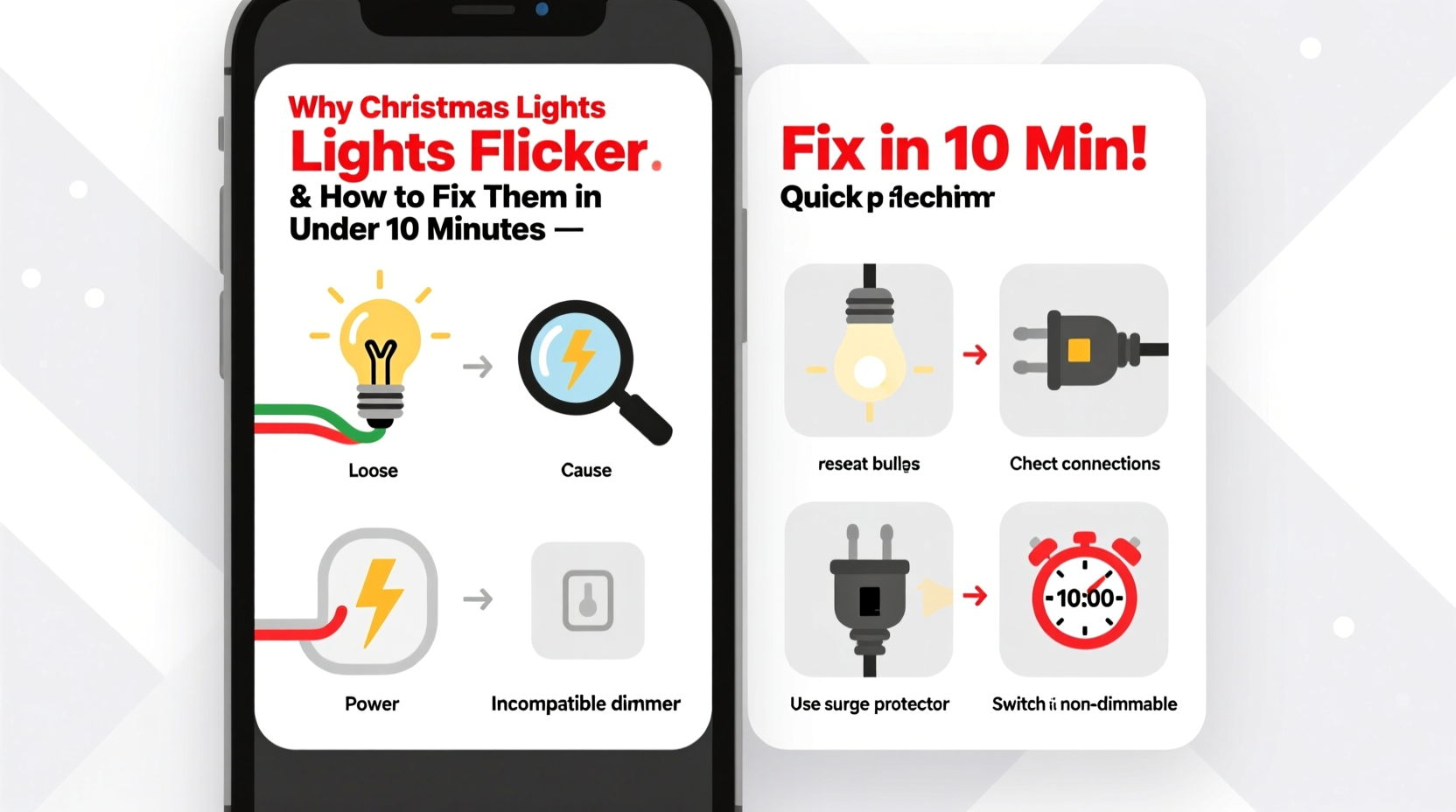
Flickering isn’t just an annoyance—it’s a signal. Your lights are communicating that something is off in the circuit. While the cause might seem random, most flickering stems from a few common culprits: loose bulbs, faulty connections, power overload, or incompatible dimmer switches. Older incandescent lights are especially prone to flicker due to their design, while LEDs may flicker due to voltage fluctuations or transformer issues.
One key difference between incandescent and LED strings lies in how they handle electrical current. Incandescent bulbs use a filament that glows when heated, making them sensitive to poor contact. A single loose bulb can interrupt the entire circuit in older series-wired strands. LEDs, on the other hand, run on low voltage and rely on consistent current regulation. If the driver (the internal power converter) is unstable or the input voltage fluctuates, flickering occurs even if all bulbs appear intact.
Step-by-Step Guide to Fix Flickering in Under 10 Minutes
You don’t need advanced tools or electrical training to fix flickering Christmas lights. With a systematic approach, you can identify and resolve the issue efficiently. Follow this timeline-tested method:
- Unplug the strand (0:00–0:30) – Never work on live wiring. Disconnect the lights from the outlet to prevent shocks or short circuits.
- Inspect for visible damage (0:30–2:00) – Run your fingers along the wire, checking for cuts, kinks, or crushed sections. Look at the plug for bent prongs or melted plastic. Damaged insulation can cause intermittent connections.
- Check each bulb (2:00–5:00) – In older series-wired sets, one loose or dead bulb breaks the circuit. Gently press each bulb into its socket. Replace any that are dark, cracked, or discolored. Use a bulb tester if available, or swap suspect bulbs with known working ones.
- Examine the shunt (for incandescents) – Some bulbs have built-in shunts designed to maintain the circuit if the filament fails. If the shunt didn’t activate, the entire string goes dark or flickers. Replacing the bulb usually resolves this.
- Test the fuse (5:00–7:00) – Many light strings have small fuses inside the plug. Use a flashlight to look through the small door. If the metal strip inside is broken or blackened, replace it with an identical-rated fuse (usually 3A or 5A). Keep spares in your holiday toolkit.
- Plug in and test (7:00–9:00) – Reconnect the strand. If it still flickers, try plugging it into a different outlet. This helps rule out issues with the power source.
- Check for overloading (9:00–10:00) – If multiple strands are daisy-chained, you may exceed the maximum load. Unplug extras and test one string at a time. Most manufacturers recommend no more than three incandescent strands linked together.
This process covers 90% of flickering cases. If the problem persists, the issue may be with the outlet, dimmer switch, or internal transformer (in LED sets).
Common Causes and How to Address Them
Not all flickering is created equal. Identifying the pattern helps pinpoint the cause:
- Random flickering across multiple bulbs: Likely a loose connection in the plug, socket, or wire junction.
- Entire string blinking rhythmically: Could be a built-in timer or faulty controller (common in programmable LED sets).
- One section flickers while others stay lit: Suggests a partial break in the circuit—often a damaged wire or failed shunt.
- Flickering only when wind blows (outdoor lights): Movement causes intermittent contact in corroded sockets or frayed wires.
| Issue | Possible Cause | Solution |
|---|---|---|
| Single bulb out, rest flicker | Loose or dead bulb in series circuit | Reseat or replace the bulb |
| Whole string flickers | Blown fuse or poor plug contact | Replace fuse or clean plug contacts |
| LEDs flicker when turned on | Incompatible dimmer or low-voltage driver issue | Use non-dimming switch or check transformer |
| Flickering after rain | Moisture in sockets or connectors | Dry thoroughly; use weatherproof covers |
| Lights dim and brighten | Overloaded circuit or voltage drop | Reduce daisy-chained strings; use dedicated outlet |
Real Example: Sarah’s Front Porch Fix
Sarah hung her favorite set of 200-count white mini-lights around her porch railing every year. Last season, they started flickering within days. She unplugged them, checked the bulbs, and found none visibly damaged. After reading online, she opened the fuse compartment and discovered one fuse was blown. She replaced it with a spare from her holiday repair kit—her husband kept a small container with fuses, extra bulbs, and zip ties in the garage. Within six minutes, the lights were steady again. “I spent years replacing entire strings,” she said. “Now I know it’s usually just a five-minute fix.”
Her story highlights how a little preparation saves time and money. Keeping a basic repair kit prevents unnecessary replacements and reduces holiday stress.
Expert Insight: What Electricians Want You to Know
“Most flickering lights aren’t dangerous, but persistent issues can indicate deeper problems like worn insulation or overloaded circuits. If you’re constantly replacing fuses or notice heat near the plug, stop using the set and consult an electrician.” — Mark Delaney, Licensed Electrician & Holiday Lighting Installer
Delaney emphasizes that while temporary fixes work, recurring flickering should be taken seriously. “Outdoor lights exposed to moisture year-round degrade faster. Inspect them annually, not just when they fail.” He also warns against mixing light types on the same circuit: “Don’t daisy-chain LED and incandescent strings. Their power draw differs, which can cause instability and shorten lifespan.”
Prevention Tips for Long-Lasting, Steady Lights
Fixing flickering is important, but preventing it is better. A few smart habits extend the life of your lights and reduce future issues:
- Store properly: Wrap lights around a cardboard reel or use a specialized storage reel to avoid tangles and wire stress.
- Keep dry: Store in sealed bins with silica gel packs to prevent moisture buildup.
- Test before hanging: Plug each strand in at home before installing outdoors or high up.
- Use surge protectors: Especially for outdoor displays, to guard against voltage spikes.
- Avoid sunlight exposure when storing: UV rays degrade plastic coatings and insulation over time.
Troubleshooting Checklist
Keep this checklist handy during setup or maintenance:
- ✅ Unplugged the lights before inspection
- ✅ Checked for frayed wires or damaged insulation
- ✅ Reseated all bulbs firmly in their sockets
- ✅ Replaced any dark or cloudy bulbs
- ✅ Inspected and replaced blown fuses
- ✅ Tested on a different outlet
- ✅ Verified not exceeding max wattage or string count
- ✅ Ensured outdoor connectors are sealed and elevated
- ✅ Used non-dimming switch for LED sets
- ✅ Considered upgrading to commercial-grade or shunt-equipped bulbs
Frequently Asked Questions
Can LED Christmas lights flicker even if they’re new?
Yes. Even brand-new LED strings can flicker if connected to a dimmer switch not rated for LEDs, or if the power supply (transformer) is overloaded or defective. Some budget LEDs lack proper current regulation, causing visible pulsing. Always verify compatibility with your electrical setup.
Why do my lights flicker only when other appliances turn on?
This indicates voltage fluctuation on the circuit. When high-power devices (like refrigerators or space heaters) start up, they draw a surge of current, temporarily lowering voltage. If your lights share the same circuit, they may dim or flicker. Solution: Plug lights into a dedicated outlet or use a voltage stabilizer.
Is it safe to leave flickering Christmas lights on overnight?
No. Persistent flickering can generate heat at loose connections, increasing fire risk—especially with older incandescent sets. The U.S. Consumer Product Safety Commission reports hundreds of fires annually linked to decorative lighting. Always resolve flickering before leaving lights unattended.
Conclusion: Restore the Glow with Confidence
Flickering Christmas lights don’t have to ruin your holiday spirit. With a few minutes and basic awareness, you can diagnose and fix most issues quickly. From checking fuses to ensuring secure bulb placement, the solutions are straightforward and accessible. More importantly, taking proactive steps—like proper storage, annual testing, and using compatible components—keeps your displays bright and safe year after year.
The holidays are about joy, tradition, and shared moments. A steady glow from well-maintained lights enhances that experience. Don’t let a flicker dim your decor. Apply these tips, keep a repair kit ready, and enjoy a worry-free, brilliantly lit season.




 浙公网安备
33010002000092号
浙公网安备
33010002000092号 浙B2-20120091-4
Comments
No comments yet. Why don't you start the discussion?