
Every holiday season, millions of homes light up with strings of festive bulbs, creating warmth and cheer. But nothing disrupts the magic quite like a string of Christmas lights that flickers unpredictably or goes dark altogether. While a flickering light might seem like a minor annoyance, it can signal deeper issues — from loose bulbs to electrical hazards. Understanding the root causes and knowing when to retire old sets can save you time, money, and even prevent fire risks.
Flickering isn’t just about aesthetics; it’s often a warning sign. Modern LED strings are more reliable than ever, but even they aren’t immune to wear and environmental stress. Whether you’re using traditional incandescent strands or energy-efficient LEDs, recognizing the signs of deterioration and understanding proper maintenance is essential for a safe, bright holiday display.
Common Causes of Flickering Christmas Lights
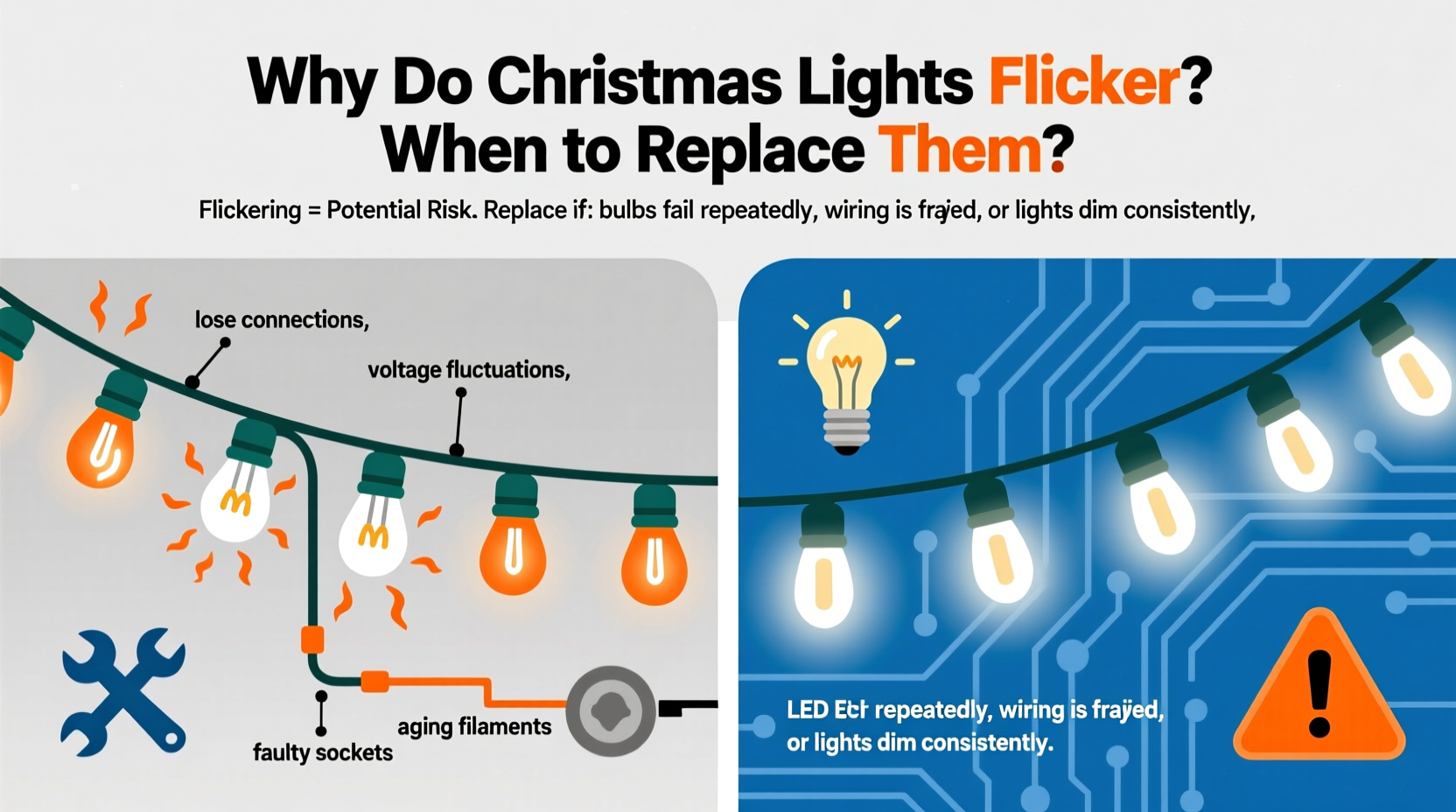
Flickering occurs when the electrical current to one or more bulbs is interrupted or inconsistent. The cause can be simple — like a loose bulb — or more serious, such as damaged wiring or incompatible dimmer switches. Identifying the source early prevents further damage and reduces safety risks.
- Loose or improperly seated bulbs: In older mini-light strings, each bulb must make solid contact with the socket. A slightly dislodged bulb breaks the circuit, causing intermittent flickering or sections of the strand to go out.
- Bad shunt connections: Many incandescent bulbs have built-in shunts designed to maintain the circuit if a filament burns out. If the shunt fails, the entire section may flicker or go dark.
- Damaged or frayed wires: Outdoor exposure, foot traffic, or improper storage can degrade insulation. Exposed wires lead to short circuits, voltage drops, and erratic lighting behavior.
- Overloaded circuits: Connecting too many strings end-to-end exceeds manufacturer limits, especially with older incandescent lights that draw more power. This leads to voltage fluctuations and flickering.
- Incompatible controllers or dimmers: Using non-dimmable LED lights on a dimmer switch, or pairing different light types (e.g., warm white with cool white LEDs), can cause unstable current flow and visible flicker.
- Moisture intrusion: Outdoor lights exposed to rain, snow, or condensation inside sockets can create intermittent conductivity, leading to flickering, especially during temperature shifts.
When to Replace vs. Repair Your Christmas Lights
Not every flickering set needs replacement. Some issues are easily fixed. However, there comes a point when repair is no longer cost-effective or safe. Knowing the difference helps extend the life of your lights while minimizing risk.
Minor problems like a single loose bulb or a blown fuse in plug-connected strands can usually be resolved in minutes. Replacement fuses are often included in the plug cap, and spare bulbs come with many incandescent sets. But repeated flickering, browning at connection points, or brittle wires are red flags.
According to the National Fire Protection Association (NFPA), decorative lighting accounts for an estimated 7% of home fires during the holiday season. Most incidents stem from outdated, damaged, or misused lighting equipment. The U.S. Consumer Product Safety Commission (CPSC) recommends replacing any light string showing visible wear — including cracked insulation, corroded sockets, or melted plugs.
“After five years of seasonal use, inspect your lights closely. Wear and tear accumulate faster than people realize — especially with outdoor exposure.” — Mark Reynolds, Electrical Safety Inspector, NFPA
Signs It’s Time to Retire Your Lights
- Visible scorch marks or discoloration on plugs or sockets
- Frayed, cracked, or stiff insulation on cords
- Corroded or bent bulb sockets
- Frequent tripping of circuit breakers when lights are plugged in
- Noticeable buzzing or overheating near the plug or transformer
- LEDs that appear dimmer or change color over time (a sign of driver failure)
If your lights require constant troubleshooting — reseating multiple bulbs, splicing wires, or using tape to secure connections — it’s safer and more efficient to invest in a new set. Modern LED strings consume up to 90% less energy, last 25,000+ hours, and are far more durable than older models.
Step-by-Step Guide to Diagnosing Flickering Lights
Before replacing a flickering strand, follow this diagnostic process to identify and resolve common issues:
- Unplug the lights immediately. Never handle faulty strings while powered.
- Inspect the plug and cord. Look for melting, cracking, or exposed copper. Discard if damage is present.
- Check for loose bulbs. Gently press each bulb into its socket. Wiggle slightly to ensure a snug fit. Replace any broken or darkened bulbs.
- Test the fuses. For plug-connected strands, open the fuse compartment (usually in the male plug). Use a multimeter or visual inspection: a broken filament means the fuse is blown. Replace with identical rating (typically 3A or 5A).
- Examine connections between strands. Ensure female plugs are fully seated and free of debris. Moisture or dirt can interrupt conductivity.
- Plug into a known working outlet. Test the lights on a different circuit to rule out household electrical issues.
- Separate combined strands. Disconnect all but one string. If it works, reconnect others one by one to identify a problematic segment.
- Use a light tester (optional). Commercial testers can detect open circuits, bad shunts, or polarity issues without manual bulb checks.
If flickering persists after these steps — especially if only part of the strand illuminates — internal wire breaks or failed components likely require full replacement.
Comparison: Incandescent vs. LED – Which Flickers More?
The type of lighting technology plays a major role in flicker frequency and reliability. Here's how traditional incandescent and modern LED strings compare:
| Feature | Incandescent Lights | LED Lights |
|---|---|---|
| Power Consumption | High (40–100 watts per 100 bulbs) | Low (4–10 watts per 100 bulbs) |
| Lifespan | 1,000–3,000 hours | 25,000–50,000 hours |
| Heat Output | High – fire risk if covered or overloaded | Very low – safe for indoor and delicate displays |
| Flicker Cause | Loose bulbs, failed shunts, filament breakage | Driver failure, incompatible transformers, dimmer conflicts |
| Repairability | Moderate – replace bulbs/fuses | Limited – often sealed units; whole string replacement needed |
| Outdoor Durability | Poor – sensitive to moisture and temperature swings | Excellent – most are weatherproof and UV-resistant |
While LEDs are inherently more stable, poor-quality drivers or off-brand power supplies can still cause noticeable flicker, particularly at high frequencies invisible to the eye but potentially disruptive to cameras or sensitive individuals. Always choose UL-listed or ETL-certified LED strings for consistent performance and safety.
Real Example: A Homeowner’s Close Call
Jamie from Portland, Oregon, used the same set of C7 incandescent lights on her roof for nine consecutive years. Each season, she noticed more flickering and had to replace several bulbs. One December evening, after plugging them in, the strand sparked near the gutter, emitting a burning smell. She unplugged it immediately and discovered melted insulation where the cord passed through a metal bracket.
An electrician later explained that repeated expansion and contraction from outdoor temperature swings had worn down the insulation. Combined with moisture ingress and age-related brittleness, the cord became a fire hazard. Jamie replaced all her old incandescent strings with commercial-grade LED versions rated for permanent outdoor use. Since then, her display has been trouble-free — and her energy bill dropped by nearly $30 over the holidays.
Prevention Checklist: Extend the Life of Your Lights
Proper care before, during, and after the holiday season dramatically improves longevity and safety. Follow this checklist annually:
- ✅ Store lights on cardboard reels or in compartmentalized bins to prevent tangling and wire stress.
- ✅ Keep lights in a cool, dry place — avoid attics or damp basements where temperature and humidity fluctuate.
- ✅ Label each string by location (e.g., “Front Porch,” “Tree Top”) for easier setup next year.
- ✅ Use surge protectors or smart outlets to guard against voltage spikes.
- ✅ Clean bulbs gently with a dry cloth before storage to remove dust and salt residue (especially for coastal areas).
- ✅ Avoid wrapping lights tightly around sharp edges; use twist ties or soft Velcro straps instead.
- ✅ Inspect every strand before use — even if stored perfectly, rodents or pests can chew through insulation.
Frequently Asked Questions
Can LED Christmas lights flicker even when they’re new?
Yes. Low-quality LED strings may flicker due to poorly designed internal drivers or incompatible transformers. Cheap imports often lack proper voltage regulation. Always purchase from reputable brands and check reviews for mentions of flickering.
Is it safe to mix different types of Christmas lights on the same circuit?
Only if they are designed to be connected. Never mix incandescent and LED strings end-to-end unless the packaging explicitly allows it. Their power requirements differ significantly, which can overload circuits or cause LEDs to flicker. Use separate extension cords or power strips for different types.
How long should Christmas lights last before needing replacement?
Incandescent strings typically last 3–5 seasons with moderate use. LEDs can last 10–15 years or more if properly maintained. However, if you notice persistent flickering, dimming, or physical damage, replace them immediately regardless of age.
Conclusion: Shine Bright, Stay Safe
Flickering Christmas lights are more than a nuisance — they’re signals. Whether it’s a loose bulb or a failing wire, each symptom tells a story about the health of your display. With a little attention and proactive care, you can enjoy a reliable, radiant holiday setup year after year.
Don’t wait for sparks or smoke to act. Regular inspection, proper storage, and timely replacement are small investments that pay off in safety, savings, and peace of mind. Upgrade to quality LED strings, follow best practices, and let your lights shine brightly — not dangerously.




 浙公网安备
33010002000092号
浙公网安备
33010002000092号 浙B2-20120091-4
Comments
No comments yet. Why don't you start the discussion?