
There’s nothing quite like the warm glow of Christmas lights to bring holiday cheer. But when those twinkling strands start flickering unpredictably—dimming, flashing on and off, or cutting out entirely—the magic fades fast. Flickering isn’t just annoying; it can signal deeper electrical issues that, if ignored, might lead to safety hazards or premature failure of your decorations.
The good news is that most causes of flickering Christmas lights are simple to diagnose and fix at home. Whether you’re dealing with indoor string lights on the tree or outdoor displays lighting up the roofline, understanding the root cause saves time, money, and stress. From loose bulbs to incompatible dimmer switches, this guide walks through the most common culprits and provides practical solutions anyone can apply—no technical background required.
Common Causes of Flickering Christmas Lights
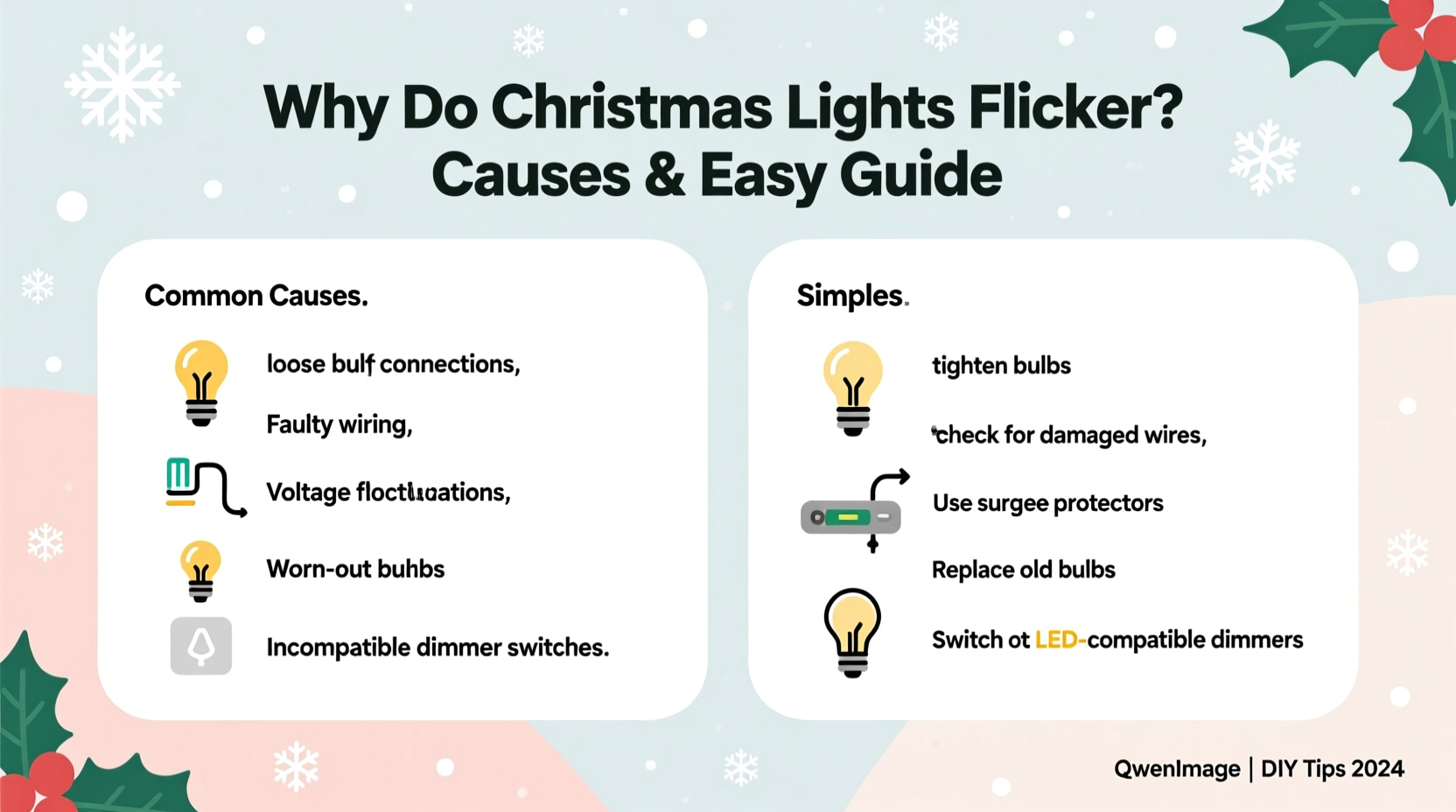
Flickering doesn’t happen randomly. Each symptom usually points to a specific underlying issue. Identifying the cause correctly is half the battle. Here are the six most frequent reasons why your Christmas lights flicker:
- Loose or improperly seated bulbs – Even one bulb not fully screwed in can interrupt the circuit.
- Overloaded circuits – Plugging too many strings into a single outlet or power strip can trip breakers or cause voltage drops.
- Damaged wires or connectors – Frayed insulation, pinched cords, or corroded male/female plugs disrupt current flow.
- Incompatible dimmer switches – Many older homes have dimmers designed for incandescent bulbs, which don’t work well with LED light strings.
- Poor-quality or outdated light sets – Cheaply made lights often lack consistent voltage regulation and fail prematurely.
- Outdoor environmental factors – Moisture, temperature swings, and wind can affect connections, especially in exposed areas.
Before replacing entire strands or calling an electrician, rule out these basic issues systematically. Most flickering problems stem from user-installation errors rather than faulty wiring inside walls.
Step-by-Step Guide to Diagnose and Fix Flickering Lights
Follow this logical troubleshooting sequence to identify and resolve the source of flickering. This process works for both incandescent and LED Christmas lights, indoors and outdoors.
Step 1: Unplug and Inspect the Entire Strand
Start by disconnecting the lights from the power source. Carefully examine each bulb, socket, and connector. Look for:
- Bulbs that appear darkened, cracked, or discolored
- Wires with exposed copper or chew marks (common with rodents)
- Connectors that feel loose or show signs of rust or corrosion
- Sections of the strand that are kinked or crushed
Step 2: Check Bulb Seating and Replace Faulty Ones
Even a slightly loose bulb can break the circuit in series-wired strings (most traditional Christmas lights). Gently press each bulb into its socket until it clicks or feels secure. If any bulbs are burned out or damaged, replace them with matching replacements. Use a bulb tester if available, or swap suspected bulbs one at a time.
Step 3: Test the Outlet and Circuit Load
Plug the strand into a different outlet—preferably on a separate circuit. If the flickering stops, the original outlet may be overloaded. Use a circuit finder or check your breaker panel to see how many devices share the same circuit. As a rule of thumb, avoid exceeding 80% of a circuit’s rated capacity (typically 15–20 amps).
Step 4: Examine Power Sources and Extension Cords
If using extension cords, ensure they’re rated for outdoor use (if applicable) and heavy-duty enough to handle the load. Thin or long extension cords can cause voltage drop, especially with multiple light strings. Replace low-gauge cords with thicker 16- or 14-gauge versions. Never daisy-chain more than three standard light strings unless labeled safe for connecting.
Step 5: Evaluate Dimmer Switch Compatibility
If your lights are controlled by a wall dimmer, turn the dimmer to full brightness. Many LED Christmas lights flicker when used with traditional dimmers because they draw too little power. Upgrade to an LED-compatible dimmer or bypass the dimmer entirely during the holidays.
Step 6: Isolate Problematic Sections
For longer runs or complex displays, disconnect sections one by one to isolate where the flickering begins. This helps determine whether the issue is in a specific segment, connector, or power supply.
“Most flickering I see during holiday service calls comes down to either a single loose bulb or people using indoor-rated extension cords outside.” — Mark Reynolds, Residential Electrician with 18 years of experience
Do’s and Don’ts When Troubleshooting Flickering Lights
| Do | Don't |
|---|---|
| Unplug lights before inspection | Handle lights while plugged in |
| Use lights rated for indoor or outdoor use appropriately | Mix indoor-only lights with outdoor setups |
| Replace bulbs with the correct voltage and size | Force mismatched bulbs into sockets |
| Use surge protectors instead of basic power strips | Daisy-chain more than three light strings without checking manufacturer guidelines |
| Check for moisture in connectors (especially outdoors) | Leave wet connections exposed to elements |
| Store lights on reels or cardboard spools to prevent tangles | Yank tangled strands apart, risking wire damage |
Mini Case Study: The Front Yard Display That Wouldn’t Stay On
Sarah from Portland, Oregon, installed a new set of LED Christmas lights around her porch railing and eaves every November. One year, the display started flickering after a few days—especially during rainy evenings. She replaced the bulbs, checked the outlets, and even bought a new timer, but the problem persisted.
After unplugging everything and tracing the setup, she discovered the root cause: the female end of an extension cord was tucked under a flowerpot where rainwater pooled. The connector had corroded slightly, creating intermittent contact. She replaced the cord with a weatherproof version, elevated the connection point using a plastic enclosure, and added a drip loop (a downward bend before the plug so water runs off instead of into the socket).
The lights worked perfectly afterward. Sarah now inspects all outdoor connections before turning on her display each season—a small habit that prevents hours of frustration.
When LED Lights Flicker: Special Considerations
LED Christmas lights are energy-efficient and long-lasting, but they behave differently than traditional incandescent bulbs. Their low power draw can confuse some electrical systems. Common LED-specific flickering issues include:
- Ghost voltage or induced current – Wires running parallel to live circuits can pick up small currents, causing faint glowing or blinking even when off.
- Poor driver quality – LEDs rely on internal drivers to regulate current. Cheap lights often use subpar drivers that overheat or fail.
- Compatibility with timers and remotes – Some smart controllers send pulsed signals that interfere with LED operation.
To reduce flickering with LEDs:
- Use only UL-listed, name-brand LED strings.
- Avoid mixing LED and incandescent strings on the same run.
- Install a dummy load (like a shunt resistor or incandescent nightlight) on the same circuit if ghost voltage is suspected.
- Ensure your timer or controller specifies LED compatibility.
Preventative Checklist for Reliable Lighting Every Year
Keep your Christmas lights flicker-free with this annual maintenance checklist:
- ✅ Store lights on reels or cardboard to prevent tangling and wire stress.
- ✅ Label each strand (indoor/outdoor, color, length) for faster setup.
- ✅ Before installing, test every strand using a dedicated outlet.
- ✅ Clean connectors with a dry cloth; use electrical contact cleaner if corroded.
- ✅ Replace frayed cords or cracked sockets immediately—don’t tape over damage.
- ✅ Use ground-fault circuit interrupter (GFCI) outlets for all outdoor displays.
- ✅ Limit connected strands to manufacturer specifications (usually 3–5 sets).
- ✅ Install a surge protector to guard against voltage spikes during storms.
Performing these checks once a year extends the life of your lights and prevents most flickering issues before they start.
FAQ: Frequently Asked Questions About Flickering Christmas Lights
Can flickering Christmas lights be dangerous?
Occasional flickering due to a loose bulb is usually harmless. However, persistent flickering caused by damaged wires, overloaded circuits, or moisture exposure can pose fire or shock risks. If lights spark, emit a burning smell, or trip breakers repeatedly, stop using them immediately and inspect thoroughly.
Why do my lights flicker only when other appliances turn on?
This typically indicates circuit overload. Large appliances like refrigerators or heaters draw significant power when starting up, causing temporary voltage drops. Plug your lights into a different circuit, or consider having an electrician install a dedicated holiday lighting circuit.
Is it normal for LED lights to flicker slightly?
No. While some early LED models had noticeable flicker due to poor drivers, modern high-quality LED Christmas lights should operate smoothly. Slight flickering may indicate incompatible controls, low voltage, or a failing component. Address it promptly to avoid further issues.
Conclusion: Shine Bright Without the Flicker
Flickering Christmas lights don’t have to ruin your holiday display. With a methodical approach, most issues can be resolved in under an hour using tools you likely already own. Start with the simplest explanations—loose bulbs, bad connections, or overloaded outlets—before moving to more complex electrical concerns.
By understanding the causes and applying the fixes outlined here, you’ll spend less time troubleshooting and more time enjoying the festive glow. Take a few minutes each season to inspect, test, and maintain your lights. Your future self—and your delighted neighbors—will thank you.




 浙公网安备
33010002000092号
浙公网安备
33010002000092号 浙B2-20120091-4
Comments
No comments yet. Why don't you start the discussion?