
As the holiday season approaches, twinkling Christmas lights bring warmth and cheer to homes across the country. But when those festive strands start flickering unexpectedly—especially in patterns that seem erratic or persistent—the magic can quickly turn into frustration. While some flickering is normal in certain types of bulbs, consistent or sudden flashing often signals an underlying electrical issue. Understanding the root causes not only restores your display but also prevents potential fire hazards and extends the lifespan of your decorations.
Flickering can stem from something as simple as a loose bulb to more serious concerns like circuit overloads or faulty wiring. The good news? Most problems are diagnosable and fixable without professional help—provided you know what to look for. This guide breaks down the most common reasons behind flickering Christmas lights, walks through systematic troubleshooting steps, and offers long-term prevention strategies backed by electrical safety standards.
Understanding How Christmas Lights Work
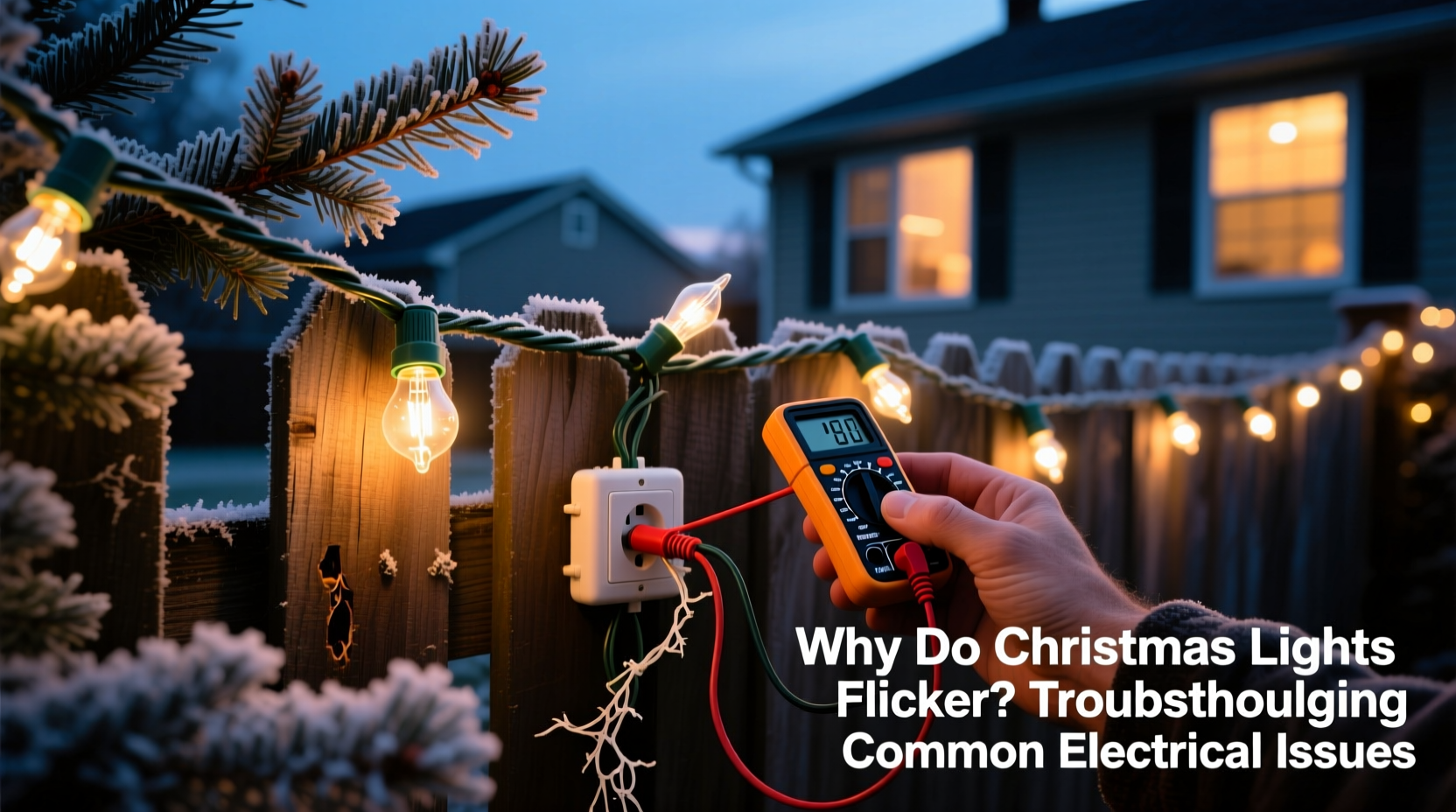
Before diving into troubleshooting, it helps to understand the two main types of light strings used today: incandescent and LED. Each operates differently and presents unique failure modes.
Traditional incandescent mini-lights use small tungsten filaments that glow when electricity passes through them. These are often wired in series, meaning if one bulb fails or becomes loose, it interrupts the entire circuit, causing sections—or even whole strands—to go dark or flicker intermittently. Many modern sets include shunt wires inside the bulb base designed to bypass a dead filament, allowing the rest of the string to stay lit. However, these shunts aren’t always reliable, especially after repeated stress or exposure to moisture.
LED Christmas lights, on the other hand, run on low voltage and typically consume up to 90% less energy than incandescent models. They’re usually wired in parallel or with advanced circuitry that isolates individual failures. When LEDs flicker, the cause is less likely to be a single bulb and more often tied to power supply inconsistencies, incompatible dimmers, or transformer malfunctions.
Another key factor is whether your lights are plug-in or battery-operated. Battery-powered strings may flicker due to low charge or poor contact between batteries and terminals. Plug-in versions depend on household voltage stability, outlet condition, and extension cord quality—all variables that affect performance.
“Flickering isn’t just annoying—it’s a warning sign. In older incandescent strings, it can indicate arcing at a loose connection, which generates heat and increases fire risk.” — James Holloway, Licensed Electrician and Safety Inspector
Common Causes of Flickering and How to Diagnose Them
Not all flickering means danger, but knowing how to distinguish normal behavior from hazardous conditions is essential. Below are the top culprits behind flickering Christmas lights, along with diagnostic clues.
1. Loose or Improperly Seated Bulbs
In series-wired incandescent strings, a single bulb that’s not fully screwed in can break the circuit. As vibrations occur (from wind or handling), the connection may briefly reestablish, causing intermittent flickering. This is one of the most frequent—and easiest to fix—issues.
2. Burned-Out or Failed Bulbs
A dead bulb doesn’t always result in total darkness. Thanks to shunt technology, many strings remain partially lit—but unstable current flow around the failed element can lead to pulsing or strobing effects. Use a light tester or visual inspection to locate dark bulbs, paying special attention to discolored bases or blackened glass.
3. Overloaded Circuits or Extension Cords
Daisy-chaining too many light strings exceeds both circuit capacity and safe amperage limits. Most residential outlets support 15 amps; exceeding this leads to voltage drops and inconsistent power delivery, manifesting as dimming or flickering—especially when other devices share the same circuit.
Extension cords contribute significantly. Thin-gauge cords (especially those rated for indoor use only) resist current flow over distance, reducing voltage reaching the far end of the string. Outdoor setups strung across lawns or rooftops are particularly vulnerable.
4. Faulty Outlets or Poor Grounding
If lights flicker only when plugged into a specific outlet, the problem lies there—not the lights. Test the outlet with another device. Worse still, ungrounded or damaged outlets can allow stray voltage fluctuations, increasing shock risk and damaging sensitive electronics like LED drivers.
5. Incompatible Controllers or Dimmers
Some decorative lights come with built-in controllers for chasing, fading, or twinkling effects. If these fail internally, they may produce unintended rapid flickering. Similarly, using non-dimmable LED strings with dimmer switches creates signal interference, leading to erratic behavior.
6. Environmental Factors
Moisture, extreme cold, and physical strain weaken connections over time. Outdoor lights exposed to snow or rain may develop corrosion inside sockets or plugs. Temperature swings cause metal components to expand and contract, loosening contacts. Wind-induced movement can jostle already fragile connections.
Troubleshooting Checklist: Step-by-Step Guide to Stop the Flicker
Follow this logical sequence to isolate and resolve the source of flickering efficiently and safely.
- Unplug the light string immediately. Never inspect or handle live electrical components.
- Inspect the entire strand visually. Look for cracked bulbs, frayed wires, melted insulation, or corroded connectors.
- Check each bulb. Remove and reseat every bulb firmly. Replace any that appear darkened, broken, or discolored.
- Use a bulb tester or multimeter. For series circuits, test continuity across each bulb. Alternatively, use a commercial light tester that detects open shunts.
- Test the string on a different outlet. Rule out faulty receptacles or shared circuit overload.
- Reduce load on the circuit. Unplug other devices running on the same breaker. Limit daisy-chained strings to three per circuit unless labeled otherwise.
- Replace extension cords with heavy-duty, outdoor-rated ones. Ensure proper gauge (16 AWG minimum for runs under 50 feet).
- Try the lights indoors first. If flickering stops, environmental exposure (moisture, temperature) is likely the culprit.
- Separate LED and incandescent strings. Mixing types on one controller can disrupt power regulation.
- Retire old or damaged sets. Strings older than five years show higher failure rates and increased fire risk.
Do’s and Don’ts: Best Practices for Safe, Steady Lighting
| Action | Recommended? | Why |
|---|---|---|
| Daisy-chain up to 3 light strings | ✅ Yes | Manufacturer-approved for most modern sets; stays within safe amperage. |
| Use indoor extension cords outdoors | ❌ No | Lack weather resistance; prone to short circuits and degradation. |
| Mix LED and incandescent lights on one circuit | ⚠️ Caution | Different power draws may cause flickering; better to separate. |
| Store lights coiled tightly on cardboard | ❌ No | Causes wire stress and internal breaks; use a reel instead. |
| Clean dirty plugs with rubbing alcohol | ✅ Yes | Removes oxidation and improves conductivity safely. |
| Leave lights on overnight unattended | ❌ No | Fire hazard; use timers or smart plugs for automatic shut-off. |
Real-World Example: A Case of Persistent Flickering
Consider Sarah from Portland, Oregon, who installed 12 strands of incandescent lights along her roofline each December. One year, the left side flickered wildly during rainy nights but stabilized in dry weather. She replaced multiple bulbs with no lasting improvement. After consulting an electrician, she discovered two issues: first, the extension cord was a lightweight indoor model exposed to rain; second, the outlet box had degraded seals, allowing moisture ingress.
The solution involved installing a new outdoor-rated GFCI outlet, replacing the cord with a 14 AWG waterproof version, and switching to LED strings less sensitive to minor voltage shifts. Post-upgrade, her display remained steady through storms—and her energy bill dropped by nearly $15 over the season.
This scenario underscores a critical point: environmental durability matters as much as electrical compatibility. What works in a dry garage may fail dramatically in real-world winter conditions.
When to Replace vs. Repair
While repairs can extend the life of high-quality light strings, not all damage is worth fixing. Here’s how to decide:
- Repair if: Only one or two bulbs are faulty, the wiring is intact, and the set is relatively new (under 3 years).
- Replace if: You notice browning at plug prongs, brittle insulation, or recurring flickering despite multiple fixes. Sets manufactured before 2015 lack modern safety features and are more prone to overheating.
Modern LED strings now cost under $20 for 100-light sets and last up to 10 times longer than incandescent alternatives. Investing in newer technology pays off in reliability, brightness consistency, and reduced maintenance.
Frequently Asked Questions
Is it safe to leave flickering Christmas lights on?
No. Persistent flickering can indicate arcing, loose connections, or overheating—each a potential fire hazard. Unplug immediately and inspect before reuse.
Why do my LED Christmas lights flicker even when new?
New LEDs may flicker if connected to a dimmer switch not rated for low-load lighting. They can also react to electronic noise from nearby appliances. Try plugging them directly into a standard outlet to test.
Can I use a surge protector for Christmas lights?
Yes, and it’s highly recommended—especially for outdoor displays. Surge protectors guard against voltage spikes from lightning or grid fluctuations. Just ensure the unit is rated for outdoor use and not overloaded.
Final Steps for a Reliable, Radiant Display
Fixing flickering Christmas lights starts with observation and ends with informed action. By methodically checking bulbs, cords, outlets, and load distribution, most homeowners can restore their display safely and affordably. More importantly, adopting preventative habits—like using weather-appropriate cords, avoiding circuit overload, and retiring aging sets—ensures future seasons remain bright and trouble-free.
Electrical safety during the holidays isn’t about fear—it’s about awareness. A few minutes of inspection can prevent hours of frustration or worse. As tempting as it is to ignore minor flickers, treating them as early warnings protects both your home and your peace of mind.




 浙公网安备
33010002000092号
浙公网安备
33010002000092号 浙B2-20120091-4
Comments
No comments yet. Why don't you start the discussion?